Island Peak Climbing Guide: Route, Skills & Preparation
 Written by Himal ShresthaGovernment-licensed trekking guide & travel writer10 years and counting in the mountains
Field-reviewed by Hari Kumar Shrestha
Island Peak (Imja Tse), 6,189 m, is one of Nepal's best-known introductions to technical Himalayan mountaineering. The approach follows the Sherpa settlements of the Khumbu, but the upper mountain is not a trekking trail: a summit attempt can involve glacier travel, crampons, fixed ropes, a steep snow or ice headwall, and an exposed ridge. The sensible starting point is to understand those demands before choosing dates or buying equipment.
This Island Peak climbing guide explains the route, the skills to practise, a practical training progression, equipment, permits, altitude risks and questions to ask a climbing operator. It is a general preparation resource. If you want the actual departure schedule, package inclusions or a booking quotation, see Accessible Adventure's 16-day Island Peak Climbing expedition. That package page is the authoritative source for the company's trip-specific arrangements.
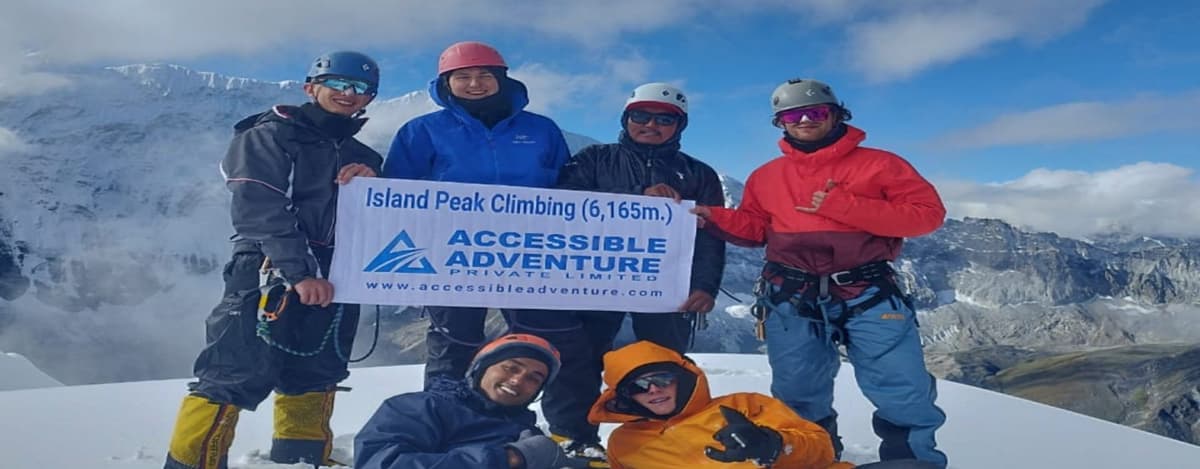
Island Peak at a Glance: The Mountain Behind the Name
Island Peak rises in the Imja Valley of Nepal's Everest region. Its other name, Imja Tse, is used alongside the English name. From the Dingboche area, the mountain appears to rise separately from the surrounding ice, which explains the name “Island Peak.” It sits among peaks and ridges associated with Lhotse, Nuptse, Ama Dablam, Makalu and Baruntse. On a clear day, the upper route offers striking views, although weather and safe climbing decisions always take priority over photography.
Island Peak's association with early Everest expeditions is part of its appeal. The mountain played a role in early Everest mountaineering history: climbers connected with the 1953 British Everest expedition used it for high-altitude practice, while the main summit was climbed in 1956. Today's route, snow and fixed-line positions should not be assumed to match those historical ascents. Snow, crevasses and technical arrangements evolve.
Although commonly called a trekking peak, the classification is not a description of technical simplicity. A fit trekker may manage the approach comfortably yet still find front-pointing in crampons, handling an ascender or descending exposed terrain difficult. Preparation therefore needs to address both endurance and mountaineering skills.
Understanding the Route Before Choosing an Itinerary
Island Peak routes usually have three stages: an approach through the Khumbu, preparation at or near the mountain camps, and a summit attempt followed by a technically demanding descent. Exact sleeping locations and travel days differ between operators. The sequence below describes the mountain's geography and should not be read as a replacement for a booked itinerary.
From Lukla to the Imja Valley
The traditional route begins at Lukla (about 2,860 m) and passes Phakding (about 2,651 m) on the way to Namche Bazaar (about 3,440 m). The trail continues past Tengboche (about 3,867 m) and toward Dingboche (about 4,410 m). From this area, Island Peak climbers head into the Imja Valley toward Chhukung (about 4,730 m), while the main Everest Base Camp trail continues toward Lobuche and Gorak Shep.
The acclimatization activities traditionally planned around Namche and Dingboche are important opportunities to observe sleep, appetite, fatigue and response to progressively higher elevations. A rest or acclimatization day is not simply free time; it is part of evaluating readiness. Weather and group health may require a different pace.
Base Camp and High Camp: Two Different Starting Strategies
Our route reference places Island Peak Base Camp at approximately 5,087 m and High Camp at approximately 5,600 m. Some Island Peak itineraries start the summit push from Base Camp, while others use High Camp. A higher camp can reduce the vertical ascent on summit day, but it also requires sleeping higher and managing a more exposed overnight position. Neither option is automatically right for every climber.
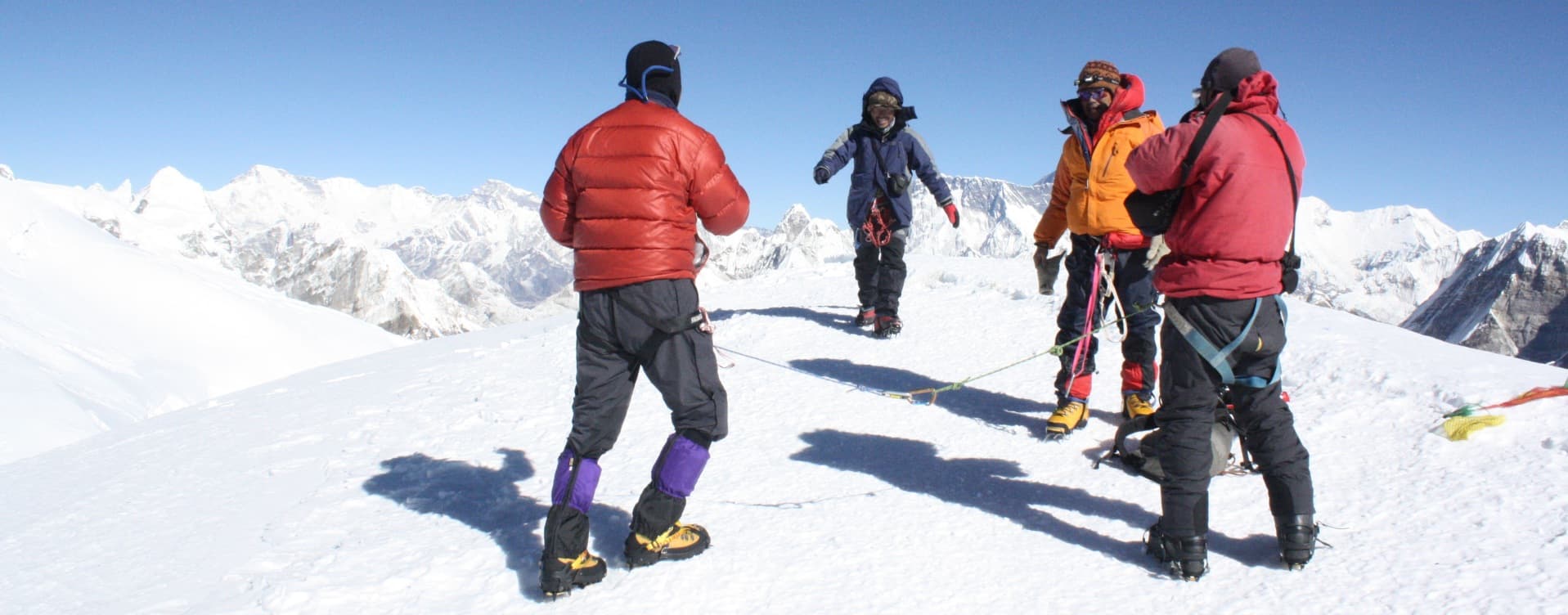
Base Camp technical practice can include crampon fitting and walking, ice axe handling, use of a jumar or ascender, harness and carabiner checks, and rope-team procedures. Our preparation outline allows four to six hours for this kind of session, subject to the actual itinerary. This is useful preparation, but it is not a guarantee that an inexperienced participant will master every technical movement in one afternoon. Confirm the instruction and camp plan for your booked departure.
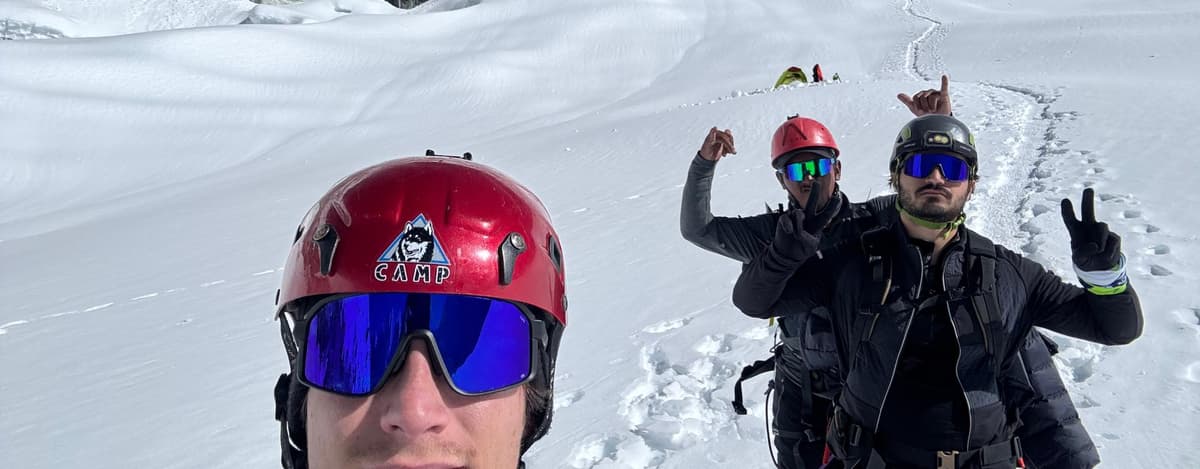
The Glacier, Headwall and Summit Ridge
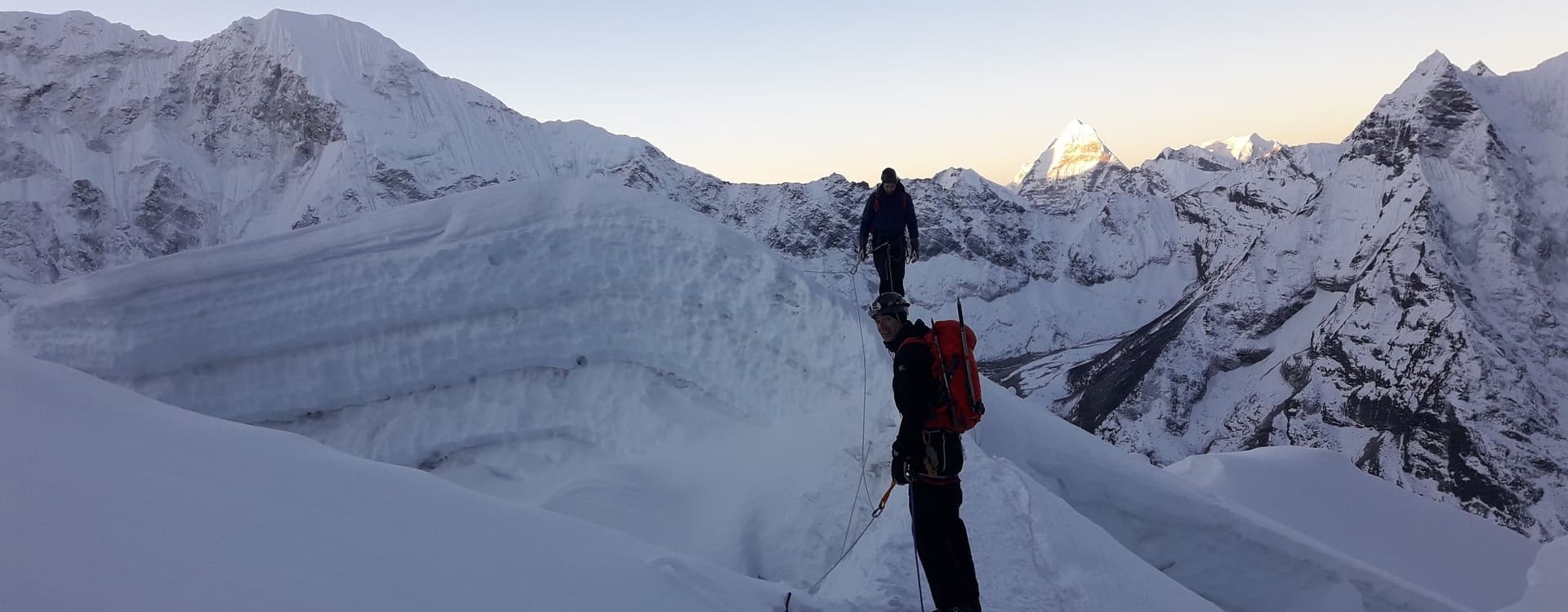
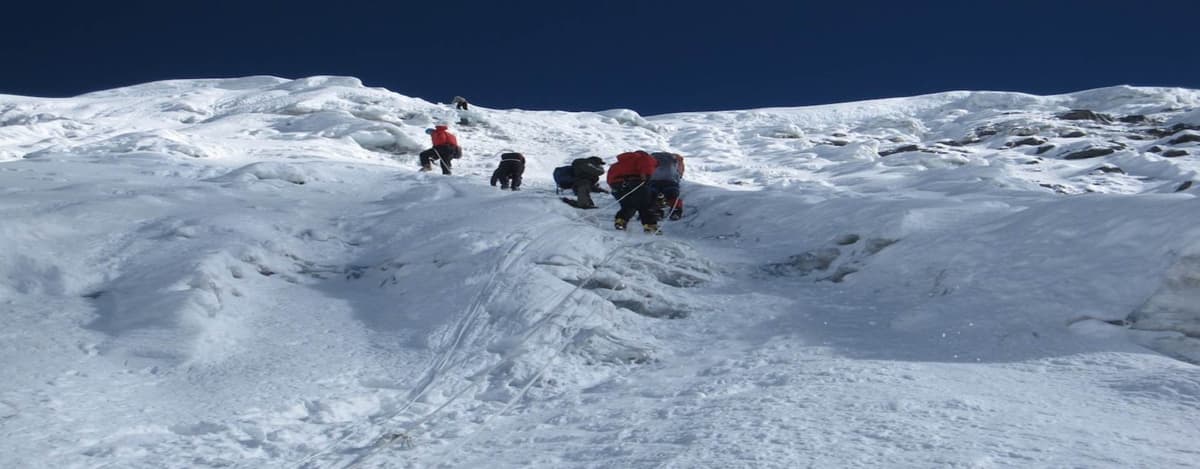
Above the climbing camps, the route may include rocky scrambling, glacier travel, crevasse hazards, fixed-line ascent and an exposed ridge. The headwall is often described as around 40–50 degrees on sections of the standard route, but that is an indicative description, not a guaranteed gradient for every season. Snow and ice can substantially change the climbing experience.
An ascender, crampons, ice axe and appropriate rope systems can be required on the steep sections, with the climbing guide determining the actual methods used. Strong summit-day performance is not only about reaching the highest point. The descent may require equal or greater concentration because climbers are tired, the rope sections may be busy and conditions may have changed since the ascent.
For a deeper description of the technical stages, see the Island Peak summit-day route guide. Its examples may use a different starting camp from Accessible Adventure's standard 16-day package.
Technical Skills Worth Practising Before Island Peak
Island Peak combines familiar trekking movements with tasks that benefit from supervised mountain instruction. Four areas deserve particular attention:
- Crampon technique: efficient foot placement on firm or steep snow and ice, including appropriate flat-footing and front-pointing under instruction.
- Fixed-rope movement: understanding how to use an ascender, manage carabiner transitions and follow the guide's ascent and descent systems.
- Glacier awareness: maintaining rope-team spacing, following commands and recognizing that snow bridges and crevasses cannot be assessed by appearance alone.
- Composure on exposed ground: moving deliberately and communicating clearly when cold, tired or uncomfortable with height.
A climbing gym can build some strength and movement confidence, but it cannot replicate crevasse terrain or high-altitude rope systems. If possible, practise with a qualified mountaineering instructor before Nepal. On-trip instruction should reinforce preparation, not become a substitute for it.
Island Peak Training Plan: A 12–16-Week Preparation Framework
Our preparation guidance recommends beginning 12–16 weeks before departure. It uses a broad 80% lower-intensity aerobic / 20% higher-intensity training split, with about four to five sessions per week of running, cycling, rowing or hiking as fitness permits. These figures are a practical planning framework, not a universal medical or coaching prescription. Training volume should be scaled to the climber's current fitness, previous injuries and recovery needs.
Endurance and Loaded Hiking
The programme emphasizes progressively longer, conversational-pace aerobic sessions and a weekly hike with an 8–12 kg pack over approximately five to seven hours where appropriate. The purpose is to become comfortable with sustained climbs, descents and consecutive days of movement rather than to maximize speed. Stair climbing with a loaded pack is another training option when steep trails are unavailable.
Strength, Stability and Descent Control
Suggested strength exercises include squats, lunges, step-ups, single-leg deadlifts and Bulgarian split squats for leg strength, alongside planks, dead bugs and Pallof presses for core stability. Controlled downhill movement matters because the technical descent may take place after a long and tiring ascent. Upper-body and grip work also help with handling climbing equipment, though they do not replace instruction in safe rope systems.
Technical Practice and Recovery
We recommend arranging a one-day supervised mountaineering skills course before departure where possible, particularly for someone who has never worn crampons or handled an ascender. Practise boots, harness adjustment, balance and rope-system communication under the supervision of a qualified instructor. Increase workload gradually, include recovery days and avoid arriving in Nepal with an avoidable training injury.
For a longer exercise progression, see Accessible Adventure's Island Peak fitness and skills training plan. The booked trip's schedule should determine how much fitness and experience you need, rather than the reverse.
Island Peak Equipment: Clothing, Technical Gear and Fit
Equipment for Island Peak falls into trekking kit and technical mountaineering kit. These are our preparation specifications; the final departure checklist must confirm exactly which items are supplied, available for rent or required from you.
Trekking and Personal Clothing
- Waterproof trekking boots, trekking poles and suitable walking socks for the Khumbu approach.
- Moisture-wicking base layers, insulating mid-layers, waterproof jacket and trousers, and warm outer insulation.
- A sleeping bag with a suggested rating of at least −10°C; the actual specification should match expected camp conditions and the operator's instructions.
- A reliable headlamp with spare batteries, wraparound UV-protective sunglasses and sun protection. Our checklist specifies UV400 sunglasses and SPF 50+ sunscreen.
Technical Climbing Equipment
- Insulated mountaineering boots compatible with the crampons required on the route. Our reference checklist specifies double-insulated boots rated to −40°C; confirm the actual boot requirement for your departure before buying or renting.
- Twelve-point crampons, a climbing harness, climbing helmet, ice axe and an ascender (jumar).
- Our equipment reference specifies at least three locking carabiners and a suitable descent or belay device; the climbing guide must confirm the system and equipment specification.
- Insulating liner gloves and warm expedition mitts, gaiters and suitable eye protection for snow and ice.
An indicative equipment-rental budget is US$100–200 for a technical-gear rental kit for an expedition, with rentals commonly sourced in Kathmandu or Chhukung. This is a planning estimate rather than a current shop quotation. Boot fit, crampon compatibility and personal gear checks matter more than choosing the lowest rental price. For further detail, consult the Island Peak equipment and summit packing guide.
Island Peak Climbing Permits and Reference Fees
Island Peak climbing typically involves the applicable climbing authorization, Sagarmatha National Park entry arrangements and local Khumbu entry requirements. The figures below are our published planning references. They are not a promise of current statutory fees or a binding package quote; confirm the applicable charges for your departure.
| Permit or charge | Published reference amount |
|---|---|
| Island Peak climbing permit — spring (March–May) | US$250 per person |
| Island Peak climbing permit — autumn (September–November) | US$125 per person |
| Island Peak climbing permit — winter (December–February) | US$70 per person |
| Sagarmatha National Park entry | US$30 per person |
| Khumbu local entry fee | Approximately US$20–25 per person, plus 13% VAT (earlier reference estimate) |
| Climbing-group waste/garbage deposit | Approximately US$250 per expedition group, subject to the applicable refund conditions |
The Trekking Agencies' Association of Nepal's published peak-fee table lists the same spring, autumn and winter climbing-permit amounts for Imja Tse. Other fees are administered separately and can change. The Khumbu Pasang Lhamu municipality publishes Trek-Card charges in Nepalese rupees; therefore, do not assume a previous dollar conversion or VAT estimate remain the exact amount payable on your departure.
Before travel, ask Accessible Adventure which permits and deposits it arranges, which charges are included in the package, and whether any fee has been revised. Gokyo and Island Peak are in the Everest/Khumbu region. Confirm any route-specific permissions for a combined itinerary rather than assuming permits from an unrelated conservation area apply.
Budgeting for Island Peak Without Confusing a Guide with a Quotation
For preliminary budgeting, a broad reference is US$2,000–3,500 per person for fully supported 16–18-day Island Peak expeditions. This is an indicative market-planning range, not the selling price of Accessible Adventure's specific 16-day trip. The current package price, offer terms, inclusions and exclusions must come from the Island Peak Climbing trip page or a dated written quotation.
Other published planning estimates include the following amounts. They can change by supplier, season and date:
- Domestic Lukla flights: US$175–220 per person, each way, as a reference estimate.
- Helicopter transfers: approximately US$450–550 per person, each way, as a reference comparison; helicopters are also weather-dependent and should not be represented as eliminating flight disruption.
- Teahouse lodging: US$8–25 per night, with meals estimated at US$30–45 per day.
- Guides and porters: indicative component examples are US$30–50 per guide per day and US$20–30 per porter per day, without establishing current wages or package inclusions.
- International flights: a reference range is US$600–1,400 from Europe or North America, depending on route and season.
- 30-day Nepal visa: a published planning estimate was US$50; confirm your nationality's current rules and official fee.
- All-in international travel budget: a broad reference is US$4,500–7,000 depending on flights, equipment and spending choices.
These are indicative planning estimates, not current market quotations. A practical comparison should separate the package quote from personal equipment, possible rental, insurance that explicitly covers technical climbing at 6,189 m, gratuities, additional food or drinks, and costs from changed flight or mountain conditions. For broader price categories, read the Island Peak cost breakdown.
Spring, Autumn and Summit-Weather Decisions
Spring (March–May) and autumn (late September–November) are the principal planning seasons, with April, early May and October often preferred. In general, climbers can expect longer daylight during spring and often clear post-monsoon visibility in autumn, with colder nights later in the year. These are useful planning patterns, not forecasts or guarantees of favourable summit conditions.
Headwall snow, glacier conditions, wind and visibility can differ substantially between departures. Fresh snow or a change in the fixed-line route can alter the technical challenge. Monsoon and midwinter attempts demand different risk assessments and are not substitutes for choosing an ordinary spring or autumn departure. Lukla flight weather should be considered separately from weather on the summit.
For a comparison of the seasons, see the Island Peak spring-versus-autumn guide. Confirm a particular date's transport routing, guide support and weather contingencies with the operator.
Altitude and Acclimatization: What Fitness Cannot Guarantee
Acclimatization is important on the journey through Namche and Dingboche before entering the higher mountain camps. That principle is worth preserving: altitude response can differ even among people with similar fitness. As elevation rises, air pressure falls and less oxygen is available with each breath; atmospheric oxygen concentration itself does not fall to half its sea-level percentage.
Headache, nausea, loss of appetite, dizziness and unexpected fatigue may indicate altitude illness. Breathlessness at rest, confusion or loss of coordination are especially concerning and require urgent assessment. Participants should report symptoms to their guide rather than trying to continue to protect a summit plan. Worsening illness can require stopping ascent, descending and emergency medical care.
A fixed pulse-oximeter reading should not be treated as a universal go/no-go threshold: oxygen saturation varies with elevation and individual circumstances. Medication, including acetazolamide, should be discussed with a qualified clinician rather than started solely from online dosage advice. For medically grounded preparation, consult the CDC guidance on altitude illness and discuss personal risk factors before travelling.
How to Assess a Climbing Operator
Guide experience, acclimatization planning, rope decisions and clear turnaround rules are central considerations when choosing an expedition. An impressive total of company summits is less informative than knowing who will actually lead your group and how the support arrangements work on your dates.
- Assigned climbing guide: ask about the actual guide's relevant Island Peak experience, training and familiarity with changing conditions.
- Summit-day support ratio: a useful discussion benchmark is one climbing guide for three to four clients. This is not a guaranteed staffing ratio; ask for the actual guide-to-climber arrangement for your departure.
- Rope and equipment systems: establish who assesses or installs any fixed lines, how equipment checks happen and what technical practice is included.
- Acclimatization and camp schedule: verify the actual overnight sequence, particularly Base Camp versus High Camp.
- Weather and turnaround decisions: ask who makes the final decision and how a participant who cannot continue is supported.
- Emergency arrangements and insurance: clarify communication, evacuation coordination, costs and the limitations of weather-dependent helicopter operations.
No guide or operator can guarantee a summit. The useful distinction is whether a company can explain its responsibilities and limits clearly before the expedition begins.
Island Peak Alone, with Everest Base Camp, or with Mera Peak?
These options suit different objectives. A summit-focused Island Peak itinerary emphasizes preparation and the climb itself. A longer combination can add Everest Base Camp or the Gokyo region, which means additional days, a different overnight sequence and a different price. A general planning range is 18–22 days for Island Peak–Everest Base Camp combinations; Accessible Adventure's specific EBC, Gokyo Lakes and Island Peak package is a separate product.
Combined Mera Peak and Island Peak expeditions are often planned as a longer 22–26-day category in our general comparison. Those general figures should never be substituted for the actual departure plan. Compare Accessible Adventure's Mera Peak and Island Peak climbing package on its own terms.
For a focused objective, the company's 16-day Island Peak package does not automatically include Everest Base Camp or Gokyo Lakes. Decide based on available time, acclimatization needs, previous experience and what you most want to accomplish.
Final Preparation Checklist
- Build endurance and strength using a realistic version of the 12–16-week training framework.
- Practise crampons, ascenders and rope-team communication with qualified supervision when possible.
- Confirm the exact personal gear, rental options and equipment supplied for your departure.
- Discuss previous altitude experience and relevant health concerns with a qualified clinician.
- Ask for confirmed permits, camping arrangements, guide allocation, insurance requirements and turnaround procedures.
- Allow for changing mountain conditions and Lukla transport disruptions.
- Use the current package itinerary and written quotation rather than treating an educational guide as a booking contract.
Island Peak is rewarding precisely because it asks more of a climber than a typical high-altitude trek. Understanding the route, training properly, checking technical equipment and making sensible decisions are part of the experience. When you are ready to compare dates and services, review Accessible Adventure's guided Island Peak Climbing expedition in Nepal for the company's actual 16-day itinerary, price, inclusions and enquiry options.
About the author: Himal Shrestha
Government-licensed trekking guide & travel writer · Accessible Adventure
Himal Shrestha is a government-licensed trekking guide and travel writer with 10 years and counting in the mountains. Trained in first aid and hospitality, he brings firsthand trekking experience to his articles on Nepal, itinerary planning, and travel preparation for Accessible Adventure.
Meet Himal ShresthaRelated Articles
Explore more stories and guides from the Peak Climbing collection