
Your adventure guide is here
Your adventure guide is here
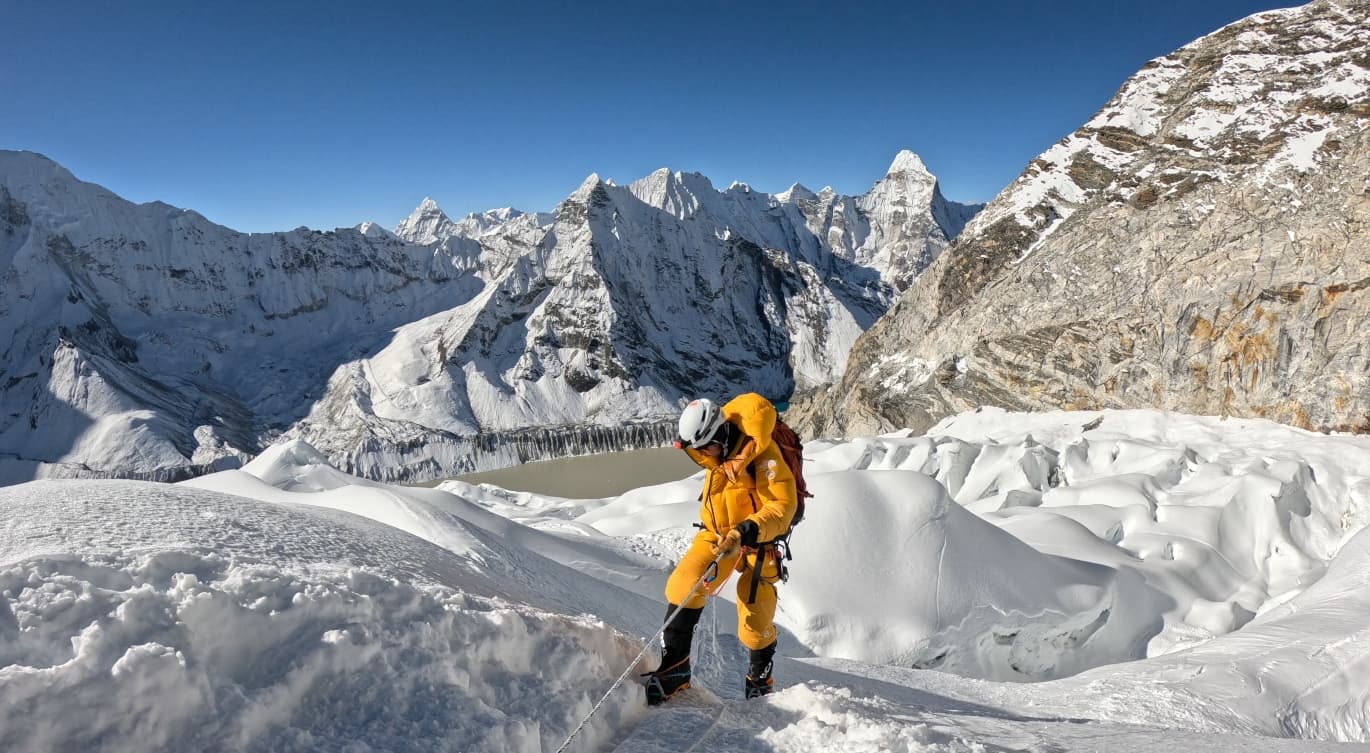
Every season, a handful of climbers arrive at Island Peak base camp having trained hard for the wrong thing. They can run ten kilometers without stopping. They have a strong bench press. And then, on the second consecutive day of climbing at altitude with a loaded pack, their legs give out long before their lungs do. Fitness for Island Peak is specific, and general fitness, while a good starting point, does not automatically transfer to what the mountain actually demands.
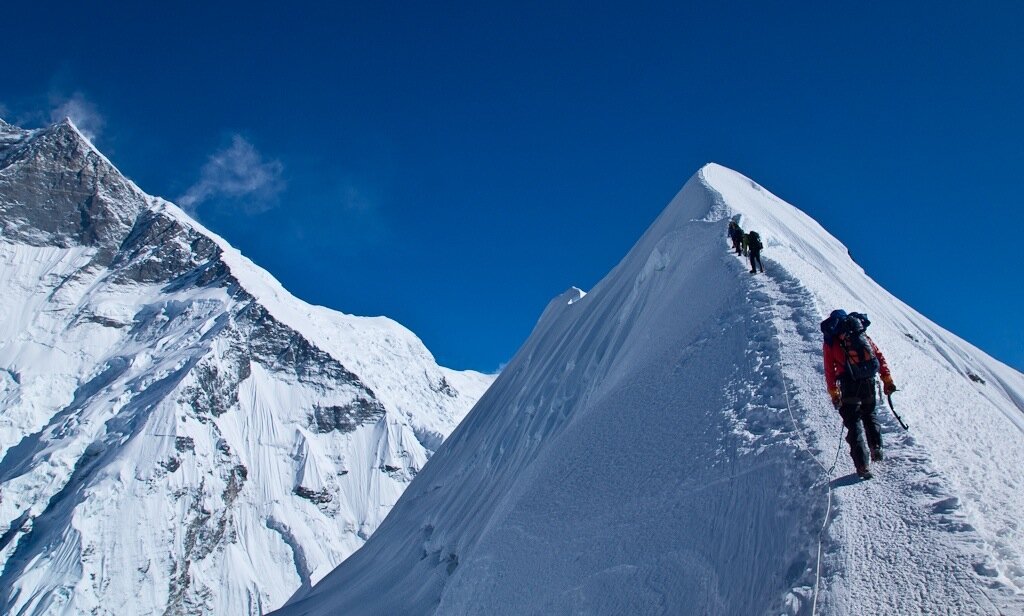
Island Peak, known locally as Imja Tse, sits at 6,189 meters in Nepal's Khumbu region. It is officially classified as a trekking peak, which undersells the physical and technical demands involved. Reaching base camp alone requires seven to nine days of sustained daily walking at altitude. Summit day itself runs 10 to 14 hours round trip, crossing a glacier, ascending a fixed-rope headwall, and covering an exposed summit ridge, all in temperatures well below freezing.
None of this is a reason to be intimidated. It is a reason to train specifically and honestly, starting early enough that the work actually compounds. This guide lays out exactly what that training should look like: how far in advance to start, what kind of cardio and strength work actually matters, how to structure a hiking progression, which technical skills are worth learning before Nepal rather than at base camp, and how to use the final weeks before departure without undoing months of preparation.
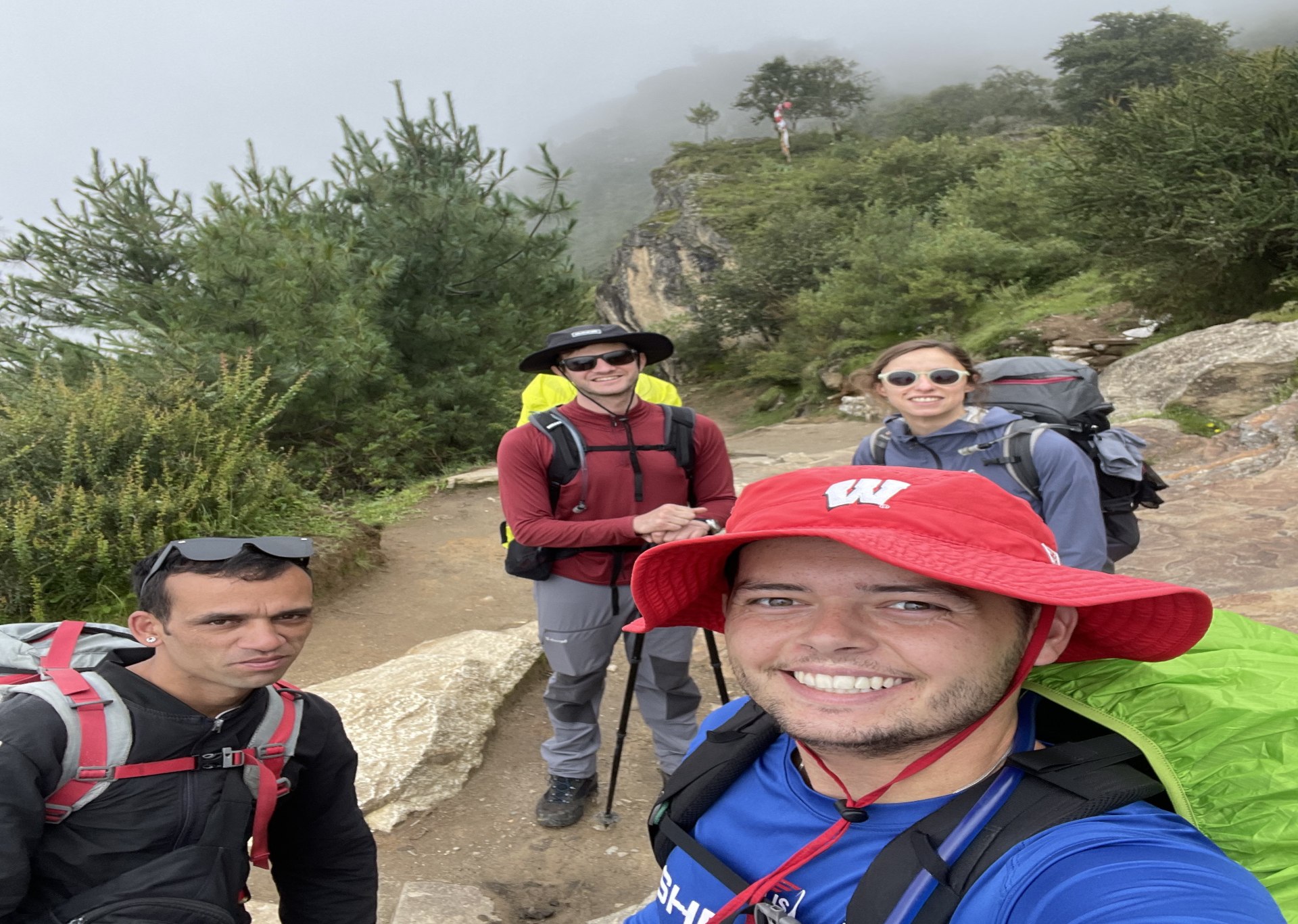
This point deserves to be made clearly before anything else, because it is the single most common misunderstanding among first-time climbers.
Someone with the cardiovascular fitness to run a marathon is not automatically prepared to summit Island Peak. Marathon training builds a specific kind of aerobic engine optimized for a single sustained effort on flat or gently rolling terrain, at sea level, over a few hours. Island Peak demands something different: the ability to ascend and descend several thousand feet of elevation on consecutive days, carrying a loaded pack, at altitudes where oxygen availability drops significantly, and to do this while managing accumulated fatigue rather than fresh legs.
This is why climbers with strong general fitness sometimes struggle more than expected on the Everest Base Camp approach trail, while climbers with more modest overall fitness but a specific hiking and load-carrying background often find the trek more manageable than anticipated. The training that matters most closely mimics the actual demands of the route: uphill walking with a pack, repeated day after day, at increasing intensity as the departure date approaches.
Strength matters too, but in a specific way. Climbers do not need to lift heavy weights in the way a powerlifter would. They need functional leg and core strength that holds up under repeated loaded ascents and descents, stabilizes the body on uneven and icy terrain, and supports the specific movements involved in crampon walking and rope work on summit day.
Timing matters more than most first-time climbers expect, and the honest answer depends on a person's starting fitness level.
For climbers who already exercise regularly, hike often, and have some experience with multi-day trekking or backpacking, three to four months of focused, Island Peak-specific training is generally sufficient. This assumes a base level of cardiovascular fitness already exists and the training block is primarily about converting that fitness into the specific hiking and load-carrying endurance the mountain demands.
For climbers starting from a more sedentary baseline, or without recent hiking experience, six months is a more realistic and considerably safer starting point. This allows for a gradual build rather than an aggressive ramp that risks injury, and it gives enough time to properly test gear, break in mountaineering boots, and build genuine confidence rather than simply surviving the final weeks before departure on adrenaline.
A useful rule for structuring the buildup, regardless of starting point, is to increase weekly hiking time, distance, or elevation gain by roughly 10 percent per week rather than making large jumps. This progressive approach reduces injury risk significantly compared to sudden increases in training volume, and it mirrors the kind of steady load progression the body will need to handle once on the mountain itself.
Regardless of starting fitness, nobody should begin serious training in the final month before departure. That window should be reserved for tapering, not building, and arriving at Lukla already fatigued from a rushed final training push is a common and entirely avoidable mistake.
Cardiovascular training forms the foundation of Island Peak preparation, but the type of cardio matters as much as the volume.
Running, cycling, and swimming all build a useful aerobic base and are worth including two to three times per week during the early months of a training block. These activities improve heart and lung efficiency in ways that transfer generally to high-altitude exertion, even though none of them closely mimic the specific demands of the mountain itself.
As training progresses, the balance should shift toward activities that more directly replicate what the body will be doing in Nepal. Stair climbing, ideally with a weighted pack, is one of the most useful and accessible ways to build climbing-specific conditioning, since it combines cardiovascular effort with the repeated leg loading that hiking at altitude demands. A stair machine at a gym works, as does a genuine stairwell or a steep local trail climbed repeatedly.
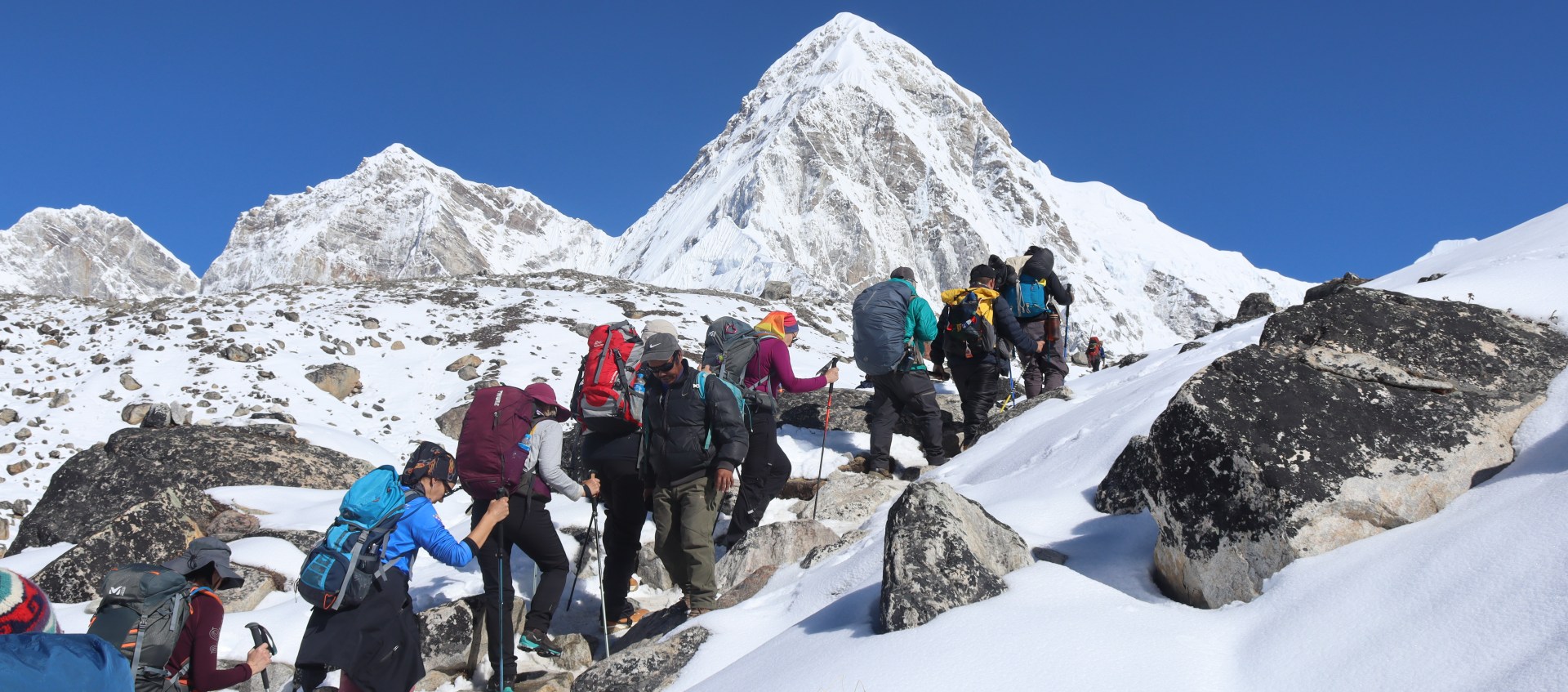
Uphill walking and hiking, again with a pack, should become the centerpiece of training as the departure date approaches. This is the single most specific and useful form of preparation available to most climbers, since it trains the exact movement pattern, muscle groups, and sustained effort profile the mountain will demand, more so than any gym-based cardio equivalent.
For climbers without easy access to hills or mountains, a weighted pack combined with a treadmill set to a steep incline is a reasonable substitute, though genuine outdoor terrain with uneven footing, when available, offers additional benefit by training balance and ankle stability that a flat treadmill surface cannot replicate.
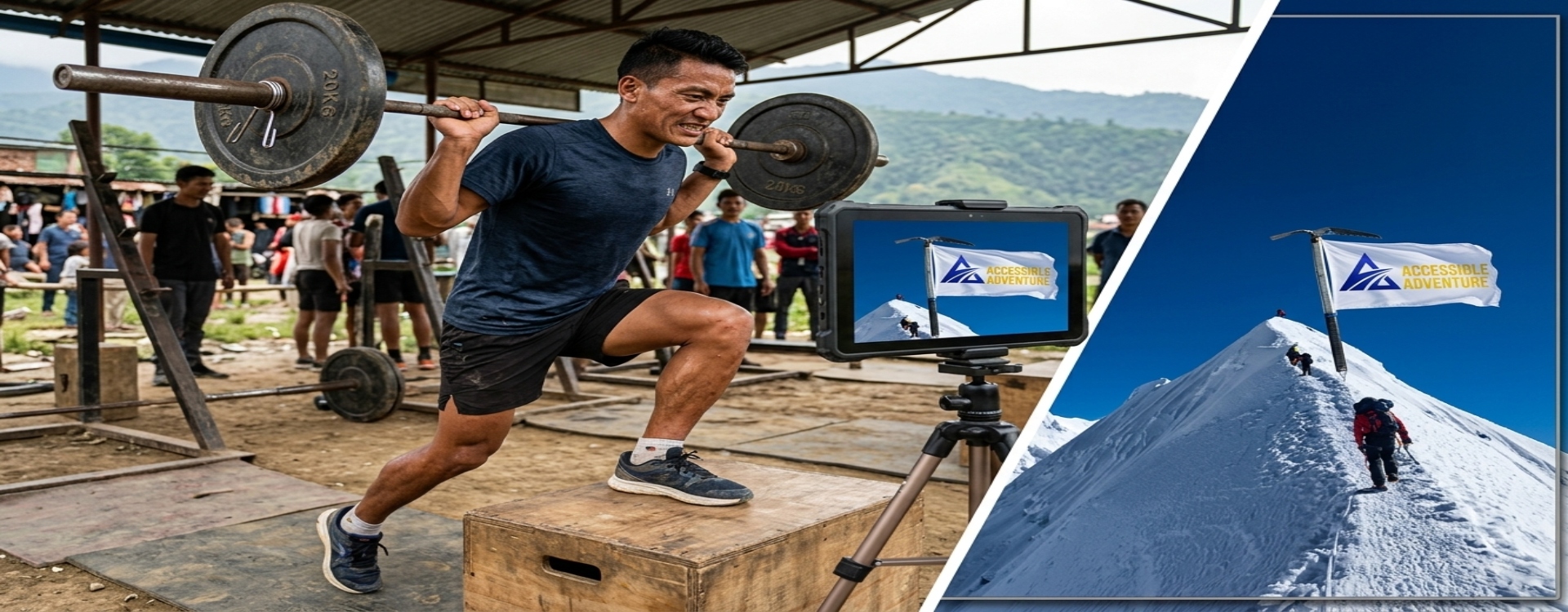
Strength work for Island Peak should be built around function rather than maximal output, with a clear focus on the legs, core, and, to a lesser extent, the upper body and grip.
Leg strength is the priority. Squats, lunges, and step-ups, ideally performed with some added resistance as strength improves, build the quadriceps, hamstrings, and glute strength needed for repeated ascents and descents over multiple consecutive days. Step-ups in particular are worth emphasizing, since the movement pattern closely resembles the repetitive elevation gain involved in trekking and in the steep sections of the Island Peak approach itself.
Core strength supports stability on uneven terrain and reduces fatigue-related injury risk during long days on the trail. Planks, deadbugs, and rotational core exercises all contribute here, and this does not need to be a large portion of a training week to be effective; twice weekly, integrated into a broader strength session, is generally sufficient.
Upper body and grip strength matter more for Island Peak than for a standard trek, because of the technical climbing involved on summit day. Using an ascender on the fixed-rope headwall, managing a harness and carabiners, and general rope handling all benefit from reasonable upper body and grip endurance, even though the climb does not require significant pulling strength in the way rock climbing might. Pull-ups, rows, and simple grip-strengthening exercises like farmer's carries are useful additions, particularly in the final two to three months of training.
Balance and stability work, often overlooked, deserves a place in a well-rounded plan. Single-leg exercises, stability ball work, or basic yoga all improve the kind of proprioception that matters on scree, moraine, and glacier terrain, where a single misstep carries real consequences.
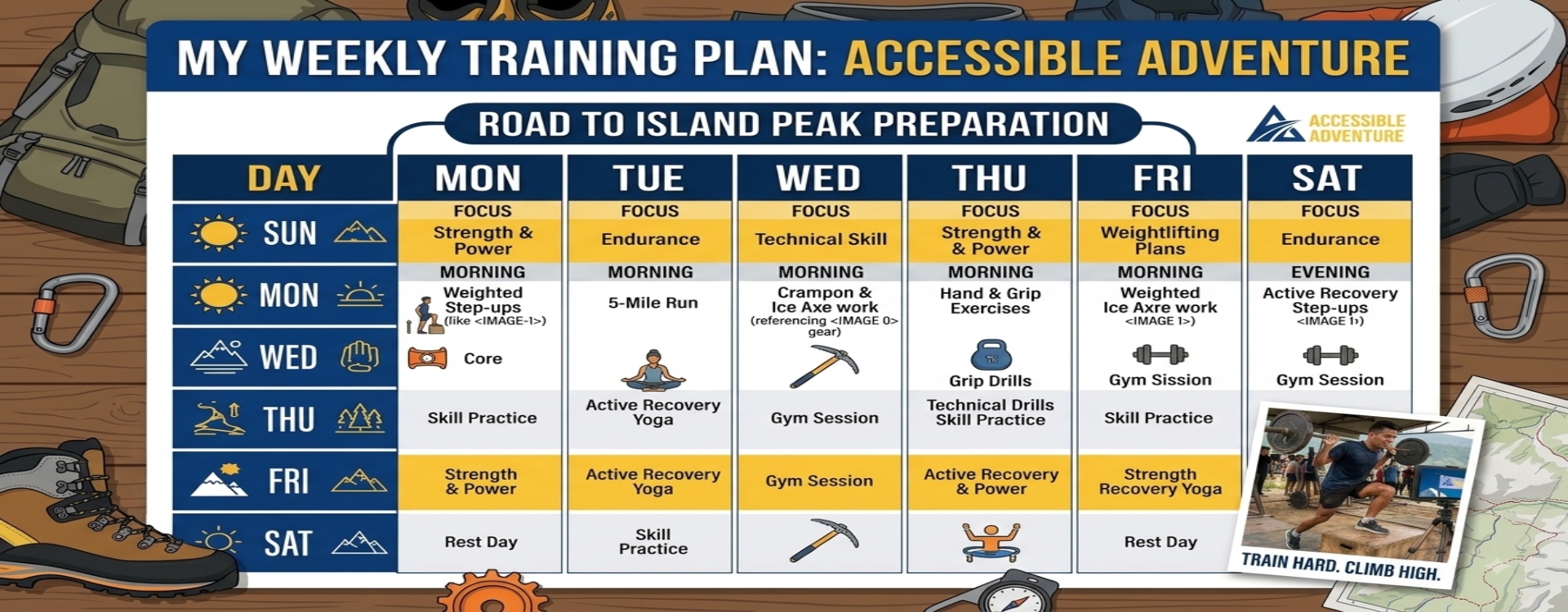
A well-structured week balances cardiovascular work, strength training, load-bearing hikes, and recovery, rather than treating every session as equally intense.
Early in a training block, three to four sessions per week is a reasonable starting point, mixing general cardio, foundational strength work, and one longer hike without significant additional load. As the plan progresses, particularly in the two to three months before departure, this should shift toward four to six sessions per week, with increasing emphasis on loaded hiking and back-to-back training days that simulate the demands of consecutive trekking days in Nepal.
A sample structure in the month before departure might include a loaded uphill hike of significant elevation gain on one day, followed immediately by a second, somewhat lighter hike the next day to simulate the cumulative fatigue of a multi-day approach without a rest day in between. This back-to-back pattern is genuinely important preparation, since it is precisely what the EBC and Island Peak approach trail demands, and it also builds the psychological resilience needed to push through a demanding day while already tired from the one before it.
At least one full recovery day per week should be built into every phase of training, regardless of how motivated a climber feels. Overtraining in the months before a major climb is a real risk, and arriving at Lukla with a nagging injury from an overly aggressive training block is a worse outcome than arriving slightly less peak-fit but genuinely healthy.
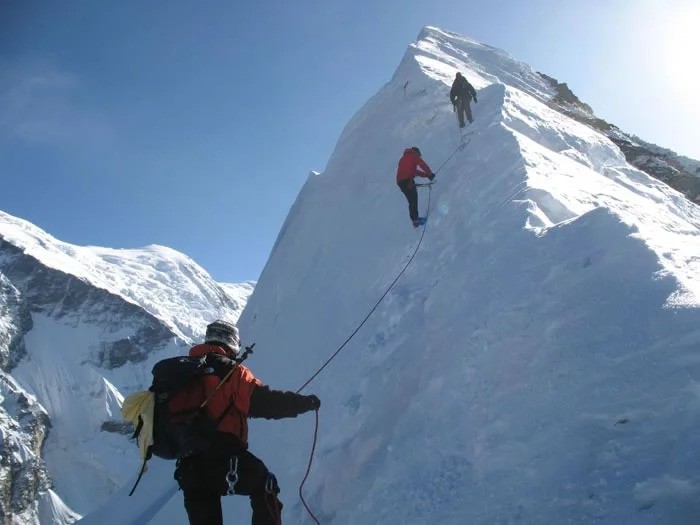
Load-bearing hikes deserve special attention because they are, more than any other single training element, what most closely predicts how a climber will handle the actual approach trek.
A daypack weight of around 20 pounds, roughly nine kilograms, is a reasonable target for training hikes, since this approximates what most climbers carry during the actual trek to Island Peak base camp. Training with this weight, rather than an empty pack, ensures the specific muscles and joints involved are properly conditioned before departure rather than encountering the added load for the first time in Nepal.
Elevation gain matters more than raw distance when selecting training hikes. A shorter hike with 3,000 feet of elevation gain, roughly 900 meters, provides more relevant training stimulus than a longer, flatter route covering more total distance. Climbers without access to significant elevation locally can substitute stair climbing or a steep treadmill incline, though genuine hills, where available, remain the gold standard for this kind of training.
Consecutive-day hiking, discussed above, is worth prioritizing specifically in the final months of training. A single big hike followed by a full recovery period does not replicate the demands of a multi-day trek nearly as well as two moderately hard days back to back. This is uncomfortable to train for and is precisely why so many climbers skip it, and precisely why it matters.
Footwear should be tested extensively during these training hikes. Any boots intended for the trekking portion of the trip, separate from the mountaineering boots used above the crampon point, should be fully broken in through repeated use well before departure. Blisters and hot spots discovered on a training hike are inconvenient. The same discovery on day three of the actual trek, with no opportunity to swap footwear, is a genuine problem.
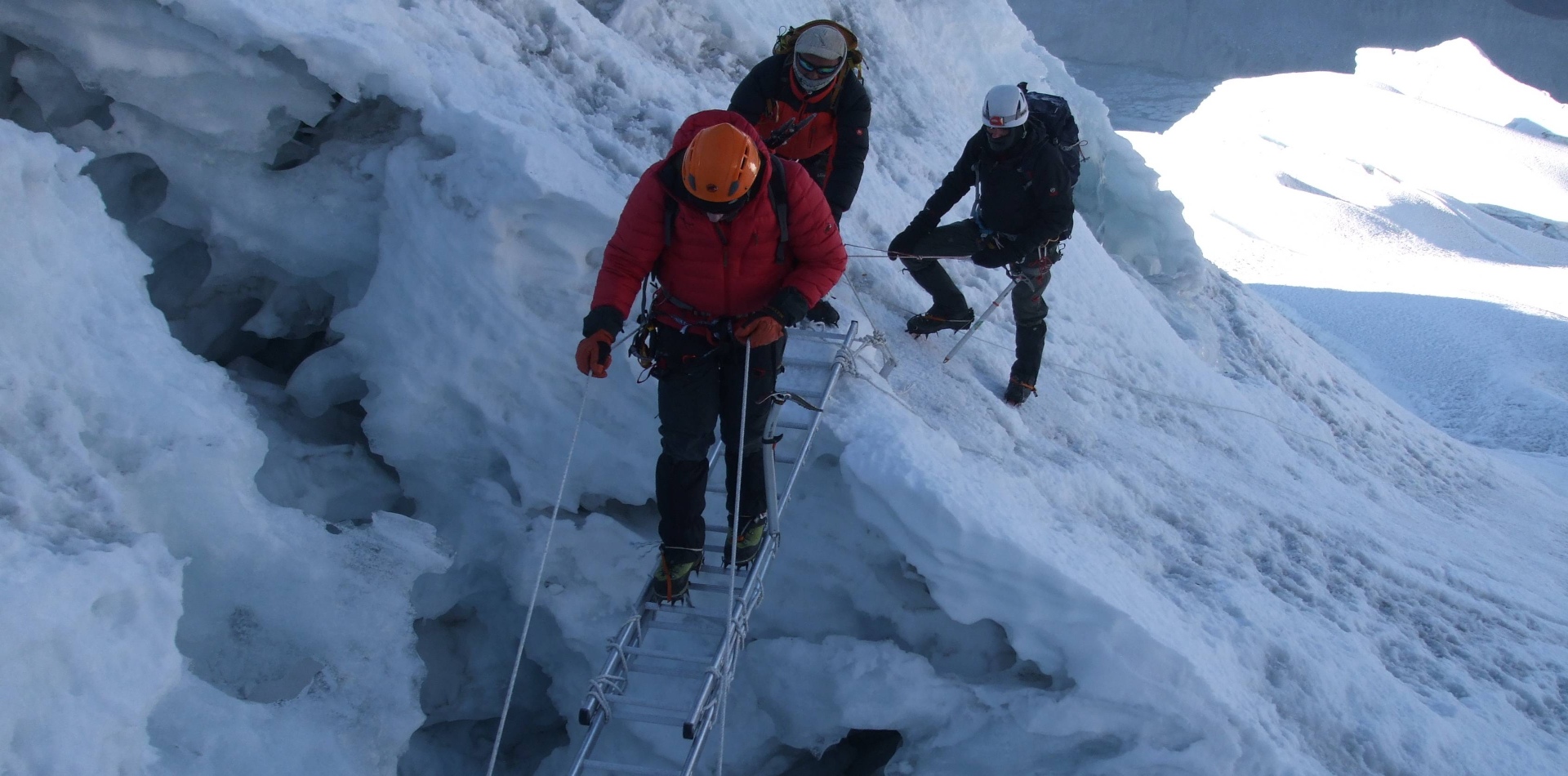
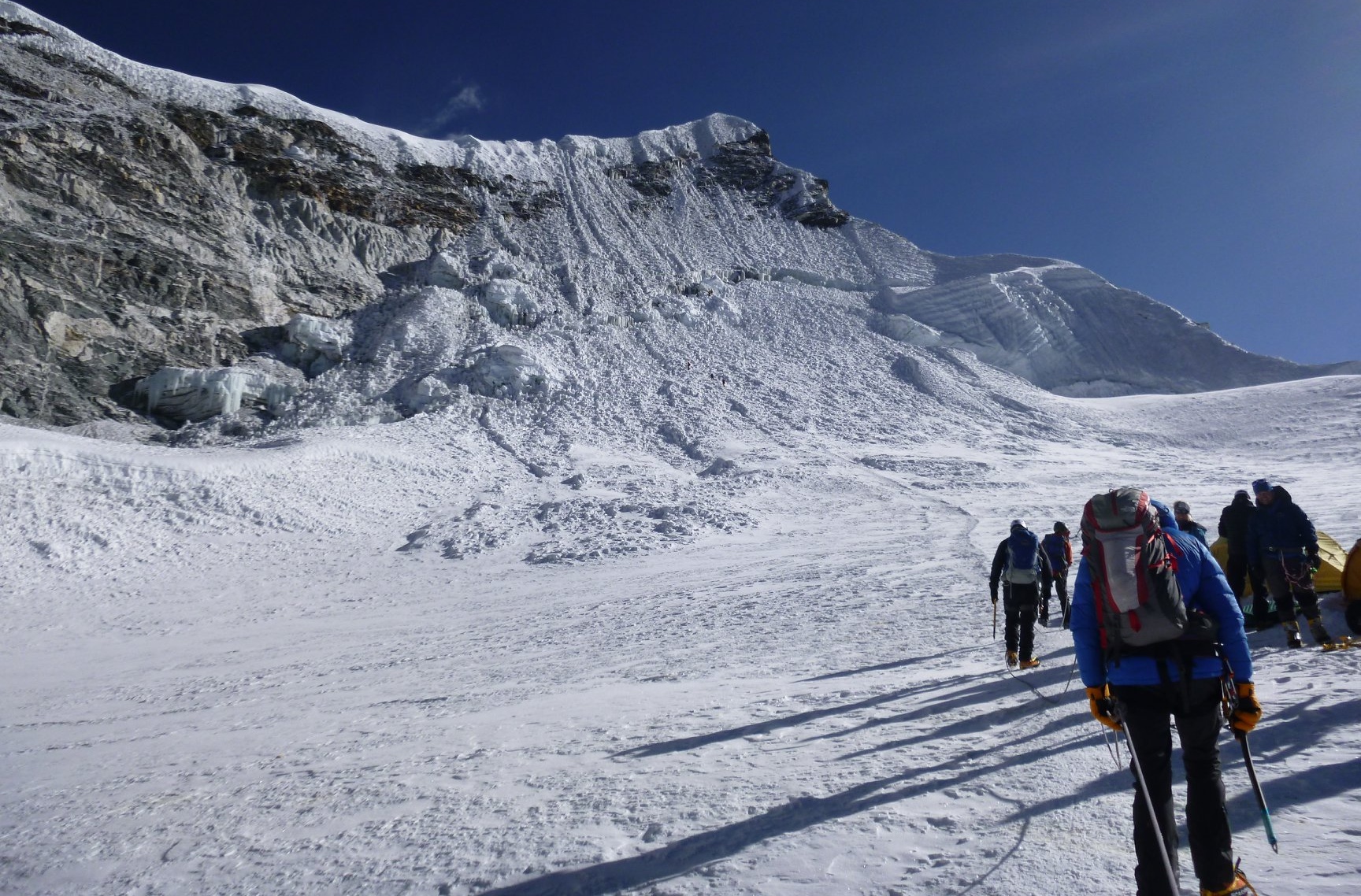
Island Peak involves genuine technical climbing on summit day: crampon walking, ice axe use including self-arrest technique, ascender operation on the fixed-rope headwall, and basic rope and harness familiarity. Guides teach all of these skills during a dedicated training day at Island Peak base camp, and it is entirely possible to summit successfully having learned everything there. That said, arriving with even a basic working knowledge of these skills meaningfully reduces the learning curve during an already demanding trip, and increases both confidence and safety margin on summit day itself.
Self-arrest, the technique of using an ice axe to stop a fall on a snow or ice slope, is widely considered one of the most important mountaineering skills to have some familiarity with before a climb like this. It works from several different falling positions and genuinely becomes reliable only through repetition, ideally practiced on a safe, moderate snow slope before departure. A single afternoon at a ski resort or accessible winter mountain environment, working through this technique under supervision, provides real value that is difficult to fully replicate in a rushed base camp training session shared with an entire climbing group.
Crampon walking technique, the second priority after self-arrest, benefits from similar advance practice. Learning to walk confidently and efficiently in crampons, including basic front-pointing technique for steeper sections, reduces both fatigue and injury risk on summit day. Some climbers find it useful to first practice the underlying footwork and balance without crampons on a snow slope, since removing the crampons initially helps develop clean movement patterns before adding the equipment itself.
Handling an ascender, the mechanical device used to climb the fixed rope on Island Peak's headwall, is worth understanding conceptually even without direct practice, since the actual base camp training session will cover this in more detail. Threading a rope through an ascender at home, understanding how it locks against downward force and releases for upward movement, and practicing clipping and unclipping while wearing the gloves intended for summit day removes a layer of unfamiliarity that otherwise gets compressed into a single training session in Nepal.
For climbers who want more structured preparation than self-directed practice can offer, a short basic mountaineering course, often five to ten days in length, is available in many regions with accessible mountain terrain, and covers crampon technique, ice axe use, rope handling, and basic safety procedures under professional instruction. This is not a requirement for Island Peak, which is deliberately designed as an accessible entry point into higher-altitude climbing, but it is a genuinely useful option for climbers who want more hands-on preparation than videos and solo practice can provide.
It is worth being honest about the limits of physical training when it comes to altitude itself, since this is an area where preparation sometimes creates false confidence.
No amount of sea-level fitness training fully prepares the body for the specific physiological effects of reduced oxygen availability above 4,000 and 5,000 meters. Cardiovascular fitness helps generally, since a stronger aerobic base tends to handle the added strain of hypoxia somewhat better, but individual susceptibility to altitude sickness varies significantly and does not correlate cleanly with overall fitness level. Fit, strong climbers can still experience significant altitude sickness, while less conventionally fit climbers sometimes acclimatize with relatively few symptoms.
What training can do is ensure that when the body is already managing the added strain of altitude, it is not also managing an entirely unconditioned musculoskeletal system. This distinction matters. Fitness training reduces the risk of physical fatigue-related problems, injury, and general exhaustion. It does not meaningfully reduce the risk of acute mountain sickness, which is primarily addressed through the itinerary's built-in acclimatization schedule, proper hydration, a sensible ascent rate, and, where appropriate, preventive medication discussed with a doctor before departure.
Climbers with access to altitude training facilities, hypoxic tents, or high-altitude locations for pre-trip acclimatization sometimes use these tools for additional preparation, and they can offer some benefit. For most climbers, however, this level of preparation is neither necessary nor accessible, and a well-structured fitness plan combined with a properly paced itinerary in Nepal itself remains the most practical and effective approach.
A few patterns show up repeatedly among climbers whose training does not translate well into a smooth trip, and most of them are easy to avoid once identified.
The first is starting too late and compressing months of necessary progression into a few frantic weeks. Fitness, and particularly the kind of durable, injury-resistant fitness this trip requires, builds gradually. A climber who begins serious training six weeks before departure, no matter how intensely, cannot replicate what four to six months of steady progression would have provided. The body needs time to adapt tendons, joints, and cardiovascular capacity, and rushing this process substantially increases injury risk right when an injury would be most costly.
The second is training only on flat terrain and assuming general fitness will carry over to steep, sustained climbing. A climber who runs regularly on flat pavement but never trains on hills or stairs often discovers, on the first genuinely steep day of the actual trek, that flat-terrain fitness does not transfer as cleanly as expected. The specific muscle groups and movement patterns used in sustained uphill walking are simply different from those used in flat running or cycling.
The third is neglecting descent-specific conditioning. Climbers tend to focus heavily on the uphill effort during training, since it feels like the harder and more obviously relevant work, but descending with a loaded pack over multiple hours places significant eccentric load on the quadriceps and knees. Training hikes should always include the walk back down, not just the climb up, since sore or fatigued legs on a descent are a common source of stumbles and minor injuries on the actual trek.
The fourth is skipping recovery entirely in an effort to maximize training volume. Overtraining syndrome, characterized by persistent fatigue, declining performance despite continued effort, and increased injury susceptibility, is a real risk for motivated climbers who treat every day as a training opportunity. A single missed rest day here and there is not a problem. A pattern of consistently skipped recovery across months of training often is.
The fifth is testing new gear, new boots, or a new diet for the first time in Nepal rather than during training. Every piece of equipment intended for the trip, from boots to backpack to trekking poles, should be used repeatedly during training hikes well before departure. The training period is the correct time to discover that a particular boot causes blisters or that a pack's fit needs adjustment, not the third day of the actual trek with no opportunity to make a change.
Physical readiness gets most of the attention in training discussions, but the mental side of preparing for a multi-week high-altitude expedition deserves its own consideration, particularly for climbers attempting their first major mountain objective.
Long training hikes, especially the back-to-back sessions discussed earlier, serve a dual purpose beyond pure physical conditioning. They build familiarity with what sustained discomfort actually feels like, and with the experience of continuing to move forward productively while tired rather than fresh. This kind of exposure, built gradually over months, translates directly into greater composure during a demanding summit day when fatigue, cold, and altitude combine to test resolve as much as fitness.
Setting realistic expectations before departure also matters considerably. Island Peak has a strong overall success rate among well-prepared, guided climbers, but weather, individual acclimatization, and unforeseen circumstances mean that summit success is never guaranteed regardless of how thorough the training has been. Climbers who understand this going in, and who define success partly in terms of the full experience rather than the summit alone, tend to handle setbacks, including a potential turnaround decision on summit day itself, considerably better than those who have mentally committed to the summit as the only acceptable outcome.
Familiarity with the guide team's decision-making process is worth understanding before the trip as well. On a mountain like Island Peak, the guide's call to turn back, whether due to weather, an individual climber's condition, or team pace, is a safety decision rather than a failure of preparation. Climbers who trust this process in advance, rather than viewing every guide decision as an obstacle to argue with in the moment, generally have both safer and more positive experiences overall.
The weeks immediately before departure require a different approach than the months of steady building that preceded them, and getting this transition right matters more than many climbers expect.
Training volume should taper, not peak, in the final one to two weeks before departure. This feels counterintuitive to climbers who have spent months building fitness and want to arrive at their sharpest, but the physiological reality is that the body needs time to recover and consolidate months of training stress before being asked to perform. Arriving in Kathmandu still sore or fatigued from a final aggressive training push undermines months of preparation rather than capping it off well.
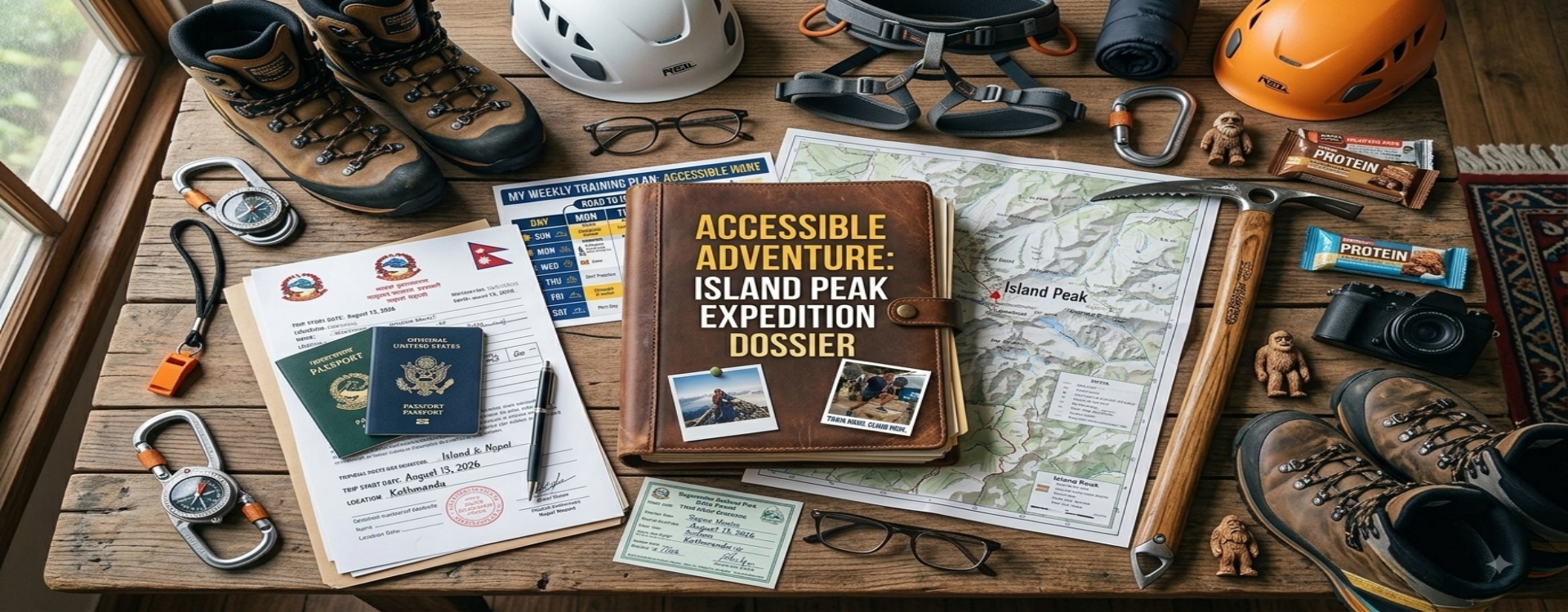
This final period is a good time to shift focus toward logistics rather than physical exertion: confirming gear, testing every piece of equipment one final time, organizing travel documents and insurance, and mentally preparing for the trip ahead. A relaxed, well-rested climber who arrives at Lukla ready to begin rather than already tired tends to perform better across the following weeks than one who trained hard right up until departure.
Sleep and nutrition deserve particular attention during this window. Consistent, adequate sleep in the final weeks supports the physiological recovery and adaptation that training has been building toward, while a stable, well-balanced diet ensures the body has the resources it needs heading into a demanding multi-week expedition. This is not the time to experiment with a new diet or supplement, but rather to reinforce the habits that supported training over the preceding months.
Hydration habits are worth establishing well before departure rather than treating as something to figure out once trekking begins. Consistent daily water intake during the training period helps the body adapt to a habit that becomes considerably more important, and considerably harder to maintain, at altitude, where thirst sensation is blunted even as fluid loss through respiration increases. Climbers who build a habit of regular, deliberate hydration during training tend to carry that habit more naturally into the trek itself, rather than needing to consciously force it for the first time while also managing altitude and physical exertion.
Iron and overall nutritional status are also worth checking with a doctor in the months before departure, particularly for climbers with any history of anemia or restrictive diets. Adequate iron levels support the body's ability to carry oxygen efficiently, which becomes considerably more relevant at altitude than at sea level. This is a simple blood test well worth arranging during the early planning stages of a training block, since correcting a deficiency takes time and is far easier to address months out than in the final weeks before departure.
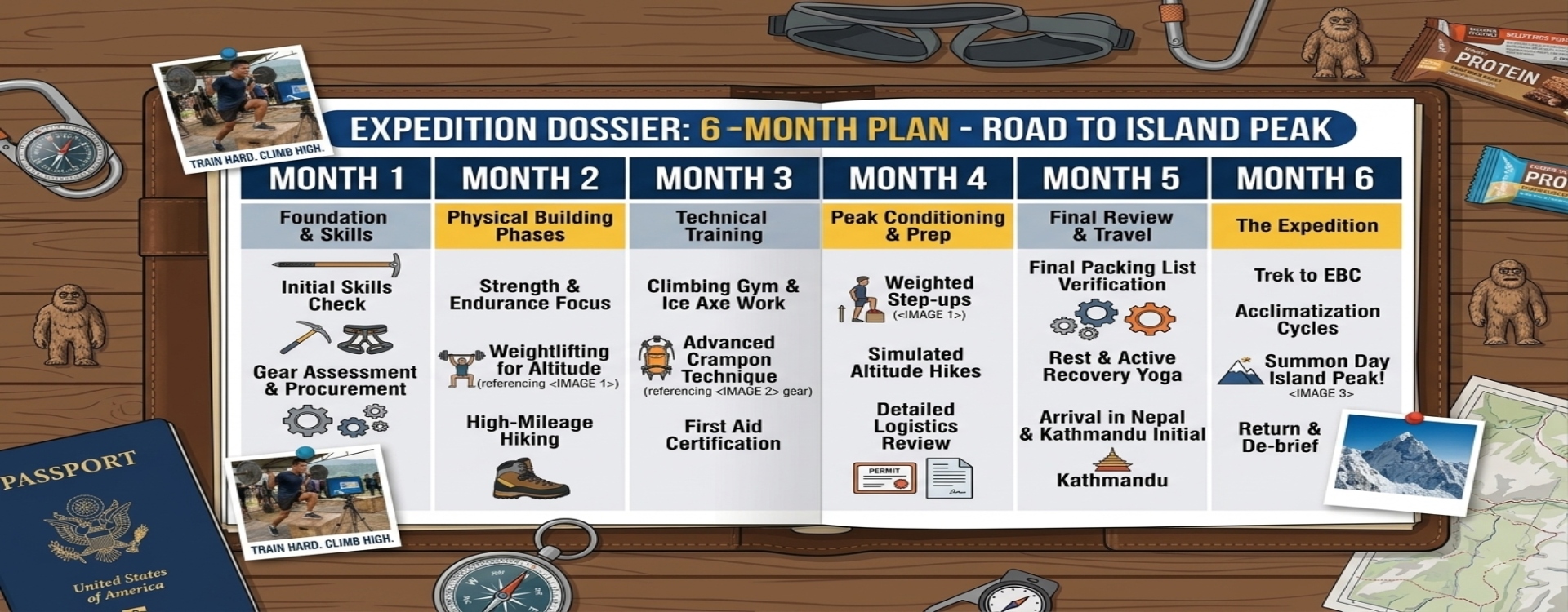
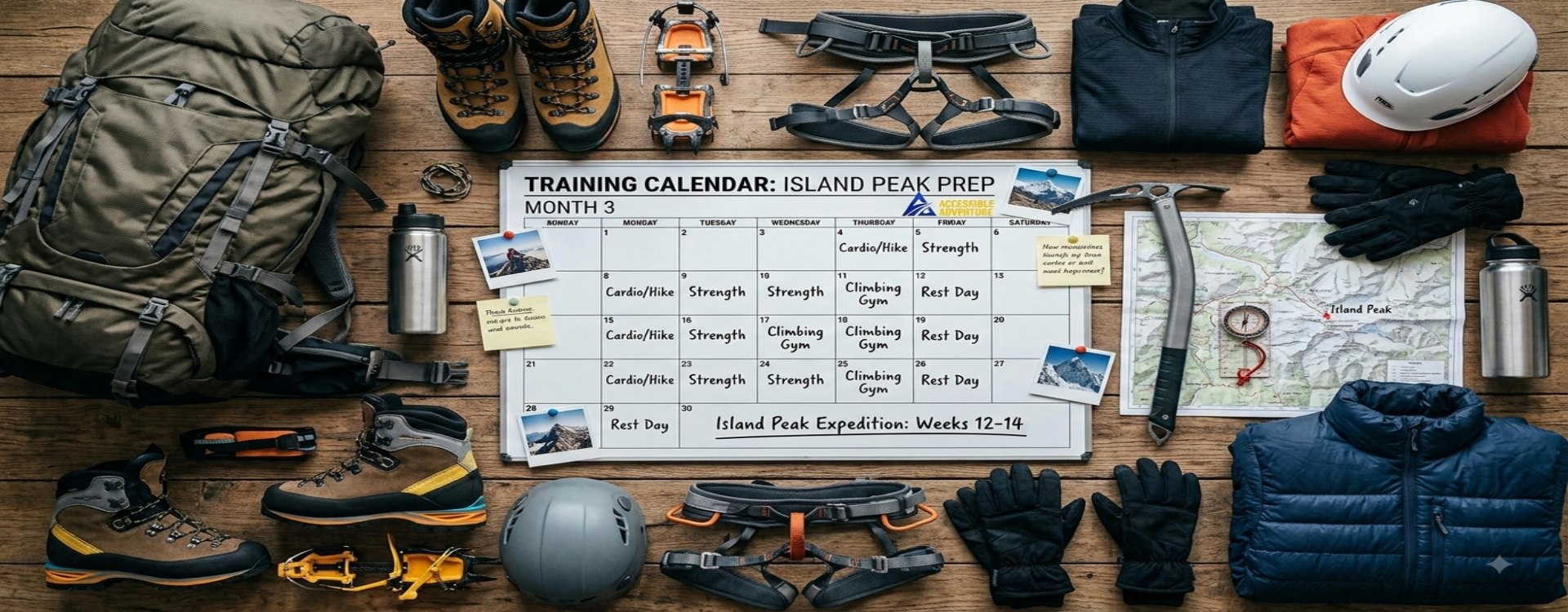
While every climber's starting point differs, a general progression across a four to six month plan illustrates how the elements above fit together over time.
In the first phase, roughly the earliest one to two months, the focus is building a general aerobic and strength base: regular cardio three to four times per week, foundational strength training twice weekly, and one moderate hike on the weekend without significant added load. This phase establishes consistency and conditions the body for the more specific and demanding work that follows.
In the middle phase, typically months two through four, training becomes more specific. Hikes increase in both frequency and load, stair climbing with a weighted pack becomes a regular fixture, and strength training shifts toward the functional leg, core, and grip work discussed above. This is also the phase where technical skill practice, such as self-arrest technique or ascender familiarity, fits naturally, since the physical base is established enough to focus additional attention on new skills without overwhelming the training load.
In the final phase, the one to two months before departure, back-to-back loaded hikes become a regular weekly feature, simulating the cumulative demands of consecutive trekking days. This is also when gear testing should be largely complete, boots fully broken in, and the overall intensity of training should begin its gradual taper toward the final two weeks of rest and preparation before departure.
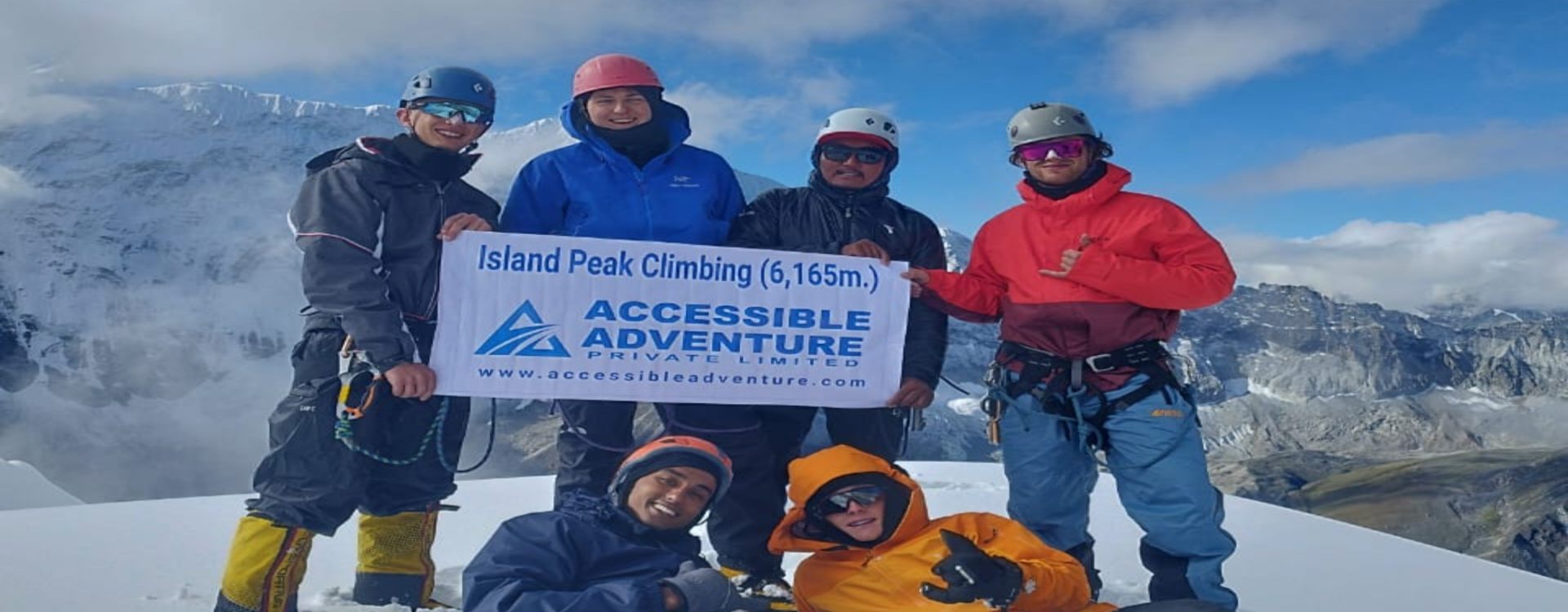
Training for Island Peak is less about becoming an elite athlete and more about becoming specifically, reliably capable of what the mountain actually asks: consecutive days of loaded hiking at altitude, functional strength that holds up under fatigue, and enough technical familiarity to move confidently through summit day. Climbers who train this way consistently report an easier, more enjoyable trip than those who arrive fit in a general sense but unprepared for the specific demands ahead.
We talk through training expectations with every climber well before departure, based on current fitness level, prior trekking experience, and however much time remains before the trip. If you are putting together a training plan and want a second opinion on whether it matches what Island Peak actually requires, reach out to us directly and we can help you build something realistic.
Three to four months of focused training is generally sufficient for climbers who already have a reasonable fitness base and some hiking experience. Climbers starting from a more sedentary baseline should plan for closer to six months, allowing a gradual build that reduces injury risk and provides enough time to properly test gear and technical skills before departure.
No. Running fitness helps build a general aerobic base but does not directly translate to the specific demands of loaded, multi-day hiking at altitude. Climbers are better served prioritizing uphill hiking with a weighted pack over pure running mileage, since this more closely mimics what the actual trek and climb require.
Loaded uphill hiking, ideally with a pack weighing around 20 pounds or nine kilograms, is the most specific and useful training activity available to most climbers. It combines cardiovascular conditioning with the exact muscle groups and movement patterns the trek and climb demand, more effectively than gym-based cardio alone.
Around 20 pounds, roughly nine kilograms, is a reasonable target that approximates what most climbers carry during the actual trek to Island Peak base camp. Training with this weight consistently ensures the body is properly conditioned for the load before encountering it in Nepal for the first time.
It is not strictly required, since guides teach these skills during a dedicated training day at Island Peak base camp. However, arriving with even basic prior exposure to self-arrest technique and crampon walking meaningfully reduces the learning curve and increases confidence on summit day, particularly for climbers with no previous mountaineering background.
No. Strength training supports the muscular endurance needed for repeated ascents and descents, but it does not replace cardiovascular conditioning or altitude adaptation. A well-rounded plan combines strength work with substantial cardio and, most importantly, loaded hiking, since no single training type covers everything the mountain demands.
Not directly. Physical fitness reduces the risk of fatigue-related problems and injury, but altitude sickness susceptibility does not correlate cleanly with overall fitness level. Even very fit climbers can experience significant altitude symptoms, which is why the itinerary's acclimatization schedule matters just as much as physical preparation.
Training volume should taper significantly in the final one to two weeks before departure rather than continuing to build. This allows the body to recover and consolidate months of training stress, and arriving well-rested rather than freshly fatigued from a final aggressive push generally leads to better performance across the trip.
No, a mountaineering course is not required, since Island Peak is deliberately designed as an accessible entry point into higher-altitude climbing, with technical instruction provided by guides at base camp. That said, a short basic mountaineering course beforehand is a genuinely useful option for climbers who want more hands-on preparation with crampons, ice axe technique, and rope handling than self-directed practice can offer.
A weighted pack combined with a steep treadmill incline or a stair machine is a reasonable substitute for hill training, and stair climbing in particular translates well to the specific demands of the route. Genuine outdoor terrain, when accessible even occasionally, offers additional benefit by training balance and stability on uneven ground that a flat treadmill surface cannot replicate.
Very important, and often underemphasized. A single hard hike followed by full recovery does not replicate the cumulative fatigue of a multi-day trek nearly as well as two moderately demanding hikes on consecutive days. This pattern, uncomfortable as it is to train for, closely mirrors the actual structure of the approach to Island Peak base camp.
Yes. Island Peak is specifically designed to be accessible to climbers with no prior technical mountaineering experience, provided they arrive with solid cardiovascular and hiking-specific fitness and are willing to learn new technical skills at base camp under guide instruction. Physical preparation matters considerably more than prior climbing experience for most first-time climbers on this route.
Bringing unforgettable Himalayan adventures to everyone. Our expert guides and carefully curated experiences ensure that everyone can explore the beauty of Nepal, Tibet, and Bhutan.
Learn More