ABC vs EBC Trek: Which Is Right for You?
By Himal ShresthaGovernment-licensed trekking guide & travel writer10 years and counting in the mountainsTable of Contents
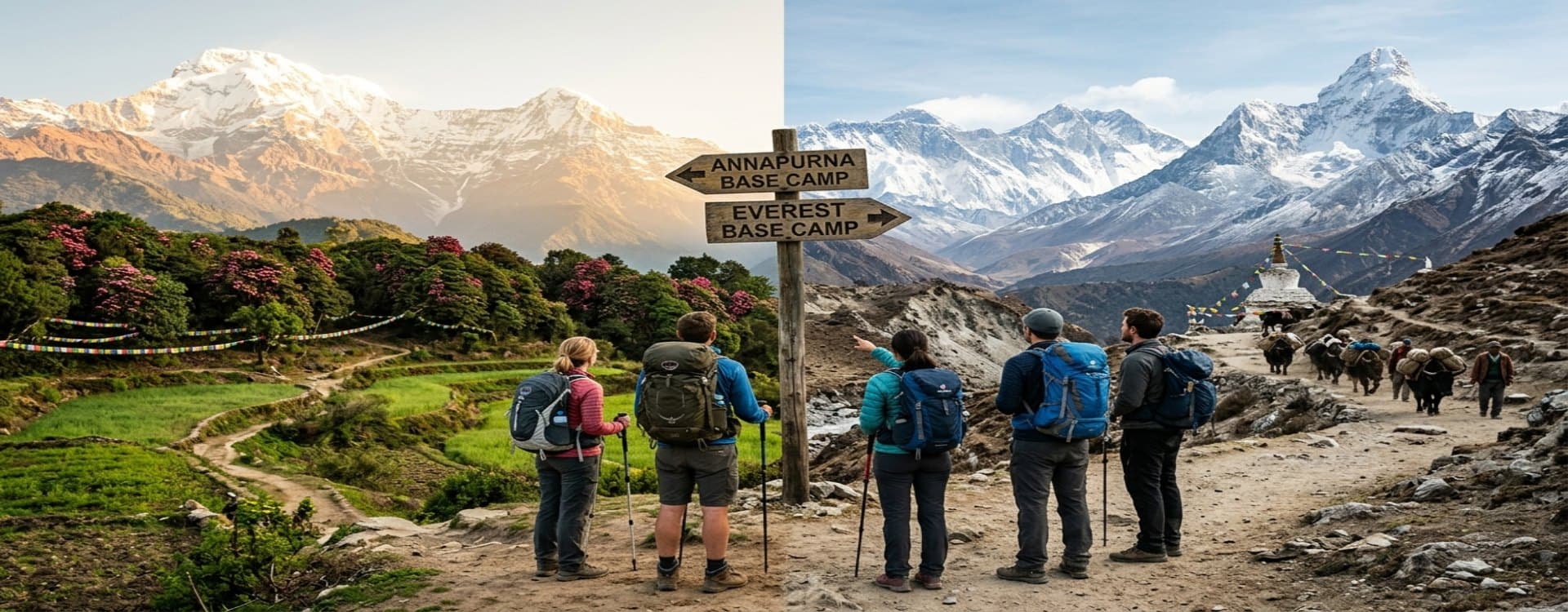
Standing at a Himalayan crossroads with two world-famous trails ahead, most first-time trekkers ask the same question: Annapurna Base Camp vs Everest Base Camp, which one deserves your boots, your budget, and your bucket-list moment? Both treks lead to the foot of 8,000-meter giants, but they offer very different journeys. Annapurna Base Camp (4,130 m) is a shorter, gentler climb through rhododendron forests and Gurung villages, reaching its base camp in as little as 7 days. Everest Base Camp (5,364 m) is the higher, longer, more iconic trek through Sherpa country, culminating near the world's tallest mountain after 12 to 14 days on the trail.
Choosing between them isn't about which trek is "better." It comes down to matching the right adventure to your fitness level, your timeline, and what you actually want out of the trip. Some trekkers want a manageable introduction to the Himalayas that they can complete in under two weeks including travel. Others have dreamed since childhood of standing near Everest itself, and no shorter trek will scratch that particular itch. In this guide, we break down altitude, cost, difficulty, scenery, and season data side by side, drawing on current 2026 itineraries and trekking data, so that by the end you know exactly which trek fits your Himalayan dream.
Both routes sit inside protected conservation areas in Nepal, both end at the foot of an 8,000-meter peak, and both have been walked by hundreds of thousands of trekkers over the past few decades. Beyond that, they diverge sharply. We'll walk through every major factor a trekker actually weighs before booking: elevation, distance and daily walking hours, difficulty and training demands, scenery and cultural texture, cost, seasonal timing, altitude sickness risk, day-by-day itinerary structure, and which trek suits which kind of traveler. By the end, you should be able to answer the Annapurna Base Camp vs Everest Base Camp question for yourself, not just repeat what a brochure says.
A quick word on how this guide is built. Every figure here, altitude, distance, cost range, and season data, reflects current 2026 trekking conditions in Nepal rather than outdated averages copied from an old brochure. Trail conditions, permit fees, and flight costs shift slightly year to year, so if you're planning a trek more than a season or two out, it's always worth confirming the latest numbers with a guide who works the route regularly.
What Are the Key Differences Between ABC and EBC?
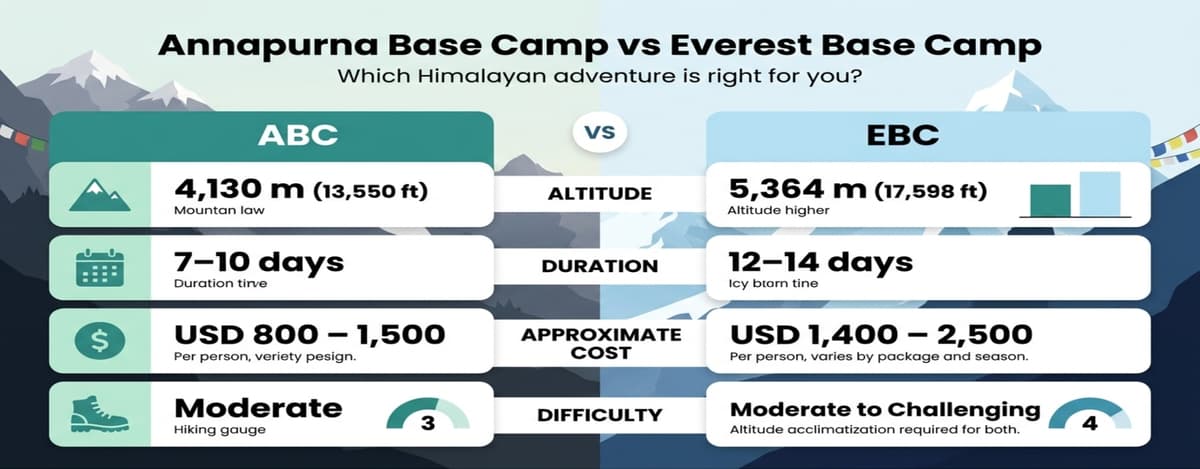
The core differences between Annapurna Base Camp vs Everest Base Camp come down to altitude, distance, and difficulty. EBC is higher and longer, while ABC is shorter and more beginner-friendly. Everything else, the cost, the season logistics, the cultural flavor, tends to follow from those three fundamentals. A trek that climbs 1,200 meters higher and covers twice the distance is naturally going to cost more, demand more preparation, and carry a slightly higher physical risk. Understanding that relationship early makes every later section easier to interpret.
It also helps to understand why these two treks, out of dozens of trails across Nepal, have become the two most requested Himalayan itineraries in the world. Both sit within a reasonable travel window from Kathmandu, both have decades of established teahouse infrastructure that removes the need to camp, and both culminate at the foot of one of the fourteen 8,000-meter peaks on Earth, a bucket-list category that draws trekkers regardless of technical climbing experience. Annapurna I, at 8,091 meters, and Mount Everest, at 8,848.86 meters, anchor their respective regions the way a cathedral anchors a town square: everything about the trail, the villages, the permits, the seasonal rhythm, orbits around reaching a vantage point close to that peak.
How High Are ABC and EBC? Altitude Compared
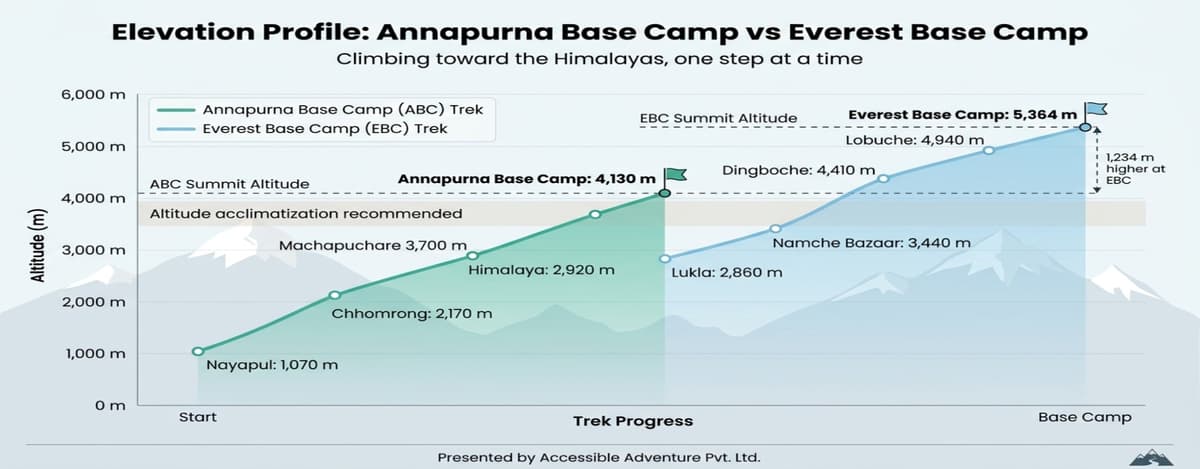
Annapurna Base Camp sits at 4,130 m (13,549 ft), while Everest Base Camp sits at 5,364 m (17,598 ft), a difference of roughly 1,234 meters. That gap matters more than the numbers alone suggest. Altitude sickness can affect trekkers from roughly 2,500 meters, and the risk grows with each night spent higher. Both treks therefore carry real altitude risk. EBC climbs well above 5,000 meters, where the body works much harder in thinner air. ABC peaks at 4,130 meters, high enough that acute mountain sickness (AMS) does occur, but with fewer nights spent at extreme height. That shorter exposure is why ABC is considered the more forgiving trek, not a reason to ignore altitude.
Altitude Comparison at a Glance
● Annapurna Base Camp: 4,130 m / 13,549 ft
● Everest Base Camp: 5,364 m / 17,598 ft
● Kala Patthar (EBC side trip): 5,644 m / 18,514 ft, the highest point most EBC trekkers reach
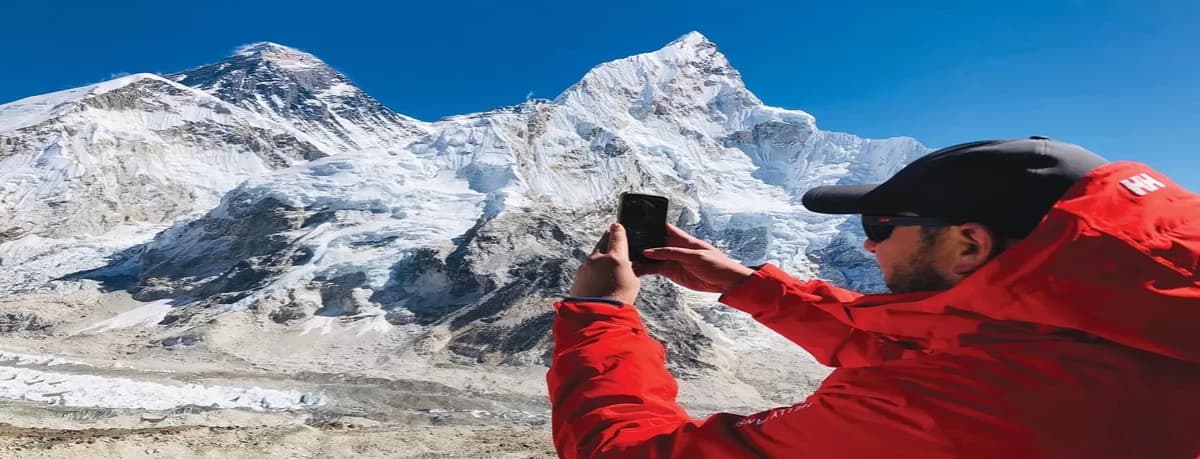
Worth noting: most guided EBC itineraries also include a pre-dawn walk up Kala Patthar, a rocky viewpoint above Gorak Shep that offers a far better view of Everest's summit than the base camp itself does, since Mount Everest's summit is not visible from Everest Base Camp itself, because the Nuptse ridge blocks the view. This is why most guided itineraries include a pre-dawn climb to Kala Patthar (5,644 m), the classic viewpoint for seeing the summit clearly. That side trip pushes the true high point of the EBC trek even further past the base camp's official elevation.
The total elevation gain tells a similar story. ABC trekkers typically climb around 3,000 to 3,300 meters of cumulative ascent from the trailhead at Nayapul, which sits at roughly 1,070 meters. EBC trekkers gain a comparable amount in raw meters, but they're doing it from a higher starting point, Lukla sits at 2,860 meters, and they finish at a considerably higher ceiling. The thinner the air gets, the harder each step of ascent becomes on the body, so the final stretch of EBC (from Dingboche upward) is disproportionately demanding compared to an equivalent elevation gain lower down.
How Many Days Do ABC and EBC Take?
Annapurna Base Camp covers roughly 60 to 70 km round trip over 7 to 12 days, while Everest Base Camp covers roughly 130 km round trip over 12 to 14 days. Some ABC route variations, particularly those that include the Poon Hill sunrise side trip or start from a more distant trailhead, stretch total distance out toward 110 to 150 km, but the standard guided package sticks to the shorter range.
Distance & Duration Snapshot
|
Trek |
Round-Trip Distance |
Typical Duration |
|
Annapurna Base Camp |
~60 to 70 km (up to ~110 km on longer routes) |
7 to 12 days |
|
Everest Base Camp |
~130 km |
12 to 14 days |
Duration isn't just a distance calculation. It's shaped heavily by how much acclimatization time a safe itinerary needs to build in. ABC's lower ceiling means a well-paced itinerary can move through it in a week to ten days without cutting corners on safety. EBC's altitude profile demands two full acclimatization days, typically one at Namche Bazaar (3,440 m) and one at Dingboche (4,410 m), which alone add two days that don't involve forward progress on the trail. Skip those and you're not saving time, you're gambling with altitude sickness.
Daily walking hours run fairly similar across both treks: 4 to 8 hours a day depending on the stage, with ABC trending toward the shorter end (4 to 6 hours on most days) and EBC trending toward the longer end (5 to 7 hours, with the summit day to Kala Patthar running 7 to 9 hours). Neither trek is a technical climb. No ropes, no crampons, no ice axes. Both are walking treks on established trails, which is part of why they attract such a broad range of trekkers, from teenagers to retirees, rather than only serious mountaineers.
Is ABC or EBC Harder? Difficulty and Fitness Requirements
Everest Base Camp is rated more physically demanding due to higher altitude and a longer duration, while Annapurna Base Camp is considered moderate and accessible to most reasonably fit trekkers. Neither trek requires prior mountaineering experience or technical skills. What separates them is stamina, altitude tolerance, and the cumulative toll of consecutive long walking days.
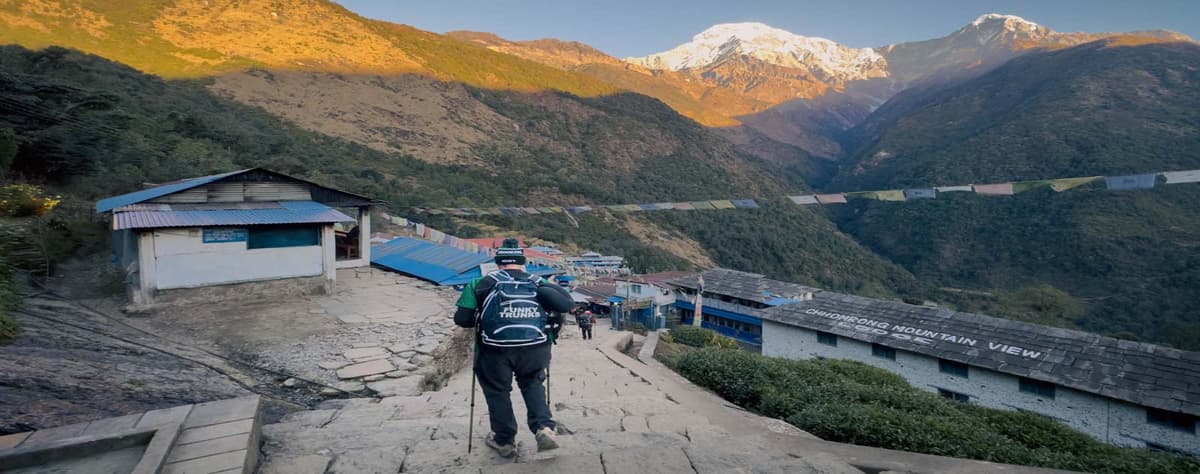
ABC's difficulty comes mostly from stone staircases. The trail into the Annapurna Sanctuary climbs and descends constantly through forested terrain, and by the time trekkers reach Chhomrong or Deurali, their legs have absorbed thousands of stone steps. It's punishing on the knees, especially on the way down, but Altitude still matters at 4,130 meters. Headaches, poor sleep and breathlessness are common, and AMS does occur on this trek. Most well-paced, well-hydrated trekkers manage it with a sensible ascent and prompt reporting of symptoms to their guide.
EBC adds a second layer of difficulty on top of similar terrain: genuine altitude stress. Above 4,000 meters, even fit trekkers notice their breathing labor on modest inclines. The final push from Gorak Shep to Everest Base Camp and back, and the pre-dawn climb to Kala Patthar, both happen above 5,000 meters, where the air holds roughly half the oxygen it does at sea level. That's a fundamentally different physical experience than anything ABC asks of you.
Fitness & Preparation Checklist
|
Preparation Area |
Annapurna Base Camp |
Everest Base Camp |
|
Recommended training start |
8 to 10 weeks before departure |
8 to 12 weeks before departure (12 to 16 weeks if starting from a sedentary baseline) |
|
Cardio target |
Comfortable with 4 to 6 hours of sustained walking |
Comfortable with 6 to 8 hours of sustained walking, ideally at altitude |
|
Strength focus |
Legs and core, for stone staircases and descents |
Legs, core, and upper back, for pack-carrying over longer consecutive days |
|
Hiking-specific prep |
Practice walks of 10+ km with a loaded daypack |
Weekend hikes of 7 to 9 hours with an 8 to 10 kg pack, ideally on consecutive days |
|
Prior altitude experience |
Helpful but not required |
Strongly recommended; a shorter high-altitude trek beforehand is common prep |
3 Quick Training Tips Before You Go
● Start cardio training (hiking, stair climbing, cycling) 6 to 8 weeks out at minimum, longer if your current fitness baseline is closer to sedentary than active.
● Break in your boots on 10+ km practice walks with a loaded daypack, since blisters and hot spots ruin more treks than altitude ever does.
● Add 2 to 3 short acclimatization hikes above 3,000 meters if you have access to elevation near home, or plan a shorter warm-up trek in the weeks before flying to Nepal.
Training plans for both treks converge on the same basic formula: build cardiovascular endurance first, add strength conditioning for legs and core, then finish with hiking-specific practice that simulates real trail conditions, ideally with a loaded pack on uneven terrain. The taper matters too. Many experienced trekkers reduce training intensity in the final two to three weeks before departure so they arrive with fresh legs rather than accumulated fatigue. A common approach cuts overall training volume by roughly 20 percent three weeks out, by 40 percent two weeks out, and drops to light walking only in the final week, with the focus shifting entirely to sleep, nutrition, and last-minute gear checks.
ABC and EBC Itineraries: Day-by-Day Comparison
Numbers on a comparison chart only tell part of the story. Seeing how each trek unfolds day by day makes the difficulty gap, and the very different rhythm of each trip, much easier to picture.
A typical 10-day Annapurna Base Camp itinerary starting and ending in Pokhara looks roughly like this: drive to the trailhead at Nayapul or Ghandruk on day one, then spend the next several days climbing steadily through Gurung villages like Ghandruk and Chhomrong, with daily elevation gains kept in the 300 to 600 meter range wherever possible. The steepest single day typically comes on the push from Deurali to Machhapuchhre Base Camp and on to Annapurna Base Camp itself, a stretch that can involve close to 990 meters of gain in one day if attempted from Deurali in a single push. Many itineraries split it with an overnight at Machhapuchhre Base Camp (3,700 m), which keeps each day's sleeping-elevation gain closer to the recommended 300 to 500 meters, the largest jump anywhere on the route. Most itineraries include just one night at Annapurna Base Camp itself (4,130 m) and one at Machhapuchhre Base Camp (3,700 m), so time at the highest elevations is short. AMS can still occur, so guides monitor symptoms and pace the final days carefully. After reaching base camp, most itineraries descend rapidly, often covering in two days what took four or five days to climb, before returning to Pokhara by road.
A typical 14-day Everest Base Camp itinerary looks structurally different. During peak seasons (typically late March to May and late September to November), Lukla flights operate from Manthali Airport in Ramechhap, not Kathmandu. This means a transfer of roughly 3.5 to 4 hours by road, often starting at 1 to 2 a.m., followed by a 15 to 20 minute flight. Outside these windows, flights usually depart from Kathmandu, followed by a short trekking day to Phakding. From there, the itinerary climbs to Namche Bazaar over a demanding uphill day, then stops entirely for a full acclimatization day, often used for a short hike up to the Everest View Hotel or a visit to the Sherpa Museum. The trail continues through Tengboche and its monastery, then on to Dingboche, where a second full acclimatization day is built in, frequently used for a side hike toward Nagarjun Hill or Pokalde Peak before returning to sleep at the same lower elevation. From Dingboche, the route pushes through Lobuche and on to Gorak Shep, the last teahouse village before the final approach. The summit push to Everest Base Camp itself, and the following pre-dawn climb to Kala Patthar, are the two hardest single days of the entire trek, frequently running 7 to 9 hours over rough glacial moraine. The descent back to Lukla typically takes three to four days, often compressing what took a week to climb into a much faster return leg, before a final flight back to Kathmandu.
The single biggest structural difference between the two itineraries is those two mandatory EBC acclimatization days. They follow the internationally recognized altitude guideline of no more than 500 meters of sleeping-elevation gain per day once above 3,000 meters, and the "climb high, sleep low" principle, where trekkers hike up to a higher point during the day and return to a lower village to sleep. ABC itineraries do not usually include a formal rest day, but they should still follow the same sleeping-elevation guideline. The route is shorter and spends fewer consecutive nights at high altitude than EBC.
ABC vs EBC Scenery and Culture: What You Will See
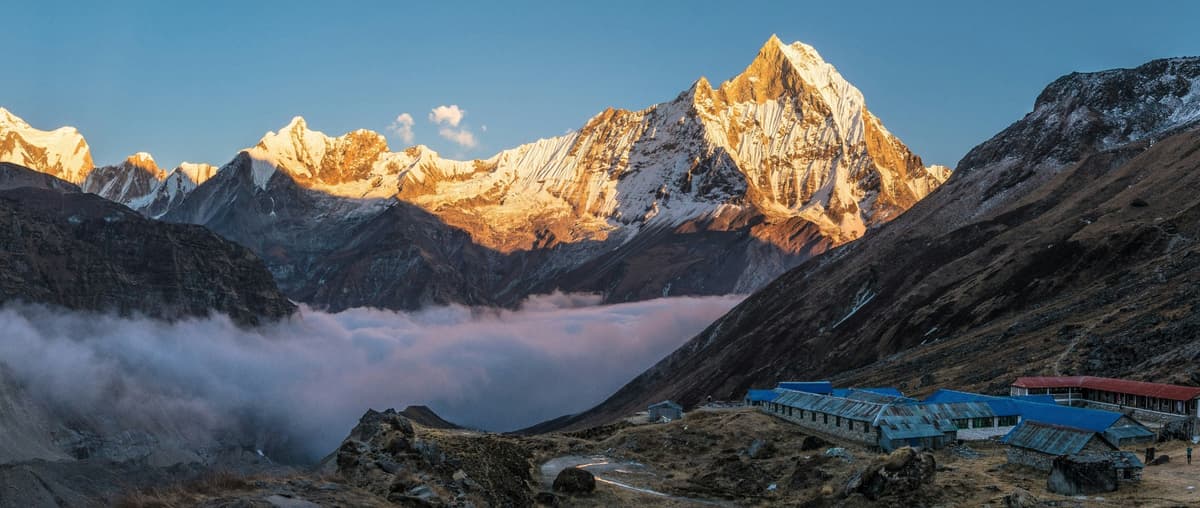
Both treks deliver world-class Himalayan views, but Annapurna Base Camp vs Everest Base Camp differ sharply in landscape. ABC offers lush forest and a dramatic amphitheater finish, while EBC offers glacier terrain and Sherpa mountaineering culture. If scenery alone decided the question, most trekkers would call it a tie, just a tie between two completely different kinds of beauty.
What Will You See on the Annapurna Base Camp Trek?
Expect rhododendron and bamboo forests, terraced farmland, Gurung and Magar villages, hot springs at Jhinu Danda, and a dramatic 360-degree amphitheater of peaks at the base camp itself. The ABC trail is a study in gradual transformation. It opens in warm, humid lower valleys thick with rice terraces and forest canopy, climbs through increasingly dense rhododendron groves that turn the whole hillside red and pink during spring bloom, and narrows into bamboo tunnels before the vegetation thins out entirely near Machhapuchhre Base Camp. Then, almost without warning, the trail spills into the Annapurna Sanctuary itself, a glacial amphitheater ringed by thirteen peaks above 6,000 meters, including Annapurna I at 8,091 meters, the tenth-highest mountain on Earth.
That amphitheater is the trek's signature moment. Unlike EBC, where Everest's summit is hidden from base camp and seen clearly only from Kala Patthar, ABC delivers its full mountain panorama right at the destination, ABC delivers its full mountain panorama right at the destination. Standing at 4,130 meters with Annapurna South, Hiunchuli, Gangapurna, and the sacred, knife-edged Machhapuchhre rising on every side is widely considered one of the most concentrated mountain views in the entire Himalayan range.
Top Highlights Along the ABC Trail
● Poon Hill sunrise viewpoint (optional side trip), a classic add-on for panoramic dawn views over the Annapurna and Dhaulagiri ranges
● Machhapuchhre (Fishtail) close-up views, especially dramatic from Machhapuchhre Base Camp itself
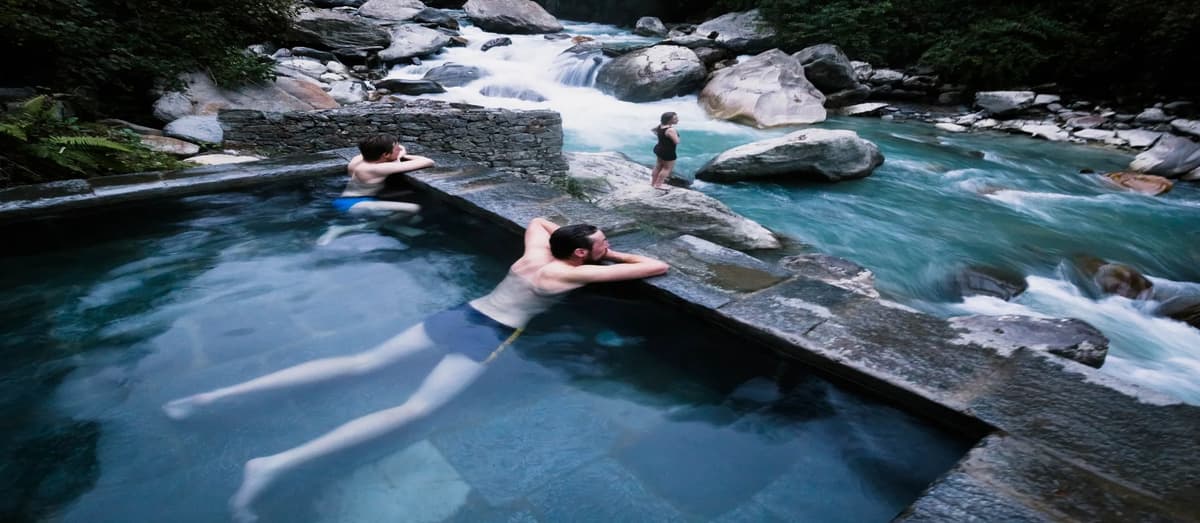
● Jhinu Danda natural hot springs, a welcome reward for tired legs partway through the trek
● Gurung and Magar village homestays, offering a genuine window into hill culture rarely seen on the busier Everest trail
What Will You See on the Everest Base Camp Trek?
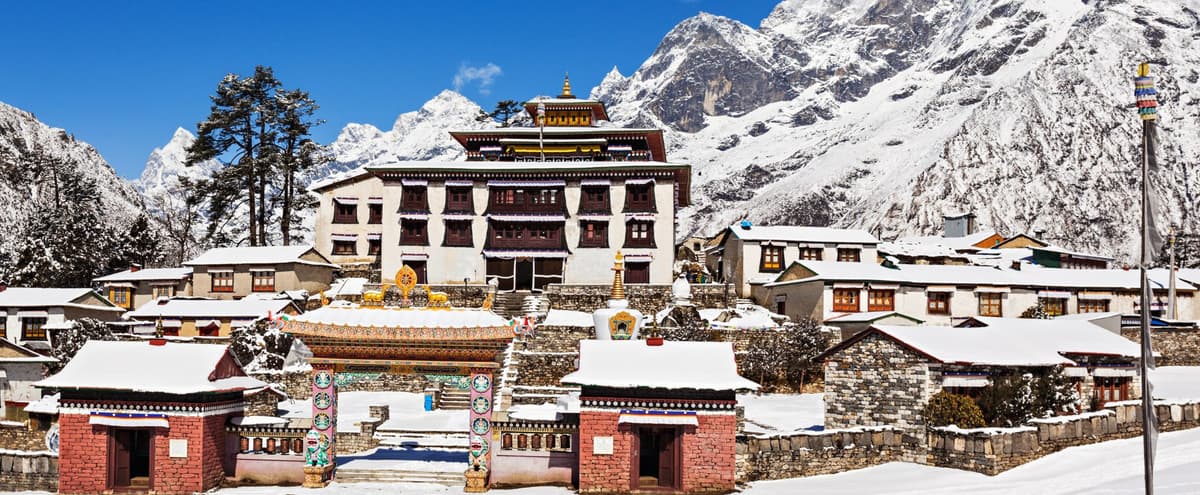
Expect the Khumbu Icefall, Sherpa monasteries, suspension bridges over glacial gorges, Sagarmatha National Park's alpine terrain, and iconic views of Everest, Lhotse, and Nuptse. Where ABC's beauty is lush and layered, EBC's is stark and monumental. The trail leaves the forest belt behind relatively early, around Namche Bazaar, and spends most of its remaining days above the tree line, crossing high suspension bridges over roaring glacial rivers, skirting moraine fields, and passing beneath some of the most photographed peaks on the planet.
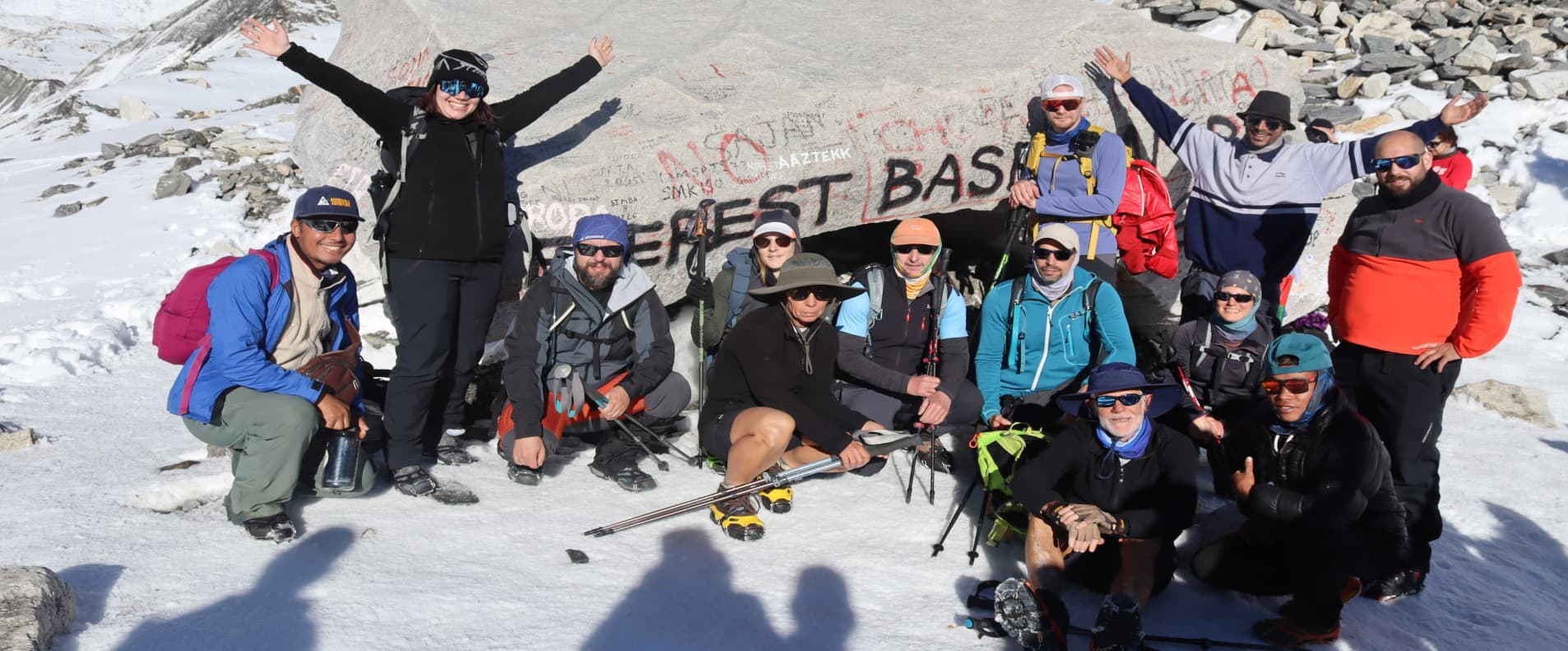
Namche Bazaar itself deserves special mention. It's the unofficial capital of the Khumbu, a bowl-shaped town of stone buildings stacked into a hillside, packed with bakeries, gear shops, and the kind of buzzing trekker energy you won't find anywhere on the Annapurna side. From there, the trail climbs past Tengboche Monastery, one of the most significant Buddhist monasteries in the Khumbu region, before pushing into increasingly stark, high-altitude terrain around Dingboche and Lobuche, and finally reaching the chaotic boulder field of Everest Base Camp itself, with the notorious Khumbu Icefall looming directly above.
Top Highlights Along the EBC Trail
● Namche Bazaar, the Sherpa trading hub and unofficial capital of the Khumbu
● Tengboche Monastery, a spiritual and scenic centerpiece of the trek
● Khumbu Icefall and Everest views from Kala Patthar, the trek's true visual climax
● Sagarmatha National Park (a UNESCO World Heritage Site), home to some of the most dramatic alpine scenery in Nepal
Which Trek Offers Deeper Cultural Immersion?
Annapurna leans toward Gurung and Magar hill culture, while Everest Base Camp offers deeper immersion into Sherpa mountaineering heritage and Tibetan Buddhist monastery life. The better choice really depends on which culture interests you more. ABC's villages, places like Ghandruk and Chhomrong, are working agricultural communities where Gurung and Magar traditions run deep, and homestay-style teahouses give trekkers a fairly intimate look at daily hill life. EBC's Sherpa villages carry a different kind of cultural weight: this is the heartland of Himalayan mountaineering itself, where generations of Sherpa climbers have supported nearly every major Everest expedition since the 1950s, and where monasteries like Tengboche remain active centers of Tibetan Buddhist practice.
Neither is objectively richer. A trekker drawn to rural village life and terraced hillside farming will find ABC more rewarding. A trekker drawn to mountaineering history and Buddhist monastic culture will feel the same pull toward EBC.
A Closer Look at Daily Life on the Trail
Teahouse culture differs subtly between the two regions, and it's worth understanding before you go. On the Annapurna side, teahouses tend to be smaller, family-run operations where the same household has often hosted trekkers for a generation or more. Menus lean heavily on dal bhat, the traditional Nepali plate of lentils, rice, and vegetable curry, along with simple noodle and momo dishes. Evenings in the common room, usually warmed by a wood or dung-fired stove, are a genuine social hub where trekkers from different countries end up trading stories with porters and guides.
On the Everest side, the scale is larger. Namche Bazaar alone has bakeries producing genuinely good pastries, espresso machines, and a handful of restaurants specializing in everything from Italian food to Tibetan bread. Higher up, past Dingboche, the offerings simplify again, and by Gorak Shep, options narrow to the essentials: hearty carbohydrate-heavy meals designed to fuel a body working hard at altitude. Prices climb steadily with elevation on both treks, since every item, from a bottle of water to a chocolate bar, has to be carried in by porter or, on the EBC side above Namche, increasingly by yak or dzopkyo (a yak-cattle hybrid common at these elevations).
Both regions also carry real conservation significance. The Annapurna Conservation Area is Nepal's largest protected area, managing tourism impact across the entire Annapurna massif. Sagarmatha National Park, covering the EBC route, holds UNESCO World Heritage status specifically for its dramatic high-altitude ecosystem and its role as home to the Sherpa people. Trekking fees on both routes fund conservation and community development work, which is part of why the permit costs listed later in this guide aren't just bureaucratic overhead.
ABC vs EBC Cost and Best Season (2026)
On average, Annapurna Base Camp vs Everest Base Camp costs differ by several hundred dollars, mainly because EBC requires a Lukla flight and higher-altitude logistics. Cost is one of the clearest, most practical differentiators between the two treks, and it's worth breaking down carefully before you commit either your time or your budget.
What Is the Average Cost of Annapurna Base Camp vs Everest Base Camp?
Annapurna Base Camp typically costs 700 to 1,200 USD per person for a guided teahouse trek, while Everest Base Camp typically costs 1,200 to 1,800 USD per person, excluding international airfare. The gap comes down almost entirely to three factors: the Kathmandu-Lukla flight, higher park and municipality fees in the Khumbu, and the fact that everything, food, fuel, lodging, gets more expensive the higher and more remote it is, since it all has to be carried in by porter or yak.
Cost Breakdown by Category
|
Category |
Annapurna Base Camp |
Everest Base Camp |
|
Permits (ACAP/TIMS or Sagarmatha/Khumbu) |
NPR 3,000 for foreign nationals and NPR 1,000 for SAARC nationals |
NPR 6,000 (approximately US$45) per foreign trekker |
|
Domestic flights |
Not required |
|
|
Guide & porter (per day) |
~$20 per day |
~$25 per day |
|
Teahouse lodging & meals |
Lower altitude means lower cost |
Higher altitude means higher cost |
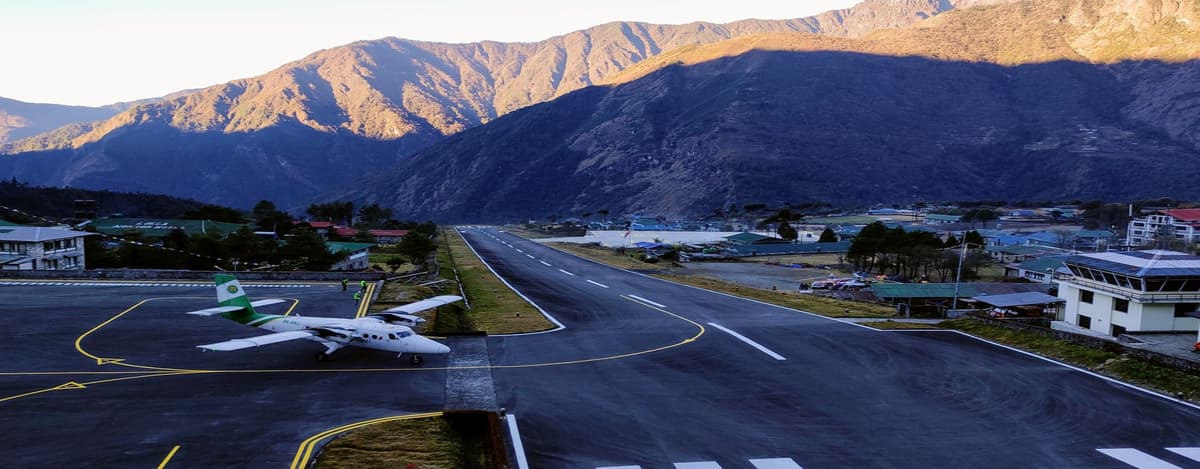
The flight line item alone explains a large chunk of the price gap. ABC trekkers can drive directly from Pokhara to the trailhead at Nayapul or Ghandruk, which keeps costs down and removes any risk of weather-related delays. EBC trekkers have no such option. The only practical way in and out of the Khumbu is by Pre-dawn Manthali departures and weather delays are the main reasons we recommend at least one buffer day. Tenzing-Hillary Airport, widely regarded as one of the most scenic, and most weather-sensitive, mountain airstrips in the world. Flight delays and cancellations during poor visibility are common enough that many guided EBC itineraries build in an extra buffer day specifically to absorb them.
Group size also plays a meaningful role on both treks. A group of four to six trekkers can often reduce the per-person guide and porter cost by 15 to 25 percent compared to a solo booking, since those costs get split across more people while fixed costs like permits stay largely per-person.
It's worth breaking down what actually drives lodging and meal costs at altitude, since that's the line item most first-time trekkers underestimate. Many teahouses on both routes offer very cheap, sometimes even free, rooms on the understanding that trekkers eat dinner and breakfast at the same establishment. Meal prices rise gradually with elevation on both treks, but the increase is steeper on the EBC side simply because everything above Namche has to be carried in over rougher, higher terrain, often by yak train rather than porter. A plate of dal bhat that costs a few hundred rupees in Pokhara or lower Annapurna villages can cost two to three times as much by the time you reach Gorak Shep. Budgeting an extra buffer for food and bottled water, or investing in a good water purification system to avoid buying bottled water at altitude, is one of the more practical ways to keep either trek's real cost close to the guided package estimate.
Tipping is another cost worth planning for on both treks, even though it rarely appears on a formal price breakdown. Guides and porters on both routes rely heavily on tips as part of their income, and most guided packages don't include this in the headline price. Setting aside a reasonable tipping budget in advance, rather than figuring it out on the last day, makes the end of the trek far less stressful.
What Is the Best Time of Year to Trek Annapurna Base Camp or Everest Base Camp?
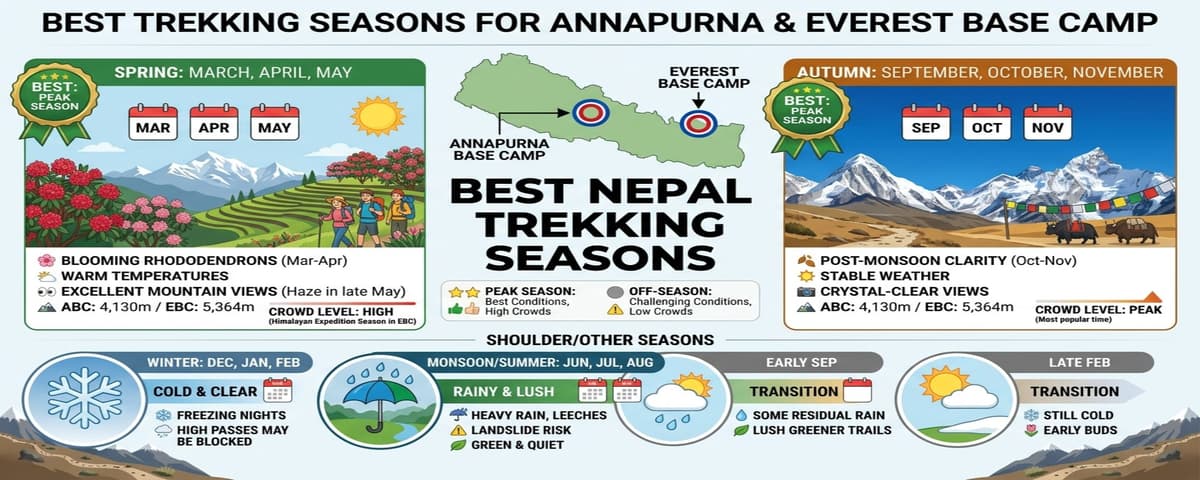
The best time is spring (March to May) or autumn (September to November), when both regions have clear skies, stable temperatures, and peak mountain visibility. These two windows account for the overwhelming majority of trekking traffic on both routes, and for good reason: the monsoon (June to August) brings mud, leeches, and clouds that frequently obscure mountain views, while deep winter (December to February) brings serious cold and, on the EBC side, teahouses that may close in the highest villages.
Season-by-Season Snapshot
|
Season |
Conditions |
Best Suited For |
|
Spring (Mar–May) |
Mild days, cold nights, blooming rhododendrons on ABC, generally stable weather |
First-time trekkers on either route; peak season alongside autumn |
|
Autumn (Sep–Nov) |
The clearest mountain visibility of the year, crisp air, stable trails |
Trekkers prioritizing photography and unobstructed views |
|
Winter (Dec–Feb) |
Very cold at altitude, especially on EBC; ABC remains more feasible year-round |
Experienced trekkers comfortable with cold-weather gear, and those seeking quieter trails |
|
Monsoon (Jun–Aug) |
Muddy trails, leeches at lower elevations, frequent cloud cover obscuring views |
Budget travelers prioritizing low cost and low crowds over mountain visibility |
Fast Packing Tips by Season
● Spring (Mar–May): Layered fleece and sun protection. Rhododendrons are in bloom on the ABC route during this window, adding a splash of color you won't see any other time of year.
● Autumn (Sep–Nov): Insulated jacket and thermal base layers. This is the clearest mountain visibility of the year, so pack a good camera along with the warm layers.
● Winter (Dec–Feb): Heavy down jacket and microspikes. ABC still feasible for well-prepared trekkers, but EBC gets very cold, particularly overnight above Dingboche.
● Monsoon (Jun–Aug): Waterproof gear and leech socks. Both routes turn muddy, and views are often clouded over, but trails are notably quieter and prices sometimes drop.
How Many Days of Leave Do You Need to Book?
Budget 10 to 14 days total for Annapurna Base Camp (including travel and buffer days) and 14 to 17 days total for Everest Base Camp (including a Lukla flight buffer for weather delays). That extra buffer for EBC isn't optional padding. Lukla's airstrip closes regularly for weather, sometimes for a day, occasionally for several, and any trekker booking flights back to an international connection should build in at least one or two spare days at the end of the itinerary to absorb a delay without missing a flight home. ABC's road-based access removes that particular risk entirely, which is one more reason it tends to suit trekkers working with a tighter, less flexible schedule.
Which Trek Should You Choose? Safety, Success Rate and Traveler Type
When weighing Annapurna Base Camp vs Everest Base Camp, success rates, altitude-sickness risk, and your own travel style matter as much as scenery. A trek can look perfect in photos and still be the wrong fit if it doesn't match your timeline, your risk tolerance, or the kind of experience you're actually looking for.
What Is the Success Rate for Reaching Each Base Camp?
Industry-reported completion rates are high for both treks: Across 2000 trekkers guided by Accessible Adventure between 14 years, 100% reached Annapurna Base Camp and 100% reached Everest Base Camp. Most well-prepared trekkers who follow their guide's pacing complete both treks. Altitude is the most common reason for turning back, largely because EBC's higher altitude raises acclimatization demands. Both numbers reflect a simple reality: these are non-technical walking treks, not mountaineering expeditions, and the vast majority of reasonably fit trekkers who prepare properly and follow their guide's pacing reach their destination without serious incident. The small gap between the two figures traces almost entirely back to altitude. Turning back below 5,000 meters due to sickness is rare. Turning back above it is less rare, simply because the body has less margin for error that high.
Altitude Sickness Risk by Trek
● Annapurna Base Camp: Moderate risk. AMS can occur from around 2,500 m and does occur at ABC (4,130 m). Gradual pacing, hydration and early symptom reporting are essential.
● Everest Base Camp: Higher risk, especially above 5,000 m. Acclimatization days at Namche Bazaar and Dingboche are essential, not optional.
Altitude Sickness (AMS) on ABC and EBC: Symptoms and Prevention
It helps to understand what altitude sickness actually is, rather than treating it as an abstract risk category on a comparison chart. Acute Mountain Sickness, commonly abbreviated AMS, happens when the body hasn't had enough time to adjust to reduced oxygen availability at altitude. Early symptoms are easy to dismiss as ordinary trek fatigue: a persistent headache, mild nausea, disturbed sleep, and unusual shortness of breath on exertion. In most cases, these symptoms resolve on their own once the body catches up, provided the trekker doesn't push higher too quickly.
The core principle guides rely on to prevent AMS from progressing is the same one baked into both itineraries: ascend gradually, and when in doubt, sleep at a lower elevation than the day's high point. On EBC specifically, this shows up as the "climb high, sleep low" pattern built into both acclimatization days. Trekkers hike up toward a higher ridge or viewpoint during the day, then descend to sleep at the village's actual elevation, which trains the body to adapt without forcing it to sleep at the most oxygen-depleted point it reached that day.
Hydration plays a bigger role than most first-time trekkers expect. Guides on both routes typically recommend 3 to 4 liters of water daily, rising to 4 to 5 liters on the highest days of EBC, along with avoiding alcohol entirely above 2500 meters, since alcohol worsens dehydration and can mask early AMS symptoms. Many trekkers also discuss Diamox (acetazolamide) with a doctor before departure as a preventive measure, though it's a medical decision that should involve a physician familiar with the trekker's health history, not something to start casually on the trail.
The most important practical takeaway is simple: any persistent or worsening symptom should be reported to a guide immediately, not toughed out. Experienced guides on both routes are trained specifically to recognize early AMS signs and to make the call on descending if symptoms don't improve. On EBC, Helicopter evacuation is available from high-altitude points, weather permitting. Evacuation costs are normally billed to the trekker's travel insurance, so adequate cover is essential. That safety net exists precisely because altitude, unlike general fatigue, doesn't reliably improve just by pushing through it.
Is Annapurna Base Camp or Everest Base Camp Better for Beginners?
Annapurna Base Camp is generally better for beginners, thanks to its lower altitude, shorter duration, and more forgiving acclimatization curve. That doesn't mean EBC is off-limits to first-timers. Plenty of trekkers with no prior high-altitude experience complete EBC successfully every season, especially on well-paced 12- to 14-day itineraries with proper acclimatization days built in. But ABC gives a new trekker more margin for error: a lower ceiling, a shorter total time exposed to altitude, and road access that removes the added stress of a weather-dependent mountain flight. For someone testing whether high-altitude trekking suits them at all, ABC is the lower-stakes way to find out.
Which Trek Should Families, Solo Travelers, and Adventure Seekers Choose?
Quick-Pick Guide by Traveler Type
● Families & first-timers: Annapurna Base Camp. Shorter days, lower altitude, and a gentler overall pace suit trekkers with kids or limited prior hiking experience.
● Solo travelers seeking iconic bragging rights: Everest Base Camp. It remains the world's most famous trekking trail, and the sense of achievement at the finish reflects that.
● Budget-conscious travelers: Annapurna Base Camp. No domestic flight required keeps costs meaningfully lower without sacrificing scenery.
● Peak-baggers & serious trekkers: Everest Base Camp. Higher altitude, a greater physical challenge, and the added reward of the Kala Patthar summit view push this trek further into serious-trekker territory.
There's a broader pattern worth naming here. ABC tends to suit people optimizing for accessibility: shorter leave from work, lower cost, gentler daily distances, and a faster route back to comfort if something isn't working. EBC tends to suit people optimizing for the experience itself, the history, the altitude, the sheer scale of standing near the world's highest mountain, even when that means a longer commitment and a bigger investment of both time and money.
Age is worth a specific mention here, since it comes up constantly in trekker questions. Neither trek has a hard age limit. Neither trek has a fixed age limit. Accessible Adventure has guided trekkers aged 2years to 80 years on ABC and 8years to 80 years on EBC. Younger trekkers and older adults should consult a doctor beforehand, and parents should discuss altitude exposure for children with a paediatrician. complete both routes regularly, provided they've trained appropriately and cleared the trip with a doctor if they have any underlying health conditions. Fitness and preparation matter far more than age alone on either trek.
ABC vs EBC Packing List: Key Gear Differences
Packing lists for ABC and EBC overlap heavily, since both are teahouse treks in the Nepal Himalaya, but the gear list shifts meaningfully once altitude and season enter the picture.
Core gear needed for both treks:
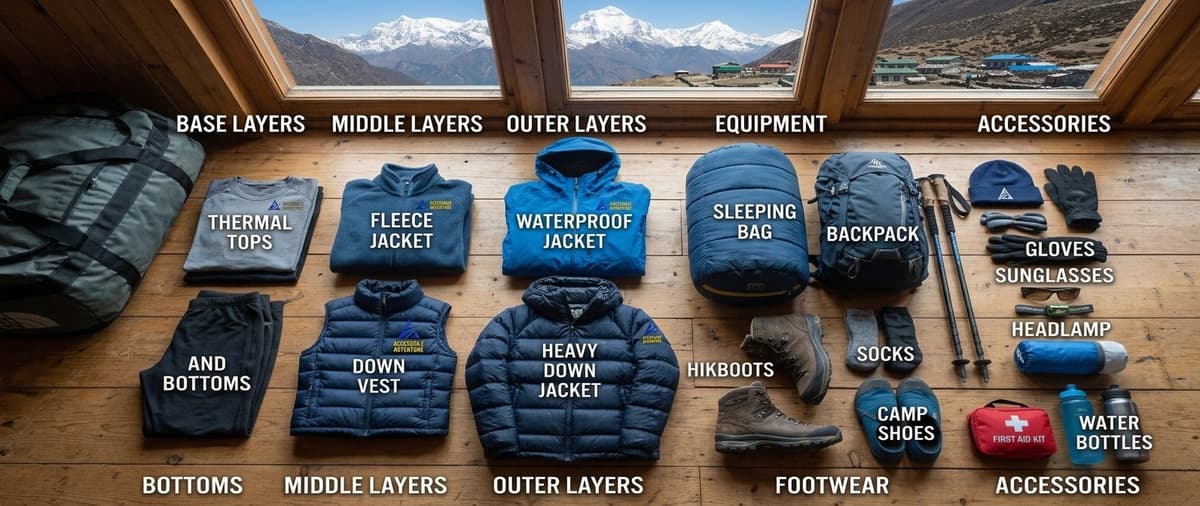
● A well broken-in pair of waterproof hiking boots, ideally with ankle support
● A four-season sleeping bag rated to at least -10°C, since teahouse rooms are unheated
● A daypack (25 to 35 liters) for carrying water, layers, and camera gear during walking hours
● A duffel bag for the porter-carried main luggage, plus a full set of moisture-wicking base layers
● A headlamp, trekking poles, sunglasses rated for high-altitude UV exposure, and a reusable water bottle or bladder with a purification method
Where EBC packing goes further:
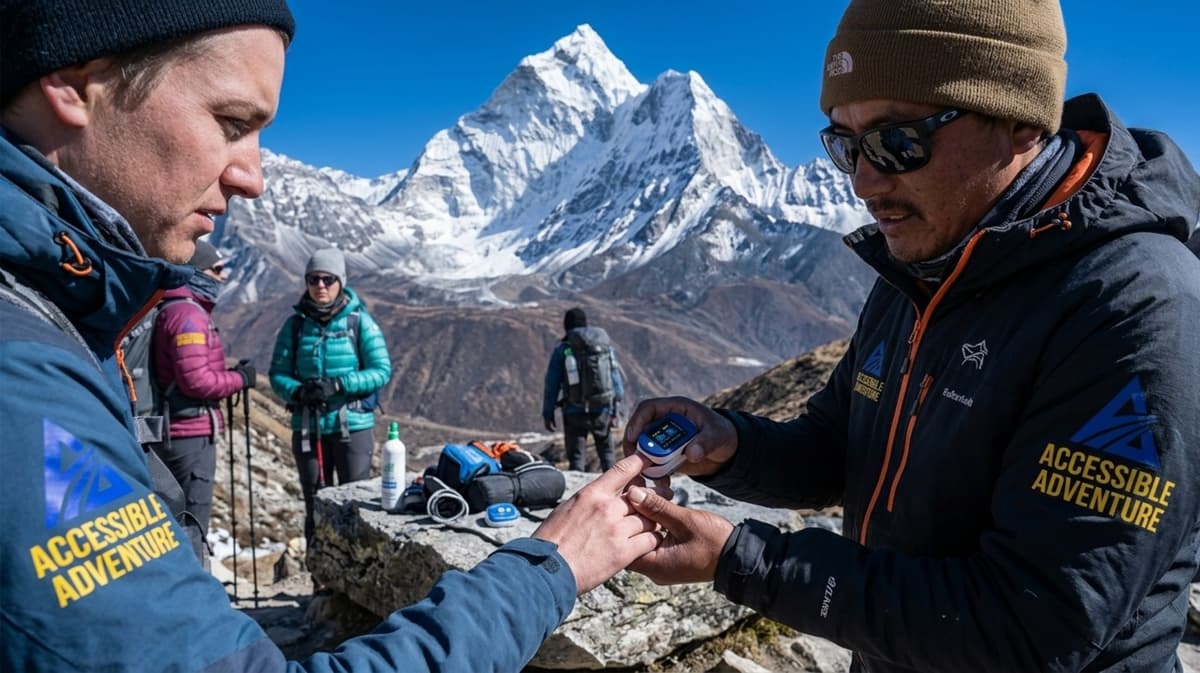
Because EBC spends more consecutive nights above 4,000 meters and pushes above 5,000 meters on summit day, its packing list leans harder into serious cold-weather gear: a heavier down jacket rated for temperatures well below freezing, insulated gloves in addition to a lighter pair for daytime use, and often microspikes or gaiters for icy or snow-covered sections in the shoulder seasons. Your guide carries a first-aid kit and monitors your oxygen saturation. If symptoms worsen, the safe response is to stop ascending and descend, as advised by your guide. Please discuss altitude medication with your doctor before departure.
Where ABC packing can travel lighter:
ABC's gear list can run somewhat lighter than EBC's because the trek is shorter and spends fewer nights at altitude. However, the night at Annapurna Base Camp (4,130 m) is cold, so a warm sleeping bag rated to about -10°C is still advisable. Rental options are available in Pokhara." (This also resolves the conflict with the "Core gear" list, which already recommends a -10°C bag.) during peak spring and autumn seasons, and a somewhat smaller overall gear list. The hot springs at Jhinu Danda are also worth planning for specifically. A lightweight pair of swimwear or quick-dry shorts, easy to overlook, turns out to be one of the more appreciated items on the packing list once trekkers reach that stop.
Regardless of which trek you choose, a good rule of thumb is to pack in layers rather than relying on any single heavy item. Temperature swings of 20 degrees Celsius or more between midday sun and post-sunset cold are common on both routes, and layering lets you adjust throughout the day rather than being stuck either sweating or freezing.
Ready to Choose? Plan Your Trek With Accessible Adventure
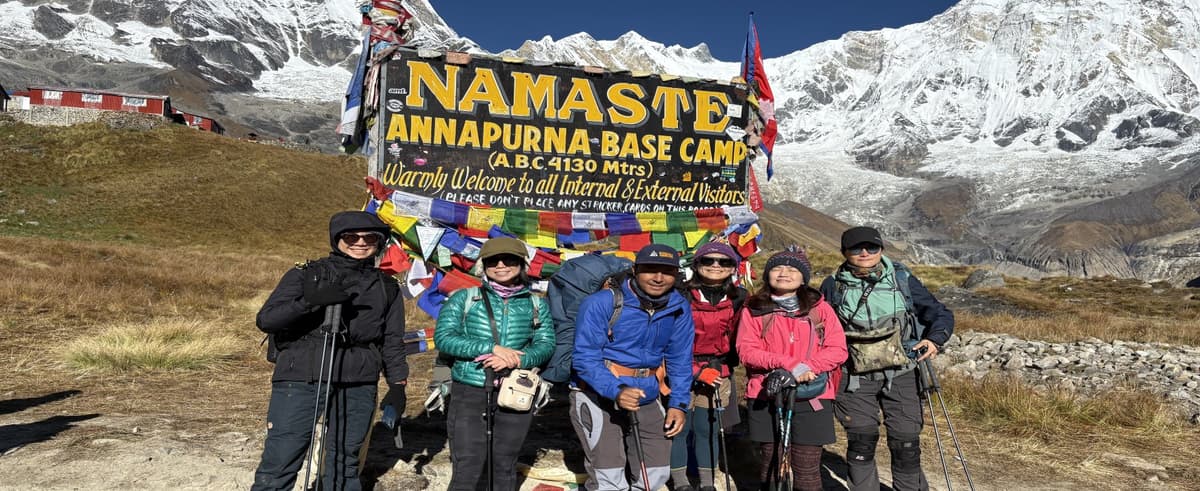
Both trails deliver a lifetime of Himalayan memories. The real question in Annapurna Base Camp vs Everest Base Camp comes down to which one matches your fitness level, timeline, and travel style. Want shorter days, lower altitude, and lush forest scenery? Annapurna Base Camp is calling. Craving the world's most iconic trekking trail and a face-to-face view of Everest itself? The base camp trek to the roof of the world awaits.
Not sure which path fits you best? Talk to our team today. We'll match you with the right trek, the right itinerary, and the right pace for your goals, and we'll handle every permit and logistic along the way. Your Himalayan story starts with one message to us.
Visa, Insurance, Cash and Connectivity: Before You Book
A handful of logistical details tend to come up after trekkers have already decided which route they want, so it's worth covering them here rather than leaving them as an afterthought.
Travel insurance is the trekker's responsibility and is not included in our packages unless stated on your itinerary, but it matters more on EBC given the higher altitude and the greater likelihood of needing a helicopter evacuation if something goes wrong. Look specifically for a travel insurance policy that covers high-altitude trekking up to at least 6,000 meters and includes helicopter rescue, since standard travel insurance policies often exclude trekking above a much lower threshold, sometimes as low as 3,000 meters, without saying so clearly in the summary terms.
Visas for Nepal are generally straightforward for most nationalities, available on arrival at Kathmandu's Tribhuvan International Airport or in advance online, and typically valid for 15, 30, or 90 days depending on the fee paid. Since EBC's total trip length, including Kathmandu time and buffer days for flight delays, can stretch past two weeks, it's worth double-checking that your visa duration comfortably covers the full trip plus a margin for any unexpected Lukla weather delay.
Connectivity varies more than most first-time trekkers expect. Both regions now offer WiFi and mobile data cards for purchase in most teahouses, though speed and reliability drop noticeably the higher you climb, and prices rise the same way lodging and meal prices do. Trekkers hoping to stay in close contact with family or work during the trip should treat connectivity as unreliable rather than guaranteed, particularly above Dingboche on the EBC route or above Machhapuchhre Base Camp on the ABC route.
Currency is worth planning for in cash. While Kathmandu and Pokhara have functioning ATMs, teahouses along both trails operate almost entirely in cash, and ATM access disappears entirely once you're a few days into either trek. Carrying enough Nepali rupees to cover meals, lodging, snacks, hot showers, and tips for the full duration of the trek, with a reasonable buffer, avoids an awkward situation partway up the trail.
Communication with your guide deserves a mention too, since it shapes the entire trip more than most first-timers expect. A good guide isn't just there to point out the trail. They read the group's pace, flag early fatigue before it becomes a problem, translate the day's plan into practical terms, and act as the bridge between trekkers and the teahouse owners, porters, and local communities along the way. Trekkers who ask questions, report symptoms honestly, and trust the guide's pacing decisions consistently have smoother trips than those who treat the itinerary as a fixed schedule to be pushed through regardless of how the body is responding on a given day.
Whichever trek you choose, the fundamentals of a good Himalayan trip stay the same: train properly beforehand, listen to your guide's pacing rather than pushing ahead of it, pack in layers, and budget a little more than the headline package price to cover meals, tips, and the small extras that make the trip more comfortable. Get those basics right, and the rest of the experience, the mountains, the villages, the sense of having earned every step, tends to take care of itself.
Frequently Asked Questions
What is the maximum altitude of Annapurna Base Camp?
Annapurna Base Camp sits at 4,130 m (13,549 ft), making it one of the most accessible high-altitude base camps in Nepal for trekkers of most fitness levels.
What is the maximum altitude of Everest Base Camp?
Everest Base Camp (Nepal side) sits at 5,364 m (17,598 ft). Many trekkers also continue to Kala Patthar at 5,644 m (18,514 ft) for the classic Everest photo.
Which trek is harder, Annapurna Base Camp or Everest Base Camp?
. Everest Base Camp is generally harder. It reaches over 1,200 m higher, takes longer, and involves a Lukla flight, all of which raise both the physical demand and the altitude-sickness risk.
How many days does the Annapurna Base Camp trek take?
Most itineraries take 7 to 12 days round trip from Pokhara, depending on your starting point, pace, and whether you add the Poon Hill sunrise side trip.
How many days does the Everest Base Camp trek take?
The Everest Base Camp trek typically takes 12 to 14 days round trip from Lukla, including essential acclimatization days at Namche Bazaar and Dingboche.
Do I need a flight to reach Annapurna Base Camp?
No. You can drive directly from Pokhara to the trailhead at Nayapul or Ghandruk, which keeps costs lower and removes weather-related flight delays.
Do I need a flight to reach Everest Base Camp?
Yes. Trekkers fly to Lukla's Tenzing-Hillary Airport, from Kathmandu in the off-season or from Manthali (Ramechhap) during peak seasons. Helicopter transfers directly from Kathmandu are an alternative at a higher cost.
Is prior trekking experience required for Annapurna Base Camp?
No. Annapurna Base Camp is beginner-friendly. A moderate fitness level and a few months of walking or stair training are usually enough preparation.
Is prior trekking experience required for Everest Base Camp?
It's optional, though recommended. Good cardiovascular fitness and prior high-altitude or multi-day hiking experience significantly improve comfort and confidence on summit day.
What is the best time of year to trek Annapurna Base Camp or Everest Base Camp?
The best time is spring (March to May) or autumn (September to November), when skies are clear, temperatures are stable, and mountain views are at their best.
How much does the Annapurna Base Camp trek cost?
Budget around $700 to $1,200 USD per person for a guided teahouse trek, covering permits, guide, porter, and accommodation, excluding international flights.
How much does the Everest Base Camp trek cost?
Expect roughly $1,200 to $1,800 USD per person, which is higher than Annapurna mainly due to Lukla flights, park fees, and higher-altitude logistics.
Which trek has a higher risk of altitude sickness?
Everest Base Camp carries a higher risk because it climbs above 5,000 m, but AMS can also occur on Annapurna Base Camp (4,130 m). A gradual ascent, proper acclimatization and prompt reporting of symptoms reduce the risk on both treks.
Can beginners do the Everest Base Camp trek?
Yes, with preparation. Beginners can complete it by training in advance, walking at a slow pace, and following a well-paced acclimatization schedule with an experienced guide.
Which trek is better for families with kids or first-time trekkers?
Annapurna Base Camp is generally the better choice for families, thanks to its lower altitude, shorter duration, and gentler daily walking distances.
About the author: Himal Shrestha
Government-licensed trekking guide & travel writer · Accessible Adventure
Himal Shrestha is a government-licensed trekking guide and travel writer with 10 years and counting in the mountains. Trained in first aid and hospitality, he brings firsthand trekking experience to his articles on Nepal, itinerary planning, and travel preparation for Accessible Adventure.
Meet Himal Shrestha