Annapurna Base Camp Trek Itinerary Comparison: 7-Day vs 9-Day vs 12-Day Routes
Field-reviewed by Hari Kumar Shrestha
Table of Contents
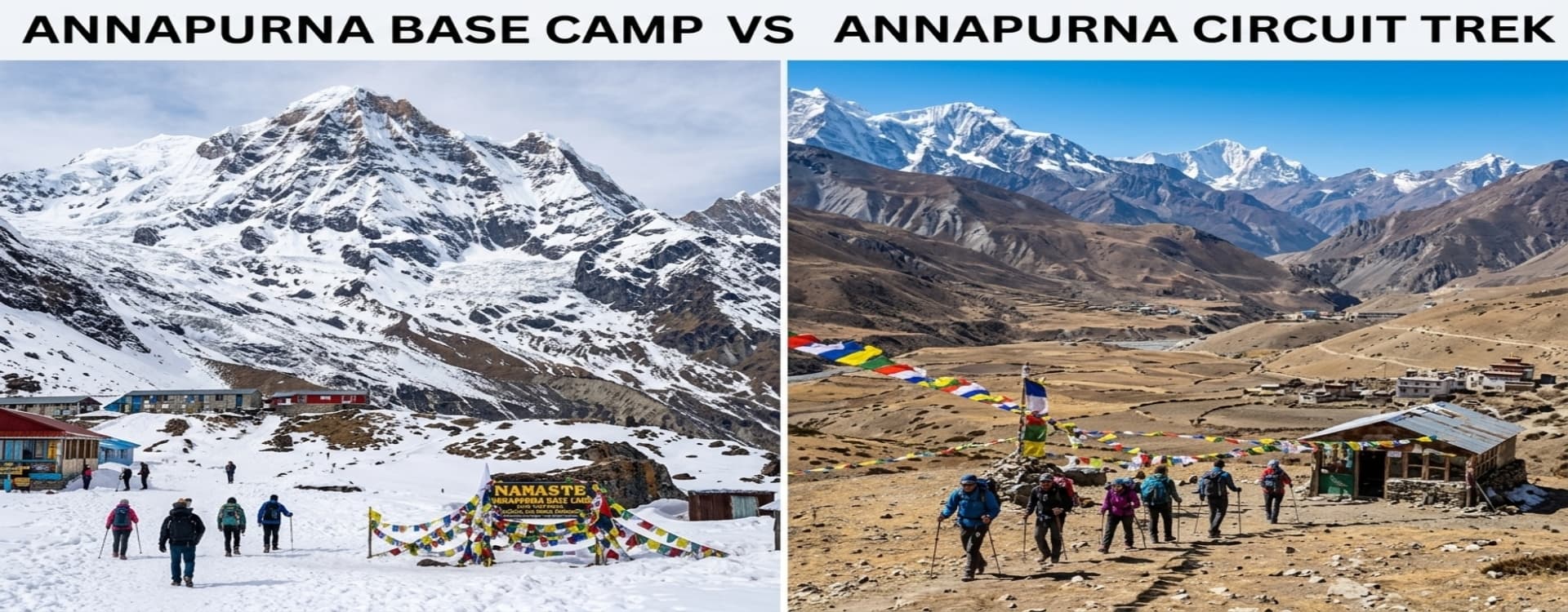
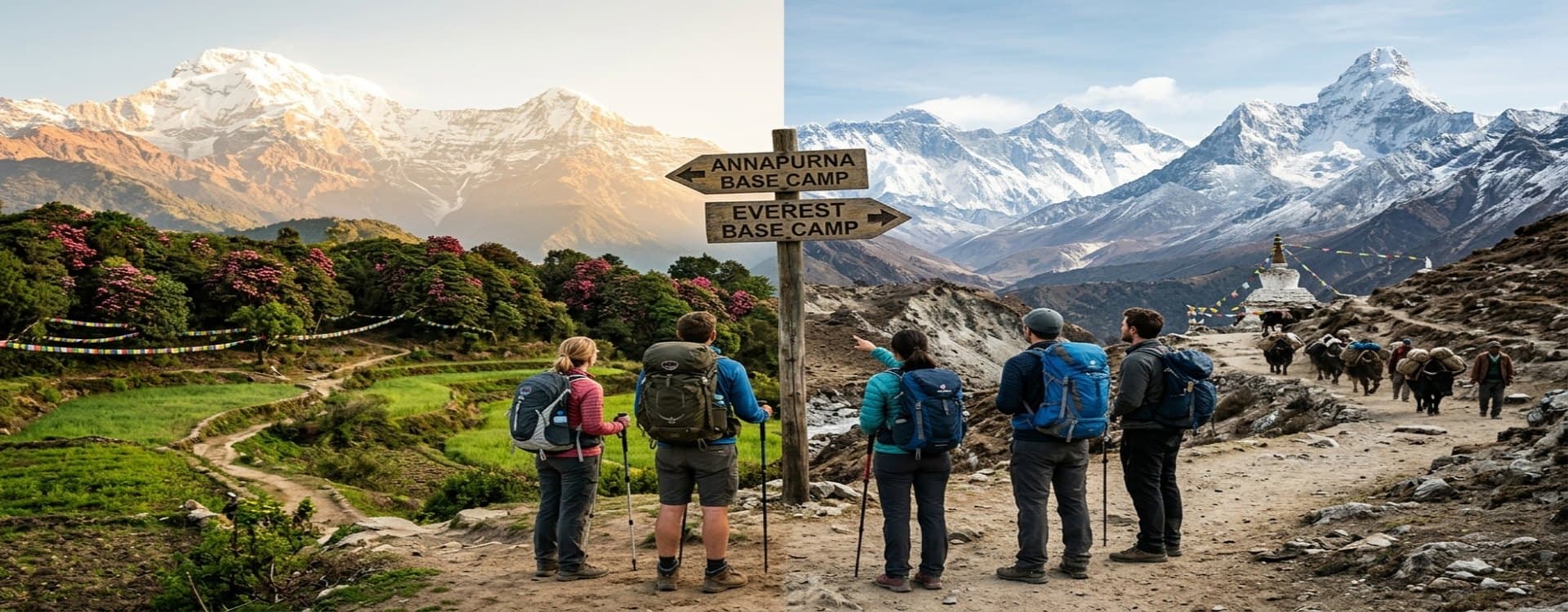
Trying to figure out how many days you actually need for the Annapurna Base Camp trek? The honest answer: it depends on three things. How much of the route you walk versus cover by jeep, your fitness and acclimatization needs, and whether the Ghorepani-Poon Hill sunrise detour is part of your plan. Those three variables are why you see ABC trips advertised anywhere from 7 to 12 days, and why two itineraries carrying the same name can look completely different on paper.
This guide lines up the three core itineraries side by side: 7-day, 9-day, and 12-day. You can see exactly what each one includes: trekking days versus jeep-assisted days, total walking distance, difficulty, and, critically, whether Poon Hill is part of the route or not. Each figure below reflects standard route information, and any itinerary-specific detail is confirmed with you before booking.
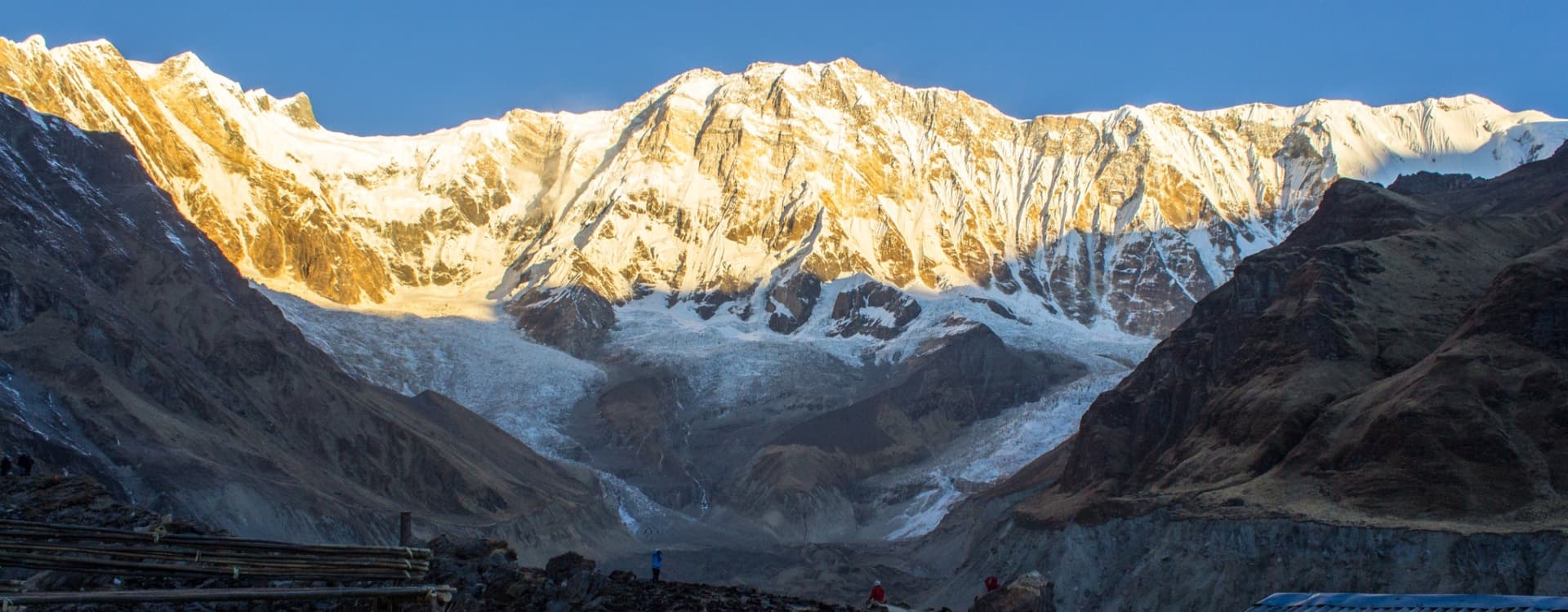
One line of context worth stating upfront: all three itineraries reach the same destination. Annapurna Base Camp at 4,130 metres, surrounded by the same amphitheatre of peaks on every side. The difference between a 7-day and a 12-day trip is not the destination; it's how you get there, how much you see along the way, and how much breathing room your body gets to adapt to the altitude before you arrive.
1. Annapurna Base Camp Trek Itinerary at a Glance
The Annapurna Base Camp trek itinerary comes in three main lengths: 7, 9, and 12 days. The biggest difference between them is not just time; it's how much of the route you walk versus cover by jeep, and whether Poon Hill's sunrise viewpoint is included. Both of those variables change the trip more meaningfully than the day count alone.
|
|
7-Day |
9-Day |
12-Day Classic |
|
Trekking Style |
Jeep-assisted; fewer walking days |
Balanced mix of jeep and walking |
Full walking route, start to finish |
|
Poon Hill |
Not included |
Optional add-on (not automatic) |
Included as core part of route |
|
Round-Trip Distance |
Shorter (jeep covers lower section) |
Mid-range |
~110 to 115km on foot |
|
Start Point |
Jeep to Kimche or Siwai |
Jeep to Ghandruk or Kimche |
On foot from Nayapul (1,070m) |
|
Best For |
Time-constrained travelers |
Most travelers; balance of time and experience |
First-timers, acclimatization-focused, scenery-maximalists |
Base camp altitude (4,130m / 13,550ft) and Poon Hill viewpoint altitude (3,210m / 10,531ft) are constant across all three itineraries. Only the path taken to reach them changes.
What 'Poon Hill Included' Actually Changes About the Route
Poon Hill is not a detour you can simply bolt onto any itinerary. It's a specific viewpoint at 3,210 metres reached only via the classic lower trail through Nayapul, Tikhedhunga, Ulleri, and Ghorepani. The viewpoint sits at the top of a 45-minute to one-hour pre-dawn climb from Ghorepani village, done in the dark with headlamps, arriving at the top as the first light catches Annapurna South, Dhaulagiri (8,167m), and Machhapuchhre across the valley below.
Itineraries that use jeep transport on the lower section and start instead at Kimche, Siwai, or Ghandruk bypass the Ghorepani turnoff entirely. This isn't an oversight or a corner cut; it's a structural consequence of the jeep route. The Ghorepani approach sits on a completely different trail arm from the jeep access points. Once you've driven past the lower section, the Poon Hill viewpoint is simply not on your path. This is why shorter itineraries exclude it by design rather than as an inconsistency.
If seeing the sunrise from Poon Hill is a non-negotiable part of your trip, the 12-day classic route is the one that includes it as a core element. On the 9-day itinerary, it's typically available as an add-on depending on the departure date and route variation; check directly before booking. On the 7-day, it isn't accessible without restructuring the itinerary entirely.
2. The 7-Day Annapurna Base Camp Trek Itinerary
The 7-day ABC itinerary is the fastest way to reach the sanctuary. It uses jeep transport on the lower section of the trail to compress the trip without cutting out the high-altitude portion that defines the experience. The trade-off is straightforward: fewer walking days in the lower valley, a faster ascent profile, and no Poon Hill.
What you don't lose is the part of the trek that most people come for. The approach through Chhomrong (2,170m), the forested descent to Bamboo (2,310m), the climb through Dovan and Himalaya Hotel (2,920m), and the final ascent to Machhapuchhre Base Camp (3,700m) and then Annapurna Base Camp (4,130m) are all on the 7-day route. The sanctuary itself, with Annapurna I (8,091m), Machhapuchhre (6,993m), Hiunchuli, and Annapurna South closing in from every direction, is the same on a 7-day trip as on a 12-day one.
7-Day Day-by-Day Breakdown
|
Day |
Route Segment |
Overnight Stop |
Altitude |
Walking Time |
|
1 |
Drive Pokhara to Kimche or Siwai, trek down to Chhomrong |
Chhomrong (2,170m) |
2,170m |
2 to 3 hrs walking |
|
2 |
Chhomrong to Sinuwa, then Bamboo |
Bamboo (2,310m) |
2,310m |
3 to 4 hrs |
|
3 |
Bamboo through Dovan to Himalaya Hotel |
Himalaya Hotel (2,920m) |
2,920m |
4 to 5 hrs |
|
4 |
Himalaya Hotel to Machhapuchhre Base Camp |
Machhapuchhre Base Camp (3,700m) |
3,700m |
4 to 5 hrs |
|
5 |
MBC to Annapurna Base Camp (4,130m) and return to MBC |
Machhapuchhre Base Camp (3,700m) |
4,130m high |
6 to 7 hrs |
|
6 |
MBC descent to Jhinu Danda via Chhomrong |
Jhinu Danda (1,780m) |
1,780m |
6 to 7 hrs |
|
7 |
Trek to Nayapul or jeep pickup, drive back to Pokhara |
Pokhara |
820m |
2 to 3 hrs + drive |
Overnight stops and trailheads follow the standard route. Your guide may adjust them for trail conditions, weather, and group needs, and the confirmed itinerary is issued at booking.
The Ascent Profile on the 7-Day Route
The 7-day schedule climbs from Chhomrong (2,170m) on Day 1 to Annapurna Base Camp (4,130m) on Day 5, gaining approximately 1,960 metres of sleeping altitude across four nights. That's a faster ascent rate than the 12-day classic route, which spreads the same gain across more days. It is generally manageable for fit trekkers with prior hiking experience, although individual responses to altitude vary. For first-time high-altitude trekkers or anyone who has previously had altitude sickness symptoms above 3,000 metres, the 7-day pace leaves less buffer if the body takes longer to adjust.
Above 3,000 metres is where altitude sickness becomes a real consideration on any ABC itinerary. Acute Mountain Sickness (AMS) symptoms- headache, nausea, and disrupted sleep- are common on the first night at Machhapuchhre Base Camp or Annapurna Base Camp regardless of which itinerary you're on. The difference is that the 12-day itinerary gives you more days of gradual ascent before you arrive at these elevations, which altitude-medicine guidance widely recommends as a way to lower the risk of altitude illness.
On the 7-day route, steady hydration (commonly advised at around 3 to 4 litres daily at altitude), a slow pace on ascent days, and honest communication with your guide about symptoms are the primary management tools. The Jhinu Danda hot springs (1,780m) on the return on Day 6 are a specific reward for the compressed schedule: a soak in natural thermal pools at the end of the longest descent day is a welcome way to relax tired muscles at the end of the descent.
Who the 7-Day Itinerary Is Right For
• Right for: travelers with limited leave, those prioritizing the base camp experience over side trips, fitter trekkers comfortable with a faster ascent pace, and anyone who has already done ABC and wants to return without repeating the full classic approach
• Not right for: first-time high-altitude trekkers who want an extra acclimatization buffer, anyone for whom Poon Hill's sunrise is a core reason for coming, or trekkers who want the full immersive experience of the lower valley and its Gurung villages
Poon Hill Status on the 7-Day Route
Not included. The 7-day itinerary starts with a jeep transfer past the lower Ghorepani trailhead. Poon Hill's viewpoint (3,210m) is accessed only from Ghorepani, which sits on a different trail arm from the jeep access points used by this itinerary. Adding Poon Hill to a 7-day route would require restructuring it into a longer trip.
3. The 9-Day Annapurna Base Camp Trek Itinerary
The 9-day itinerary is the most-booked option. It adds two days back to the 7-day schedule and uses that time in two ways: a gentler ascent profile that gives the body more time to adapt above 2,000 metres, and the option, on some departures, of a Poon Hill side trip.
The additional days on the 9-day route go into the lower and middle sections of the trail rather than the high-altitude section. Where the 7-day approach uses jeep transport all the way to Chhomrong or Kimche and sets off walking from there, the 9-day typically starts walking from Ghandruk (1,940m). That addition gives you a full day in one of the finest Gurung villages in the Annapurna region before the trail climbs toward Chhomrong and the sanctuary approach. It also spreads the early altitude gain across more days, which most trekkers feel noticeably.
9-Day Day-by-Day Breakdown
|
Day |
Route Segment |
Overnight Stop |
Altitude |
Walking Time |
|
1 |
Drive Pokhara to Kimche; trek down to Ghandruk |
Ghandruk (1,940m) |
1,940m |
2 to 3 hrs |
|
2 |
Ghandruk to Chhomrong via Kimche |
Chhomrong (2,170m) |
2,170m |
4 to 5 hrs |
|
3 |
Chhomrong to Bamboo via Sinuwa |
Bamboo (2,310m) |
2,310m |
3 to 4 hrs |
|
4 |
Bamboo through Dovan to Himalaya Hotel |
Himalaya Hotel (2,920m) |
2,920m |
4 to 5 hrs |
|
5 |
Himalaya Hotel to Machhapuchhre Base Camp |
MBC (3,700m) |
3,700m |
4 to 5 hrs |
|
6 |
MBC to Annapurna Base Camp (4,130m) and return to MBC |
MBC (3,700m) |
4,130m high |
6 to 7 hrs |
|
7 |
MBC descent to Bamboo or Sinuwa |
Bamboo / Sinuwa (~2,360m) |
~2,360m |
4 to 5 hrs |
|
8 |
Bamboo/Sinuwa to Jhinu Danda; optional hot springs |
Jhinu Danda (1,780m) |
1,780m |
4 to 5 hrs |
|
9 |
Trek to Nayapul; drive to Pokhara |
Pokhara |
820m |
2 to 3 hrs + drive |
Note: exact overnight stops and trailhead details are illustrative and should be confirmed against the current itinerary before booking.
What the Extra Days Actually Add
The two additional days on the 9-day schedule compared to the 7-day are not padding. Day 1 puts you in Ghandruk, a Gurung village at 1,940 metres with stone-paved lanes, a cultural museum, and clear views of Machhapuchhre and Annapurna South from the village edge. Day 2 is a proper trekking day from Ghandruk to Chhomrong rather than the abrupt jeep-and-short-walk arrival of the 7-day option. Both of these differences matter in terms of physical acclimatization and in terms of what the trek feels like.
Above Chhomrong, the 9-day itinerary follows the same route as the 7-day: Bamboo, Dovan, Himalaya Hotel, Machhapuchhre Base Camp, and Annapurna Base Camp at 4,130 metres. The high-altitude section is identical on both. What the extra two days buy you is a gentler on-ramp and more cultural content in the lower valley.
The Jhinu Danda hot springs feature on the 9-day return as on the 7-day, and on this slightly longer schedule there's often more flexibility in the timing. Day 8 at Jhinu Danda is a genuinely easy day after the descent from high camp, which most trekkers welcome.
Who the 9-Day Itinerary Is Right For
• Right for: most travelers, those with moderate fitness and a preference for a reasonable acclimatization pace, anyone who wants the Ghandruk cultural experience, and trekkers who want the option of adding Poon Hill if time allows
• Not right for: trekkers with a hard seven-day cap, or those who specifically want the full classic walking route from Nayapul with Poon Hill as a guaranteed core element rather than an optional add-on
Poon Hill Status on the 9-Day Route
Optional. Poon Hill is not automatically included in the standard 9-day itinerary, but it can be added on certain departures depending on the specific route variation. Whether adding it extends the trip by a day, incurs an additional cost, or both depends on the departure date and route structure. Confirm directly before booking. The short answer: if Poon Hill's sunrise is important to you on the 9-day route, ask about it specifically when you inquire. Don't assume it's included.
4. The 12-Day Annapurna Base Camp Trek: The Classic Route with Poon Hill
The 12-day classic itinerary walks the full route on foot from Nayapul (1,070m), includes the pre-dawn Poon Hill (3,210m) sunrise hike as a core part of the route, and gives the most acclimatization buffer of the three options. It covers approximately 110 to 115 kilometres round trip on foot. This is the itinerary for first-timers who want the full experience, for trekkers who want every hour of acclimatization time the route allows, and for anyone who wants the Poon Hill sunrise as a guaranteed part of the trip rather than an optional extra.
The 12-day schedule spreads the altitude gain from Nayapul's 1,070 metres to base camp's 4,130 metres across more days than either of the shorter itineraries. That matters physiologically. The body produces more red blood cells and adapts its breathing patterns in response to altitude gain, and it does this more effectively when ascent is gradual. The 12-day schedule is not conservative in a cautious sense; it's thorough in a practical one.
12-Day Day-by-Day Breakdown
|
Day |
Route Segment |
Overnight Stop |
Altitude |
Walking Time |
|
1 |
Drive Pokhara to Nayapul (1,070m); trek to Tikhedhunga |
Tikhedhunga (1,540m) |
1,540m |
3 to 4 hrs |
|
2 |
Tikhedhunga to Ghorepani via Ulleri stone steps (1,960m) |
Ghorepani (2,860m) |
2,860m |
5 to 6 hrs |
|
3 |
Pre-dawn hike to Poon Hill (3,210m); trek to Tadapani |
Tadapani (2,630m) |
3,210m high point |
5 to 6 hrs |
|
4 |
Tadapani to Chhomrong via Ghandruk |
Chhomrong (2,170m) |
2,170m |
5 to 6 hrs |
|
5 |
Chhomrong to Bamboo via Sinuwa |
Bamboo (2,310m) |
2,310m |
3 to 4 hrs |
|
6 |
Bamboo through Dovan to Himalaya Hotel |
Himalaya Hotel (2,920m) |
2,920m |
4 to 5 hrs |
|
7 |
Himalaya Hotel to Machhapuchhre Base Camp (MBC) |
MBC (3,700m) |
3,700m |
4 to 5 hrs |
|
8 |
MBC to Annapurna Base Camp (4,130m) and return to MBC |
MBC (3,700m) |
4,130m high |
5 to 6 hrs |
|
9 |
MBC descent to Bamboo or Sinuwa |
Bamboo / Sinuwa (~2,360m) |
~2,360m |
4 to 5 hrs |
|
10 |
Bamboo/Sinuwa to Jhinu Danda; natural hot springs |
Jhinu Danda (1,780m) |
1,780m |
3 to 4 hrs |
|
11 |
Jhinu Danda to Nayapul; drive to Pokhara |
Pokhara |
820m |
3 to 4 hrs + drive |
|
12 |
Rest, exploration, or contingency day in Pokhara |
Pokhara |
820m |
Flexible |
Note: exact overnight stops and trailhead details are illustrative and should be confirmed against the current itinerary before booking. Round-trip walking distance on the full classic route is approximately 110 to 115km.
Why the Extra Days Matter for Acclimatization
Altitude sickness risk rises meaningfully above roughly 2,500 metres, and the 12-day classic itinerary spreads the climb from Nayapul's 1,070 metres to base camp's 4,130 metres across 8 upward trekking days rather than the 5 of the 7-day route. Each of those extra days at an intermediate altitude- Ghorepani at 2,860 metres, Tadapani at 2,630 metres, Chhomrong at 2,170 metres- gives the body longer to adapt before the trail climbs again.
The practical effect of this additional acclimatization time shows up most clearly above Himalaya Hotel and Machhapuchhre Base Camp. Trekkers on the 12-day route who have spent more days at intermediate altitudes before reaching these elevations are generally less likely to develop altitude illness than those who ascend faster, although individual responses vary. This is not guaranteed; individual physiology varies significantly, and some trekkers on 7-day itineraries experience no altitude issues whatsoever. But the statistical pattern is real enough that it's worth understanding before you choose an itinerary based on time savings alone.
The Ulleri stone staircase on Day 2 of the classic route deserves specific mention. The climb from Tikhedhunga through Ulleri (1,960m) to Ghorepani (2,860m) involves a long staircase of stone steps, commonly described as numbering in the thousands,, a sustained ascent over 5 to 6 hours that tests legs and lungs at what is still a manageable altitude. It's one of the most physically memorable sections of the entire trek. Shorter itineraries bypass it completely. Some trekkers are relieved by that. Others, once they hear about it, specifically want to include it.
The Poon Hill Sunrise Hike: What It Adds to the 12-Day Route
The Poon Hill sunrise hike is a core part of the 12-day classic itinerary, included by design rather than as a paid add-on. It happens on Day 3, starting before dawn from Ghorepani (2,860m). The climb to the viewpoint at 3,210 metres takes roughly 45 minutes to an hour on a stone staircase above the village, done in the dark with headlamps, arriving at the top as the eastern sky lightens behind the ridge.
What you see from the top: Annapurna South (7,219m), Annapurna I (8,091m) behind it, Dhaulagiri (8,167m) to the west, and Machhapuchhre directly to the northeast. As the sun clears the horizon, these peaks light up from the summit down in the order the light reaches them. The higher summits catch it first. The lower ridges follow. By the time full daylight arrives, the entire southern face of the Annapurna massif is visible above the cloud layer that fills the valleys below. It is widely regarded as one of Nepal’s most popular sunrise viewpoints, with the clearest views typically in the spring and autumn seasons.
After the sunrise hike, Day 3 continues with the main trekking day to Tadapani. The morning has already been substantial before the main walk begins, which is worth knowing for pacing. Most groups are back at Ghorepani for breakfast by 7:30 AM and on the Tadapani trail by 8:30 or 9:00.
Who the 12-Day Itinerary Is Right For
• Right for: first-time high-altitude trekkers, anyone who wants the maximum acclimatization buffer, trekkers for whom the Poon Hill sunrise is a core part of the trip, scenery-focused travelers who want the complete lower and upper valley experience, and photographers who want both the sunrise panorama from Poon Hill and the base camp amphitheatre
• Not right for: travelers with a tight 7 to 9 day window, or experienced trekkers returning for a second ABC trip who don't need the full classic introduction
5. How to Choose the Right Annapurna Base Camp Trek Itinerary for You
The right itinerary comes down to three questions: how much time you have, your fitness and altitude comfort, and whether Poon Hill is a must-see or a nice-to-have. Here's how each scenario maps clearly to one of the three options.
By Time Available
One week free: The 7-day itinerary is your option. It's the fastest way to reach Annapurna Base Camp (4,130m) and return to Pokhara, using jeep transport to bypass the lower walking sections without skipping the sanctuary itself.
Nine to ten days: The 9-day itinerary works cleanly within this window and includes more cultural content, a gentler ascent profile, and the option of Poon Hill on certain departures. Most travelers with a ten-day Nepal window choose this route.
Two weeks or close to it: The 12-day classic is the natural fit. It gives you three extra acclimatization days compared to the 9-day route and includes Poon Hill as a guaranteed element. If you're flying internationally and building a Nepal trip of 14 to 16 days total, the 12-day itinerary fits with room for Kathmandu and a day in Pokhara on either side.
By Fitness Level
Beginner or first-time high-altitude trekker: Choose the 12-day classic. The additional acclimatization days and gradual altitude gain from Nayapul give the body the most time to adapt before the high-altitude section of the trail. If you've never trekked above 3,000 metres, this buffer is genuinely useful.
Moderate fitness, some hiking background: The 9-day itinerary suits most trekkers in this category. It offers a reasonable acclimatization pace without requiring the full two-week commitment of the classic route.
Experienced high-altitude trekker: The 7-day itinerary is efficient without being reckless for trekkers who have previously been above 4,000 metres and know how their body responds. The compressed ascent profile requires more self-awareness about altitude symptoms, not necessarily more fitness.
Whether Poon Hill Matters to You
If the sunrise view from Poon Hill (3,210m) is one of the main reasons you're trekking to ABC: choose the 12-day classic. It's the only itinerary that includes it as a guaranteed core element of the route.
If you'd like Poon Hill but aren't sure whether it's a priority: ask about the 9-day itinerary specifically and confirm whether the departure you're considering includes it or has it as a paid extension.
If reaching Annapurna Base Camp itself is the primary goal and the lower-trail scenery is secondary to time and cost efficiency, the 7-day itinerary delivers exactly that. The sanctuary at 4,130 metres is the same on every itinerary. What changes is how much of the journey you experience before arriving.
The One Question That Resolves Most Decisions
Most trekkers who ask 'which itinerary should I choose?' are really asking one of two things: 'Do I have enough time for the 12-day?' or 'Is the 7-day too rushed?' The practical answer to both: the 9-day is the most flexible option for trekkers who are genuinely undecided. It is a popular choice for exactly this reason. It offers more than the 7-day without committing to the full two-week schedule of the classic route, and it leaves Poon Hill available as an optional addition rather than forcing the decision at the planning stage.
That said, if you know you want Poon Hill, book the 12-day and get it included rather than trying to add it on later. And if you know you have exactly seven days, don't stretch for a 9-day itinerary you can't comfortably complete. The trail is more flexible than the calendar.
Conclusion
However much time you have, there's an Annapurna Base Camp trek itinerary built around it. The difference between the 7-day, 9-day, and 12-day routes comes down to trekking style, acclimatization pace, and whether Poon Hill's sunrise is part of your story. All three reach the same place: the sanctuary at 4,130 metres with the full Annapurna massif surrounding you on every side. The question is just how much of the journey you want to walk.
Not sure which option fits your dates and fitness? Reach out for a custom quote and the right itinerary can be matched to your specific trip.
Frequently Asked Questions
How many days do I need for the Annapurna Base Camp trek?
Most itineraries run 7 to 12 days, depending on whether you use jeep transport on the lower trail and how much acclimatization buffer you want. The 7-day option uses jeep access; the 12-day classic walks the full route from Nayapul on foot.
What is the shortest Annapurna Base Camp itinerary?
The shortest standard option is a 7-day itinerary using jeep transport to bypass the lower trail sections. It reaches Annapurna Base Camp (4,130m) and returns to Pokhara in seven days without including Poon Hill.
Does the 7-day Annapurna Base Camp itinerary include Poon Hill?
No. The 7-day itinerary uses jeep access to the upper trail and bypasses the Ghorepani trailhead, where the Poon Hill viewpoint access begins. Adding Poon Hill to a 7-day route would require extending it into a longer itinerary.
Does the 9-day Annapurna Base Camp itinerary include Poon Hill?
Not automatically. Poon Hill is typically an optional add-on to the 9-day route on select departures. Whether adding it extends the trip by a day, incurs additional cost, or both depends on the specific route variation. Confirm directly when you inquire.
Does the 12-day Annapurna Base Camp itinerary include Poon Hill?
Yes. The 12-day classic itinerary includes the Poon Hill (3,210m) sunrise hike as a core part of the route, not as a paid add-on. The pre-dawn climb from Ghorepani village takes 45 minutes to an hour and is built into Day 3 of the itinerary.
Why don't the shorter itineraries include Poon Hill?
Poon Hill (3,210m) is reached only via the lower trail through Nayapul, Ulleri, and Ghorepani. Jeep-assisted itineraries start higher up on a different trail arm, bypassing the Ghorepani turnoff by design. It's a structural route difference, not an omission.
What is the best Annapurna Base Camp itinerary for beginners?
The 12-day classic itinerary generally suits beginners best. It spreads the altitude gain from Nayapul (1,070m) to base camp (4,130m) across more days, giving the body more time to acclimatize and reducing the risk of altitude sickness symptoms above 3,000 metres.
How difficult is the Annapurna Base Camp trek?
It's rated moderate. No technical climbing skills are required at any point, but sustained daily walking, significant altitude gain, and the high-altitude section above 3,500 metres call for reasonable cardiovascular fitness and genuine physical preparation beforehand.
What is the altitude of Annapurna Base Camp?
Annapurna Base Camp sits at 4,130 metres (13,550 feet) above sea level, within the sanctuary at the base of Annapurna I (8,091m). All three itineraries reach this altitude on their summit day.
What is the altitude of Poon Hill?
Poon Hill's viewpoint sits at 3,210 metres (10,531 feet). It's reached via a 45-minute to one-hour pre-dawn climb from Ghorepani village (2,860m) and offers panoramic sunrise views of Annapurna South, Dhaulagiri, and Machhapuchhre.
How far is the Annapurna Base Camp trek round trip?
The full classic walking route from Nayapul covers roughly 110 to 115 kilometres round trip. Jeep-assisted 7-day and 9-day itineraries cover less on foot because the lower trail section is covered by vehicle.
Can I add Poon Hill to a jeep-assisted itinerary?
On some 9-day departures, Poon Hill can be added as an optional extension. This typically adds at least one day and sometimes an additional cost. It cannot be added to the 7-day itinerary without restructuring the trip. Confirm availability and terms when you inquire.
What is the best season for the Annapurna Base Camp trek?
Spring (March to May) and autumn (September to November) offer the clearest skies and most stable weather across all three itineraries. The Poon Hill sunrise is most reliable in these seasons. Monsoon (June to August) brings heavy cloud that frequently obscures views.
Do I need a guide for the Annapurna Base Camp trek?
Yes. Nepal requires a licensed guide for all foreign trekkers in the Annapurna Conservation Area on any itinerary length, a rule enforced since April 2023. Independent unguided trekking is not permitted.
Which Annapurna Base Camp itinerary is most popular?
The 9-day itinerary is typically the most-booked option, balancing trip length, acclimatization comfort, and the option of Poon Hill on certain departures. It suits the widest range of travelers.
What's the real difference between the 9-day and 12-day itineraries?
Roughly three extra trekking days, used for a more gradual ascent profile and, on the 12-day route, the included Poon Hill sunrise hike. The 12-day itinerary also walks the full route from Nayapul (1,070m) on foot rather than using jeep access for the lower section.
Does altitude sickness affect all three itineraries equally?
No. Faster itineraries carry a marginally higher risk because the altitude gain is compressed into fewer days. The 12-day classic's gradual ascent from Nayapul (1,070m) gives the body more time to adapt before reaching the high-altitude section above 3,500 metres. On all three itineraries, standard AMS prevention applies: hydrate consistently, ascend slowly, and report symptoms to your guide immediately.
About the author: Himal Shrestha
Government-licensed trekking guide & travel writer · Accessible Adventure
Himal Shrestha is a government-licensed trekking guide and travel writer with 10 years and counting in the mountains. Trained in first aid and hospitality, he brings firsthand trekking experience to his articles on Nepal, itinerary planning, and travel preparation for Accessible Adventure.
Meet Himal ShresthaRelated Articles
Explore more stories and guides from the Trekking Regions collection