No cancellation fees. No hassle. Book Now, stay relaxed.Cancellation Terms

Manaslu Region

Manaslu Region
Manaslu Region

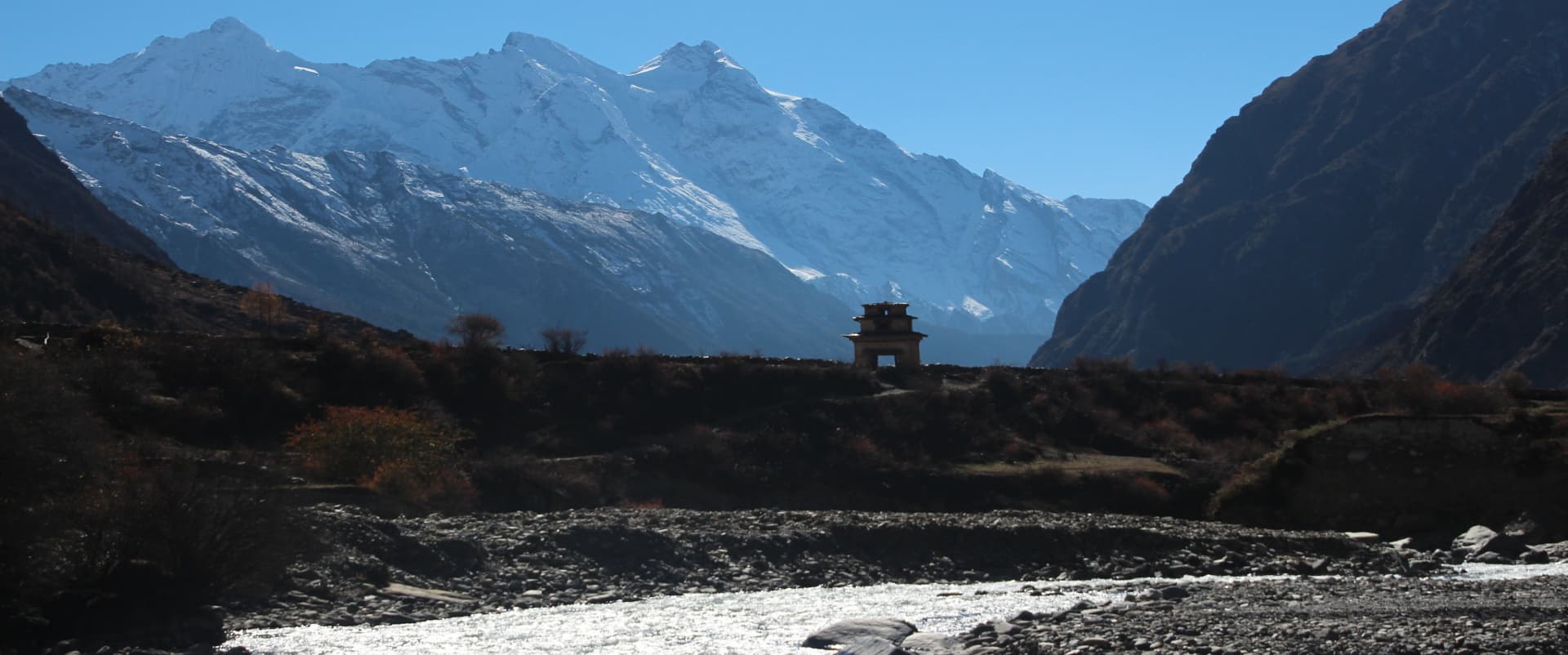
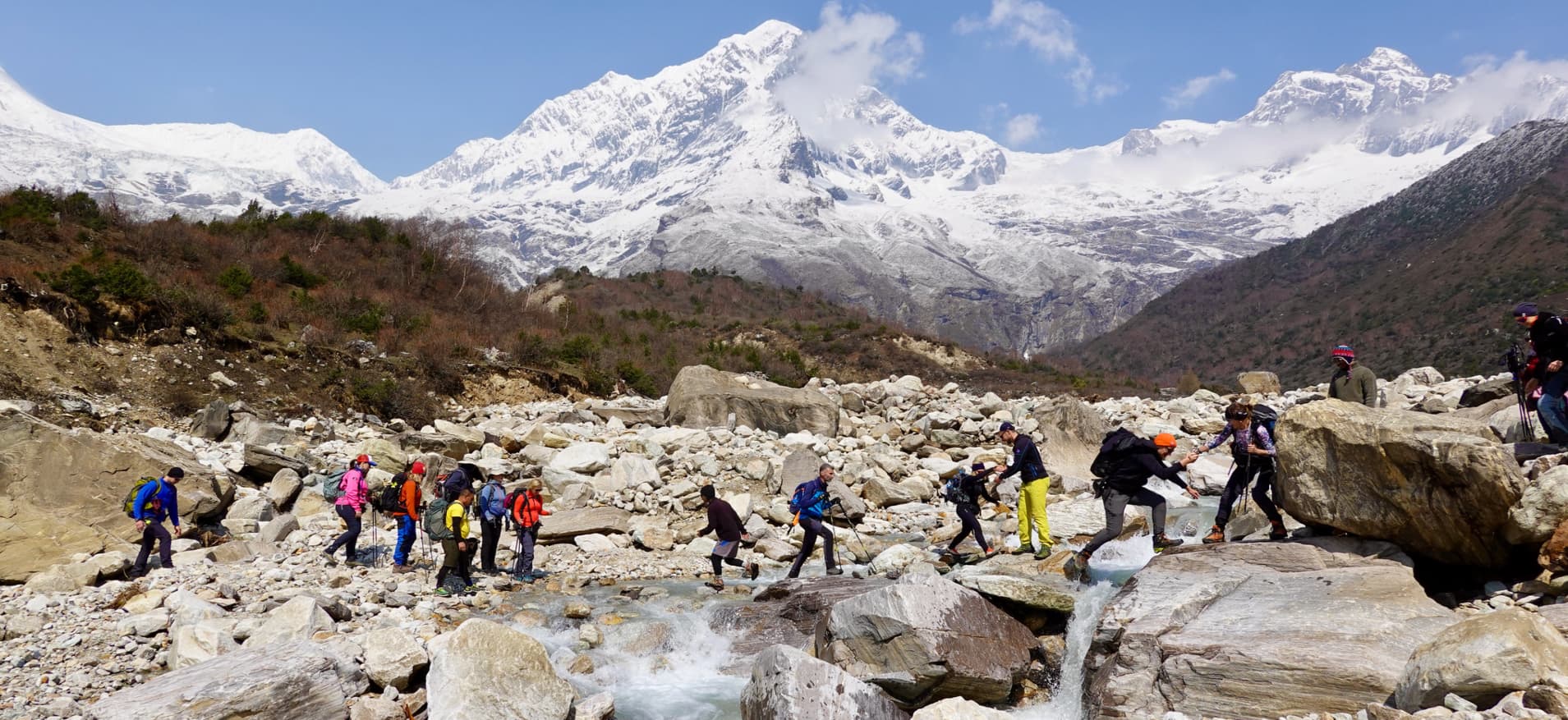
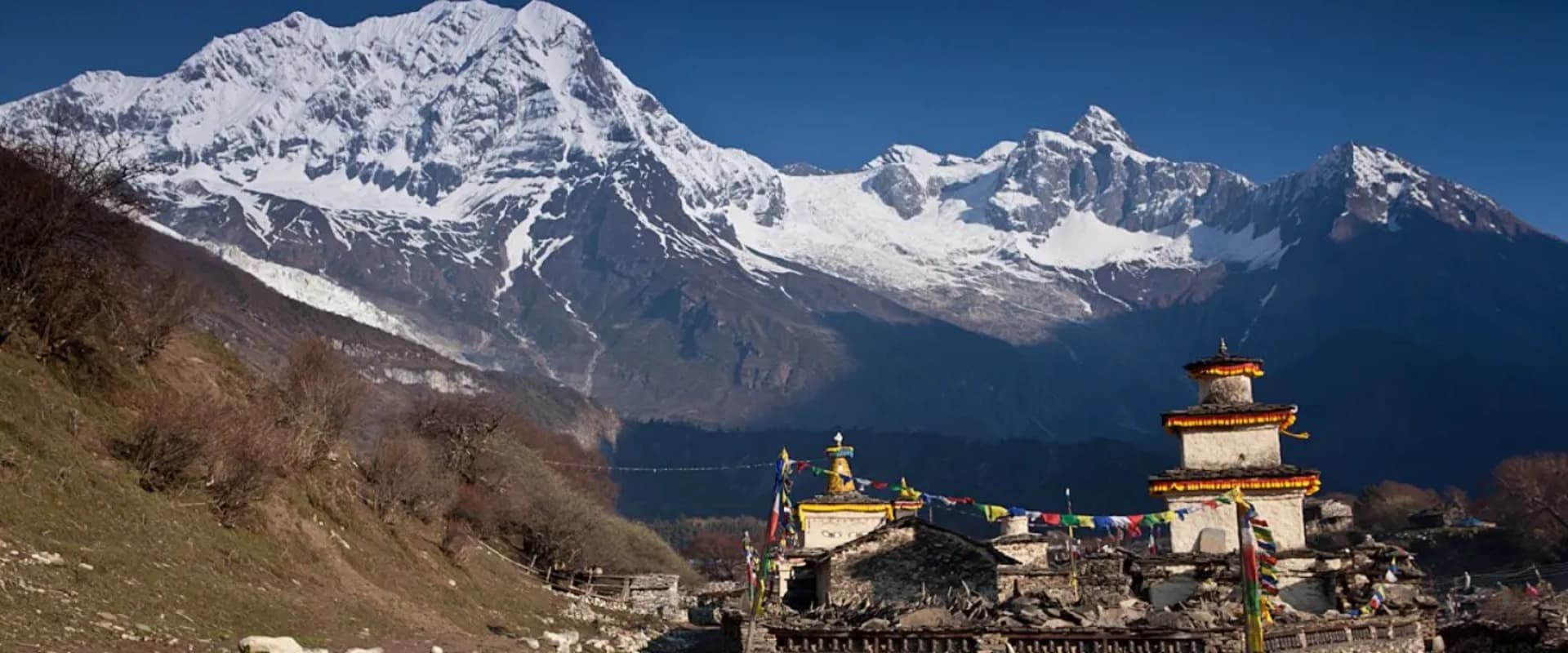
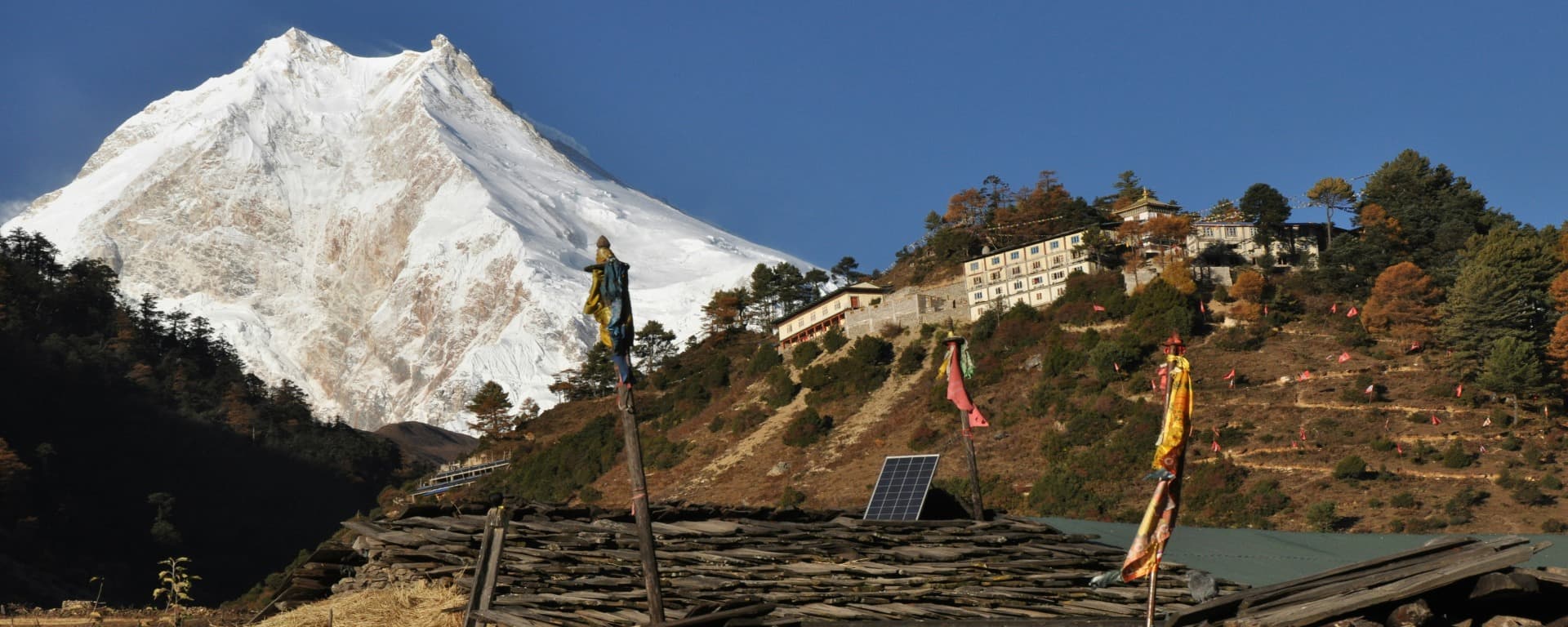
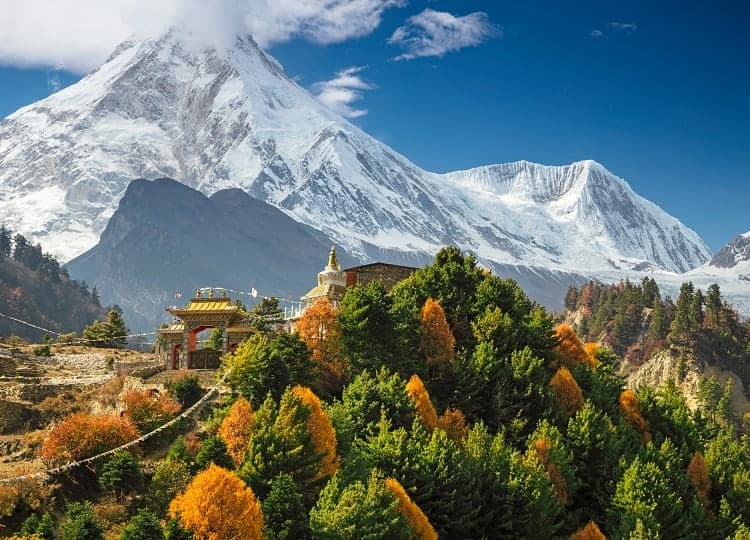
The  amazing landscapes  of the central Himalayas are simply one of a kind. Located north-westwards from Kathmandu, Mount Manaslu and Ganesh stand tall and massive leaving viewers baffled. Within the shadow  and divine protection of these mountains, rivers flow through lush green hills and meadows. People here live a very spiritual life, an interplay between hindu and buddhist ideologies. Butterflies, birds and other animals roam around in the wilderness. Trekking in Manaslu and Ganesh Himal are sure to satisfy your soul’s deep longing for adventure.

Mount Manaslu stands at 8156m and falls within the list of the highest ten mountains in the world. The mountain itself contains two massive identifiable peaks, one relatively lower and one higher. The Ganesh Mountain, aptly named after the Hindu god towers at 7406m above sea level just nearby. The mountain being the one point whose latitude is taken as reference to calculate the time relative to Greenwich Mean Time (GMT). Other peaks like the Himalchuli (7893m) also can be seen clearly in the vistas.

Lying in the Gorkha district the Manaslu Trekking route covers a distance of about 177km which circles the mountain going over the mountain pass to the Annapurna range. Trekking in the region was only permitted by the Nepalese government in 1991. Most of the trek follows an ancient salt trading route where rock salt and Himalayan salt from Tibet and Tibetan regions was brought over to the hills of Nepal. Multiple peaks over 6000 and 7000m altitude can be seen during the trek.

The Manaslu Conservation area was delineated in 1998 in an effort to conserve the ecosystem in the region. Forests of rhododendron which bloom during spring add colour to the landscape. With medicinal herbs found plenty, the region is especially important for the Ayurvedic medicine. Endangered animals like the Asian black bear, Himalayan snow leopard and the famous cute mammal, the red panda roam the forests in this region. More than 110 species of birds have been catalogued to be present in the region with rare ones like the Crimson Horned Pheasant.

The Gurung people inhabit the main hills in the region and within the many ethnic groups present here, the Nubri and Tsum people are the most prominent. Their hospitality in the numerous tea houses and lodges is sure to give you a homely feeling. A large number of the younger inhabitants join the Nepal army and are appropriately named Gurkhas. They are sure to have stories and experiences that will have you captivated.  vVsitors will also get a taste of the discrete Tibetan-influenced culture of the Tsumba people, who strictly disallow the slaughter of any and all animals, influenced by the unviversalism of Buddhism.T his has been a boon for the wild animals thriving in the area, especially the endangered species that call the region their home.

The highly popular Tsum valley, until recently considered one of the most remote parts of Nepal is now open for exploration and tourists both domestic and international are starting to see the value of eco-tourism in the region. With the increase in popularity and access to the region, even by busses and jeep. The region is starting to open up and is gearing itself to give you an experience like no other.

Even with the many tea-houses and the convenience of road transportation, you are sure to find within this region vistas and landscapes that can rival even that of the world famous Annapurna region. The cascading waterfalls with snowy peaks are sure to have you coming back for more.

Available Packages

5 carefully curated packages to match your adventure style

Tsum Valley Trek
15 days
4200m m

Tsum Valley Trek

The Hidden Valley of Happiness: A Journey into Tsum Valley

Tucked away in the northern corners of the Gorkha district, the Tsum Valley is a sanctuary where time truly seems to have stopped. Often called the "Hidden Valley of Happiness," or Beyul Kyimolung in the local dialect, this sacred Himalayan landscape was first described by Guru Rinpoche in the 8th century as a refuge for spiritual seekers. The word "Tsum" originates from the Tibetan "Tsombo," meaning vivid or bright—a fitting description for a place where the mountain air is crystal clear and the cultural traditions remain incredibly vibrant. For trekkers seeking more than just a physical challenge, Tsum Valley offers a deep immersion into a world of ancient Buddhist wisdom, nestled under the watchful eyes of the Ganesh Himal and Sringi Himal ranges.

Until 2008, Tsum Valley remained a restricted area, largely closed to the outside world. This long isolation has preserved a way of life that is rare to find elsewhere in the Himalayas. Unlike the more commercialized trekking routes in Nepal, the trails here lead you through untouched villages and past centuries-old monasteries that still serve as the heartbeat of the community. Here, the local Tsumba people live by the code of Shyagya, a centuries-old non-violence pact that prohibits the hunting or killing of any living beings. This commitment to peace creates an atmosphere of profound serenity that stays with you long after you leave. With Accessible Adventure, we provide the expert guidance and logistical support needed to navigate this remote region, allowing you to focus entirely on the spiritual and natural beauty of this "Garden of Eden."

A Landscape of Spiritual and Natural Wonder

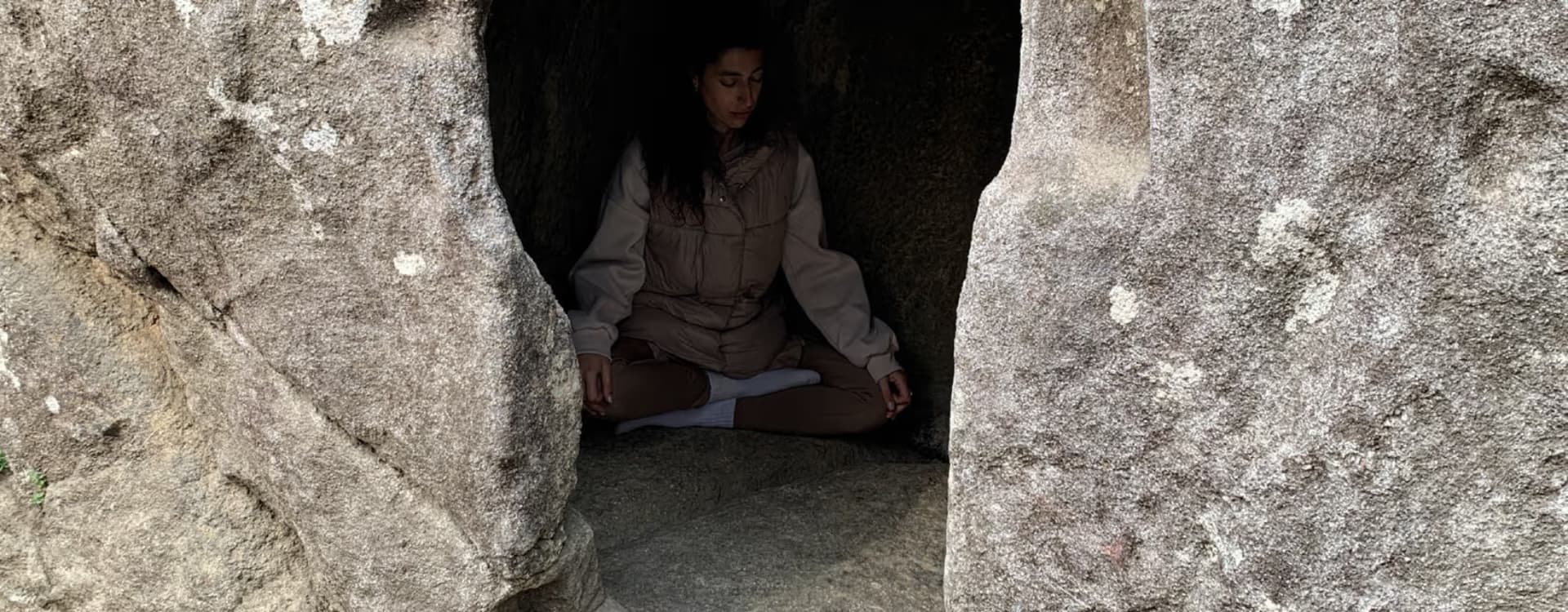
The journey begins in the lush lower reaches of the Budhi Gandaki river valley, where the trails wind through dense forests of pine and rhododendron. As you ascend, the landscape opens up into a high-alpine paradise of wide valleys, glacial rivers, and dramatic waterfalls. You will visit iconic sites like Mu Gompa, the highest and oldest monastery in the valley, and Rachen Gompa, a significant nunnery that houses a thousand clay statues of Avalokiteshwara. You may even find yourself meditating in the very caves where the legendary yogi Milarepa is said to have stayed centuries ago, feeling the same stillness that has drawn practitioners here for generations.

Trip StyleTrekking
Difficulty
Moderate to Demanding
Starting from
$1495/ person
Manaslu Circuit Trek
1% OFF
16 Days
5220mm

Manaslu Circuit Trek

Manaslu Circuit Trek: 16 Days of Raw Himalayan Wilderness

The Manaslu Circuit Trek is among the most rewarding high-altitude journeys available in Nepal, and yet it remains genuinely off the tourist radar. The route circles Mount Manaslu, the eighth-highest peak on earth at 8,163 meters, following a centuries-old salt trading path along the Budhi Gandaki River gorge before climbing over the Larkya La Pass at 5,106 meters. Unlike the nearby Annapurna or Everest corridors, this region was sealed to foreign visitors until 1991, a fact that goes a long way toward explaining why the villages, monasteries, and forests here feel so untouched. We run this 16-day itinerary through October and April, the two clearest windows in the Himalayan calendar, when the skies open up, and the mountain views are at their most dramatic.

The route begins in Machha Khola at 930 meters and works steadily north through the Budhi Gandaki gorge, passing Gurung villages in the lower reaches before transitioning into the high-altitude Tibetan Buddhist settlements of the Nubri Valley. You will walk through rhododendron forests, past thundering waterfalls, across suspension bridges strung above turquoise rivers, and through narrow canyon passages that force the river and the trail to fight for space. Key stops include the cultural hub of Samagaon at 3,530 meters, where an acclimatization day is built into the program, and the high camp at Dharamsala before the pre-dawn push over the pass and the long descent to the meadows of Bimtang. The circuit finishes at Dharapani, connecting with the Annapurna road network for the return to Kathmandu.

If you are considering this trek and want a team that genuinely knows the Manaslu region, we have been working in the Gorkha district for decades. Our guides have deep ties to the Nubri communities, which means you will see parts of this landscape that are simply not accessible through a larger agency. Get in touch to check availability and plan the dates that work for your schedule.


Why the Manaslu Circuit: 7 Reasons This Trek Stands Apart

1. Genuine Remoteness in a Crowded Trekking World

Most major trekking routes in Nepal have been transformed by the volume of visitors they attract. The Annapurna Circuit now includes a road through significant portions of the route, and Everest Base Camp sees hundreds of trekkers per day during peak season. The Manaslu Circuit sits in a different category. Because it lies within a restricted zone requiring a special permit, the daily number of trekkers is naturally limited. You will share camp villages with a handful of other groups at most, and on many stretches of trail you will walk for hours without encountering another foreigner. The sense of space and quiet this produces is one of the defining qualities of the experience.

The restricted area designation also means that unguided solo trekking is prohibited by the government of Nepal, which keeps out the casual day-tripper and ensures that anyone on the trail has committed to the full journey. The result is a more focused, respectful atmosphere on the route.

2. Cultural Depth in the Nubri and Tsum Valleys

The upper Budhi Gandaki valley is home to the Nubri people, a Tibetan-origin community that has maintained its language, religious traditions, and architectural style largely intact for centuries. As you move higher, mani walls stretching for hundreds of meters line the trail, prayer flags snap from ridgelines, and the sound of conch shells and drums drifts from monasteries perched on impossible cliffs. Ribung Gompa in Lho village, visible from the trail against the sheer south face of Manaslu, is one of the most striking religious sites in the entire Himalayan belt.

The villages of Samagaon and Samdo maintain a culture that owes more to Lhasa than to Kathmandu. Yak caravans still move trade goods through these settlements, and the festivals of Losar and Mani Rimdu are observed with genuine communal devotion rather than as tourist performances. Trekking with a guide who speaks the local dialect and has personal relationships in these communities opens a dimension of the journey that no guidebook can replicate.

3. Ecological Variety Across 4,000 Meters of Elevation

The vertical range of the Manaslu Circuit is one of its most underappreciated qualities. Beginning in the subtropical zone below 1,000 meters, the trail passes through five distinct ecological bands before reaching the high alpine world of the Larkya La. Subtropical forests give way to temperate stands of oak and rhododendron that erupt in red and pink blossoms through March and April. Higher still, the trail enters subalpine scrubland before opening into the stark glacial moraine that characterizes the approach to the pass.

The Manaslu Conservation Area, established in 1998 and covering 1,663 square kilometers, protects habitat for snow leopard, Himalayan tahr, red panda, and over 110 species of birds including the endangered Impeyan pheasant, Nepal's national bird. Sightings are not guaranteed, but early mornings on the upper trail regularly produce encounters with tahr herds on the rocky slopes above.

4. The Larkya La Pass: A True Himalayan Achievement

Crossing the Larkya La Pass at 5,106 meters is the physical and emotional centerpiece of the entire circuit. The ascent begins before dawn from Dharamsala at 4,460 meters, moving across glacial moraine by headlamp before the first light strikes the surrounding peaks. At the top, on a clear day, the panorama includes Annapurna II, Himlung Himal, Cheo Himal, and the entire western face of the Manaslu massif. Prayer flags and stone cairns mark the high point, and it is common for trekkers to pause there for longer than they intended, simply taking in the scale of what surrounds them.

The descent is long, dropping 1,500 meters to the meadows of Bimtang through glacial valleys and streams swollen with snowmelt. By afternoon, when you arrive at the lodge in Bimtang and look back up at the ridge you crossed in the dark that morning, the sense of accomplishment is substantial.

5. Authentic Teahouse Culture Without the Frills

Part of what makes the Manaslu Circuit special is the fact that the accommodation infrastructure has developed more slowly than on other routes. Teahouses here are family operations, often run by the same Nubri family that has hosted travelers since the trail opened to foreigners. The meals are cooked fresh on wood or gas stoves, and the dining rooms function as genuine community spaces shared between the family, porters, guides, and trekkers. You will not find a coffee shop franchise or a wifi password printed on a laminated card in Samdo. What you will find is a bowl of hot soup placed in front of you by a woman who learned the recipe from her mother.

This simplicity is not a deficiency; it is precisely the quality that draws travelers who are tired of the packaging that comes with more commercial routes. For those who want a glimpse of what Himalayan trekking looked like two decades ago, this is the closest living version of it.

6. Structured Acclimatization Built Into the Schedule

Altitude management is where many independent trekkers on other routes run into trouble. The Manaslu Circuit itinerary, as designed by us, follows the established mountaineering principle of gaining elevation gradually and including dedicated acclimatization days before major threshold crossings. The rest day in Samagaon at 3,530 meters, positioned two days before the 4,460-meter camp at Dharamsala, gives the body the time it needs to increase red blood cell production and stabilize oxygen absorption. Our guides carry pulse oximeters and conduct morning and evening readings to monitor each trekker's saturation levels throughout the upper section.

This structured approach means the success rate for crossing the Larkya La with us is consistently high. Altitude-related turnarounds are rare not because we push clients through discomfort, but because the schedule itself is calibrated to minimize the physiological stress at each stage.

7. Direct Community Impact Through Your Trek Fees

A portion of every trek fee paid to us flows directly back into the communities the route passes through. We hire locally, which means porters and assistant guides are drawn from the villages along the Budhi Gandaki rather than from Kathmandu's pool of general-purpose trekking staff. Teahouse stays are arranged with established local operators rather than large regional chains, keeping the economic benefit close to where the environmental cost of the tourism falls.

We also maintain a practical commitment to reducing single-use plastic on the trail. Every trekker receives a water filtration system at the start of the trip, which eliminates the need to purchase plastic-bottled water from Jagat to Dharapani. Over the course of 16 days, this makes a measurable difference in the waste stream reaching already-limited disposal facilities in remote villages.

Trip StyleTrekking
Difficulty
Demanding to Strenuous
Starting from
$1415$1395/ person
Manaslu Spiritual & Monastic Retreat Trek
2% OFF
14 Days
3350mm

Manaslu Spiritual & Monastic Retreat Trek

Manaslu Spiritual & Monastic Retreat Trek: A Journey Into Nepal's Sacred Hidden Valleys

The Manaslu Spiritual and Monastic Retreat Trek is a 14-day high-altitude pilgrimage that moves through two of Nepal's most restricted and spiritually significant landscapes: the Manaslu Conservation Area and the Tsum Valley. This is not a conventional trek. The route was built around the concept of the Beyuls, or hidden valleys, which the great Buddhist master Padmasambhava, also known as Guru Rinpoche, consecrated as sanctuaries of peace and spiritual refuge in the 8th century. Mount Manaslu itself, the eighth-highest mountain on earth at 8,163 meters, takes its name from the Sanskrit word "Manasa," meaning soul or spirit. For the indigenous Nubri and Tsumba communities who have lived in its shadow for generations, the mountain is not a geographic landmark but a living spiritual entity. The trek reaches a maximum elevation of 3,700 meters at Mu Gompa and 4,000 meters on the side trip to Pungyen Gompa, making it accessible to trekkers with moderate to strenuous fitness levels. Spring (March through May) and autumn (October through November) offer the most reliable weather windows, though each season carries its own distinct character. What this journey offers is rare: an immersive encounter with a living monastic tradition, the meditative practice of walking through ancient prayer landscapes, and the particular kind of silence that only high-altitude remoteness can produce.

The itinerary traces a route that begins in Kathmandu, follows the Budhi Gandaki River valley northward through subtropical gorges and rice terraces, and enters the mountain villages of Deng, Namrung, Lho, and Samagaon before branching east into the hidden Tsum Valley. Along the way, trekkers pass through stone villages where Tibetan Buddhist culture remains largely unchanged from how it existed several hundred years ago. Notable landmarks include Ribung Gompa in Lho, which sits directly beneath the southern face of Manaslu; Pungyen Gompa at 4,000 meters, a monastic sanctuary surrounded by the Manaslu glacier; Piren Phu Cave near Burji village in Tsum, where the 11th-century Tibetan yogi Milarepa is believed to have spent years in solitary meditation; and Mu Gompa at 3,700 meters, the highest and most secluded monastery in the Tsum Valley. Each day on the trail is structured with time for both physical movement and intentional spiritual practice, including walking meditation, monastery visits, butter lamp ceremonies, and evening teachings from Tibetan Buddhist guides.

This package is operated exclusively by our company, a government-registered trekking agency based in Kathmandu that specializes in culturally immersive and logistically complex itineraries across Nepal's restricted regions. If you are ready to walk through landscapes where non-violence is not a philosophy but a law, and where the mountains themselves carry names rooted in human consciousness, this retreat is designed for you. Contact us today to discuss departure dates, group sizes, and any customizations to the spiritual programming.

Why Choose the Manaslu Spiritual & Monastic Retreat Trek: 7 Defining Highlights

Every trekking package in Nepal promises mountains and culture. This one delivers something more specific: a structured encounter with Himalayan spiritual life in one of the least-visited and most legally protected corridors in South Asia. Here are seven reasons why this retreat stands apart.

1. Access to Nepal's Last Truly Restricted Frontiers

The Manaslu region and the Tsum Valley sit in a restricted zone adjacent to the Tibetan border, and access requires a separate Restricted Area Permit (RAP) that cannot be self-arranged. Foreign trekkers must be part of a registered group of at least two people with a government-licensed guide. This regulatory framework has kept the region free from the teahouse congestion and commercialization that now characterize parts of the Annapurna and Everest circuits. The Tsum Valley itself was closed entirely to foreign visitors until 2008, and the infrastructure here remains deliberately minimal. Walking these trails still carries the quality of genuine discovery.

2. Living Tibetan Buddhist Culture Without Crossing into Tibet

The Nubri people of the Manaslu valley and the Tsumba people of the Tsum Valley descended from Tibetan communities that settled in these high valleys centuries ago. They speak Tibetan dialects, practice the Nyingma and Kagyu schools of Vajrayana Buddhism, and maintain a social and religious structure that mirrors pre-1950 Tibet in many respects. Visiting active monasteries like Ribung Gompa in Lho, Mu Gompa in Tsum, and Rachen Gompa near Chhokangparo allows trekkers to observe daily monastic life, including puja ceremonies, thangka painting, and the butter sculpture offerings made for religious festivals, without the complications of travel permits or political sensitivities associated with Tibet itself.

3. The Shyakya: Walking Through a Valley Governed by Non-Violence

The Tsum Valley operates under the Shyakya, a local customary law of non-violence that has been in place for over a century. Under this tradition, all forms of hunting, livestock slaughter, and forest clearing are prohibited within the valley boundaries. The practical effect is extraordinary: wildlife moves freely through the valley floor, the forests are dense and largely undisturbed, and visitors are asked to observe a vegetarian diet during their stay. Snow leopards, Himalayan tahr, blue sheep, and musk deer have been documented throughout the valley. For a trekker seeking an environment that genuinely embodies the Buddhist principle of ahimsa, the Tsum Valley has few equivalents anywhere in the Himalayan region.

4. Milarepa's Cave and Other Pilgrimage Sites of Ancient Significance

Piren Phu Cave, located near Burji village in upper Tsum, is one of the most important pilgrimage destinations in the Himalayan Buddhist world. Jetsun Milarepa (c. 1052-1135 CE), regarded as one of Tibet's greatest yogis and poets, is traditionally believed to have spent extended periods in meditation in this cave. The site contains ancient stone carvings, fragments of inscribed slate, and a small shrine maintained by the local monastic community. Pilgrims from Nepal, Tibet, and Bhutan travel here specifically to circumambulate the cave and receive merit from the sacred geography. Trekkers on this retreat visit Piren Phu as part of the upper Tsum itinerary, guided by context from the spiritual guide accompanying the group.

5. Pungyen Gompa: Meditation at 4,000 Meters With Manaslu Glacier Views

On the acclimatization day in Samagaon, the recommended side trip leads to Pungyen Gompa at approximately 4,000 meters. The monastery sits at the edge of the glacial moraine directly below the Manaslu glacier's terminus. The three-to-four hour ascent from Samagaon passes through yak pastures and gradually thins into a rocky alpine approach. At the monastery, the resident monks conduct daily prayers in an ancient stone prayer hall decorated with murals depicting the life of the Buddha and the Tibetan Buddhist cosmological wheel. The combination of altitude, glacial backdrop, and monastic quietude makes this side trip the most physically and spiritually concentrated single experience on the entire itinerary.

6. Ribung Monastery and the Mani Rimdu Festival Connection

Ribung Gompa in the village of Lho is among the most visually dramatic monasteries in the Manaslu region, positioned on a natural terrace with a direct sightline to the 8,163-meter summit of Manaslu. The monastery belongs to the Nyingma school and hosts the Mani Rimdu festival, a masked dance ceremony that dramatizes the victory of Buddhism over the pre-Buddhist Bon religion. Mani Rimdu at Ribung typically takes place in autumn, roughly aligned with the tenth month of the Tibetan lunar calendar. Trekkers who time their visit during the autumn window may witness this ceremony, which involves monks in elaborate costumes representing deities, demons, and the protective forces of the dharma.

7. A Structured Retreat Format, Not Just a Trek

The fundamental difference between this package and a standard circuit trek is the intentionality of the programming. Each day includes specific spiritual activities: walking meditation instructions from the guide, monastery visit protocols, evening reflection sessions, and designated silence periods. The pace of the itinerary has been constructed with retreat days built in at Samagaon and Mu Gompa rather than pushing the mileage toward a summit objective. Rest days are not rest days in the conventional sense but are intensive spiritual practice days. Trekkers are encouraged to arrive with a personal intention or question that they carry through the two weeks, using the physical demands of high-altitude movement and the cultural encounters along the way as material for reflection.


Trip StyleTrekking | Short Himalayan Adventure | Scenic & Cultural Experience
Difficulty
Moderate to Demanding
Starting from
$1480$1450/ person
Tsum Valley Trek - Buddhist Culture & Himalayan Views
3% OFF
14 Days
3700mm

Tsum Valley Trek - Buddhist Culture & Himalayan Views

Tsum Valley Trek: Nepal's Sacred Hidden Valley Experience

Tucked into the northern reaches of Gorkha district along the Nepal-Tibet border, Tsum Valley is one of the Himalaya's most extraordinary and least-visited trekking destinations. Known locally as Beyul Kyimolung, a Sanskrit-Tibetan compound that translates loosely to a hidden valley of happiness and refuge, Tsum remained sealed to outsiders until 2008, when the Nepal government first opened its trails to trekking. That relatively brief window of accessibility, combined with its strict permit requirements and remoteness, has kept visitor numbers low, which means the valley's ancient Tibetan Buddhist culture, its monasteries, mani walls, sacred caves, and ageless hospitality have survived intact. The trek carries you through subtropical gorges along the Budhi Gandaki River, past terraced farmland and cascading waterfalls, and eventually into a high-altitude world that feels geographically and spiritually closer to Tibet than to modern Nepal. At the top of the valley, Mu Gompa monastery sits at roughly 3,700 metres, framed by the north face of Ganesh Himal and the distant ridgelines of Sringi Himal and Boudha Himal. The trek is rated moderate to challenging, suited for trekkers who can handle five to seven hours of walking per day over varied terrain.

The standard Tsum Valley loop covers roughly 11 to 16 days of actual trekking, with the route entering the valley from Philim and working through a sequence of remarkable settlements. From Lokpa at 2,240 metres, you climb into Lower Tsum and the stone village of Chumling at 2,386 metres, then continue through Chhokangparo (also spelled Chokhangparo) at around 3,010 metres, before reaching Nile and finally ascending to Mu Gompa near the Tibetan border. Along the way you pass Rachen Gompa, one of the largest nunneries in the region; Dephyudonma Gompa, among the oldest monasteries in the valley; and a series of meditation caves historically associated with the revered Buddhist yogi and poet Milarepa. The cultural landscape at every stop, including prayer flags strung between stone walls, butter lamps glowing inside ancient temples, and monks in crimson robes going about their daily routines, is unlike anything available on Nepal's more commercial trekking circuits.

This guide is built for anyone seriously considering the Tsum Valley Trek. It covers the complete day-by-day itinerary, the seven highlights that distinguish this route from every other trek in the Himalayas, what the costs include and exclude, essential preparation across food, accommodation, weather, altitude, and safety, and a comprehensive FAQ section covering everything from permits to packing. If you want a trek where the trail is quiet, the culture is real, and the mountains feel genuinely wild, read on.


Why Choose the Tsum Valley Trek (7 Highlights)

1. One of Nepal's Last Truly Restricted Valleys

The phrase "restricted area permit" gets applied to a lot of Nepal's northern zones, but in Tsum Valley's case it carries genuine weight. The region was off-limits to foreign visitors for decades and only opened in 2008 following advocacy by the Trekking Agents Association of Nepal (TAAN). Even today, you cannot enter independently. Government regulations require all trekkers to carry a Tsum Valley Restricted Area Permit, a Manaslu Conservation Area Permit (MCAP), a TIMS card, and, for itineraries that continue along the Manaslu Circuit, an Annapurna Conservation Area Permit (ACAP). A minimum group size of two trekkers, each accompanied by a government-licensed guide, is mandatory by law. These requirements create a natural ceiling on annual visitor numbers, which is why the trails remain uncrowded even during peak season. Unlike the Annapurna or Everest regions, where teahouses queue up along well-worn paths and groups of trekkers converge at every stop, Tsum Valley stretches of trail can pass for hours with no other party in sight. That kind of solitude has become rare in Nepal's trekking landscape, and for many visitors it is reason enough to make the trip.

2. Tibetan Buddhist Culture Preserved Without Interruption

The people of Tsum Valley, known as Tsumbas, are direct descendants of Tibetan immigrants who settled the valley centuries ago. Their language, dress, architecture, and religious practice remain closely tied to a Tibetan Buddhist tradition that predates most modern influences. The valley counts 33 villages and approximately 500 households. Village homes are built in the Tibetan style, with flat rooftops, stone walls, and prayer flags mounted on corners. Mani walls, long structures built from stones carved with the mantra Om Mani Padme Hum, line the main trails and are circumambulated clockwise by locals as part of daily practice. The valley's two main monasteries carry major spiritual significance: Mu Gompa, established in 1895 CE and housing important religious texts including the Kangyur, along with a life-sized statue of Avalokiteshvara and images of Guru Padmasambhava and Tara; and Rachen Gompa, one of the largest nunneries in the Manaslu region. The valley's most celebrated sacred sites also include the meditation caves of Milarepa, a revered 11th-century Tibetan yogi and poet who is said to have practised in these mountains. Local festivals, including Lhosar (Tibetan New Year), Saka Dawa (commemorating the Buddha's birth, enlightenment, and passing), and Dhachyang, offer visitors who time their trek accordingly an extraordinary window into living religious tradition.

3. Spectacular and Continuously Changing Mountain Scenery

The Tsum Valley Trek does not wait until the high sections to reward your effort with views. From the moment the trail leaves the Budhi Gandaki River valley and turns into the Tsum canyon, the landscape begins to transform. In the lower sections, subtropical forests of rhododendron, pine, and oak fill the gorges, with waterfalls cutting down the cliffside. At mid-altitudes around 2,500 to 3,000 metres, the terrain opens into wide highland plateaus reminiscent of the Tibetan plateau, where the light takes on a quality that photographers describe as almost impossible to capture faithfully. The high sections above Nile and approaching Mu Gompa deliver an unobstructed panoramic corridor looking toward the northern faces of Ganesh Himal (7,422 metres), Sringi Himal (7,161 metres), Boudha Himal (6,672 metres), and, from certain vantage points along the Manaslu Circuit extension, Himalchuli (7,893 metres) and Manaslu itself at 8,163 metres, the eighth-highest mountain on Earth. Near the Tibetan border at the top of the valley, ridgelines of Tibetan peaks are visible to the north, completing a panorama that runs from sub-Himalayan foothills to the roof of the world.

4. Genuine Wildlife and Botanical Diversity

The Manaslu Conservation Area, which covers the entire trekking zone, was established specifically to protect the biodiversity of this corridor between sub-tropical and alpine ecosystems. The lower trail sections pass through habitat shared by common langur monkeys, Himalayan black bear, and the occasional red panda. Above the treeline, snow leopard, Himalayan tahr, blue sheep (bharal), and musk deer have all been documented within the conservation area. The Shyar Khola river, fed by glacier melt from the slopes of Ganesh Himal, runs through Tsum Valley and supports healthy populations of snow trout. Spring trekkers walking through the rhododendron-forested stretches between March and May witness a bloom season that turns entire hillsides crimson, pink, and white. Higher up, small alpine flowers push through the rocky terrain at altitudes where few plants can survive. This ecological range, from subtropical river valley to near-Tibetan plateau in a single trek, produces a walking experience that shifts dramatically over the course of a few days.

5. Far Less Crowded Than Nepal's Mainstream Routes

Comparative numbers put the scale difference in sharp relief. The Everest Base Camp trek corridor typically sees tens of thousands of trekkers per season. The Annapurna Circuit draws similar figures. Tsum Valley, partly because of its mandatory permit structure and partly because of its relative obscurity, draws a small fraction of that traffic. On most trekking days through the valley proper, you will share the trail only with local villagers, yak herders, and the occasional passing group of pilgrims. Teahouse dining rooms in the evening sometimes seat fewer than ten people from the entire visiting trekker population for that night. This low density has a cascading effect on the quality of the experience. Trail erosion is minimal. Teahouse operators have time to be genuinely attentive. Local guides can arrange impromptu monastery visits without fighting tourist schedules. Wildlife encounters are more likely because the animals have not been trained by constant human presence to avoid the trail. And the mental experience of the trek, the sense of genuinely going somewhere few people go, is something that even seasoned Himalayan trekkers report finding here.

6. A Route That Combines Physical Challenge with Cultural Depth

Most multi-day Himalayan treks offer either physical challenge (high passes, long days, significant elevation gain) or cultural richness (villages, monasteries, festivals), but rarely both in equal measure. Tsum Valley delivers both simultaneously. The physical demands are real: daily walking times of five to seven hours, trails that climb steeply out of river gorges, sections of exposed trail requiring careful footing, and altitude gains that demand proper acclimatization rest at strategic points. At the same time, nearly every significant stop on the itinerary carries cultural meaning. Jagat is the historic entry checkpoint where traders once paid tolls to pass into the highlands. Chumling is the first village in Lower Tsum, where Buddhist monasteries and chortens reflect a centuries-old religious settlement pattern. Chhokangparo, perched on a high ridge above the valley, offers one of the most dramatic panoramic settings of any village in Nepal. Nile, the last permanent settlement before Mu Gompa, feels like a genuinely frontier outpost. And Mu Gompa itself, the trek's culminating destination, is not a viewpoint or a pass but a living monastery where monks and pilgrims gather for worship, study, and retreat. A trek that ends at a functioning monastery at the edge of the Tibetan plateau is, by its very nature, a different kind of adventure than one that ends at a signpost.

7. A Gateway to the Extended Manaslu Circuit

For trekkers with more time, the Tsum Valley loop can be seamlessly combined with the full Manaslu Circuit, extending the overall itinerary to between 20 and 25 days. The combined route includes the famous Larkya La Pass at 5,106 metres, one of the highest trekking passes in Nepal, which delivers panoramic views of Manaslu's western flanks, Cheo Himal, Himlung Himal, and dozens of other peaks. The Manaslu Circuit itself remains far less commercialised than the Annapurna Circuit and is widely considered among the most complete Himalayan trekking routes available, combining high passes, deep river gorges, forest corridors, Tibetan plateau-style highlands, and cultural encounters with both Tibetan and Gurung communities. Using Tsum Valley as one leg of this larger circuit makes it possible to experience two of Nepal's most distinctive mountain worlds in a single expedition.


The Mystique of Beyul Kyimolung

The spiritual foundation of the Tsum Valley is rooted in the concept of the beyul, a term in Tibetan Buddhism describing a hidden valley where the physical and spiritual worlds intersect. Guru Rinpoche is believed to have identified these valleys as places of refuge for the faithful during times of great cosmic or social upheaval. Tsum Valley, specifically identified as Kimolung, is one of the most revered of these sites. The air in the valley is often described by those who visit as possessing a different quality, one of stillness and sacredness that reflects centuries of meditation and prayer. This sense of sanctity is reinforced by the landscape itself, which is dotted with ancient monasteries, cliff-face grottoes where saints once meditated, and Mani walls that stretch for hundreds of meters along the trail.

The residents of the valley, the Tsumba people, are of direct Tibetan origin and speak a unique dialect known as Tsumke. Their culture is a living testament to the endurance of Tibetan traditions in the high Himalayas. The Tsumba people have lived in relative isolation for generations, relying on a combination of subsistence farming, yak herding, and historical trade with Tibet to sustain their communities. This isolation has preserved social structures that have vanished elsewhere, including the rare practice of fraternal polyandry, where multiple brothers share a single wife to prevent the fragmentation of family land and wealth. The commitment of the Tsumba people to their heritage is perhaps most evident in the law of Shyagya, a non-violence declaration that has governed the valley since 1920. Under this law, the hunting or slaughter of animals is strictly prohibited, creating a sanctuary where wildlife and humans coexist in a rare state of harmony.

 

Trip StyleTrekking | Remote Himalayan Adventure | Tibetan Buddhist Cultural Journey
Difficulty
Easy to Moderate
Starting from
$1495$1450/ person
Rapid Manaslu Circuit Trek
5% OFF
9 days
5016mm

Rapid Manaslu Circuit Trek

The Manaslu Circuit is one of Nepal's least-visited yet most rewarding high-altitude treks. It loops around Mount Manaslu, the world's eighth highest peak at 8,163 metres, threading through the remote Gorkha district along the Budhi Gandaki River valley. Unlike the heavily trafficked Everest and Annapurna routes, this corridor still feels genuinely wild. Terraced fields give way to dense rhododendron forests, which thin out into boulder-strewn moraines and eventually the wide, wind-scoured plateau approaching the Larkya La Pass at 5,106 metres. The nine-day rapid itinerary compresses a route that standard groups complete in fourteen to eighteen days, making it ideal for experienced trekkers who are physically prepared and want maximum mountain immersion in a shorter window.

The trail passes through a remarkable string of settlements, Jagat, Deng, Namrung, Lho, Samagaon, Samdo, and finally Dharapani, each one a living record of the Nubri and Tsum people whose culture sits at the crossroads of Nepali hill tradition and Tibetan Buddhism. Prayer walls carved with the mantra Om Mani Padme Hum line the paths between villages. Ribung Gompa in Lho and the ancient monastery above Samagaon are among the oldest surviving religious sites in the entire Gandaki zone. On the descent from Larkya La you drop into the Dudh Khola valley and eventually join the Annapurna Circuit trail at Dharapani, giving the route a pleasing sense of completion. Every elevation band from subtropical river gorge to glacial high camp is crossed within the nine days, which is part of what makes the schedule both demanding and uniquely varied.

This package is designed for people who want a structured, supported adventure with nothing left to chance. We handle every permit, every jeep transfer, and every night's accommodation so that your energy stays where it belongs, on the trail. Whether your goal is to stand on Larkya La and look across a frozen ocean of Himalayan peaks or to sit quietly at dawn in a courtyard while the Manaslu massif turns gold, this trek delivers. Contact us to check departure dates and secure your spot.


Seven Reasons to Choose the Rapid Manaslu Circuit Trek

1. One of the Remotest Major Treks in Nepal

The Manaslu Conservation Area did not open to international trekkers until 1992, roughly two decades after the Everest and Annapurna regions. As a result, the infrastructure is lighter and the crowds are a fraction of what you encounter on those iconic routes. In peak autumn months the trails see only a few hundred trekkers per week compared to several thousand on the Annapurna Circuit. This translates directly into a more personal experience: you share tea house dining rooms with a handful of travelers instead of long queues, and the local people you meet have not been overexposed to tourism. The landscape has a rawness to it that more accessible treks have gradually lost.

2. Crossing the Larkya La Pass, A Genuine High-Mountain Achievement

At 5,106 metres, Larkya La is the central challenge of this trek and the moment most trekkers describe as the high point of their Nepal experience. The crossing begins in the dark, usually between 3 and 4 in the morning, so that you reach the top before the afternoon winds build. From the prayer-flag-draped cairn at the summit you can see Himlung Himal (7,126 m), Cheo Himal (6,820 m), Kang Guru (6,981 m), and the enormous bulk of Annapurna II (7,937 m) filling the southern horizon. The descent into Bimtang, across scree and residual snow, takes several hours and finishes in a broad glacial meadow ringed by peaks. Few physical accomplishments in non-technical mountaineering come close to this.

3. Authentic Nubri and Tsum Cultural Corridor

The upper Budhi Gandaki valley is home to the Nubri people, a Tibetan-speaking community whose religious and social life has changed relatively little over the past several centuries. Villages like Samagaon and Samdo were historically trading posts on the trans-Himalayan salt route connecting Nepal with Tibet, and that heritage is visible in the flat-roofed stone architecture, the chortens and mani walls at every trail junction, and the gompas that anchor community life. Spending two nights in Samagaon, as the itinerary requires for acclimatization, gives you genuine time to explore the village, visit Pungen Gompa, and talk with locals rather than just passing through.

4. Rich Natural Diversity Across Every Elevation Zone

The trek descends to roughly 1,340 metres at the start and climbs past 5,000 metres, passing through five distinct ecological zones. Sub-tropical forest along the lower Budhi Gandaki holds langur monkeys and a wide range of birds including the Himalayan monal pheasant, Nepal's national bird. Higher up, oak and maple give way to stands of silver fir and rhododendron, spectacular in flower during March and April. The alpine scrub zone around Namrung and Lho supports Himalayan tahr and musk deer. Above 4,000 metres the terrain transitions to moraine and glacier, with snow leopard tracks occasionally reported near Pungen Glacier. This is one of Nepal's richest wildlife corridors outside the Terai national parks.

5. Acclimatization Built Into the Schedule

The rapid itinerary is not simply a compressed version of the standard route. The rest day in Samagaon (Day 5) is a non-negotiable part of the schedule and is positioned to give your body adequate time at 3,530 metres before the big push to Dharamsala at 4,460 metres and then over the pass. The daily elevation gains are calibrated against the broadly accepted guideline of not sleeping more than 500 metres higher than the previous night once you are above 3,000 metres. This approach, combined with an early start on the pass day, gives fit and prepared trekkers a strong safety margin. We monitor every trekker's health through the journey and our guides carry pulse oximeters.

6. Fully Managed Logistics in a Restricted Area

The Manaslu region is a government-designated restricted area, which means independent trekking is not permitted. Every visitor must be part of a registered group of at least two and must be accompanied by a licensed trekking guide. Three separate permits are required, the Manaslu Restricted Area Permit, the Manaslu Conservation Area Permit (MCAP), and the Annapurna Conservation Area Permit (ACAP). We handle every piece of paperwork and take care of the checkpoint procedures at Jagat and subsequent control posts along the trail. For trekkers who are unfamiliar with Nepal's permit system, this removes a significant source of confusion and ensures there are no delays at the start of the trek.

7. Local Expertise, Fair Employment Practices, and Responsible Tourism

Our guides are all certified by the Nepal Mountaineering Association and hold wilderness first aid qualifications. Many grew up in mountain communities and have personal connections to the Gorkha region, which gives their cultural commentary a depth that outsider guides cannot replicate. We use family-run tea houses at every stop rather than group camps, which channels spending directly into the local economy. Our porters are employed on fair-wage contracts that exceed the minimum set by the Trekking Agencies Association of Nepal, and each porter carries no more than 20 kg in line with the Porter Protection guidelines. Sustainable tourism is not a marketing term for us, it shapes every operational decision we make.


Trip StyleTrekking | High-Altitude Adventure | Cultural & Scenic Experience
Difficulty
Easy to Moderate
Starting from
$1290$1230/ person