No cancellation fees. No hassle. Book Now, stay relaxed.Cancellation Terms
Manaslu Spiritual & Monastic Retreat Trek

Starting from

USD 1/ person
Book Now ↓

Manaslu Spiritual & Monastic Retreat Trek

Country

Nepal

Duration

14 Days

Difficulty

Moderate to Demanding

Max Altitude

3350mm

Style

Trekking | Short Himalayan Adventure | Scenic & Cultural Experience

Status

Year Around

Why Choose the Manaslu Spiritual & Monastic Retreat Trek

Manaslu Spiritual & Monastic Retreat Trek: A Journey Into Nepal's Sacred Hidden Valleys

The Manaslu Spiritual and Monastic Retreat Trek is a 14-day high-altitude pilgrimage that moves through two of Nepal's most restricted and spiritually significant landscapes: the Manaslu Conservation Area and the Tsum Valley. This is not a conventional trek. The route was built around the concept of the Beyuls, or hidden valleys, which the great Buddhist master Padmasambhava, also known as Guru Rinpoche, consecrated as sanctuaries of peace and spiritual refuge in the 8th century. Mount Manaslu itself, the eighth-highest mountain on earth at 8,163 meters, takes its name from the Sanskrit word "Manasa," meaning soul or spirit. For the indigenous Nubri and Tsumba communities who have lived in its shadow for generations, the mountain is not a geographic landmark but a living spiritual entity. The trek reaches a maximum elevation of 3,700 meters at Mu Gompa and 4,000 meters on the side trip to Pungyen Gompa, making it accessible to trekkers with moderate to strenuous fitness levels. Spring (March through May) and autumn (October through November) offer the most reliable weather windows, though each season carries its own distinct character. What this journey offers is rare: an immersive encounter with a living monastic tradition, the meditative practice of walking through ancient prayer landscapes, and the particular kind of silence that only high-altitude remoteness can produce.

The itinerary traces a route that begins in Kathmandu, follows the Budhi Gandaki River valley northward through subtropical gorges and rice terraces, and enters the mountain villages of Deng, Namrung, Lho, and Samagaon before branching east into the hidden Tsum Valley. Along the way, trekkers pass through stone villages where Tibetan Buddhist culture remains largely unchanged from how it existed several hundred years ago. Notable landmarks include Ribung Gompa in Lho, which sits directly beneath the southern face of Manaslu; Pungyen Gompa at 4,000 meters, a monastic sanctuary surrounded by the Manaslu glacier; Piren Phu Cave near Burji village in Tsum, where the 11th-century Tibetan yogi Milarepa is believed to have spent years in solitary meditation; and Mu Gompa at 3,700 meters, the highest and most secluded monastery in the Tsum Valley. Each day on the trail is structured with time for both physical movement and intentional spiritual practice, including walking meditation, monastery visits, butter lamp ceremonies, and evening teachings from Tibetan Buddhist guides.

This package is operated exclusively by our company, a government-registered trekking agency based in Kathmandu that specializes in culturally immersive and logistically complex itineraries across Nepal's restricted regions. If you are ready to walk through landscapes where non-violence is not a philosophy but a law, and where the mountains themselves carry names rooted in human consciousness, this retreat is designed for you. Contact us today to discuss departure dates, group sizes, and any customizations to the spiritual programming.

Why Choose the Manaslu Spiritual & Monastic Retreat Trek: 7 Defining Highlights

Every trekking package in Nepal promises mountains and culture. This one delivers something more specific: a structured encounter with Himalayan spiritual life in one of the least-visited and most legally protected corridors in South Asia. Here are seven reasons why this retreat stands apart.

1. Access to Nepal's Last Truly Restricted Frontiers

The Manaslu region and the Tsum Valley sit in a restricted zone adjacent to the Tibetan border, and access requires a separate Restricted Area Permit (RAP) that cannot be self-arranged. Foreign trekkers must be part of a registered group of at least two people with a government-licensed guide. This regulatory framework has kept the region free from the teahouse congestion and commercialization that now characterize parts of the Annapurna and Everest circuits. The Tsum Valley itself was closed entirely to foreign visitors until 2008, and the infrastructure here remains deliberately minimal. Walking these trails still carries the quality of genuine discovery.

2. Living Tibetan Buddhist Culture Without Crossing into Tibet

The Nubri people of the Manaslu valley and the Tsumba people of the Tsum Valley descended from Tibetan communities that settled in these high valleys centuries ago. They speak Tibetan dialects, practice the Nyingma and Kagyu schools of Vajrayana Buddhism, and maintain a social and religious structure that mirrors pre-1950 Tibet in many respects. Visiting active monasteries like Ribung Gompa in Lho, Mu Gompa in Tsum, and Rachen Gompa near Chhokangparo allows trekkers to observe daily monastic life, including puja ceremonies, thangka painting, and the butter sculpture offerings made for religious festivals, without the complications of travel permits or political sensitivities associated with Tibet itself.

3. The Shyakya: Walking Through a Valley Governed by Non-Violence

The Tsum Valley operates under the Shyakya, a local customary law of non-violence that has been in place for over a century. Under this tradition, all forms of hunting, livestock slaughter, and forest clearing are prohibited within the valley boundaries. The practical effect is extraordinary: wildlife moves freely through the valley floor, the forests are dense and largely undisturbed, and visitors are asked to observe a vegetarian diet during their stay. Snow leopards, Himalayan tahr, blue sheep, and musk deer have been documented throughout the valley. For a trekker seeking an environment that genuinely embodies the Buddhist principle of ahimsa, the Tsum Valley has few equivalents anywhere in the Himalayan region.

4. Milarepa's Cave and Other Pilgrimage Sites of Ancient Significance

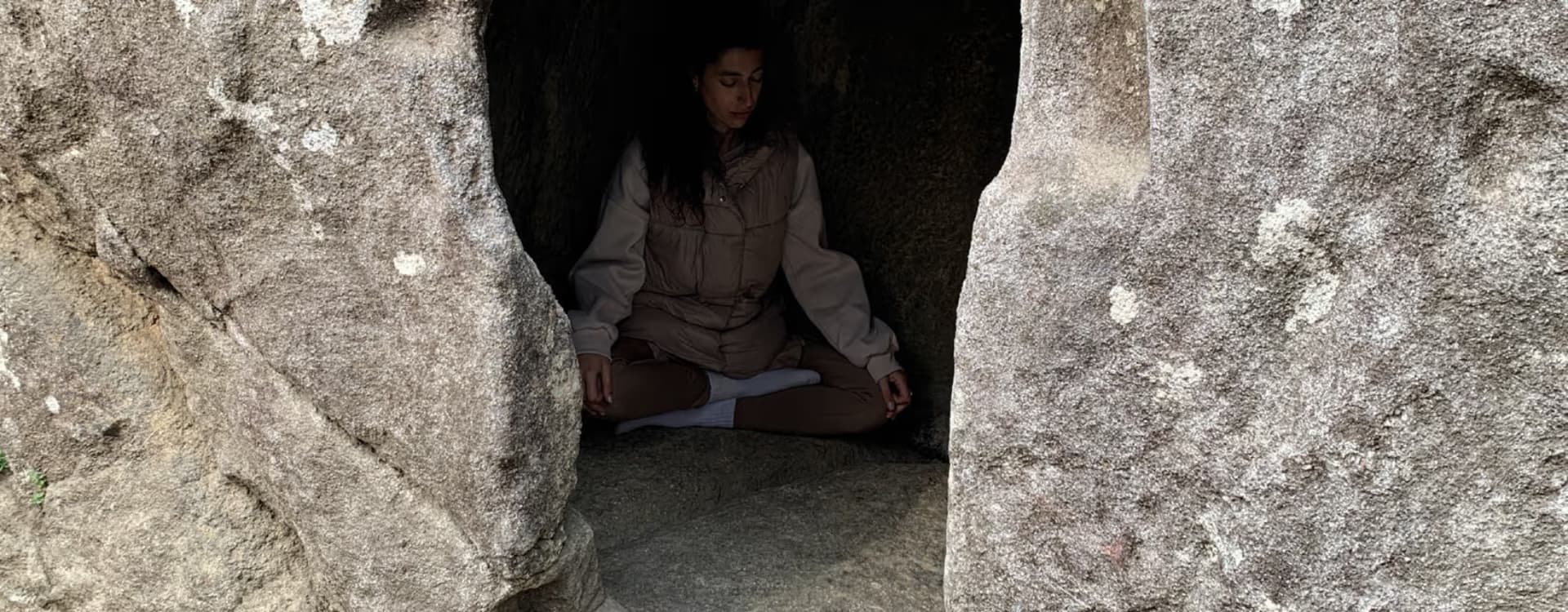
Piren Phu Cave, located near Burji village in upper Tsum, is one of the most important pilgrimage destinations in the Himalayan Buddhist world. Jetsun Milarepa (c. 1052-1135 CE), regarded as one of Tibet's greatest yogis and poets, is traditionally believed to have spent extended periods in meditation in this cave. The site contains ancient stone carvings, fragments of inscribed slate, and a small shrine maintained by the local monastic community. Pilgrims from Nepal, Tibet, and Bhutan travel here specifically to circumambulate the cave and receive merit from the sacred geography. Trekkers on this retreat visit Piren Phu as part of the upper Tsum itinerary, guided by context from the spiritual guide accompanying the group.

5. Pungyen Gompa: Meditation at 4,000 Meters With Manaslu Glacier Views

On the acclimatization day in Samagaon, the recommended side trip leads to Pungyen Gompa at approximately 4,000 meters. The monastery sits at the edge of the glacial moraine directly below the Manaslu glacier's terminus. The three-to-four hour ascent from Samagaon passes through yak pastures and gradually thins into a rocky alpine approach. At the monastery, the resident monks conduct daily prayers in an ancient stone prayer hall decorated with murals depicting the life of the Buddha and the Tibetan Buddhist cosmological wheel. The combination of altitude, glacial backdrop, and monastic quietude makes this side trip the most physically and spiritually concentrated single experience on the entire itinerary.

6. Ribung Monastery and the Mani Rimdu Festival Connection

Ribung Gompa in the village of Lho is among the most visually dramatic monasteries in the Manaslu region, positioned on a natural terrace with a direct sightline to the 8,163-meter summit of Manaslu. The monastery belongs to the Nyingma school and hosts the Mani Rimdu festival, a masked dance ceremony that dramatizes the victory of Buddhism over the pre-Buddhist Bon religion. Mani Rimdu at Ribung typically takes place in autumn, roughly aligned with the tenth month of the Tibetan lunar calendar. Trekkers who time their visit during the autumn window may witness this ceremony, which involves monks in elaborate costumes representing deities, demons, and the protective forces of the dharma.

7. A Structured Retreat Format, Not Just a Trek

The fundamental difference between this package and a standard circuit trek is the intentionality of the programming. Each day includes specific spiritual activities: walking meditation instructions from the guide, monastery visit protocols, evening reflection sessions, and designated silence periods. The pace of the itinerary has been constructed with retreat days built in at Samagaon and Mu Gompa rather than pushing the mileage toward a summit objective. Rest days are not rest days in the conventional sense but are intensive spiritual practice days. Trekkers are encouraged to arrive with a personal intention or question that they carry through the two weeks, using the physical demands of high-altitude movement and the cultural encounters along the way as material for reflection.


Trip Summary

DayDestination & ActivitiesDistanceTimeMountain Seen
1

Arrival in Kathmandu (1,400m) : Spiritual Orientation and Welcome Circle

10 km30 minsOn a clear day: Langtang Lirung, Ganesh Himal
2

Kathmandu → Machha Khola (930m): First Steps Toward Himalayan Stillness

160 km drive7-8 hoursGanesh Himal (en route)
3

Machha Khola → Jagat (1,340m)- Entering the Gateway of the Manaslu Region

14 km6–7 hrs-
4

Jagat → Deng (1,860m)- Trails Woven With Ancient Prayer

18 km6–7 hrsShringi Himal
5

Deng → Namrung (2,630m)- Wooded Valleys and Whispering Monasteries

19 km6-7 hrsHimal Chuli, Ganesh Himal
6

Namrung → Lho (3,180m)- Immersion in Monastic Mountain Life

10 km4-5 hrsManaslu North, Naike Peak
7

Lho → Samagaon (3,530m)- Meditation Amid the Mighty Manaslu

8 km4-5 hrsManaslu, Himal Chuli
8

Acclimatization in Samagaon (3,530m)- Rest, Pray, and Realign

6 km3-4 hrsManaslu, Birendra Peak
9

Samagaon → Lokpa (Tsum entry ~2,240m)- Transition Into Sacred Hidden Lands

17 km 6–7 hrs Ganesh Himal Range
10

Lokpa → Chumling / Chhokang (~3,000m)- Teachings and Cultural Bonding

12 km5–6 hrsGanesh Himal Range
11

Chhokang → Mu Gompa (3,700m)- High-Altitude Peace and Monk-Led Practice

10 km 4–5 hrsPika Himal
12

Mu Gompa → Deng (1,860m)- Return Journey Through Quiet Valleys

22 km 7–8 hrs -
13

Deng → Kathmandu (1,400m)- Reflection and Renewal

150 km drive8–9 hrs-
14

Kathmandu – Departure: Integration and Farewell

10 km30 minsHimalayan Range

Detailed Manaslu Spiritual & Monastic Retreat Trek Itinerary

Cost Details

Price Includes

1. Arrival, Departure & Ground Logistics

  • Private airport transfers (arrival & departure) in a comfortable tourist vehicle
  • All ground transportation as per itinerary (Kathmandu – Machha Khola – Kathmandu)
  • Experienced driver with fuel, tolls, parking, and road taxes covered

2. Accommodation

  • 3 nights in Kathmandu at a premium boutique hotel (Twin/Double sharing, BB plan)
  • Best available teahouse/lodge accommodation during trekking (Twin sharing basis)
  • Clean, hygienic rooms with mountain hospitality standards in remote regions

3. Meals & Dining

  • Daily breakfast in Kathmandu
  • Full board meals during trek (Breakfast, Lunch, Dinner)
  • Freshly prepared local and continental meals along the trail
  • Seasonal fruits served after dinner during trek

4. Trekking Crew & Support Team

  • Licensed, highly experienced English-speaking trekking guide
  • Assistant guide (for group size above 4 participants)
  • Strong and reliable porters (1 porter for every 2 trekkers; max 20–22kg load)
  • All staff wages, insurance, meals, accommodation, and equipment covered
  • Dedicated support ensuring safety, comfort, and cultural connection

5. Permits & Entry Fees

  • Manaslu Restricted Area Permit (MRAP)
  • Manaslu Conservation Area Permit (MCAP)
  • Annapurna Conservation Area Permit (ACAP, if applicable route overlaps)
  • Tsum Valley Restricted Area Permit
  • All required government taxes and official documentation

6. Spiritual & Cultural Experience

  • Guided monastery visits and cultural immersion experiences
  • Meditation and mindfulness sessions (self-guided / coordinated with local monks where accessible)
  • Entry fees to monasteries and cultural sites during the trek

7. Equipment & Safety

  • Company duffel bag (to be returned after trek)
  • Basic first aid kit carried by guide
  • Pulse oximeter for daily oxygen saturation monitoring
  • Assistance in arranging rescue operations (covered by client’s travel insurance)

8. Administrative & Service Charges

  • All government taxes and VAT
  • Official service charges
  • Trekking organization and logistics management fees

Price Excludes

1. International & Domestic Travel

  • International airfare to/from Kathmandu
  • Nepal entry visa fees (Visa on arrival available)

2. Personal Expenses

  • Lunch and dinner in Kathmandu
  • Tea, coffee, soft drinks, bottled water, and alcoholic beverages during trek (strictly not included as per policy)
  • Snacks, desserts, and personal food preferences
  • Hot showers, Wi-Fi, battery charging, and laundry services during trek

3. Travel Insurance & Emergency

  • Comprehensive travel insurance (mandatory) covering:
  • High-altitude trekking (up to 4,000m+)
  • Emergency helicopter evacuation
  • Medical treatment and trip interruption
  • Any evacuation or medical expenses (claimable via insurance)

4. Trekking Gear & Equipment

  • Personal trekking equipment (down jacket, sleeping bag, trekking poles, etc.)
  • Gear rental costs in Kathmandu if required

5. Tips & Gratitude

  • Tips for guide, porter, and driver (customary and highly appreciated)
  • Any additional staff or personal support requested

6. Unforeseen Circumstances

  • Costs arising from delays due to:
  • Weather conditions
  • Landslides, road blockages, or natural events
  • Political unrest or flight/transport disruptions
  • Additional accommodation or meals outside itinerary

7. Optional & Custom Services

  • Private upgrades (vehicle, helicopter transfers, luxury hotel upgrades)
  • Extra nights in Kathmandu beyond itinerary
  • Personal meditation instructors or private spiritual guides (on request basis)
Altitude in:
Scroll to view full route

Manaslu Spiritual & Monastic Retreat Trek Departures

Select Departure Date

Trip duration: 14 Days

May - Jun 2026

May 2026

Su
Mo
Tu
We
Th
Fr
Sa
1
2
3
4
5
6
7
8
9
10
11
12
13
14
15
16
17
18
19
20
21
22
23
24
25
26
27
28
29
30
31

June 2026

Su
Mo
Tu
We
Th
Fr
Sa
1
2
3
4
5
6
7
8
9
10
11
12
13
14
15
16
17
18
19
20
21
22
23
24
25
26
27
28
29
30
Your Trip
USD 1/ person

Best Price Guaranteed

2-3 People
USD 0/ Person
4-5 People
USD 0/ Person
6-11 People
USD 0/ Person
12-15 People
USD 0/ Person
16+ People
USD 0/ Person

Speak to an Expert

Laxmi Malla
Hari Kumar Shrestha
Himal Shrestha
Shiva Kumar Shrestha
UR Ghale

Himal Shrestha

Director 🇳🇵

Additional Information

Meet Our Expert Guides

Shiva Kumar Shrestha

Shiva Kumar Shrestha

Managing Director & Senior Guide

20 years of experience

I am an experienced and knowledgeable Senior Guide who has accompanied countless travelers throughout their time spent hiking in Nepal. Beginning my working life in 2004 as a porter, I am now a government-licensed trekking guide in Nepal with many years of experience. I was born and raised in the mountainous region of Dhading, and as a result, I have an in-depth understanding of the region's history, traditions, culture, and festivals. I have extensive experience trekking in the Everest, Annapurna, Langtang, Manaslu, and Dolpo regions.
Deepak Gurung

Deepak Gurung

Trekking Guide

12 years of experience

I have more than ten years of experience directing hikers across the high terrain of the Nepal Himalaya. I was born and grew up in the Gorkha highlands, which has given me profound awareness of the mountains and the way of life of the people who live in them. I have led numerous expeditions to Everest Base Camp and other locations in the Everest and Annapurna ranges. I received training from the Nepal Academy of Tourism and Hotel Management (NATHM) as a Trekking Guide. I am especially skilled at directing groups of senior citizens and families with children.
Ramsaran Shrestha

Ramsaran Shrestha

Senior Trekking Guide

19 years of experience

Anyone who spends some time with me will eventually recognize me for the respectful and knowledgeable gentleman that I am. I started working as a hiking guide at the end of the nineties. Since 2004, I have been one of Accessible Adventure's employees, and I currently have a position as one of the company's senior trekking guides. I am one of the most experienced, competent, and professional trekking guides, and I speak English fluently. I have traveled with trekking groups on an uncountable number of Nepal's trails.
Meena Karki

Meena Karki

Trekking Guide

13 years of experience

I am from the Kaski district in the Annapurna region of Nepal. Trekking has been my passion since childhood as I grew up seeing trekkers and hikers stepping up the trails for trekking adventures. Following my dreams, I took female trekking guide as my profession and now I have more than a decade of experience in this field. I have been to Everest, Annapurna, Langtang, Mustang and most of the trekking regions numerous times. With in-depth knowledge of routes, culture, and history, I ensure your trekking adventure is extra special.
Prakash Gurung

Prakash Gurung

Trekking Guide

8 years of experience

I am a young and enthusiastic guide with enough knowledge in guiding the Himalayas. Having sound experience in the trekking sector, I bring rich experience and readiness to assist trekkers with professionalism and dedication. I respect not only my own culture but also those of other communities. My unwavering commitment has been an enormous boon to the organization's ability to function smoothly. I recently received my license from the Ministry of Tourism Hotel Management tourist training center and have a certificate for providing first aid at high altitudes.
Ram Hari Dhamala

Ram Hari Dhamala

Trekking Guide

11 years of experience

I am a field member of Nepal's best trekking company with more than a decade of experience working in the field of travel and tourism. I am certified as a trekking guide and was brought up among the wondrous sights and sounds of Mother Nature in the picturesque town of Dhading. The rolling landscape complete with mountains, valleys, and rivers has always piqued my interest. Because of my deep love for the outdoors, I decided to pursue a career in tourism. My disposition is cordial and upbeat, and I am responsible and experienced.

Everything you need to know

Frequently Asked Questions About The Manaslu Spiritual & Monastic Retreat Trek

General

How many days does the Manaslu Spiritual Retreat Trek take?

The standard package is 14 days, including two nights in Kathmandu at the start and end of the trip. The active trekking period covers 10 days of movement plus two dedicated retreat days (one at Samagaon and one at Mu Gompa). Customized extensions of one to three days are available for groups that want more time in the Tsum Valley or additional monastery visits.

What makes this different from a standard Manaslu Circuit Trek?

The standard Manaslu Circuit crosses the Larkya La pass at 5,106 meters and focuses on completing a circuit. This retreat does not cross the pass. Instead, it branches into the Tsum Valley and prioritizes monastery visits, cultural immersion, and structured spiritual programming. It reaches a maximum elevation of 4,000 meters at Pungyen Gompa. The daily schedule includes guided meditation, evening reflection circles, and facilitated cultural exchanges that are not part of a standard circuit itinerary.

Is prior trekking experience required?

Prior trekking experience is strongly recommended but not strictly required. Participants should be able to walk five to seven hours daily on uneven terrain for consecutive days. The altitude profile, reaching 3,700 to 4,000 meters, means that cardiovascular fitness and comfort with mountain environments are important. Trekkers who have completed a multi-day hill or mountain trek in the past two years will find the transition to this itinerary manageable with appropriate preparation.

Can the trek be done during the monsoon?

The Tsum Valley receives less direct monsoon rainfall than the outer Himalayan ranges due to its protected position in the rain shadow. Experienced trekkers who accept the conditions of muddy trails, active leeches in the lower sections, and reduced mountain visibility can complete the trek during June through August. However, the standard departure windows offered by us are March through May and September through November.

How large are the groups?

Standard group sizes range from two to twelve participants. Groups of four to eight are considered ideal for the spiritual programming quality, as they are large enough to create a meaningful group dynamic in the reflection sessions but small enough to enter monastery spaces without disrupting the monastic community's daily life. Private departures for individuals or couples are available with a single supplement.

Similar Packages

Now Offering 100% Private Treks

Explore Nepal's breathtaking trails at your own pace with our exclusive private treks. No strangers, no rushed schedules—just you, your adventure, and complete flexibility. Enjoy personalized itineraries, expert guides, and a safety-first approach designed for unforgettable experiences.

Tailor-Made Itineraries

Plan your trek exactly how you want it. Choose destinations, duration, and activities that suit you.

Dedicated Guide & Porter

Enjoy expert guidance and personal assistance every step of the way.

Safety & Health Focus

We ensure proper acclimatization, medical support, and emergency readiness.

Flexible Scheduling

Pick your own travel dates and move at a pace that suits your adventure style.

Privacy & Comfort

Ideal for couples, families, and friends who want a fully private experience.