No cancellation fees. No hassle. Book Now, Cancellation Terms
Comparisons GuidesPeak Climbing+18
30 min readIsland Peak vs Mera Peak: Which Climb Should You Choose?
September 20, 2026
30 min
1 views
A side-by-side look at two of Nepal's most climbed 6,000-metre summits, and how to figure out which one actually fits you
Sooner or later, almost everyone researching a first Himalayan summit runs into the same fork in the road. Island Peak or Mera Peak. Both sit above 6,000 metres. Both are officially classified as trekking peaks by the Nepal Mountaineering Association, which makes them sound almost casual on paper. Neither one is casual once you are standing at base camp in the dark, and the two climbs are different enough that picking the wrong one for your fitness level, budget, or comfort with exposure can turn what should be the trip of a lifetime into a miserable slog.
We get asked this question constantly, often from climbers who have already read three or four other comparison articles and still feel unsure. Part of the confusion comes from the fact that both mountains get marketed as beginner-friendly, and both technically are, depending on what kind of beginner you are. A strong trekker who has never touched an ice axe will have a very different experience on each of these peaks than a climber who has done a mountaineering course but has limited high-altitude trekking behind them.
This guide breaks the comparison down honestly, section by section, covering difficulty, altitude, technical demands, route and scenery, cost, season, duration, and how each climb pairs with Everest Base Camp. By the end, you should have a clear sense of which mountain actually matches what you want out of the trip, rather than which one has the better marketing copy.
The Short Answer
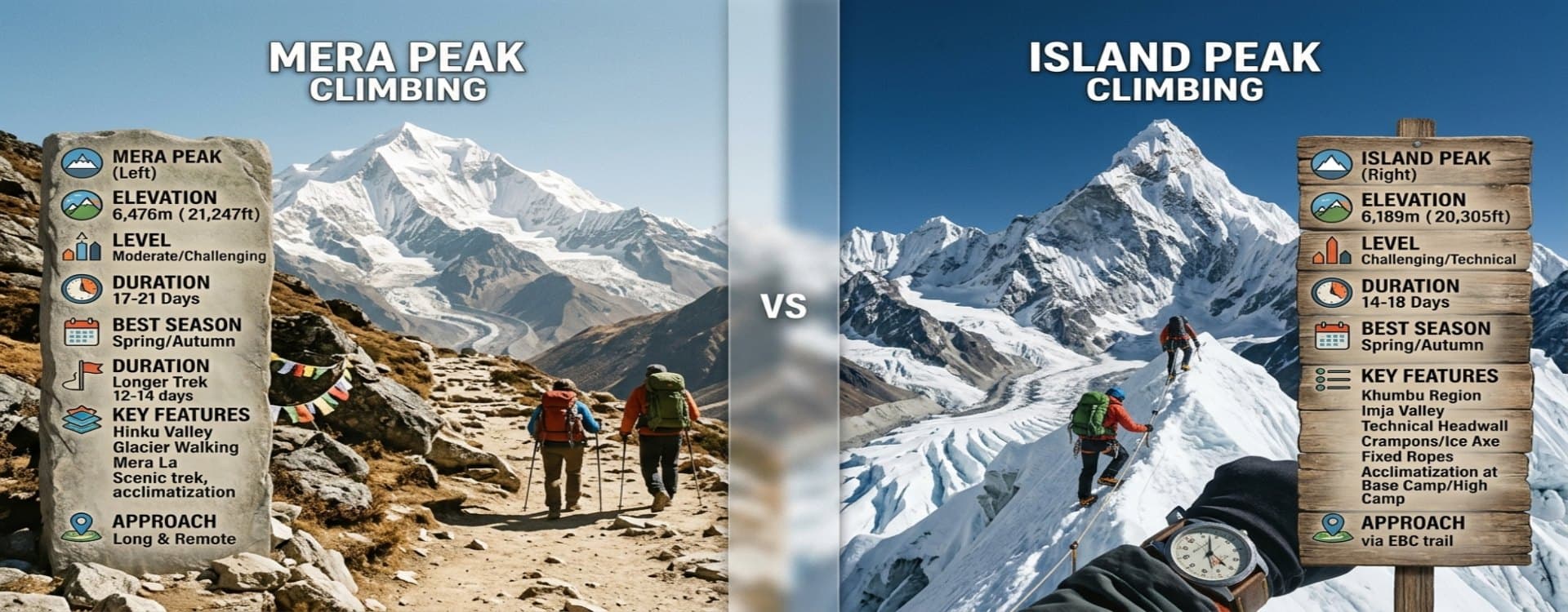
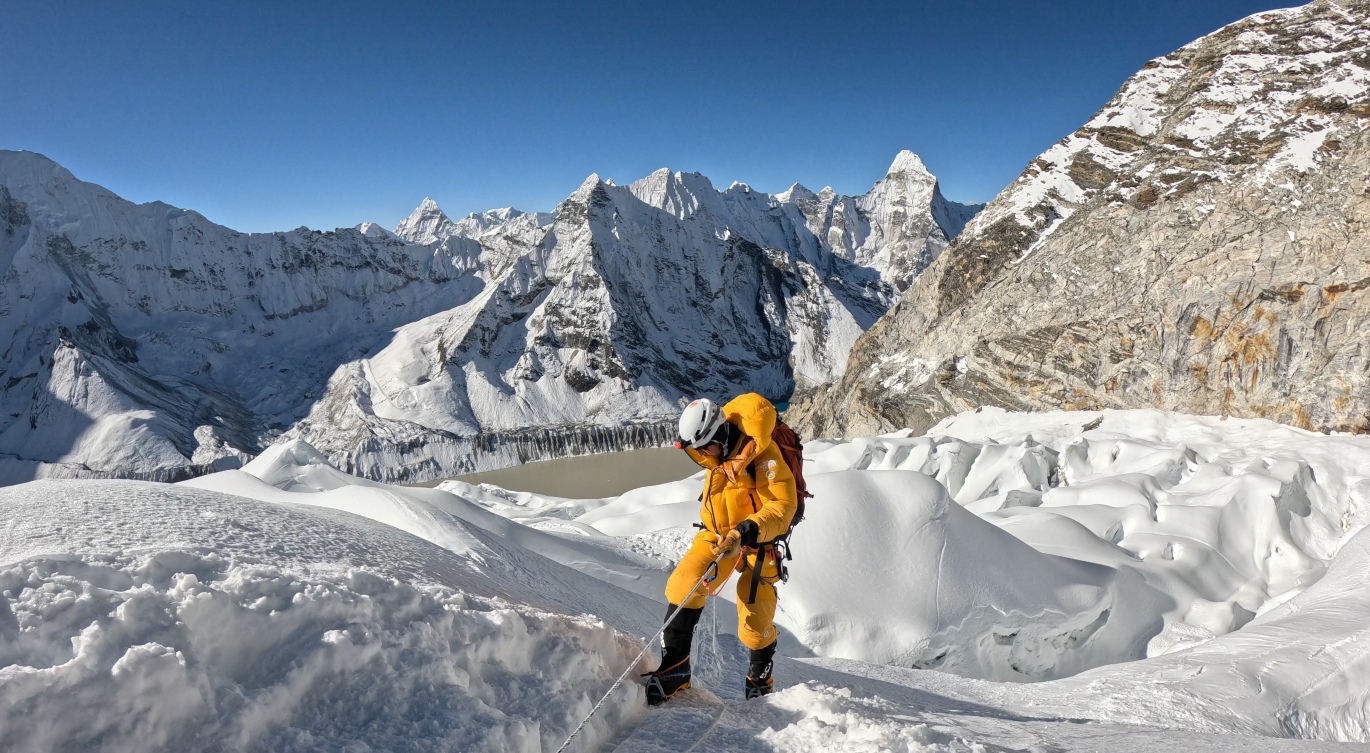
If you want the fastest possible summary before diving into the details, here it is. Mera Peak is higher at 6,476 metres and is the tallest trekking peak in Nepal, but it is far less technical. The climb is essentially a long, high-altitude glacier walk that tests stamina and acclimatisation more than climbing skill. Island Peak is lower at 6,189 metres but involves a genuinely technical summit push, including a glacier crossing, crevasse navigation, and a steep fixed rope headwall that demands comfort with a jumar and crampons on steep ground.
Put simply, Mera Peak asks more of your lungs and your patience. Island Peak asks more of your nerve and your technical comfort. Neither is objectively easier across the board, and the mountain that suits you best depends heavily on what kind of challenge you are actually looking for.
Island Peak vs Mera Peak at a Glance
|
Category |
||
|
Altitude |
6,189 metres |
6,476 metres, Nepal's highest trekking peak |
|
Region |
Khumbu, Everest region |
Hinku Valley, Makalu Barun National Park |
|
Technical difficulty |
Moderate to genuinely technical headwall |
Low, mostly a glacier walk |
|
Grading |
PD+ / Alpine Grade 2B |
F to PD, generally easier |
|
Typical duration |
14 to 18 days |
15 to 18 days |
|
Summit success rate |
Roughly 60 to 85 percent depending on conditions |
Roughly 75 to 90 percent with a well-built itinerary |
|
Combines well with |
Everest Base Camp trek |
Standalone or with Island Peak on longer trips |
|
Best for |
Trekkers wanting a technical introduction to rope climbing |
Trekkers wanting altitude and stamina without technical skill |
Difficulty: Where Each Climb Actually Gets Hard
The word difficulty means something different on each of these mountains, and understanding that difference is the single most useful thing you can take from this guide.
Mera Peak: A Test of Altitude and Endurance
Mera Peak's difficulty comes almost entirely from altitude and duration rather than technical climbing. The approach through the Hinku Valley is long, remote, and involves several consecutive days of five to seven hours of walking, often over uneven terrain with limited teahouse infrastructure compared to the busier Khumbu trails. By the time climbers reach Khare, the last permanent settlement before the mountain, the cumulative effect of altitude and daily exertion has already worn down anyone who arrived unprepared.
The summit push itself is comparatively gentle in technical terms. Most of the route above high camp is a straightforward glacier ascent on moderate snow slopes, using crampons and, in some seasons, fixed ropes on the steeper sections near the top. There is no equivalent of Island Peak's headwall. What there is instead is thin air at nearly 6,500 metres, biting cold, and six to seven hours of steady uphill walking before you even reach the summit ridge. Climbers who underestimate Mera Peak because it lacks technical terrain often discover, partway up summit night, that raw endurance at that altitude is its own serious obstacle.
Island Peak: A Test of Technical Nerve
Island Peak flips that equation. The approach trek to base camp, which largely follows the same trail used for Everest Base Camp, is demanding but familiar territory for anyone who has done a serious Khumbu trek before. Base camp itself sits at roughly 5,087 metres, lower than Mera Peak's high camp, and the approach does not carry the same remote, thinly supported character as the Hinku Valley.
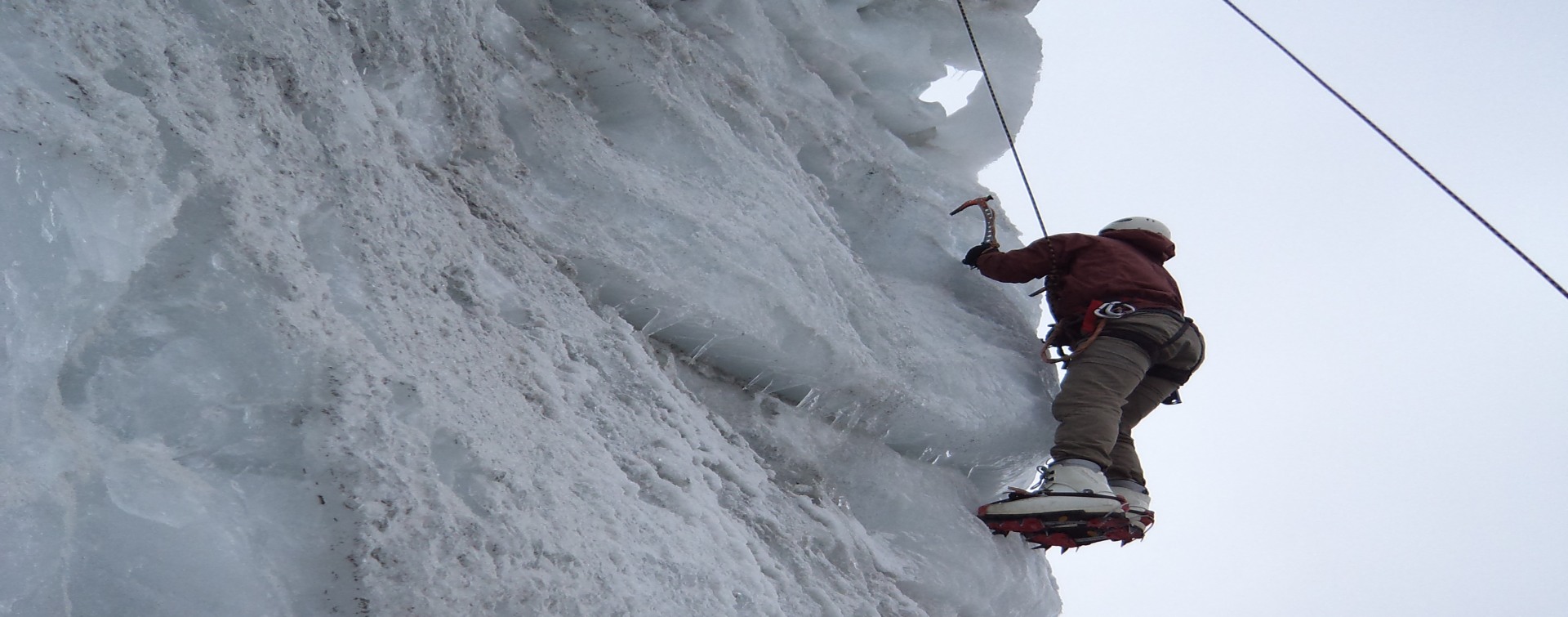
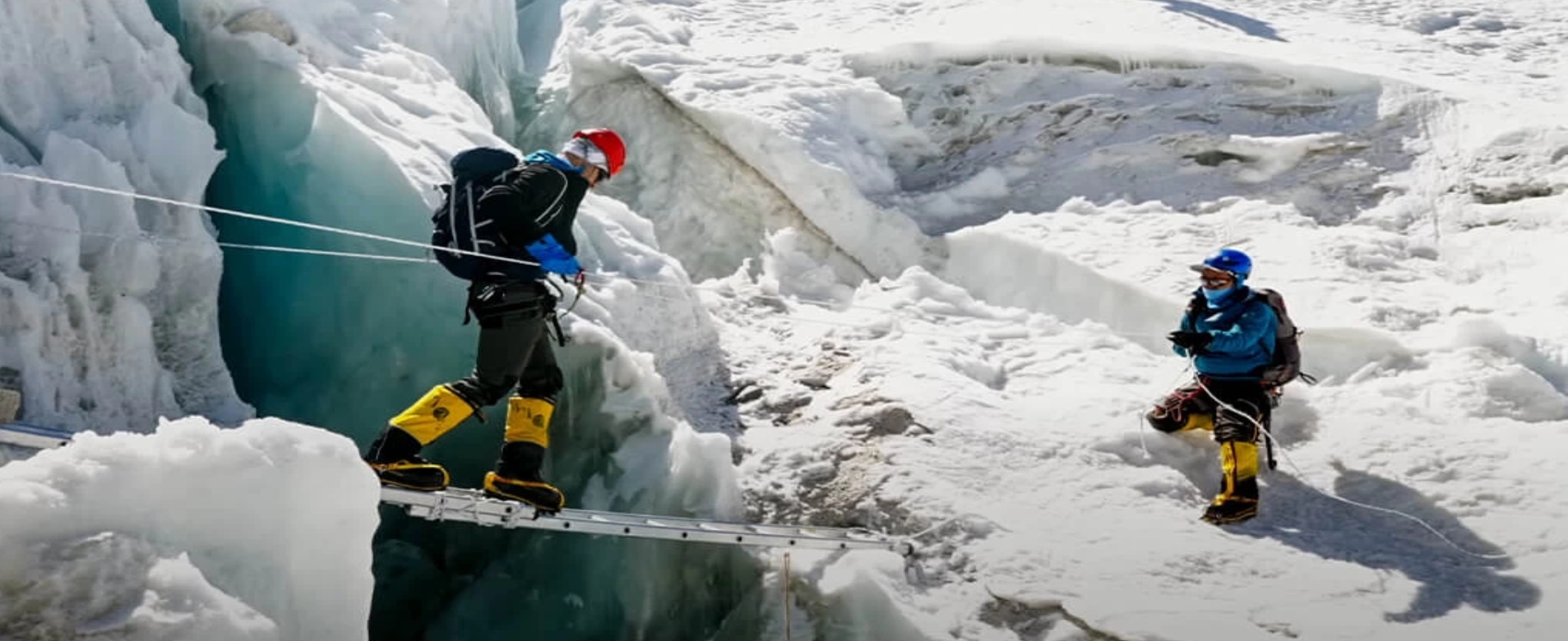
Where Island Peak earns its reputation is on summit day. After a steady hike over rock and moraine from base camp, the route reaches a glacier where climbers rope up and cross a stretch of crevassed terrain. Above that sits the headwall, a section of steep snow and ice typically running between 100 and 200 metres, graded around 45 to 60 degrees depending on the season and how much snow has bonded to the ice. Climbers ascend this on fixed ropes using a jumar, a piece of gear most first time climbers have never touched before their guide company runs them through a training session at base camp the night before.
This is a real technical section, not a token one. It demands comfort trusting a fixed line, basic jumar technique, and the ability to move confidently on steep ground in the dark, at altitude, after already hiking for several hours. Above the headwall, the summit ridge narrows and drops away on both sides, adding genuine exposure to the final stretch before the top.
So Which Is Actually Harder?
Technically, Island Peak is the harder climb. It involves rope work, a jumar ascent, crevasse crossings, and real exposure that Mera Peak simply does not have. Mera Peak, on the other hand, is often the more physically exhausting climb over the full itinerary, because of its longer, more remote approach and the sheer duration of summit night at extreme altitude.
A useful way to think about it: if what worries you is falling or being roped to a steep wall in the dark, Mera Peak will feel easier. If what worries you is simply running out of steam on a long, grinding ascent with thin air and no technical distraction to focus your mind, Mera Peak may actually feel harder despite its lower technical grade.
Altitude, Route, and Scenery
Mera Peak holds the title of Nepal's highest trekking peak at 6,476 metres, a full 287 metres above Island Peak's 6,189 metre summit. That altitude difference matters more than it might initially seem, since the effects of thin air become significantly more pronounced above 6,000 metres, and Mera's summit sits close enough to that extra threshold to be felt.
The two climbs also sit in genuinely different parts of Nepal, which shapes the entire feel of the trip beyond the summit day itself.
The Mera Peak Route Through the Hinku Valley
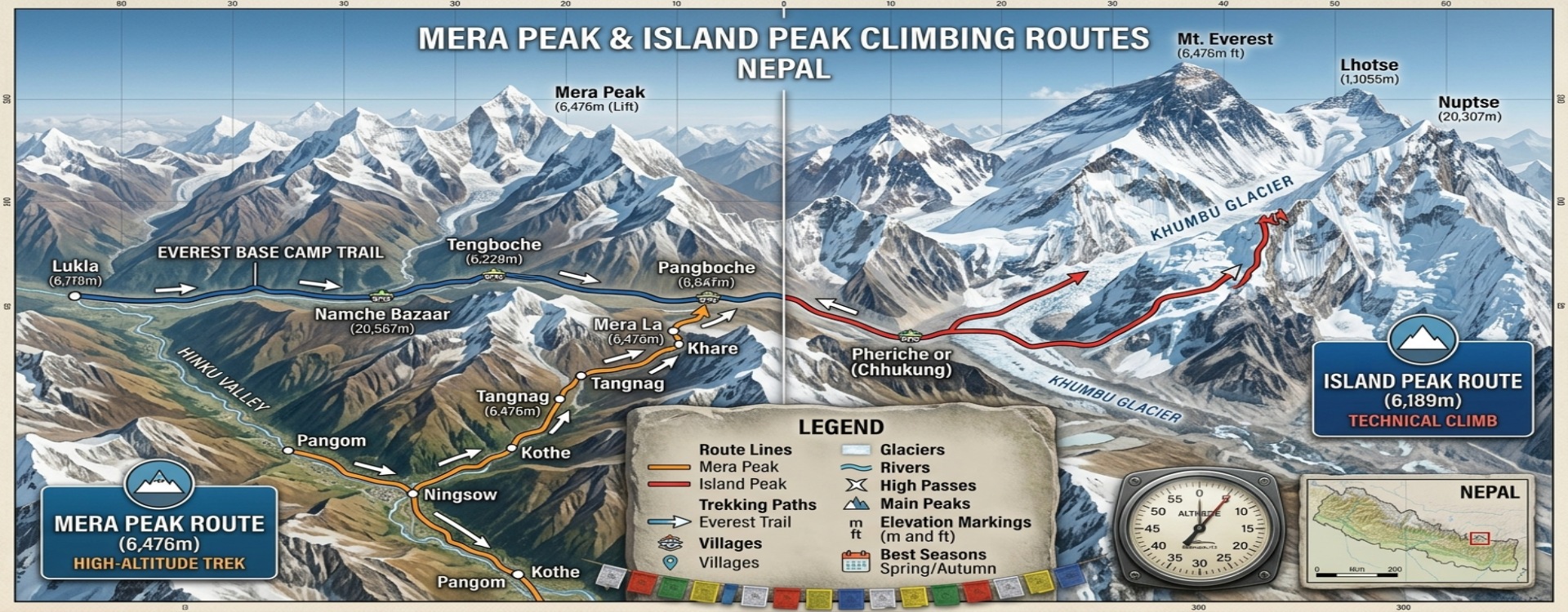
Mera Peak's approach begins in Lukla but almost immediately diverges from the well-travelled Everest Base Camp trail, heading south into the Hinku Valley instead. Climbers cross the Zatrwa La pass at around 4,600 metres early in the trek, a demanding day that separates the Khumbu drainage from the quieter, more forested Hinku Valley beyond. From there the route runs through Kothe, Thagnak, and up to Khare, gaining altitude steadily through pine and rhododendron forest before the trees give way to open moraine and glacier.
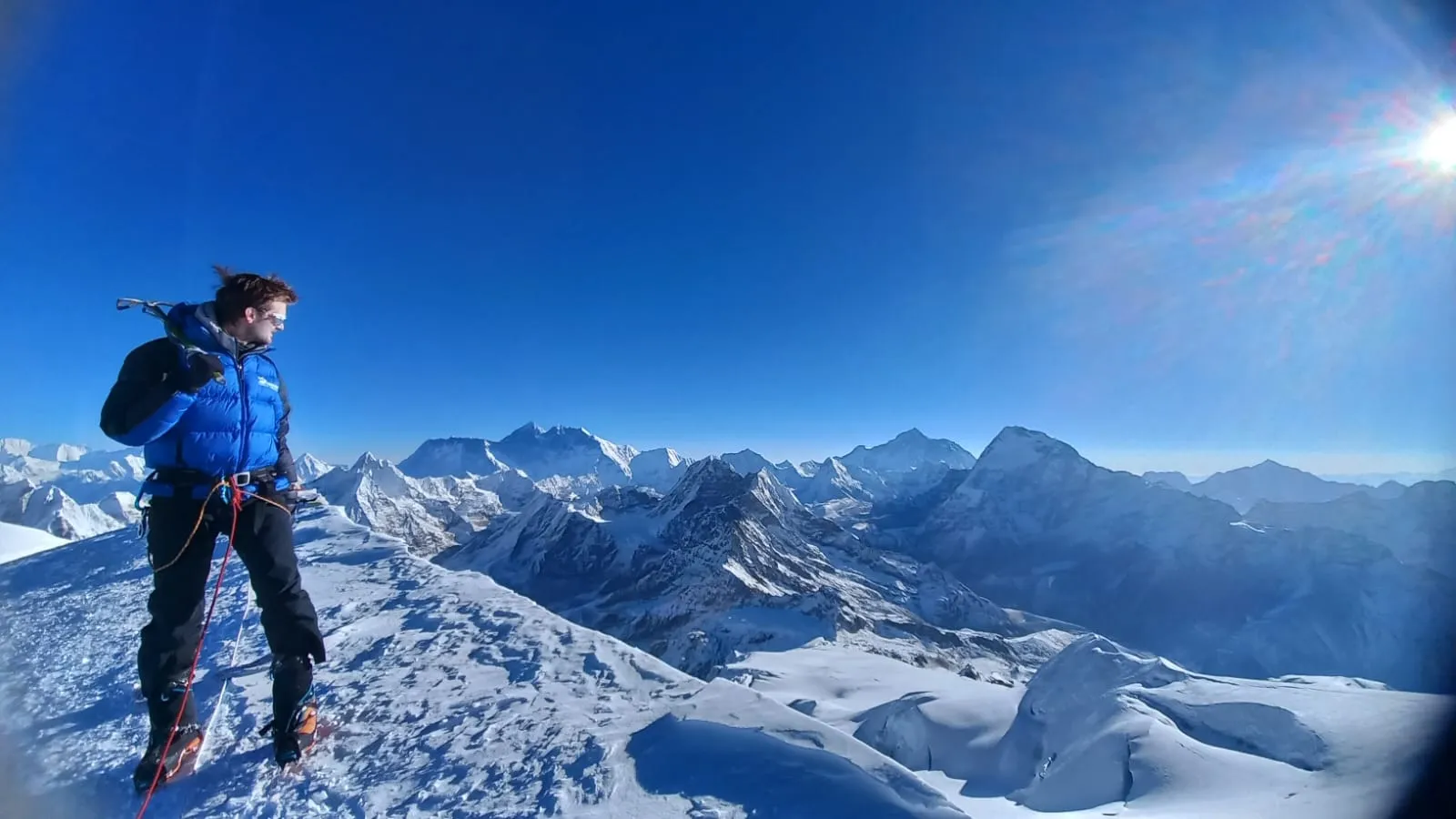
This is a genuinely remote trail. Teahouses are simpler and less frequent than in the Khumbu, and the wildlife and forest scenery along the lower valley have a wilder, less touristy character. The reward at the top is one of the widest panoramas from any trekking peak in Nepal, with five 8,000-metre giants visible from the summit on a clear day: Everest, Lhotse, Makalu, Cho Oyu, and Kanchenjunga.
The Island Peak Route Through the Khumbu
Island Peak's approach shares the classic Everest Base Camp trail for most of its length, passing through Namche Bazaar, Tengboche, and Dingboche before branching east toward Chhukung and the Imja Valley. This route benefits from the best trekking infrastructure in Nepal, with well-established teahouses, reliable food, and a trail thousands of trekkers walk every season.
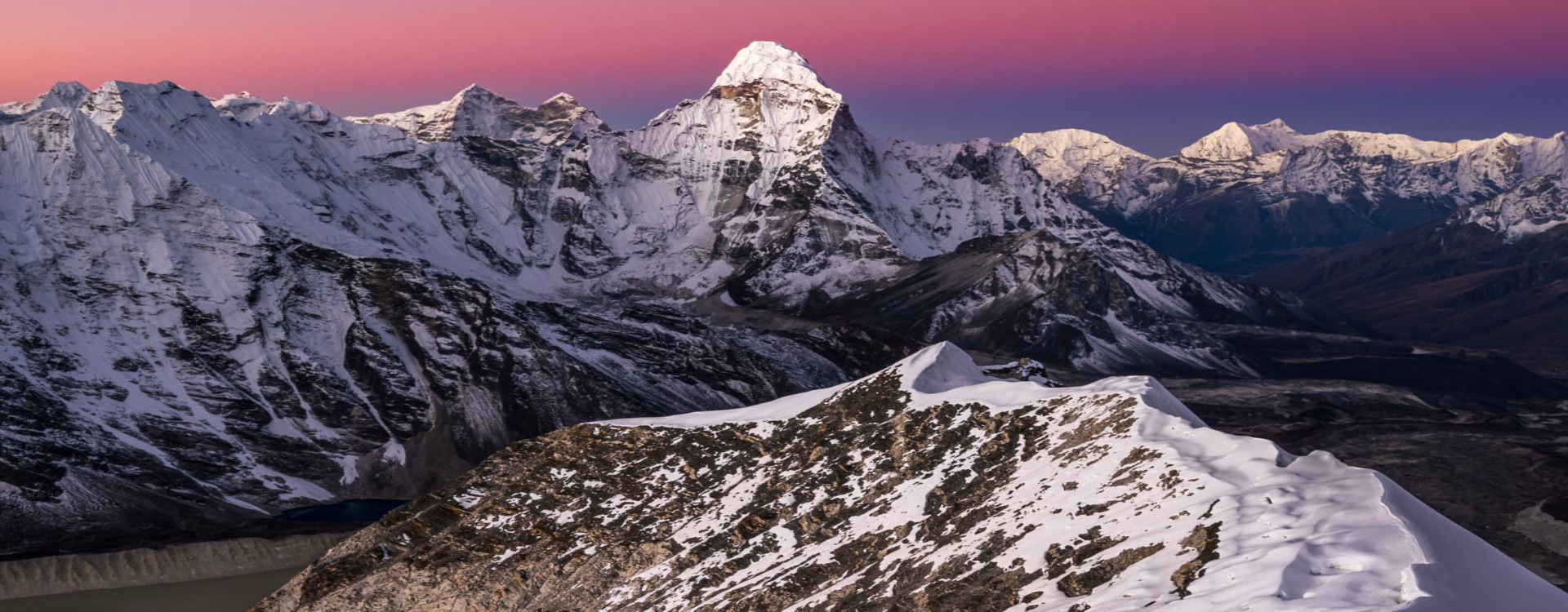
The scenery leans dramatic rather than wild. Island Peak sits wedged between the towering south face of Lhotse and the elegant profile of Ama Dablam, and the summit view is dominated by close-up walls of ice and rock rather than the sweeping, distant panorama Mera Peak offers. For climbers who want to stand surrounded by steep, glaciated giants at close range, Island Peak delivers that experience in a way Mera Peak, with its wider and more distant views, does not quite match.
Cost Comparison
Cost is often the deciding factor once climbers have narrowed things down between these two peaks, and the honest answer is that the two climbs land in a similar price bracket overall, though the details differ enough to matter.
Both Island Peak and Mera Peak are classified as Group B trekking peaks by the Nepal Mountaineering Association, meaning they share the same permit fee structure. As of the current NMA schedule, foreign climbers pay 350 US dollars per person for a spring ascent and 175 US dollars for an autumn, winter, or summer climb on either mountain. Since the government fee is identical, the total package price mostly comes down to itinerary length, group size, and service tier rather than which peak you choose.
A full Island Peak package with us typically runs between 1,600 and 3,800 US dollars per person, covering permits, a licensed guide, teahouse accommodation, meals on trek, Lukla flights, and climbing equipment support. Mera Peak packages tend to sit in a broadly similar range, generally between 2,200 and 3,500 US dollars for a comprehensive 17 to 18 day itinerary, with the small variation usually explained by the extra day or two the longer Hinku Valley approach often requires.
Neither of these figures includes international airfare to Nepal, personal climbing gear you choose to buy rather than rent, or travel insurance rated for helicopter rescue above 6,000 metres, all of which apply equally regardless of which peak you climb.
Duration and Itinerary Structure
Both climbs typically run somewhere between two and a half and three weeks door to door, though the internal structure of each itinerary looks different.
Mera Peak Itinerary Shape
A standard Mera Peak itinerary runs 15 to 18 days. The first several days are dedicated to the long approach through the Hinku Valley, with the crossing of Zatrwa La early on setting the tone for a physically demanding trek before any climbing begins. Acclimatisation is built in through gradual altitude gain along the valley rather than dedicated rest days at any one village, since there simply are not major settlements in the Hinku Valley the way there are in the Khumbu. A pre-climb training day at Khare covers crampon and rope basics before the push to high camp and the summit.
Island Peak Itinerary Shape
Island Peak itineraries generally run 14 to 18 days as well, but the structure looks more familiar to anyone who has researched Everest Base Camp, since the trail overlaps for much of the route. Dedicated acclimatisation days at Namche Bazaar and Dingboche are standard, followed by the branch east to Chhukung and base camp, a technical training day covering jumar and crampon technique, and then the summit push itself. Because the approach follows established Khumbu infrastructure, weather delays and itinerary adjustments tend to be easier to manage than in the more remote Hinku Valley.
Combining With Everest Base Camp
This is one of the more practical differences between the two climbs, and it often ends up being the deciding factor for climbers who also want to see Everest Base Camp and Kala Patthar on the same trip.
Island Peak has a clear natural advantage here. Because its approach trail is the same trail used for Everest Base Camp, many climbers simply extend their itinerary to include a side trip to EBC and Kala Patthar before heading east to Chhukung for the climb. We run a combined Island Peak plus Everest Base Camp package for exactly this reason, and it works well logistically since no backtracking to Lukla is required partway through the trip.
Mera Peak is harder to combine with Everest Base Camp in a single efficient trip. Because the Hinku Valley and the Khumbu are separate drainages accessed by different trails from Lukla, adding Everest Base Camp to a Mera Peak itinerary generally means returning most of the way to Lukla after the Mera summit and then starting the EBC trail largely from scratch. It is possible, and some climbers do combine the two mountains themselves in one extended 26 to 30 day expedition, but it adds significant time, cost, and physical demand, and it is not something we would recommend to a first time climber without a strong fitness base.
Best Season for Each Climb
Both mountains share the same two established climbing windows in Nepal, spring from roughly March through May and autumn from September through November, with autumn being the more popular and slightly cheaper season on both peaks due to the lower NMA permit rate outside spring.
On Island Peak, the two seasons bring a noticeably different character to the headwall. Spring climbs tend to meet harder, more consolidated blue ice, which rewards precise crampon technique. Autumn climbs, coming after the monsoon, often find softer, more forgiving snow conditions on the same section, though sometimes slower going underfoot.
On Mera Peak, seasonal differences show up more in weather stability and visibility than in the character of the climbing terrain itself, since the route is mostly a snow and glacier walk regardless of season. Spring offers rhododendrons in bloom along the lower valley and generally stable weather, while autumn tends to bring the clearest skies and the best odds of an unobstructed summit panorama. Both seasons carry real weather risk on Mera Peak specifically, since sudden storms in the Hinku Valley have stranded climbers in past seasons, which is part of why a properly built acclimatisation schedule and an experienced guide team matter as much as the calendar month you choose.
Summit Success Rates
Success rate figures vary considerably depending on the source and the specific season referenced, but the general pattern holds across most reporting. Mera Peak tends to post higher summit success rates overall, commonly cited in the range of 75 to 90 percent for well-prepared groups on longer itineraries, with some seasons and operators reporting figures closer to 95 percent under ideal conditions. Poorly built shorter itineraries with insufficient acclimatisation have historically pulled that average down in specific seasons, underscoring how much the itinerary length itself affects the outcome on this particular mountain.
Island Peak's reported success rates run somewhat lower and more variable, commonly cited between 60 and 85 percent, reflecting the fact that the technical headwall introduces a failure point that simply does not exist on Mera Peak. A climber who is fit enough to reach base camp on Mera Peak has a genuinely good chance of standing on the summit. A climber who is fit enough to reach Island Peak base camp still has to get through the headwall, and not everyone who arrives fit and acclimatised finds that section straightforward on the day.
The takeaway is not that one mountain is inherently safer or more reliable than the other. It is that the two climbs fail in different ways. Mera Peak attempts most often fall short because of altitude and fatigue accumulated over a long approach. Island Peak attempts most often fall short at one specific, identifiable point on the route.
Fitness and Preparation for Each Peak
The physical preparation for both climbs overlaps heavily, since both demand a solid trekking fitness base built around multi-day hiking with a pack, cardiovascular conditioning, and some altitude exposure beforehand if possible. Where the two diverge is in the specific skills worth prioritising in the months before departure.
Preparing for Mera Peak
• Long duration cardio training, since summit night can run six to eight hours of steady uphill walking at extreme altitude
• Multi-day hiking with a loaded pack to build the stamina the long Hinku Valley approach demands
• Basic familiarity with crampons is helpful but not essential, since the technical demands are modest
• Mental preparation for a genuinely remote trail with simpler infrastructure than the Khumbu
Preparing for Island Peak
• General trekking fitness built the same way as for Everest Base Camp, since the approach overlaps
• Some prior comfort with crampons and an ice axe, even a single indoor session, meaningfully reduces first time nerves on the headwall
• Upper body and core strength work specifically for the jumar ascent on the fixed rope section
• Comfort with exposure, since the summit ridge is narrow and drops away on both sides
What Summit Day Actually Feels Like on Each Mountain
Numbers on a page rarely convey what a summit push actually feels like at 2am with a headlamp and cold fingers. Walking through both summit days side by side makes the practical difference between these two climbs much easier to picture.
Summit Night on Mera Peak
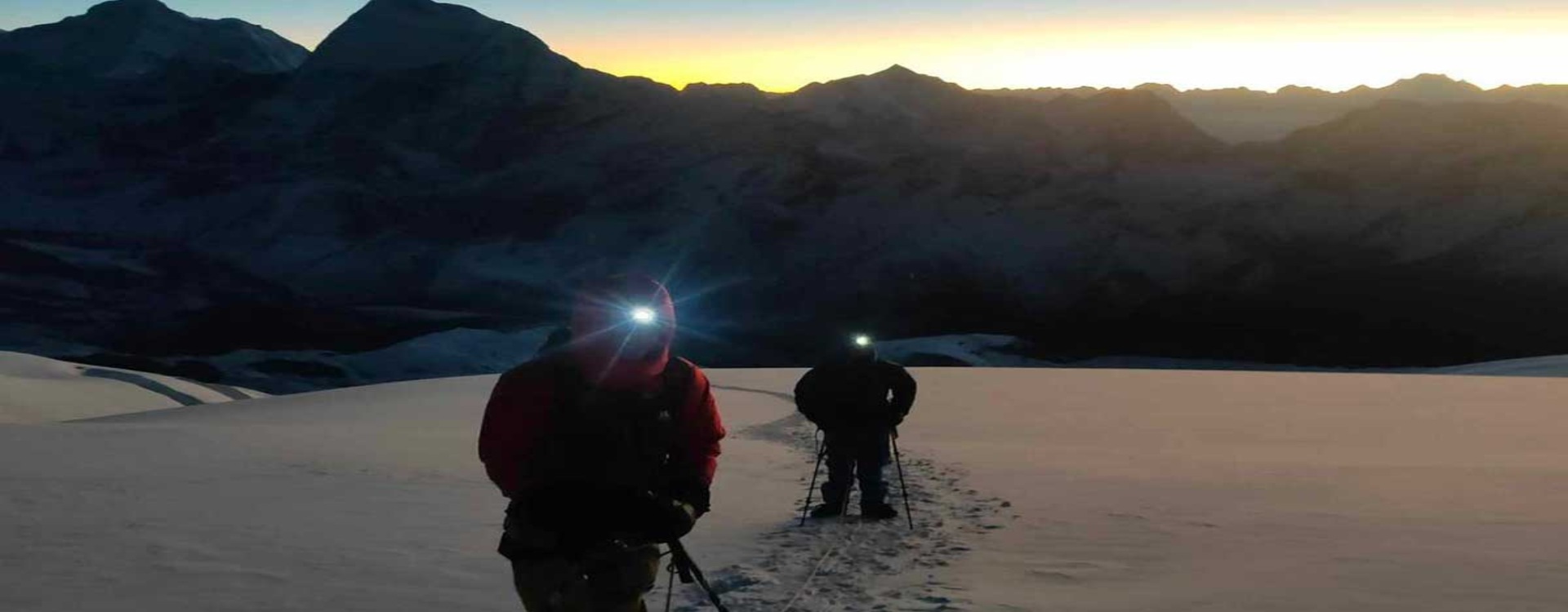
Most teams leave high camp, sitting around 5,780 metres, somewhere between midnight and 2am. The first stretch is a steady, unrelenting uphill slog on snow, using crampons from the outset since the terrain is glaciated almost the entire way. There is no scrambling section, no rock band to navigate, and no rope work beyond clipping into a fixed line on the steepest final approach in some seasons. What there is instead is hour after hour of the same repetitive motion at extreme altitude, where the air holds roughly half the oxygen available at sea level.
The mental challenge on Mera Peak summit night is almost entirely about pacing and patience. Climbers who push too hard in the first two hours often find themselves badly depleted by hour four, still with real distance to cover. The summit itself, once reached, opens onto one of the widest 8,000 metre panoramas available anywhere in Nepal, which for many climbers makes the six to eight hours of grinding ascent worth every step. The descent back to high camp and then onward to Khare is long but technically simple, and fatigue rather than danger tends to define the way down.
Summit Night on Island Peak
Island Peak summit night usually begins slightly later, often between midnight and 3am from base camp at roughly 5,087 metres. The first several hours are a hike over rock and scree, non-technical but tiring in the dark, before the terrain shifts abruptly at the glacier. Climbers rope up here, and the character of the climb changes completely. What follows is a crevasse crossing, then the headwall itself, a sustained section of steep snow and ice where a jumar does the real work of ascending the fixed rope while crampon points bite into the ice below.
This section demands active concentration in a way Mera Peak's summit push does not. Climbers are managing gear, trusting a rope system many have never used before this trip, and doing so while tired from several hours of hiking already behind them. Above the headwall, the narrow summit ridge adds a final stretch of genuine exposure before the top. The descent reverses the entire sequence, meaning the headwall has to be downclimbed or rappelled while legs are already fatigued, which is its own distinct challenge that Mera Peak's descent simply does not include.
How to Train for Each Climb in the Months Before Departure
Preparation timelines for both mountains look similar on paper, generally starting in earnest three to four months before departure, but the emphasis within that training window should shift depending on which peak you have chosen.
A General Training Framework
• Four months out: build a baseline of three to four cardio sessions per week, mixing hiking, running, or cycling with at least one longer session on the weekend
• Three months out: add a weighted pack to hikes, working up toward carrying 8 to 10 kilograms over several hours on varied terrain
• Two months out: introduce stair climbing or hill repeats specifically, since summit night on either mountain is sustained uphill effort with no flat recovery sections
• One month out: taper volume slightly while maintaining intensity, and prioritise sleep and injury prevention over adding new training stress this close to departure
Extra Focus for Mera Peak
Because Mera Peak's difficulty is almost entirely about sustained effort at extreme altitude, training should lean heavily toward long duration cardio sessions, ideally including at least a few multi-hour hikes with a loaded pack in the two months before departure. Time at altitude before the trip, even a weekend at a modest elevation, helps some climbers gauge how their body tends to respond, though it is not a substitute for the gradual acclimatisation schedule built into the itinerary itself.
Extra Focus for Island Peak
Island Peak training benefits from the same cardio base, but with added attention to upper body and core strength, since the jumar ascent on the headwall relies on arm and shoulder strength in a way Mera Peak's climb simply does not demand. Pull-ups, rows, and core stability work in the two months before departure make a noticeable difference to how the headwall feels on the day. If it is possible to get even one session with crampons and an ice axe before the trip, whether at an indoor wall or on a guided day out, it meaningfully reduces the unfamiliarity of using that gear for the first time in the dark at altitude.
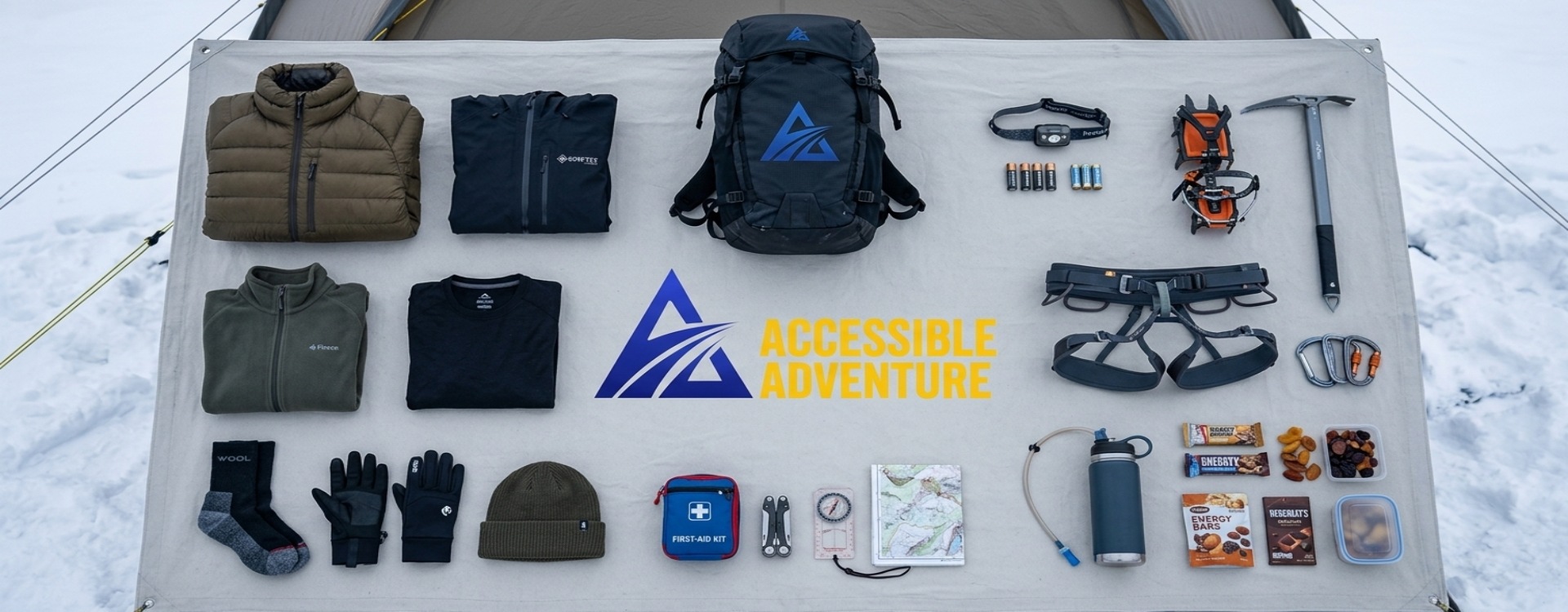
Gear Differences Between the Two Climbs
The core gear list for both mountains overlaps substantially, since both require the same cold weather clothing system, sleeping gear, and trekking equipment for the multi-day approach. The technical climbing kit is broadly similar too, with mountaineering boots, crampons, a harness, an ice axe, a helmet, and an ascender all appearing on both packing lists.
Where the lists genuinely diverge is in how that gear gets used. On Island Peak, the jumar and the fixed rope system see sustained, active use on the headwall, and climbers benefit from testing the exact model of ascender their operator provides during the base camp training session rather than assuming familiarity from a single practice run. On Mera Peak, the same equipment is carried and may be used on isolated steeper sections in some seasons, but it does not see the same sustained demand, and the climb places more weight on layering and hand and foot warmth across a longer, colder summit push.
Footwear deserves a specific mention. Because Mera Peak's route is glaciated almost from high camp onward, insulated mountaineering boots rated for extreme cold matter enormously, since climbers spend six to eight hours continuously on snow and ice. Island Peak's approach includes more rock and moraine before the glacier, so boot choice involves a slightly different balance between warmth and comfort on mixed terrain during the earlier, non-technical hours of the push.
So Which One Should You Choose?
There is no universally correct answer here, only the answer that fits your goals, but a few patterns tend to hold up consistently across the climbers we have guided on both mountains.
Choose Mera Peak if you want the highest trekking peak summit in Nepal, you are drawn to a remote, less crowded trail, and your main goal is testing your stamina and altitude tolerance rather than learning technical rope skills. It also tends to suit climbers who want the lower-stress option in terms of technical risk, since there is no equivalent of a headwall to get through.
Choose Island Peak if you want a genuine introduction to technical mountaineering, including rope work, a jumar ascent, and real exposure, and you would like the option to combine your climb with Everest Base Camp on the same trip. It also suits climbers who prefer the busier, better supported Khumbu trail over a more remote approach.
A number of experienced climbers eventually do both, often on separate trips a year or two apart, using Mera Peak as an introduction to high altitude and Island Peak as the step up into technical terrain, or the reverse depending on which skill set they want to build first. If time and budget allow, some operators, including ourselves, offer a combined 26 to 30 day expedition covering both summits, though this is a serious undertaking better suited to climbers with a strong existing fitness base than to a first Himalayan trip.
Making Your Decision With Confidence
Both Island Peak and Mera Peak deliver a legitimate 6,000 metre Himalayan summit, a proper certificate from the Nepal Mountaineering Association, and views that stay with climbers long after the trip ends. Neither is a climb to take lightly, and neither is reserved for elite mountaineers either. They sit in a sweet spot that has made trekking peaks in Nepal one of the most accessible entry points into real high-altitude mountaineering anywhere in the world.
If you are still weighing the decision, think honestly about what kind of hard you are looking for. A long, grinding test of lungs and patience points toward Mera Peak. A shorter but genuinely technical test of nerve and rope skill points toward Island Peak. Either way, the right preparation, a properly built acclimatisation schedule, and an experienced guide team matter more to your outcome than which mountain you ultimately pick.
When you are ready to talk through your dates, fitness background, and which of these two climbs fits your goals, we can walk you through a realistic itinerary for either mountain, permit by permit and day by day.
Frequently Asked Questions
Both are considered beginner friendly trekking peaks, but in different ways. Mera Peak suits beginners who want a genuine 6,000-metre summit without technical climbing, since the route is mostly a glacier walk. Island Peak suits beginners who are comfortable learning basic rope and ice techniques along the way, since the headwall does require some technical comfort even with guide training.
Mera Peak is higher at 6,476 metres, making it the tallest trekking peak in Nepal. Island Peak stands at 6,189 metres, 287 metres lower.
Island Peak is significantly more technical. It involves a glacier crossing, crevasse navigation, and a steep fixed rope headwall requiring jumar technique. Mera Peak's standard route is largely non-technical, involving mostly a snow and glacier walk on moderate terrain.
In technical terms, yes. Mera Peak does not have an equivalent of Island Peak's headwall. However, Mera Peak's longer, more remote approach and its higher summit altitude can make it feel more physically demanding overall, particularly on summit night.
Yes, some operators offer combined expeditions covering both summits over 26 to 30 days. This is a serious undertaking that requires strong fitness and significant time, and it is generally better suited to climbers with prior high altitude experience than to a first Himalayan trip.
Mera Peak generally posts higher success rates, commonly cited between 75 and 90 percent on well built itineraries, since altitude and endurance are the main obstacles. Island Peak's success rates run somewhat lower, typically between 60 and 85 percent, since the technical headwall introduces an additional point where climbers can turn back.
No, prior climbing experience is not strictly required for either mountain. Guiding teams provide training in crampon and rope technique before the summit push on both peaks. What matters more is a solid trekking fitness base and, for Island Peak specifically, a reasonable comfort level with exposure and steep terrain.
Both peaks fall under the same NMA Group B permit fee structure, so the government cost is identical. Total package pricing tends to be broadly similar between the two, generally in the range of 1,600 to 3,800 US dollars, with small differences driven by itinerary length and group size rather than which mountain you choose.
Yes, and this is a common and popular combination. Because Island Peak's approach trail overlaps with the standard Everest Base Camp route, climbers can visit EBC and Kala Patthar before heading east to Chhukung for the climb, all within a single efficient itinerary.
It is possible but considerably less efficient, since the Hinku Valley and the Khumbu are accessed by different trails from Lukla. Combining the two generally means returning most of the way to Lukla after the Mera summit before starting the EBC trail, which adds significant time and cost.
Both mountains share the same two climbing windows, spring from roughly March through May and autumn from September through November. Autumn tends to be slightly cheaper on both peaks due to the lower NMA permit rate outside spring, and it often offers clearer skies for summit views.
Island Peak itineraries typically run 14 to 18 days, while Mera Peak itineraries typically run 15 to 18 days. The extra day or two on Mera Peak is usually accounted for by the longer Hinku Valley approach.
This depends on personal preference. Mera Peak offers a wider, more distant panorama, with five 8,000-metre peaks visible on a clear day, including Everest, Lhotse, Makalu, Cho Oyu, and Kanchenjunga. Island Peak offers closer, more dramatic views, sitting wedged between the south face of Lhotse and Ama Dablam.
Yes. Nepal's mountaineering regulations require a licensed guide for any NMA managed trekking peak, and the climbing permit for both mountains can only be issued through a government registered trekking agency. Solo climbing without a guide is not a legal option on either peak.
Altitude sickness risk is somewhat higher on Mera Peak given its greater summit elevation and the more remote nature of the approach, which offers less flexibility for adjusting the itinerary around symptoms. Both mountains carry genuine AMS risk above 5,000 metres, and a gradual, well built acclimatisation schedule is the single most important protective factor on either climb.
There is no strict rule here, and experienced climbers approach it both ways. Some prefer Mera Peak first, using it purely as an altitude and endurance test before adding technical rope skills on Island Peak. Others prefer Island Peak first, building technical comfort before taking on Mera Peak's longer, higher altitude challenge. Either sequence works if there is adequate time and fitness between the two trips.
About Accessible Adventure
Bringing unforgettable Himalayan adventures to everyone. Our expert guides and carefully curated experiences ensure that everyone can explore the beauty of Nepal, Tibet, and Bhutan.
Learn More