Planning a Custom Nepal Trip: What to Tell Your Travel Planner
Field-reviewed by Hari Kumar Shrestha
Most people who write to us about a custom Nepal trip start the same way. They have a rough idea, a few saved photos of snowy peaks, and a feeling that they want "some trekking and maybe something else." That is a fine place to begin. We plan trips from much less, and a good planner can work with a loose idea.
What speeds everything up is a handful of details. The clearer we are on your dates, your group, your experience, and your priorities, the sooner we can suggest routes that fit your real situation. A first message with the right information saves several rounds of emails and usually leads to a stronger first proposal.
This guide covers what to tell a travel planner when you ask for a tailor-made trip to Nepal. Arrive with what you know. Gaps are normal, and filling them is part of our job. Near the end you will find a checklist you can copy into an email, followed by a short hypothetical inquiry so you can see how the pieces fit together.
If you would rather skip ahead and start the conversation now, you can plan your tailor-made Nepal trip with us directly. Otherwise, read on and build your message first.
Why the first message matters
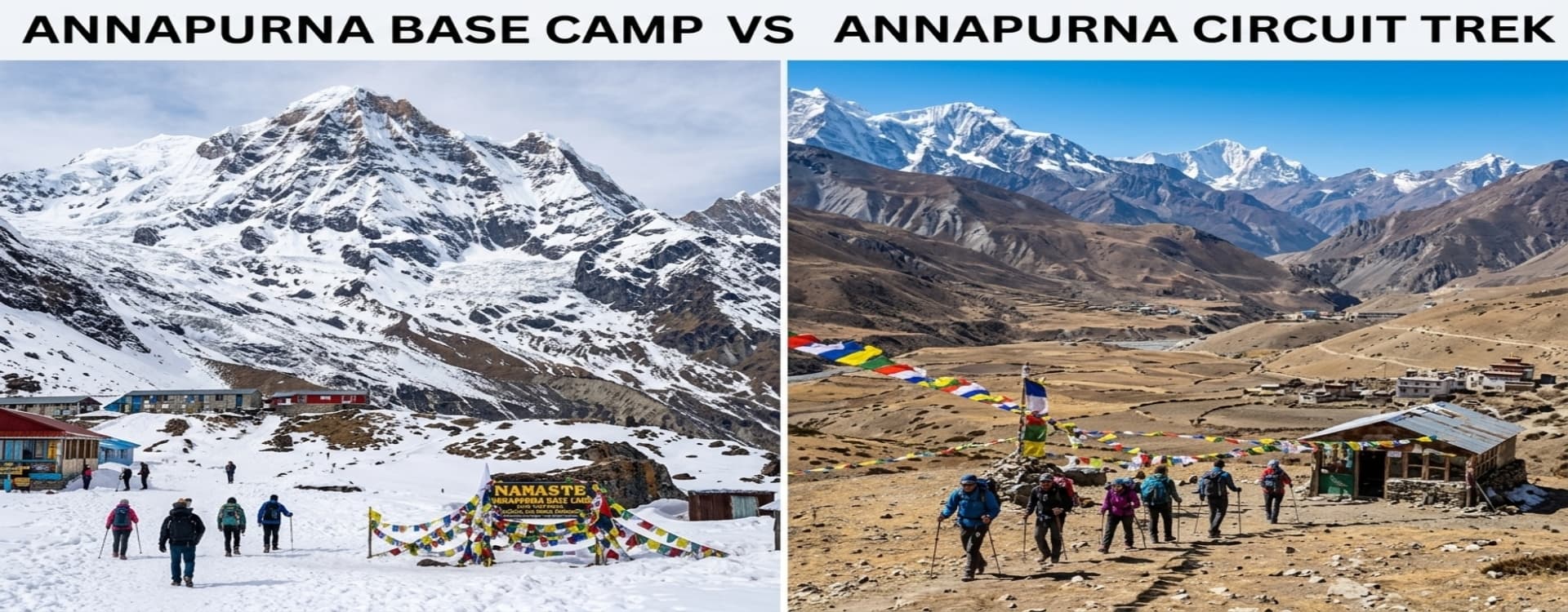
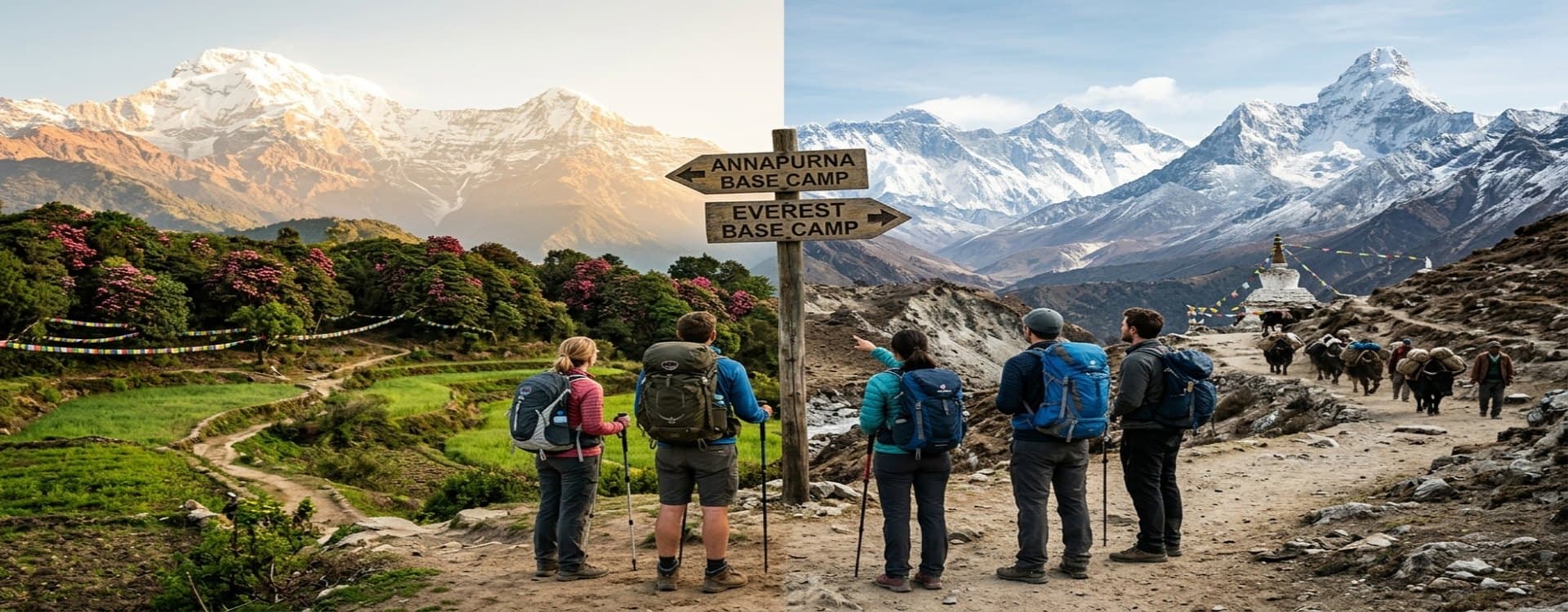
Nepal is a small country with a huge range of options. In a single holiday you could walk through rhododendron forest in the Annapurna region, watch sunrise over temples in Kathmandu, or look for one-horned rhinos in the lowlands of Chitwan. Each of those choices changes the length of the trip, the season you should travel, the gear you need and the money you spend.
A planner who knows nothing about you has to guess. A planner who knows your dates, your pace and your priorities can start narrowing things down on the first reply. That is the whole purpose of the details below. They help us ask better questions and give you better answers.
None of this commits you to anything. Early inquiries are a conversation, and plans change as you learn more about what is possible.
Your travel dates and how flexible they are
Start with the window you have in mind. Exact dates are useful, but a range works well too. "Any time in the second half of October" tells us far more than "sometime in autumn."
Season shapes almost everything in Nepal. Spring, roughly March to May, brings warm days, flowering rhododendrons and some haze in the distance. Autumn, from late September through November, usually offers the clearest mountain views and is the busiest period on the popular routes. Winter is cold at altitude, though lower-elevation trekking and cultural travel remain possible. The monsoon, from about June to August, brings heavy rain across much of the country, while some rain-shadow regions in the north stay drier.
Tell us whether your dates are fixed or movable. If you can shift by a few days either way, we can often find a better flight, a quieter stretch on the trail or a smoother connection. If your dates are locked because of school holidays, work leave or a wedding, say so. We will plan around them.
It also helps to mention any festivals you want to see or avoid. Dashain and Tihar, two of Nepal's biggest festivals, fall in autumn and affect transport and bookings, since many people travel to be with family. The exact dates shift each year, so it is worth checking the calendar for your travel year before you commit.
How many days you have in total
People often mean different things by "two weeks." Some mean fourteen days on the ground in Nepal. Others mean fourteen days away from work, which includes long-haul flights in both directions.
Count from the day you leave home to the day you are back. Then tell us the arrival and departure times of your international flights if you already have them. Many flights land in the evening, and a late arrival changes what is realistic on day one.
We also like to keep a spare day or two near the end of a trek-focused trip. Mountain weather can delay flights in and out of airstrips such as Lukla, and a buffer protects your connection home. If your schedule has no slack at all, tell us that too. It affects which routes make sense and how much risk is sensible.
A useful way to describe it: "We have 16 days door to door. We would like at least 10 of them on a trek if that fits." That one sentence gives us a budget of time to work with.
Who is travelling
Tell us how many people are in your party and how you know each other. A couple, a family with teenagers, three friends who met at university and a group of colleagues all have different needs, and the relationship tells us a lot about how decisions get made.
Give the ages of everyone, especially children. A trek that suits a family with two teenagers may look quite different from one planned for retired friends or for adults in their thirties. Age by itself says little about ability, so we will ask about experience too. We simply need the picture.
It is also worth saying who is excited and who is coming along for company. Every group has someone who would happily stay another night in Kathmandu and someone who wants the highest pass possible. Knowing that early lets us design a trip that gives both people something to look forward to.
If some travellers will join part of the trip and leave early, or arrive late, mention it now. Staggered arrivals change transfers, permits and guide arrangements.
What you want to do
Nepal can deliver trekking, cultural visits, wildlife, sightseeing, adventure activities and quiet time. Most people want a mix, and that is perfectly workable. What helps us is knowing the proportions.
Try describing the trip you picture in plain words. Maybe it is long days on the trail with mountain views at every turn. Maybe it is two or three easier days among villages and monasteries, followed by a few nights of sightseeing in Kathmandu and Pokhara. Perhaps wildlife in Chitwan is the main draw and a short trek is a bonus.
A simple ranking works well. Pick your top three interests and put them in order. When days are limited, the first one gets the most time, and we will tell you honestly how much of the second and third fit around it.
Specific interests are welcome too. Photography, birdwatching, local food, Buddhist and Hindu heritage, cycling, a particular view you have seen in a book. These small details often steer the route more than the big headline goals.
Your trekking experience and preferred pace
Be honest here. It is the single most useful thing you can do for your own comfort on the trail.
Tell us what you have done before. A few day hikes near home, a week of hut-to-hut walking in the Alps, a multi-day trek at altitude, no hiking at all. If you have ever slept above about 3,000 metres, mention it and say how you felt. If you have never been that high, say that too. Past experience helps us choose routes with sensible daily gains in elevation and enough rest days.
Then describe how you like to walk. Some people prefer a gentle pace with long breaks for photos and tea. Others enjoy a steady rhythm and finishing early. It helps to say how many hours of walking feel comfortable on a normal day. Four or five hours with a light daypack is a very different trek from six or seven hours with steep sections.
There is no right answer, and we do not judge. A trek that matches your pace is more enjoyable than one that looks impressive on paper. Overestimating yourself can turn good scenery into a slog. Underestimating yourself can leave you wishing you had pushed on.
Altitude deserves a quick word of its own. How your body responds to height is hard to predict, which is why good itineraries build in gradual ascents and rest days. Tell us anything you already know about your own reactions, and plan to speak with your doctor before travelling to high elevations.
Accommodation and comfort
On most trekking routes in Nepal, travellers stay in teahouses. These are family-run lodges with simple rooms, shared dining areas and meals cooked on site. Facilities vary a great deal by route and altitude. Lower valleys often have rooms with attached bathrooms and hot showers. Higher up, bathrooms are more likely to be shared, rooms are basic and heating is limited to the dining hall.
In cities, the range is much wider. Kathmandu and Pokhara offer everything from simple guesthouses to heritage hotels and international chains.
Tell us how you feel about comfort. A few questions help you answer:
• Do you want your own room, or are shared rooms fine for friends and family?
• Is a private bathroom important on the trail, in the city, or both?
• How do you feel about cold rooms and shared toilets at higher altitude?
• Would you like a more comfortable hotel in Kathmandu or Pokhara to balance a simple trek?
Many travellers pick a basic setup on the mountain and a treat at either end. That is a perfectly good plan, and it is easy for us to arrange when we know about it from the start.
Food preferences belong here too. Vegetarian, vegan or gluten-free eaters can usually be looked after, though choices narrow on remote routes. Mention your needs early so we can confirm what is realistic for the route you are considering.
Your approximate budget
Money is the part people most often leave out, and it is one of the most useful things to share. Without a number, a planner has to guess whether you are picturing a simple trek with local lodges or a high-comfort holiday with private transport and upgraded hotels.
A rough range is plenty. You can give it per person or for the whole party. Just say which one, and name the currency. If you are comparing us with other operators, a range helps everyone talk about the same thing.
Also say what your budget includes. Some travellers mean everything, from international flights to tips and insurance. Others mean only what they pay a local operator. Clearing this up early prevents awkward surprises later.
If your budget is firm, tell us. If it has some give, tell us how much. A planner can often show where an extra amount makes a real difference, such as a more comfortable hotel, a domestic flight that saves a long drive, or an extra rest day. We will also be straight with you if a wish list and a budget do not line up.
For reference, the exact cost of any trip depends on route, season, group size and services, so we quote after we understand the details. A quote built on your answers is far more reliable than a generic price list.
Your must-haves and your optional extras
Every trip involves trade-offs, and you will be happier if you decide in advance which wishes are fixed.
A must-have is something the trip would feel incomplete without. Seeing the Himalayas up close, reaching a specific viewpoint, spending a night in a Newar town, watching wildlife at dawn. An optional extra is something you would enjoy if it fits. Maybe a rafting day, an extra evening in Pokhara or a cooking class in Kathmandu.
Write these in two short lists. Planners use them like a map. We build the trip around the must-haves, then add optional extras in the order that makes sense for the remaining time and energy.
This also helps when your first wish list is too big. If you have ten days and eight must-haves, we will talk through what can happen together, what needs more time and what could wait for another visit. Seeing the options laid out makes those decisions easier and less stressful.
If you already have a specific package in mind and want to adjust it, you can customize your chosen trek instead of starting from scratch. Tell us which trip you like and what you would change.
Special requirements to discuss privately
Some details are personal, and you may not want to put them in a general form. That is completely understandable.
This category can include medical conditions, medications, allergies, mobility considerations, dietary restrictions tied to health or faith, travelling with a young child or an older relative, or anything that makes you want a quieter conversation before booking. You decide how much to share and when.
A simple approach works. In your first message, write something like, "I have a requirement I would like to discuss privately. Could we arrange a call or a private reply?" That lets us set time aside and keeps the details between us and you.
When you do share, being specific helps. We can only judge what a route can support once we know what you need. We will tell you plainly what is possible, what needs more planning and what may not suit the area you are considering. Some remote routes are far from medical care, and some accommodation has limited facilities. We would always rather say so up front than let you find out on the trail.
For anything medical, please speak with your own doctor before you travel. They know your health history, and good travel insurance that covers trekking at your intended altitude is something to arrange as well.
A few extra details that save time
Once the main points are covered, a few small additions make your inquiry even more useful:
• Whether you have visited Nepal before, and what you liked or disliked.
• Any routes, regions or photos that caught your eye, even if you are unsure about them.
• Your usual fitness routine, if you want to share it.
• Whether you plan to travel on to another country afterwards.
• How you prefer to communicate: email, messaging apps or a video call.
• Time zones and the best hours to reach you.
None of these are required. They simply help us shape our replies to you.
Permits, visa rules and entry requirements for Nepal can change. You do not have to research them before writing, because we will confirm what applies to your route and dates. If you want to double check, official government sources are the safest place to look.
Copy-and-paste inquiry checklist
Here is a simple template. Copy it into an email, fill in what you can and leave the rest blank.
• Travel dates: Preferred start and end dates, or a window. Flexible or fixed?
• Total days: Days available from leaving home to returning home.
• Travellers: Number of people, relationship, and ages.
• Interests: Top three, in order (trekking, culture, wildlife, sightseeing, other).
• Experience: Previous hiking or trekking, highest altitude reached, any recent training.
• Pace: Slow, steady or brisk. Comfortable hours of walking per day.
• Accommodation: Comfort level on the trail and in cities. Room preferences.
• Food: Dietary preferences or restrictions.
• Budget: Approximate amount, per person or total, with currency. State what it includes.
• Must-haves: The experiences you most want.
• Optional extras: Nice-to-have additions if time and budget allow.
• Special requirements: Anything you would like to discuss privately.
• Anything else: Previous Nepal trips, routes you have seen, questions for us.
A sample inquiry (hypothetical)
The example below is invented to show how an inquiry might read. It does not describe a real customer or a real booking.
Hello,
We are two friends in our early forties planning a trip to Nepal in October. Our dates are flexible, but we have to be back at work by the 28th. We will have about 15 days in total, including flights.
Our interests, in order, are mountain scenery, local culture and a little wildlife if it fits. We have each done a few multi-day hikes in Europe, and one of us has slept at around 3,000 metres on a trip to the Alps. Neither of us has been to Nepal. We walk at a steady pace and are comfortable with five to six hours a day, with time for photos.
We are happy with simple lodges on the trek and would like a comfortable hotel in Kathmandu at the end. One of us is vegetarian.
Our budget is around a mid-range amount per person, not counting international flights. We have not decided on the exact figure and would welcome your advice on what is realistic.
Must-haves are close views of high peaks and at least one day exploring old Kathmandu. A short wildlife stop would be a bonus. There is one personal requirement we would like to discuss by phone.
Thanks, and we look forward to hearing your thoughts.
Notice what this message does. It names the interests in order, gives honest experience, shares a budget direction and flags a private conversation. It does not include a finished itinerary or any route names, and that is perfectly fine. From a message like this, we could suggest a few routes, explain how many days each would need and ask the next round of questions.
What happens after you send it
A good reply usually includes a few follow-up questions and some first ideas. We might suggest two or three route options at different levels of difficulty and explain how each matches your priorities. We might point out that a favourite idea needs more days than you have, or that a different season would make a certain route easier. You can then tell us what feels right and what does not.
From there the plan is shaped through conversation. Everything depends on safety, logistics and availability. Weather, permits, flight seats and lodge space all affect what we can offer on specific dates. We will always tell you plainly when something is limited, and when there is a good alternative, we will describe it.
Take your time with the details. A thoughtful first message lays the groundwork for a smoother trip, and a short call can sort out anything you are unsure about.
Start the conversation
If you have read this far, you probably have enough to write a solid inquiry already. Copy the checklist, fill in what you know and send it our way. When you are ready, share your trip preferences with our team and tell us how you picture your time in Nepal. We will take it from there.
About the author: Himal Shrestha
Government-licensed trekking guide & travel writer · Accessible Adventure
Himal Shrestha is a government-licensed trekking guide and travel writer with 10 years and counting in the mountains. Trained in first aid and hospitality, he brings firsthand trekking experience to his articles on Nepal, itinerary planning, and travel preparation for Accessible Adventure.
Meet Himal ShresthaRelated Articles
Explore more stories and guides from the Traveler Information & Planning collection