No cancellation fees. No hassle. Book Now, Cancellation Terms
Traveler Information & PlanningTrekking Regions+25
29 min readAnnapurna Base Camp Packing List: Season-by-Season Gear Guide
September 23, 2026
29 min
1 views
Building an Annapurna Base Camp packing list is trickier than it sounds, and not because the trek demands some enormous expedition kit. It doesn't. Most people picture Himalayan trekking gear as something closer to a mountaineering shopping list, ice axes and oxygen bottles and all, and then they're relieved to learn ABC needs none of that. The real challenge sits somewhere else entirely: a single day on this trail can move you through four distinct microclimates before you've even reached the teahouse where you're sleeping that night. You start in Pokhara's warm, humid lower valleys, spend the morning sweating through subtropical farmland, climb into cool, damp forest by early afternoon, and by evening you might be standing somewhere that has nothing in common, temperature-wise, with where breakfast happened.
Morning at Chhomrong feels nothing like evening at base camp, and neither of those feels anything like a warm afternoon back in Pokhara. That's the part first-timers underestimate. They pack for the trip they imagine, usually based on whatever the weather happens to be doing on the day they leave home, and then they're caught off guard three days in when the temperature drops twenty degrees between lunch and dinner.
Here's the principle worth internalizing before you pack a single bag: layering beats duplication, every time. Carrying five shirts because you're not sure what the weather will do wastes both space and shoulder strength for no real benefit, since you'll wear maybe two of them in rotation anyway. A smart layering system, on the other hand, adapts to whatever the mountain throws at you on any given hour of any given day. As a rough rule, Nepal's temperature drops by about 6°C for every 1,000 meters you climb. That number matters more than it sounds like it should, because it's exactly why a warm afternoon in the valley tells you nothing useful about what awaits you at altitude that night. Pack for the coldest plausible night and the wettest plausible day you might encounter, not the average conditions you're hoping for, and keep your daily pack light enough that you're not dreading the walk before it even starts. Everything below is built around that single idea, season by season, layer by layer.
The Year-Round Core: What Stays the Same No Matter the Season
Here's something that tends to surprise people once they actually sit down and think it through: most of the Annapurna Base Camp Packing List doesn't change from March to December. It's tempting to assume a winter trek and a monsoon trek need entirely different kits, and in a narrow sense they do, but the foundation underneath both is identical. Trekking layers, waterproof protection, warm insulation, solid hiking footwear, sleep essentials, personal medication, a water treatment method, and sun protection form the backbone of the kit no matter when you go. Seasons don't replace this system. They add to it, the way you'd add a scarf to an outfit rather than redesign the whole wardrobe.
Understanding that distinction early saves a lot of unnecessary shopping. Once you've built the year-round core, seasonal planning becomes a matter of small, targeted additions rather than starting from scratch every time someone asks what month you're going.
Clothing: Building the Layering System
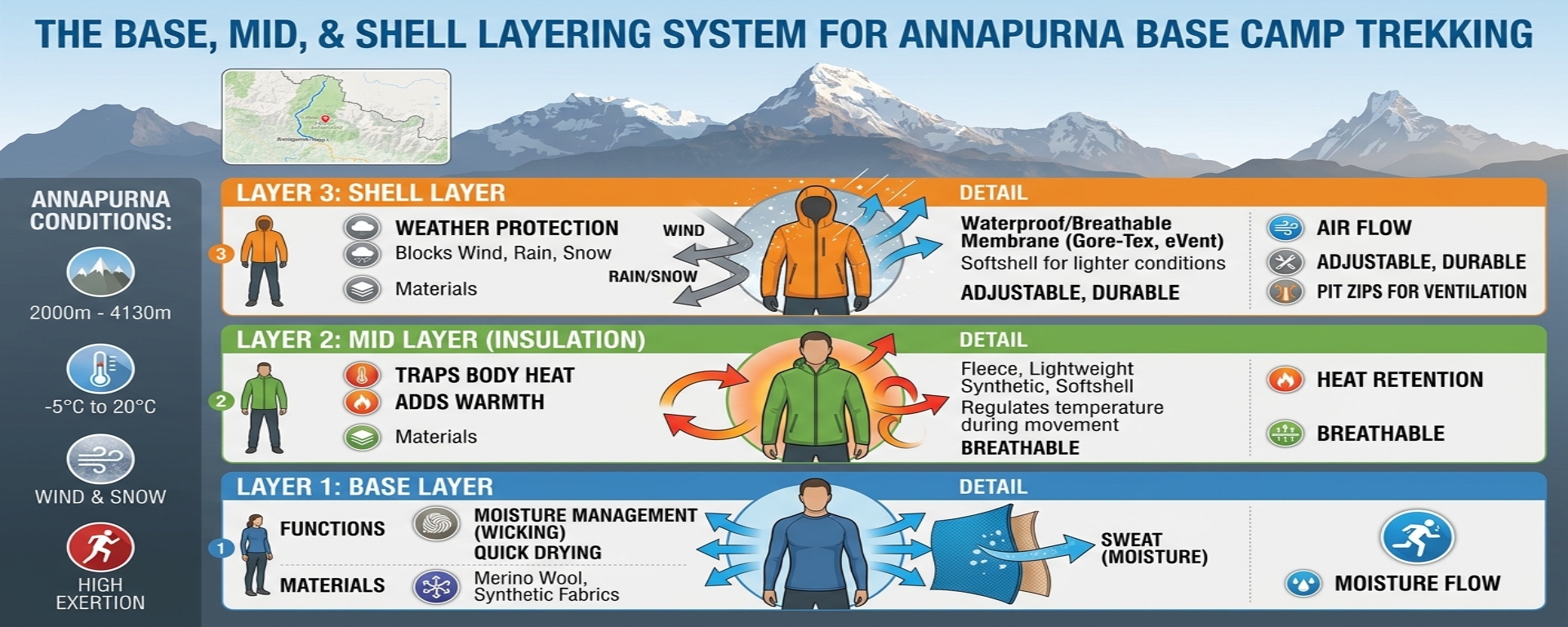
Think in systems rather than counting outfits, because that's really the mental shift that makes packing for ABC click. A base layer manages moisture against your skin, pulling sweat away so you're not sitting in damp fabric once you stop moving. A mid layer, usually a fleece or light insulation, traps the warmth your body generates. A shell blocks wind and rain from undoing all of that work. That's the whole idea, repeated with small adjustments as the season shifts, and once you understand the three roles, choosing individual pieces gets a lot easier. Here's a framework that works across nearly every itinerary we run:
● 2 to 3 quick-dry trekking shirts
● 1 to 2 thermal or base-layer tops
● 1 thermal bottom
● 2 pairs of trekking trousers
● 1 lightweight fleece
● 1 insulating or down jacket
● 1 waterproof shell
● 3 to 4 pairs of trekking socks
● 1 pair of warm sleep socks
That list looks light for a ten-day trek to a lot of first-timers, and we understand the instinct to add more. But most trekkers on our itineraries go somewhere between five and nine days without a real laundry opportunity, and that's exactly why this list leans on quick-dry fabric rather than a fresh shirt for every single day. Two or three shirts, rotated and rinsed in a sink when you get the chance, genuinely gets you through the whole trek without feeling grimy or under-prepared. What actually matters more than shirt count is having the right mid and outer layers ready when the temperature drops, which it will, reliably, every single evening once you're above 3,000 meters.
One thing worth mentioning here, since it comes up constantly in pre-trek calls: cotton is the enemy on this trail. It holds moisture, dries slowly, and turns cold and clammy the moment you stop moving or the weather shifts. Synthetic or merino wool fabrics cost more upfront but perform dramatically better across a week of variable mountain weather, and most experienced trekkers consider that difference non-negotiable by their second or third Himalayan trip.
Footwear and Foot Care
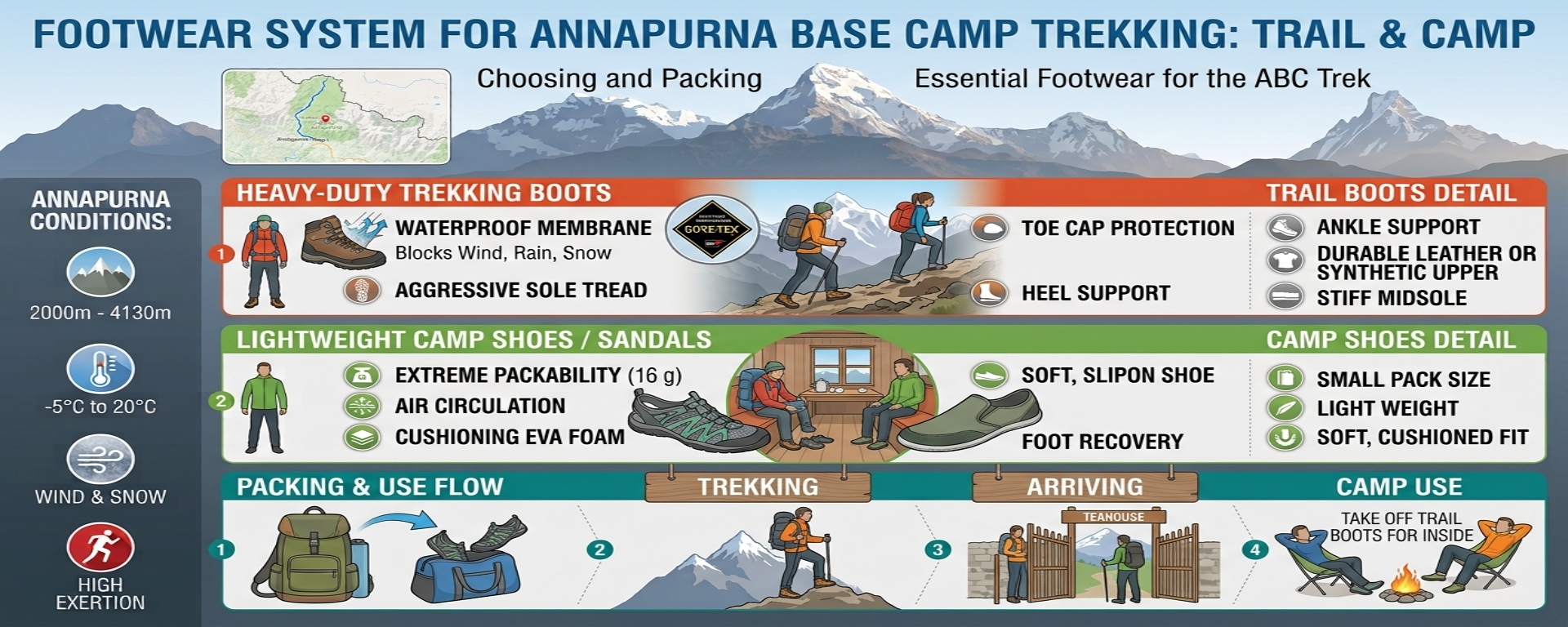
Your feet do more work on this trek than any other part of your body, which makes footwear the one category where cutting corners tends to backfire hardest and fastest. Bring trekking boots or shoes that are already broken in, never fresh out of the box. We've watched more than a few trekkers limp through their first two days in brand-new boots, and it's a genuinely miserable way to start a trip you've spent months planning. Give new footwear at least a few weeks of regular wear before you fly, ideally on terrain that resembles what you'll be walking on here: hills, stairs, uneven ground.
Beyond the boots themselves, round out the footwear kit with lightweight camp shoes for evenings at the teahouse, since nobody wants to keep their trekking boots on after a long day, a pair of trekking poles for the descents, blister treatment supplies, spare laces, and gaiters if you're trekking in a wetter or colder window. Gaiters aren't essential for every season, but they earn their weight quickly once there's mud, loose scree, or fresh snow involved.
Choose footwear for what the trail actually demands, which is stone steps by the thousand, wet forest sections that stay slick even in dry months, and uneven, sometimes loose terrain underfoot. Altitude matters less here than grip and ankle support do. A boot rated for snow and ice does you no favors on a slick, muddy staircase below Chhomrong, where most of your traction problems will actually happen. Save the heavier, stiffer boots for winter departures specifically, and lean toward something more flexible and breathable the rest of the year.
Daypack Essentials vs. What Goes With the Porter
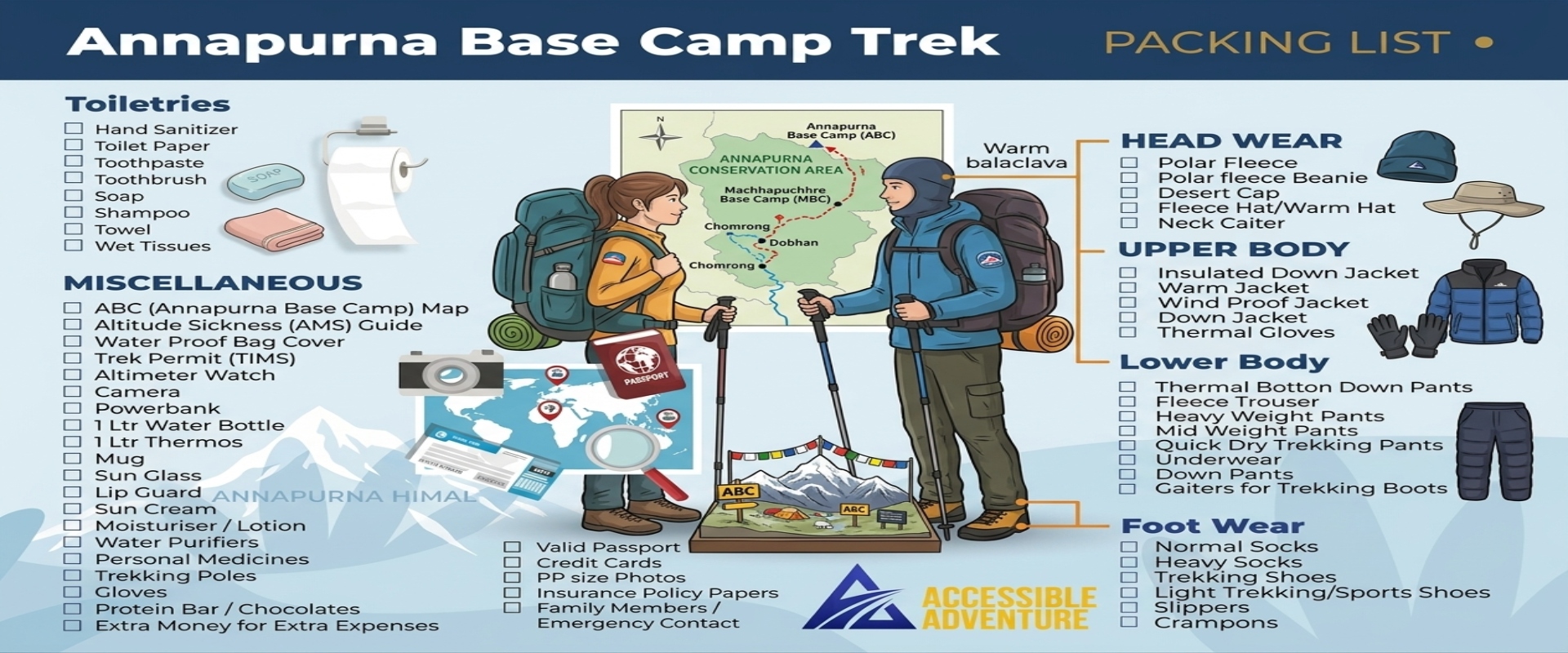
Split your gear into two categories early, ideally before you even start packing, because it changes how you organize everything else. Overnight items, spare layers, and anything you won't touch until the teahouse can travel with your porter, sealed away and out of your hands for the day. Your daypack, by contrast, should carry only what you'll actually need during the walking day itself, since every extra kilogram on your own back adds up across six or seven hours of climbing.
● Waterproof pack liner
● Dry bags for electronics and documents
● Headlamp with spare batteries
● Water bottle or bladder
● Sunglasses
● Sunscreen
● Personal first-aid items
● Snacks for the trail
A quick, practical note that's easy to overlook: weather can turn faster than your porter can catch up to you, especially on longer stretches between villages. That's part of why the waterproof shell and a rain cover for your daypack both belong on your own back, not buried somewhere in your porter's load three switchbacks behind you.
How Heavy Should Your Trekking Pack Actually Be?
There's no single universal weight limit worth repeating here, and honestly, any number thrown around without context isn't especially useful to you as an individual trekker. Body size, fitness level, and how much support you've arranged all change the real answer. What matters more is this: aim for a daypack you can comfortably carry for four to seven hours without your shoulders aching by lunchtime, confirm your porter baggage arrangement with your trekking operator well before departure so there are no surprises at the trailhead, and always keep valuables, documents, medication, and your daily layers on your own back rather than in checked baggage that might not reach you until evening.
Packing for Spring on the Annapurna Base Camp Trail
Spring is one of the two most popular windows to trek ABC, and for good reason: it calls for the standard three-layer system plus sun protection and light rain gear, with extra insulation held in reserve for cold mornings and nights up high. That's a relatively forgiving packing scenario compared to deep winter or peak monsoon. But there's a catch that trips up a surprising number of first-timers every year. ABC sits at 4,130 meters, and spring conditions at base camp bear almost no resemblance to a warm spring afternoon down in Pokhara, where most trekkers start their journey and form their first impression of the weather.
What to Pack for Annapurna Base Camp in March
March trekkers are often genuinely surprised by how much insulation they end up needing, and it's usually because they packed based on the pleasant, almost summery weather in Pokhara the day before departure. One published climate table places March temperatures around 4°C during the day and -8°C at night near base camp. That's a real swing, and while exact daily conditions obviously can't be promised this far out, that gap alone illustrates why a proper down jacket earns its spot in your bag rather than staying optional.
For March specifically, pack a thermal base layer, a down jacket, a warm hat and gloves, sunglasses, sunscreen, and a waterproof shell. Layer these deliberately rather than throwing them all on at once. Most trekkers find they're comfortable in just a base layer and shell during the midday climb, then add the fleece and down jacket the moment the sun starts dropping behind the ridgeline in late afternoon.
Does April or May Mean Lighter Gear?
Partly, and it's worth understanding exactly where that "partly" applies. Lower elevations do warm up noticeably by April and May, and breathable layers become genuinely more useful the closer you stay to Pokhara or the trail's lower villages. If your itinerary spends extra time around Ghandruk or the lower forest sections, you'll likely find yourself stripping down to a single trekking shirt during the warmest part of the day.
Base camp itself, though, doesn't follow that same warming curve, because altitude cares very little about the calendar month. Keep the down jacket and thermal layers in your bag regardless of how warm the lower trail feels. May, in particular, can bring pre-monsoon showers that catch unprepared trekkers off guard, arriving with little warning on what otherwise looks like a clear afternoon. A packed-away rain shell that never gets used is a minor inconvenience. A soaked base layer three hours from the next teahouse is a genuine problem.
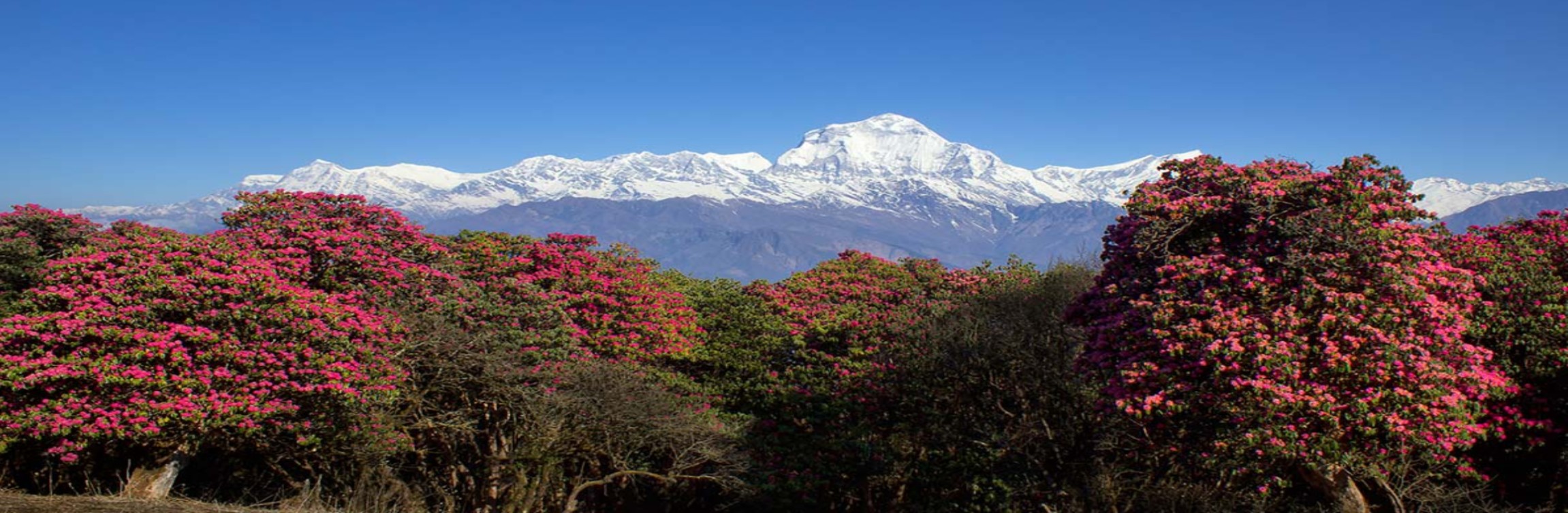
Rhododendron Season Extras
Late March through April turns the lower and mid-elevation trail into a corridor of blooming rhododendron forest, arguably one of the most photographed stretches of trail in the entire Annapurna region, and it's worth packing a little differently to make the most of it. Camera or phone protection matters here, since you'll likely be reaching for your device constantly and dropping it in damp leaf litter is a real risk. Sunglasses, a sun hat, a lightweight rain layer, trekking poles, and quick-drying clothing all earn their place during this stretch specifically.
Worth remembering, and this applies well beyond rhododendron season: this single trail crosses wildly different elevations and vegetation zones in the space of a day or two. Treating "spring" as one uniform climate is a mistake that catches out a lot of first-timers who pack based on a single seasonal label rather than the actual elevation profile of their specific itinerary.
Packing for Monsoon (June to September)
Monsoon trekking has a reputation, not always a fair one, but it does demand a different packing mindset than the rest of the year. Monsoon packing really comes down to three priorities: waterproofing, quick drying, and grip. Get those three right and the rest tends to fall into place. June through September is Nepal's principal monsoon window, and the southern slopes of the Annapurna region, which face directly into the incoming weather systems, can see substantial rainfall during these months. Roughly 80 percent of Nepal's annual rainfall falls in this single stretch of the calendar, which tells you most of what you need to know about how seriously to take this section.
That said, monsoon trekking isn't the washout some people imagine. Rain tends to arrive in afternoon and evening bursts rather than as an all-day soak, and mornings are often clear, sometimes strikingly so. Trekkers who come prepared for the wet stretches often find the lush, green, quieter trail more than makes up for the extra planning.
Essential Rain Protection
● Waterproof shell jacket
● Rain trousers
● Backpack rain cover
● Internal pack liner
● Dry bags for electronics
● Waterproof phone pouch
● Quick-dry clothing throughout
● Extra spare socks
Layer these thoughtfully rather than treating them as a single unit. The pack liner and dry bags protect what's inside your bag even if the outer shell eventually soaks through after hours of steady rain, which does happen on longer monsoon days. Think of it as protection in depth rather than a single point of failure.
What About Leeches?
Leeches show up on plenty of monsoon packing lists, and honestly, for good reason at lower, wetter elevations where the forest floor stays damp for days at a time. Long socks, trouser coverage that overlaps your boots rather than leaving a gap at the ankle, and the right footwear all help keep them off you. It sounds worse than it usually is in practice; most trekkers deal with the occasional leech as a minor, if slightly unsettling, nuisance rather than a genuine problem.
Worth noting though, since it's a common source of unnecessary anxiety before the trip: leech exposure is mainly a concern on the lower, wetter sections of trail, generally below 2,000 or so meters, not something you'll deal with up near base camp itself, where the cooler, drier alpine air keeps them away entirely.
Footwear for the Rainy Season
Grip matters more than almost anything else during monsoon, more even than it does during the rest of the year, because wet stone steps and muddy sections turn a normally straightforward trail into something that demands real attention with every footfall. Look for deep-tread soles and solid ankle support first, before worrying about anything else.
There's a genuine trade-off worth weighing here between waterproof boots, which trap moisture from your own sweat and can leave your feet damp from the inside even in dry conditions, against quick-drying shoes that let water in more easily but breathe better and dry out faster once you're indoors. Neither option is objectively correct. It comes down to how your feet tend to handle prolonged dampness, something most trekkers already know about themselves from other outdoor activities. Whichever you choose, pack extra socks and take the chance to dry your feet properly whenever a teahouse offers the opportunity, even if that just means propping your boots near the kitchen stove for an hour.
Packing for Autumn and Winter
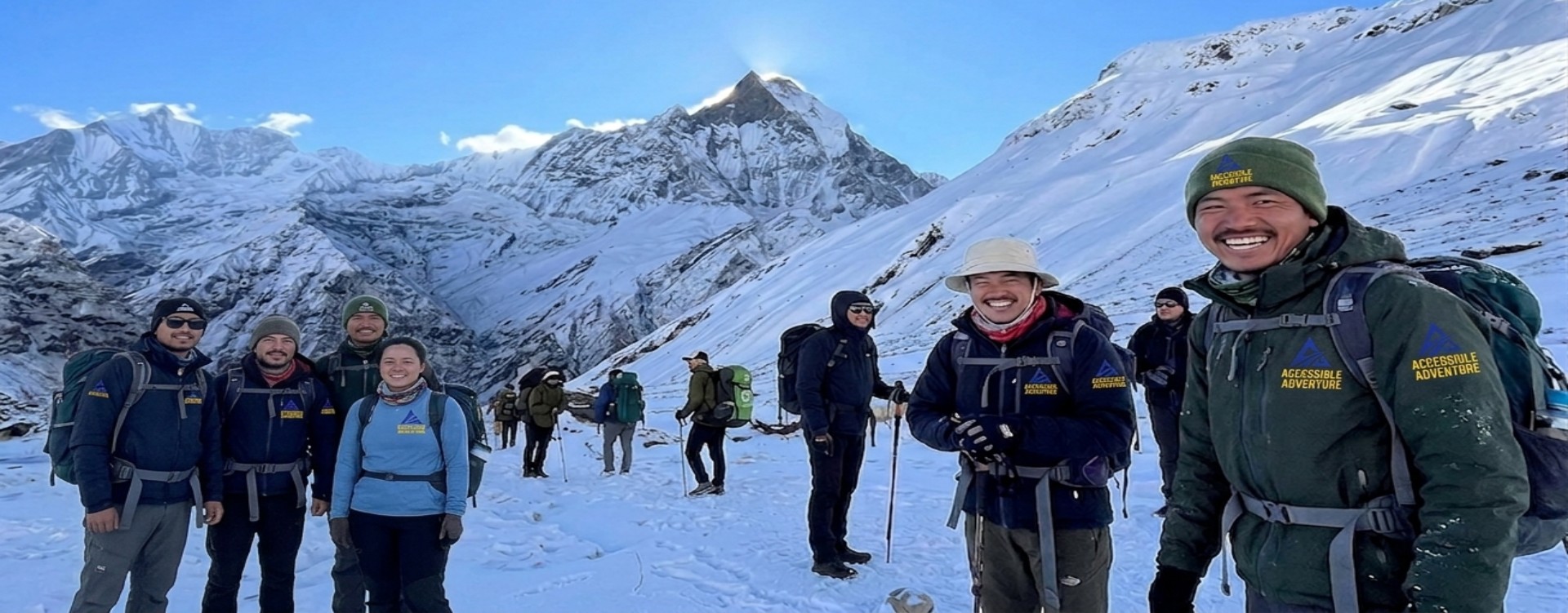
Autumn and winter sit at opposite ends of the cold-weather spectrum, and it's worth treating them as genuinely separate planning exercises rather than one long "cold season" in your head. Autumn asks for a dependable insulation system to handle cold nights at 4,130 meters, and it remains one of Nepal's strongest trekking windows for a reason: clear skies, stable weather, and mountain views that autumn trekkers consistently rate as the best of the year. Winter is a different proposition entirely, and it demands more serious cold-weather preparation along with real flexibility around snow and shifting trail conditions that simply don't factor into an October or November trip.
What to Pack for ABC in October and November
These two months draw the largest crowds on the ABC trail, and once you see the numbers, it's easy to understand why. A published ABC temperature table puts October at roughly 16°C during the day and -6°C at night near base camp, with November running colder still at around 11°C and -10°C. Treat these as planning ranges rather than a forecast, since conditions shift somewhat year to year, but the direction is consistent across nearly every source we've checked: comfortable, even pleasant, daytime trekking weather paired with genuinely cold nights once the sun goes down.
For this window, pack a down jacket, thermal base layers, a fleece, warm gloves, a warm hat, a buff for your neck and face, a quality sleeping bag rated for below-freezing temperatures, a headlamp, sunglasses, and solid SPF protection. The daytime sun at this altitude is stronger than most people expect, even when the air itself feels cold, so sunscreen matters just as much in November as it does in April.
What to Pack for ABC in Winter (December-February)
Winter trekking at ABC is entirely possible, and a smaller but dedicated group of trekkers specifically seeks out this season for the quiet trails and stark, snow-dusted scenery. But it asks considerably more of you in terms of preparation. Bring heavier insulation than you would for autumn, warmer gloves rated for genuinely cold conditions, and a sleep system built for nights that can drop well below what an October or November sleeping bag was designed to handle.
Snow and icy trail sections become more likely the higher you climb during these months, particularly past Deurali. Traction devices like microspikes are worth packing only when current conditions and local guidance actually call for them, not as a default addition to every winter packing list regardless of what the trail is actually doing that week. Check weather and route conditions closer to departure than you would for an autumn trek, since winter windows shift more unpredictably and a route that was clear last week might not be this week.
Season-by-Season Planning Table
|
Season |
Typical Lower-Route Conditions |
ABC Planning Conditions |
Packing Priority |
|
Spring |
Mild to warm by day |
Freezing nights possible |
Layers + insulation |
|
Monsoon |
Warm, humid, wet |
Cooler at altitude |
Waterproofing |
|
Autumn |
Mild, clear |
Cold nights |
Insulation + layers |
|
Winter |
Cold |
Potentially very cold or snowy |
Full cold-weather system |
A quick editorial note worth sitting with: you'll find different "official" ABC temperature figures across different sources, sometimes varying by several degrees for what's nominally the same month, and that's normal rather than a red flag. Weather stations, elevation of measurement, and the particular year all shift the numbers slightly. Treat every figure in this guide as an approximate planning range rather than a guarantee, and check conditions again as your departure date gets close, ideally within a week or two of leaving.
Should You Buy Your Gear or Rent It in Nepal?
This question comes up in nearly every pre-trek conversation we have, usually from trekkers trying to avoid an expensive shopping trip before a flight they've already booked. The short version: buy anything that depends on personal fit, and consider renting bulky or occasional-use items where you can confidently check the condition and hygiene before handing over cash. That split does most of the decision-making for you once you apply it item by item.
Worth Buying Before You Arrive
● Trekking boots or shoes
● Base layers
● Socks
● Personal medication
● Sunglasses
● Personal hygiene items
The logic behind this list is fairly consistent across every item on it: these are things that touch your skin directly, need to fit your body specifically, or matter for your health in ways a rental simply can't guarantee. A boot that fits someone else's foot well might blister yours badly within a day. Buy these at home, where you have time to test them properly, rather than scrambling in Kathmandu the day before you leave.
Worth Renting in Kathmandu or Pokhara
Sleeping bags, down jackets, trekking poles, and a handful of technical or outdoor items are all commonly available to rent in both cities, often from shops clustered within a few streets of each other in the main tourist districts. Rental shop names and current prices genuinely do fluctuate season to season and year to year, so we'd rather point you toward confirming those details in person or with us directly than publish specific numbers here that go stale within a single trekking season and end up misleading someone.
Is Renting Actually Cheaper?
It depends on more than the sticker price, and this is where a lot of people make the wrong call simply because they only compared the upfront numbers. Weigh the purchase cost back home against the Nepal rental cost, how many trekking days you're actually covering on this specific trip, whether you'll realistically use the gear again after this trek, and what replacing or repairing a purchased item down the line might eventually cost you.
A down jacket you'll wear on one trek and never again, because you don't live somewhere cold and don't plan on more high-altitude trips, often makes more financial and practical sense as a rental. One you'll use for years of winter hiking back home usually doesn't, since the per-use cost drops dramatically the more often you actually wear it. Run the numbers honestly based on your own future plans rather than what seemed like a good deal in the moment.
What to Leave Out of Your Backpack
Overpacking is one of the most common mistakes first-time trekkers make on this route, and it's genuinely an easy one to fix once you know what to look for and why it happens in the first place. Most overpacking comes from anxiety rather than actual need. People pack for every hypothetical scenario they can imagine rather than trusting the layering system and the support structure already built into a guided trek.
Commonly Overpacked Items
● Too many changes of outfit
● Full-size toiletries instead of travel versions
● Multiple heavy electronics
● Excessive casual clothing for evenings
● Full-size towels
● Camping gear you won't actually use on a teahouse trek
That last one catches out more people than you'd expect. ABC is a teahouse trek, meaning you'll have a roof, a bed, and hot meals every single night. Trekkers occasionally arrive with a full camping kit, tent included, under the mistaken impression they'll need to be self-sufficient out on the trail, and end up carrying dead weight the entire route for gear that never once leaves the bottom of the bag.
What Should Never Get Cut to Save Weight
Some categories are worth protecting even when you're trying to shave grams elsewhere, and this is the list we'd push back on if a client tried to cut any of it during a pre-trek gear check. Insulation, your waterproof layer, essential medication, a working headlamp, your water treatment system, sun protection, personal documents, and basic first aid should all stay in the bag no matter how tempting it is to trim further in the name of a lighter pack.
These aren't comfort items you can improvise around if you left them behind. They're the difference between a manageable bad moment on the trail, an unexpected cold snap, a stomach bug, a dead phone battery at dusk, and a genuinely dangerous one. Cut elsewhere first.
Building Your Own List
Pull all of this together and the approach really comes down to four ideas worth carrying with you as you actually pack your bag. Pack in systems, not categories, thinking in terms of base, mid, and outer layers rather than a scattered checklist of unrelated items. Prepare for altitude and weather, not just the temperature you happen to feel in Kathmandu the day you land, since that number tells you almost nothing about conditions a week and 3,000 vertical meters later. Keep your daily pack practical enough that you're not fighting it on the trail, resenting every extra kilogram by hour four of a long climbing day. And build the list around both the season and the route's dramatic elevation swings, not around a single number pulled from one forecast you happened to check the week before you left.
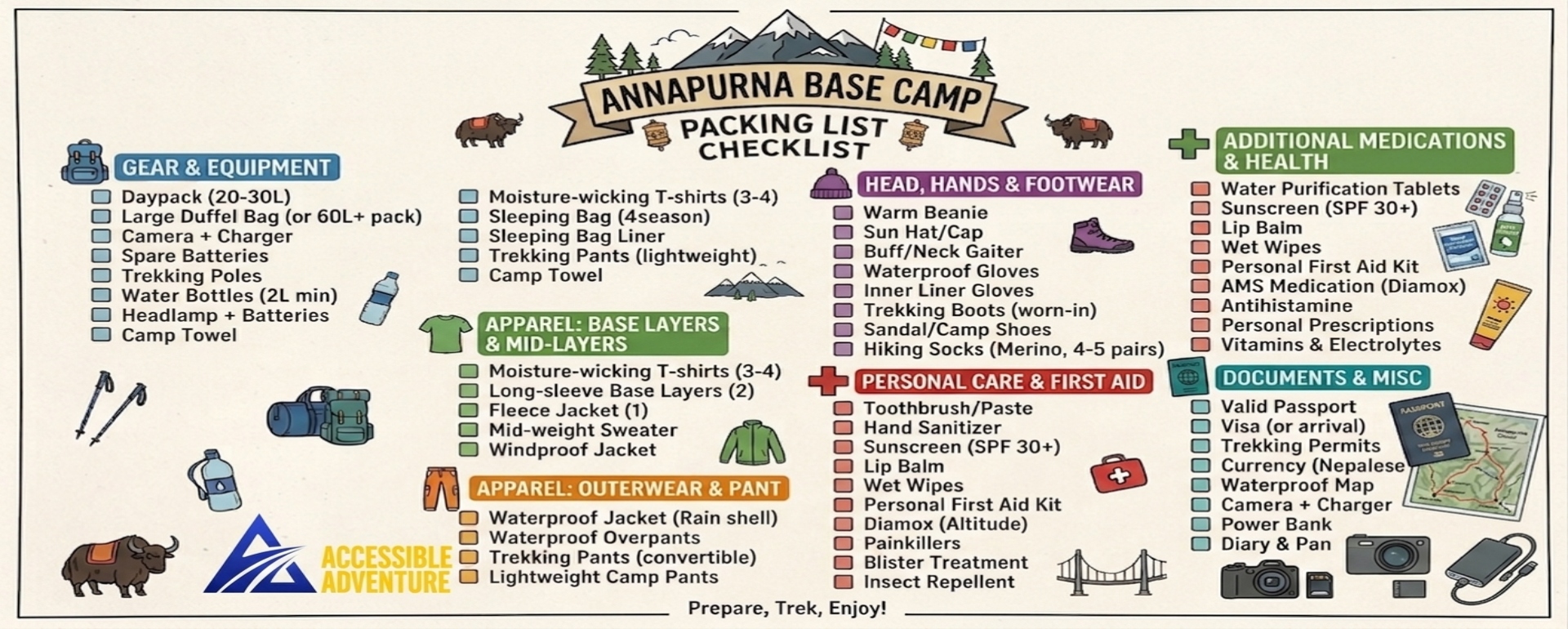
Want a version of this you can check off as you go, rather than scrolling back through this guide the night before your flight? Download the printable Annapurna Base Camp Packing List and use it as your final pre-departure checklist.
Frequently Asked Questions
Bring layered trekking clothing, waterproof protection, warm insulation, broken-in footwear, trekking poles, sun protection, water storage, medication, and basic first aid. The core kit stays largely the same year-round, with seasonal additions layered on top depending on when you're trekking.
Night temperatures can fall well below freezing. Published planning figures put October around -6°C and November around -10°C, though actual conditions vary year to year and shouldn't be treated as a guarantee for your specific trip.
Yes. A warm insulating jacket is a core part of any ABC packing system, since the trek reaches 4,130 meters and nights there can turn genuinely cold even during the warmer trekking seasons.
Yes, especially at higher elevations and in colder seasons. Thermal base layers earn their keep during mornings, evenings, and the night spent at base camp, when temperatures drop fastest.
Not necessarily. Prioritize comfortable, well-broken-in footwear with solid grip first, since that matters more day to day than waterproofing does. Waterproofing becomes more valuable during wetter stretches of the year, particularly monsoon.
Yes. They're especially useful on the route's repeated stone staircases, on steep descents, and across uneven terrain, where they noticeably reduce strain on your knees over a multi-day trek.
Not as a default item. Whether traction equipment is worth bringing depends entirely on current snow and ice conditions at the time of your trek, which your guide can advise on closer to departure.
Yes, rental options are widely available in both Kathmandu and Pokhara. Confirm the bag's condition, warmth rating, and fit before accepting one, rather than assuming every rental option is suitable for your season.
Keep your load practical and confirm the exact porter baggage arrangement with your operator ahead of time. Your daypack should hold only what you need for that day's walk, with everything else traveling separately.
Yes. Even during the main trekking seasons, a waterproof shell remains a sensible part of your emergency weather kit, since mountain weather can shift with little warning regardless of the month.
Standard trekking layers plus a warm down jacket, thermal layers, gloves, a hat, and a sleeping bag rated for freezing conditions, since nights at base camp drop well below zero even during this popular, generally mild month.
Prioritize waterproof bags, rain gear, quick-drying clothes, spare socks, and footwear with dependable grip. Waterproofing and quick drying matter more during this season than they do at any other time of year.
A warm sleeping bag is strongly recommended. Teahouse accommodation is basic, and high-altitude nights can get cold fast, often faster than trekkers staying in unheated rooms expect.
There's no single standout item, but a reliable layering and insulation system does more heavy lifting than anything else in the bag, since it's what actually keeps you comfortable across the trek's wide daily temperature swings.
No. The trick is building one solid year-round core kit, then making targeted seasonal additions, rather than trying to assemble four entirely separate packing lists from scratch for spring, monsoon, autumn, and winter.
About Accessible Adventure
Bringing unforgettable Himalayan adventures to everyone. Our expert guides and carefully curated experiences ensure that everyone can explore the beauty of Nepal, Tibet, and Bhutan.
Learn More