Nepal
Nepal Travel Guide: Everything You Need to Know Before You Go
Nepal sits in South Asia between the giants of China to the north and India to the south, occupying a strip of territory roughly 800 kilometers long and between 145 and 250 kilometers wide. Within that modest footprint, the land rises from the subtropical lowlands of the Terai at around 60 meters above sea level to the summit of Mount Everest at 8,849 meters, making it one of the most vertically dramatic countries on earth. Eight of the world's fourteen peaks above 8,000 meters are found here, a concentration of extreme altitude that exists nowhere else. The mountains are the reason most first-time visitors come, but the people who return to Nepal, and many people do return, tend to say the mountains were only part of what kept bringing them back.
This is a country of 30 million people spread across 125 distinct ethnic groups speaking 123 different languages, practicing Hinduism and Buddhism in forms that in many places have become so intertwined they are difficult to separate. It is a country where a medieval-era palace square sits in the middle of a busy capital city, where yak cheese is produced at 3,800 meters using a technique introduced by Swiss development workers in 1952, where the living goddess Kumari is selected by ritual from among young girls of the Newar community and lives in a temple near Kathmandu's Durbar Square. These things are not curated for tourists. They are simply how things are.
This guide is for people who want to understand Nepal before they arrive, not just the mountains and the trekking permits, but the visa process, the cultural context, the food, the seasonal logic, how to move around, how to behave respectfully, and how the whole system of visiting this country actually works. The specific trekking regions, including the Annapurna, Langtang, and Manaslu areas, and the topic of peak climbing, each have their own dedicated guides within this section. This page is the foundation from which all of those branch.
Understanding Nepal's Geography
Most people who have not studied Nepal closely assume it is essentially a mountain country. This is understandable but wrong in an important way. The country actually spans five distinct ecological and physiographic zones arranged in horizontal bands running roughly east to west, and each zone is radically different from its neighbors in terrain, climate, vegetation, and the way people live within it.
The southernmost band is the Terai, a flat strip of subtropical lowland that forms part of the same geological formation as the Gangetic Plain of India. This is Nepal's agricultural heartland, where most of the country's rice, wheat, and sugarcane is grown, and where the majority of the population lives. The Terai is also home to Chitwan National Park and Bardia National Park, both of which protect significant populations of one-horned rhinoceroses, Bengal tigers, gharial crocodiles, and wild elephants in landscapes that look nothing like the alpine imagery that dominates Nepal's tourism marketing.
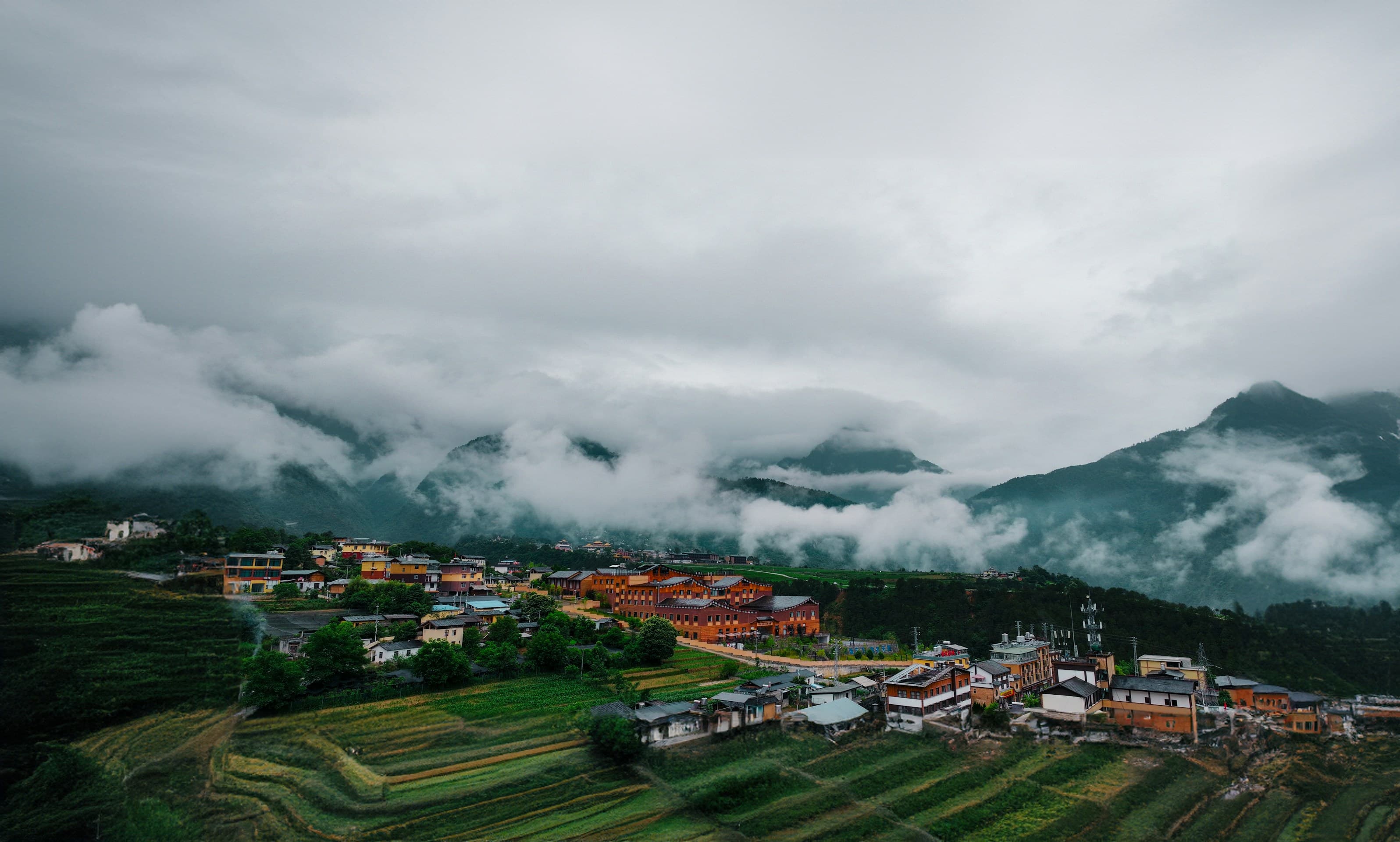
Immediately north of the Terai lies the Siwalik Range, also called the Churia Hills, a set of young, geologically unstable ridges that rise to around 1,500 meters. Above the Siwaliks, the Middle Hills form the most densely populated zone of the country, with elevations running from around 1,000 to 3,500 meters. Kathmandu sits in a valley within this zone at approximately 1,400 meters, as does Pokhara at roughly 800 meters on the edge of Phewa Lake. This is the zone of terraced farming, rhododendron forest, and the cultural diversity of dozens of hill-dwelling ethnic communities.
The High Himalaya zone begins above the Middle Hills, containing the great trekking valleys and the mountain ranges that draw visitors from around the world. Above this lies the Trans-Himalayan or high altitude zone, the rain-shadow terrain north of the main Himalayan ridge where Tibetan-influenced culture is dominant and the landscape takes on a high-desert character. Upper Mustang and the area around Manaslu and the Langtang valley's northern reaches fall within this zone. Understanding which zone you are visiting helps you understand the terrain, the climate, and the cultural environment you will encounter.
Visa: How to Enter Nepal
Nepal operates a visa-on-arrival system that applies to citizens of most countries in the world, making it one of the more straightforward international entry processes in Asia. Citizens of India do not require a visa at all and may enter using a valid Indian passport or a photo voter ID card under the terms of the 1950 Indo-Nepal Treaty of Peace and Friendship. Citizens of China, Brazil, Russia, and Thailand benefit from specific bilateral arrangements that may modify standard fee structures; check the current terms with the Nepal Department of Immigration before travel.
For the vast majority of international visitors, the process at Tribhuvan International Airport in Kathmandu works as follows. On arrival, proceed to the visa-on-arrival section before the main immigration counters. Either use the electronic kiosk machines in the arrivals hall to fill out the digital application form, or complete a paper Tourist Visa Application Form available at the form counter. The online pre-arrival option through the Nepal Department of Immigration's Nepaliport portal (nepaliport.immigration.gov.np) allows you to complete the form up to 15 days before arrival and receive a barcode receipt, which puts you in a shorter queue at the airport. The form expires 15 days after submission, so time it accordingly.
After completing the form, pay the visa fee at the payment counter. Cards are not reliably accepted, and cash in US dollars is the safest option, though euros, British pounds, and other major currencies are also accepted. Receive your payment receipt, then present your passport, photograph, payment receipt, and application at the immigration counter to receive the visa stamp. Total processing time runs from 20 to 45 minutes depending on queue volume, which is highest when multiple international flights arrive simultaneously.
Citizens of a small number of countries, including Afghanistan, Iraq, Somalia, Ghana, Nigeria, Zimbabwe, Ethiopia, and several others, cannot obtain a visa on arrival and must apply through a Nepalese embassy or consulate before travel. Check the current list on the Nepal Department of Immigration's official website before booking.
|
Visa Duration |
Fee (USD) |
Entry Type |
Notes |
|
15 days |
USD 30 |
Multiple entry |
Valid from date of entry |
|
30 days |
USD 50 |
Multiple entry |
Most common choice for trekkers |
|
90 days |
USD 125 |
Multiple entry |
Maximum stay 150 days per calendar year |
|
India |
Free |
No visa required |
Passport or photo voter ID accepted |
Passport validity of at least six months beyond your entry date is required, along with at least one blank page for the visa stamp. Tourist visas can be extended at the Department of Immigration offices in Kathmandu (Kalikasthan) or Pokhara in 15, 30, or 90-day increments, up to a cumulative maximum of 150 days per calendar year. The extension process requires a completed form, a passport photograph, the current visa, and the relevant fee, and takes roughly one business day to process.
Arriving at Tribhuvan International Airport
Tribhuvan International Airport (airport code KTM) in Kathmandu is Nepal's only international airport, though a second international airport at Pokhara has been functional since 2023 with limited scheduled international service primarily from Indian cities. Every international trekker and climber passes through Kathmandu, and understanding the airport helps reduce the friction of arrival after a long journey.
The airport sits approximately seven kilometers southeast of the Thamel tourist district. After clearing immigration and customs, you exit into the arrivals hall where a concentration of taxi drivers, hotel representatives, and trekking agency staff hold signs. If your agency or hotel has arranged a pickup, which we strongly recommend arranging in advance, your representative will be there with a sign bearing your name. The transfer to Thamel takes between 20 and 45 minutes depending on traffic, which can be significant during peak hours.
Pre-paid taxi counters operate in the arrivals area at published rates to various city destinations. Using the pre-paid counter rather than negotiating directly with drivers in the car park avoids the haggling that otherwise consumes time and energy at the end of a long international journey. If you need to purchase a local SIM card, Nepal Telecom and Ncell both have counters in the arrivals area; buying one here before leaving the airport is considerably simpler than finding a shop in the city. You will need your passport for SIM registration. Data costs are low by international standards, and having a local number is genuinely useful for coordinating with your agency, guide, or hotel.
The altitude of Kathmandu at 1,400 meters is already higher than many visitors' home cities, and the combination of jet lag, a long flight, and the noise and density of the city can make the first 24 hours feel disorienting. The correct response is to check in, eat something, drink water, and sleep before attempting to organize anything complicated. Leave the permit processing, gear purchases, and briefings for the following morning when you are functional.
The Permit Landscape: An Overview
Nepal's trekking and climbing permit system can appear confusing at first because different areas are governed by different regulatory bodies with different fee structures. Understanding the basic architecture of the system prevents surprises at trailhead checkpoints.
The Trekkers' Information Management System card, known universally as the TIMS card, is a registration document required on most trekking routes in Nepal. It costs NPR 2,000 for individual trekkers and NPR 1,000 for those in registered groups. It records your identity and planned route and is the mechanism by which rescue operations can locate a missing trekker. TIMS cards are obtained at Nepal Tourism Board offices in Kathmandu or Pokhara.
National park and conservation area entry permits are required separately. Each protected area has its own entry fee: Sagarmatha National Park (Everest region) charges NPR 3,390 including VAT for foreign nationals; Annapurna Conservation Area Permit (ACAP) costs NPR 3,000; Langtang National Park charges NPR 3,390 including VAT; and Manaslu Conservation Area Permit (MCAP) costs approximately NPR 3,000. These are payable at the park checkpoint or in advance at the relevant authority's Kathmandu office.
The Manaslu Restricted Area Permit (RAP) is an additional requirement for the Manaslu Circuit because the route passes through a restricted zone bordering Tibet. The RAP must be obtained through a registered agency and costs USD 100 for the first seven days in peak season, with daily fees thereafter. Similar restricted area permits apply to parts of Upper Mustang, Nar Phu Valley, and several other sensitive border regions. Our guides handle permit acquisition as part of every organized departure; independent trekkers must visit the respective offices before reaching trailheads.
Peak climbing permits for Nepal Mountaineering Association-regulated trekking peaks such as Island Peak and Mera Peak are obtained through a registered climbing agency and cost approximately USD 350 per person in spring and USD 175 in other seasons as of September 2025. Higher expedition peaks above the NMA threshold are managed by the Department of Tourism at significantly higher fees. The full permit picture for each specific region is detailed in the dedicated region guides within this travel guide section.
Getting Around Nepal
Movement within Nepal requires some adjustment of expectations formed by travel in countries with developed road infrastructure. The terrain is dramatic and mountainous, which means that distances on a map translate poorly to journey times on the ground. The 200-kilometer road from Kathmandu to Pokhara, which crosses the Middle Hills zone along the Prithvi Highway, takes six to eight hours by bus and four to five by private vehicle on a good day.
Domestic flights are the practical answer for covering significant distances quickly, and Nepal has a well-developed domestic aviation network. Buddha Air, Yeti Airlines, and several smaller carriers operate scheduled services between Kathmandu and Pokhara (25 to 30 minutes), Lukla (the gateway to the Everest region, 35 to 40 minutes), Bharatpur (for Chitwan, 20 minutes), Tumlingtar (for eastern Nepal approaches), Dhangadhi (for Bardia), and several other destinations. The Lukla route in particular is one of the more dramatic short flights in commercial aviation: the runway at Tenzing-Hillary Airport is 527 meters long, slopes upward at 11.7 degrees, ends against a rock face, and begins at a cliff edge above the valley. Flights to Lukla are weather-dependent and subject to delays or cancellations with minimal notice during cloud, rain, or wind, which is a routine part of logistics in the Everest region.
For the Langtang and Manaslu regions, the approach is by road from Kathmandu, which means a private jeep or tourist bus journey of seven to eight hours to the respective trailheads. Private jeeps are significantly more comfortable, faster, and more flexible than public buses; for groups of four or more, the per-person cost difference is modest. Tourist buses to Pokhara operate on a fixed schedule from the tourist bus park near Thamel and are a reasonable option for the Kathmandu to Pokhara leg.
Within cities, taxis are the standard option. Agree on a fare before getting in or insist on the meter; drivers in Thamel and around the main tourist areas will generally negotiate if asked. Taxis are inexpensive by international standards, and the short distances within Kathmandu and Pokhara mean that most in-city journeys cost between NPR 200 and NPR 600. Ride-hailing apps including Pathao and InDriver operate in Kathmandu and offer metered, cashless options with less negotiation involved.
Culture, Religion, and Behaving Well
Nepal is formally a secular state, having transitioned from a Hindu kingdom in 2008, but religion is embedded in daily life in a way that secular governance does not change overnight. Roughly 81 percent of the population identifies as Hindu and approximately 9 percent as Buddhist, with smaller communities of Muslims, Kirantis, and Christians. In practice, the boundary between Hinduism and Buddhism in Nepal is more permeable than formal percentages suggest. The same individual may offer morning prayers at a Hindu temple and then circumambulate a Buddhist stupa in the afternoon, and both activities are understood within a coherent personal religious framework.
The physical expressions of this religious life are everywhere. Kathmandu alone contains seven UNESCO World Heritage Sites: the Pashupatinath Temple complex on the banks of the Bagmati River, one of the most sacred Hindu temples in South Asia and a site of cremation ghats that visitors may observe from designated areas; the Boudhanath Stupa, a massive mandala-shaped structure that is one of the largest Buddhist stupas in the world and the spiritual center of Nepal's Tibetan Buddhist community; Swayambhunath, the hilltop complex known informally as the Monkey Temple, with its distinctive golden spire and watchful painted eyes visible across the valley; and three Durbar Squares in Kathmandu, Patan, and Bhaktapur, each containing clusters of ancient palaces, temples, and courtyards that were built by the Malla dynasty between the 12th and 18th centuries.
Visiting these sites requires a degree of cultural awareness that is not complicated but matters. Remove footwear before entering any temple interior, and in many cases before crossing the threshold of the courtyard. Non-Hindus are not permitted to enter the inner sanctuaries of Pashupatinath; the outer areas and the riverside ghats are open. Photography of cremation ceremonies is heavily discouraged and is considered deeply disrespectful. At Buddhist sites, walk clockwise around all religious structures including stupas, mani walls, and chortens. Ask before photographing monks, nuns, or people engaged in active worship. Dress modestly when visiting temples; shorts and sleeveless tops are inappropriate regardless of the temperature.
Tipping culture in Nepal follows specific patterns that are worth understanding before you go. In restaurants, a 10 percent tip is appreciated but not always expected; many restaurants now add a service charge automatically. For guided trekking and climbing, tips for guides and porters represent a meaningful component of their income and are expected. The standard for trekking guides is approximately USD 10 to 15 per day; for porters, USD 7 to 10 per day. Summit bonuses for climbing guides are customary on peak expeditions. These are not optional extras in the Nepal trekking context; they are how a fair wage for mountain work actually functions in practice.
Festivals: When Nepal Comes Alive
Nepal has more public holidays than almost any country in Asia, a reflection of a religious calendar that draws on both Hindu and Buddhist traditions, multiple ethnic community calendars, and national civic occasions. Timing a visit to coincide with a major festival substantially deepens the experience, though it also means planning accommodation and transport earlier.
Dashain is the most important festival in the Nepali Hindu calendar, lasting fifteen days and falling in September or October based on the lunar cycle. It celebrates the goddess Durga's victory over the demon Mahishasura and is a time of family reunions, ritual blessing, flying kites, and animal sacrifice at certain temples. On the tenth day, Vijaya Dashami, families gather to receive tika, a mark of red paste and yogurt applied to the forehead by elders as a blessing for the coming year. The country undergoes a visible transformation during Dashain: Kathmandu and other cities thin out as people return to home villages, marigolds and silk cotton blooms appear in markets, and the sound of drums accompanies processions around neighborhoods. For visitors, Dashain is both a fascinating cultural event and a practical logistical factor: transport out of Kathmandu is heavily booked in the days before the festival begins, and some services in the capital reduce.
Tihar, the festival of lights, follows approximately two weeks after Dashain and lasts five days. Each day is dedicated to a different relationship or entity: crows on day one, dogs on day two, cows and then the goddess Laxmi on day three (when homes are lit with oil lamps and marigold garlands to welcome the goddess of wealth), and finally Bhai Tika on day five when sisters apply elaborate tikas to their brothers and exchange gifts and blessings. The visual effect of Tihar across Nepal's cities is extraordinary: every house strung with lights, every street corner decorated with garlands, the night air smelling of mustard oil lamps and incense.
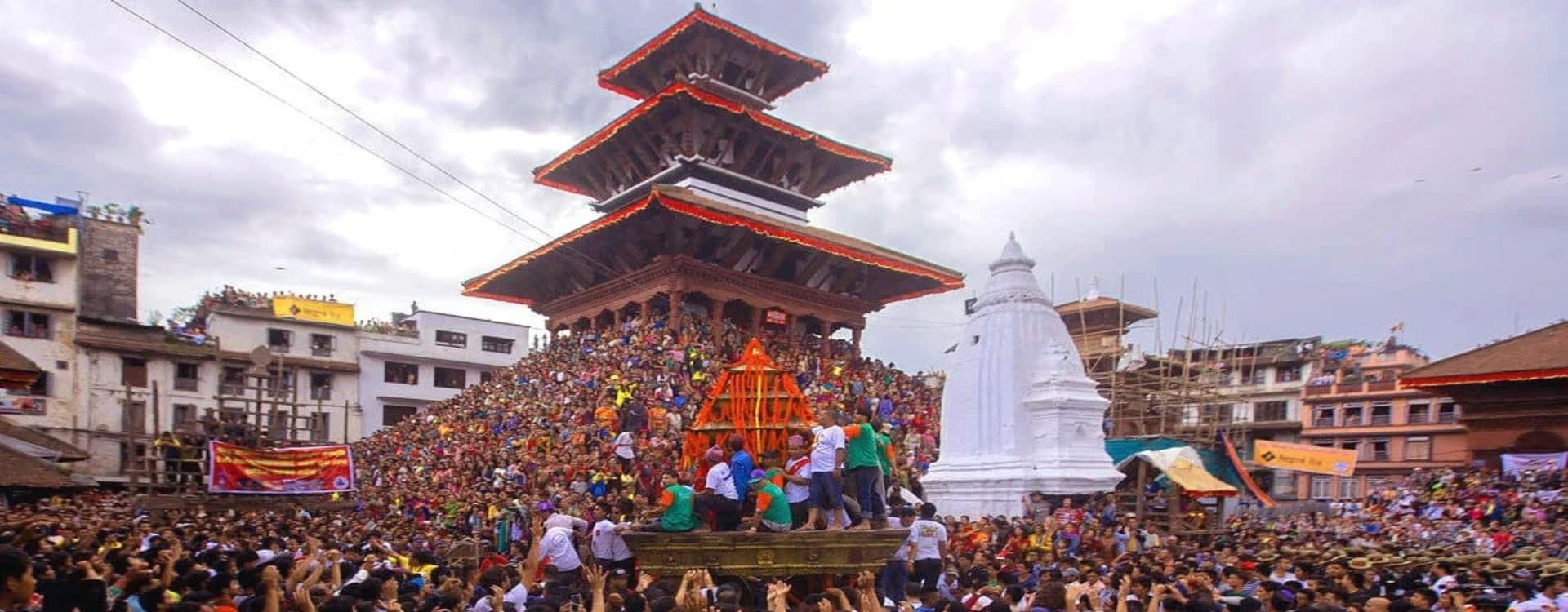
Indra Jatra is an eight-day festival centered in Kathmandu's Durbar Square that honors Indra, the Hindu god of rain and sky. It typically falls in September, overlapping in timing with the end of the monsoon. The festival involves the public procession of the Kumari, the living goddess, in a wooden chariot through the streets of Kathmandu. The Kumari is a prepubescent girl selected through an elaborate ritual process from a specific Newar family lineage to embody the goddess Taleju; she lives in her temple near Durbar Square and appears in public only during Indra Jatra and a handful of other occasions. Watching the Kumari chariot procession is one of the most distinctive cultural experiences available in Nepal and worth timing a visit to see.
Holi, falling in March, brings the color festivals that Nepal shares with India in its own regional form. In the hill regions including Kathmandu, Holi is celebrated on a different day from the Terai region, which observes it a day later. The festival involves throwing colored powder and water across all social barriers, and it turns the streets of Thamel and Pokhara into a joyful chaos of pink, blue, and yellow. Pack clothes you do not mind destroying.
For Buddhist communities, the Losar celebrations of Tibetan New Year, which fall in February or March depending on the lunar calendar, are the major festival event. In the Sherpa communities of the Khumbu, the Helambu Hyolmo communities, and the Tibetan neighborhoods of Kathmandu's Boudhanath area, Losar involves monastery ceremonies, masked dances called cham, feasting, and the public gathering of community members who may not see each other for the rest of the year. Mani Rimdu, a sacred ceremony held at Thyangboche Monastery in the Everest region every November, is another major Buddhist event that trekkers on the Everest circuit frequently encounter.
Food Across Nepal
Nepali food is shaped by altitude, ethnicity, and the agricultural possibilities of a terrain that ranges from tropical to arctic within a few hundred kilometers. The single dish that unifies the country is Dal Bhat, the national meal consisting of steamed rice, lentil soup, vegetable curry, and pickled vegetables. It is eaten twice daily by most Nepalis regardless of ethnicity, religion, or income level, and the correct response from a visiting trekker is to eat it frequently rather than seeking out Western alternatives. Dal Bhat is nutritionally well-suited to high-altitude physical exertion, comes with free refills at virtually every establishment that serves it, and costs a fraction of the menu alternatives.
Beyond Dal Bhat, the cuisine varies meaningfully by region and ethnicity. Newari food in the Kathmandu Valley is distinctly different from the rest of Nepal, featuring dishes like bara (savory lentil pancakes), chatamari (a rice flour crepe sometimes called the Newari pizza), and choila (spiced grilled meat seasoned with mustard oil and spices). The Thakali cuisine of the Mustang region in the upper Kali Gandaki valley is considered the finest everyday cooking tradition in Nepal, building on the Dal Bhat structure with higher-quality ghee, more varied vegetables, locally fermented flavors, and a refinement of presentation that reflects a community whose identity was built around running the best rest houses on the old Tibet-India salt trade route.
In Kathmandu and Pokhara, the restaurant options are genuinely diverse. Both cities have well-developed tourist districts with food ranging from Tibetan momos (dumplings filled with vegetable, buff, or pork and steamed or pan-fried) to South Indian thalis, Japanese ramen, Italian pizza, and American-style burgers. The quality is variable but the better restaurants in Thamel and Lakeside are comparable to decent casual dining anywhere in Asia. Newari restaurants clustered around the traditional neighborhoods of Patan and Bhaktapur offer the most authentic local experience in the valley and are worth seeking out specifically.
Food safety is a practical consideration throughout Nepal. The general rules are consistent: eat hot food that has been cooked in front of you, avoid raw salads in restaurants outside the main tourist areas, drink boiled or purified water rather than tap water, and peel fruit yourself rather than accepting pre-peeled portions. These precautions reduce but do not eliminate the risk of gastrointestinal illness, which is the most common health problem for international visitors to Nepal. Carrying oral rehydration salts and standard anti-diarrheal medication is sensible preparation.
Health, Vaccinations, and Altitude
Nepal has no mandatory vaccination requirements for entry. Standard recommendations from most travel medicine clinics for Nepal include hepatitis A, typhoid, tetanus and diphtheria, and hepatitis B. Rabies vaccination is recommended for extended travel or any itinerary involving remote areas where medical care is more than 24 hours away; rabies is present in Nepal's animal population including the langur monkeys at Swayambhunath who interact with visitors closely. Japanese encephalitis vaccination is relevant for longer stays in rural lowland areas, particularly the Terai. Malaria prophylaxis is generally not recommended for the altitude ranges of the main trekking routes but may be relevant for the Terai lowlands; consult a travel medicine specialist with your specific itinerary.
Altitude sickness is the most significant health risk for trekkers and climbers and deserves serious preparation regardless of your fitness level. The condition affects people unpredictably and does not correlate reliably with age, gender, or cardiovascular fitness. The fundamental prevention strategy is gradual ascent: the accepted guideline above 3,000 meters is to gain no more than 300 to 500 meters of sleeping elevation per night and to include a rest day for every 1,000 meters of altitude gained. Every trekking itinerary offered through our company is designed around this principle. Acetazolamide (Diamox) at 125 mg twice daily is the standard prophylactic medication; discuss it with your physician before travel. Symptoms of Acute Mountain Sickness include headache, fatigue, nausea, and poor sleep. Descent is the definitive treatment for serious altitude illness, and no other consideration overrides it.
Travel insurance covering emergency helicopter evacuation to at least the altitude of your highest planned elevation is non-negotiable for anyone trekking above 3,000 meters in Nepal. Helicopter rescue from the upper trekking zones costs between USD 3,000 and USD 10,000 depending on location; without appropriate insurance, that cost falls entirely on the individual. Standard travel insurance policies sold alongside airline tickets almost never include this coverage. Adventure-specific insurers such as World Nomads, Battleface, and Campbell Irvine offer appropriate policies; read the fine print carefully and confirm your planned altitude is explicitly covered.
Money, Connectivity, and Practical Logistics
The Nepalese rupee (NPR) is the currency, and its exchange rate against major currencies is available from licensed money changers and ATMs throughout the country. ATMs are abundant in Kathmandu and Pokhara but become unreliable in smaller towns and disappear entirely once you are on a trekking trail. The last reliable ATMs before most major trekking routes are in Namche Bazaar for the Everest region, Besisahar for the lower Annapurna Circuit, and Kathmandu itself for Langtang. Carry enough cash from the capital to cover the full cost of your trek plus a contingency buffer.
Major currencies including US dollars, euros, and British pounds exchange well at licensed money changers in Thamel, which typically offer better rates than hotel front desks or airport counters. Keep some US dollar bills in good condition (no tears, no pen marks, no excessive folding) as USD cash is universally accepted for trekking permits, park entry fees, and emergency transactions outside the banking system.
Mobile connectivity is better than most first-time visitors expect in the cities and along the main trekking corridors. Nepal Telecom's 4G network reaches Namche Bazaar, most Annapurna Circuit villages, and the lower Langtang valley. A Nepal Telecom SIM card purchased at the airport on arrival costs around NPR 200 for the card and varies for data packages; NPR 500 to 1,000 buys a data package sufficient for a two to three week visit. Connectivity becomes patchy and eventually disappears in the high mountain zones; plan for several days of digital disconnection on any serious trek.
Wi-Fi is available at most Kathmandu and Pokhara hotels and at tea houses along the main trekking routes at lower elevations, though quality and reliability vary considerably. Tea houses in the upper zones charge NPR 300 to 700 per day for Wi-Fi access that may or may not actually deliver a usable connection. A local SIM with data is more reliable than relying on tea house Wi-Fi for anything important.
When to Visit Nepal
Nepal's geography means that no single answer to the timing question is correct for all purposes and all regions. The broad seasonal framework is defined by the monsoon, which arrives in June, intensifies through July and August, and retreats in mid to late September. The pre-monsoon spring and post-monsoon autumn seasons bookend this wet period and together constitute the main trekking windows.
October is the single most popular and arguably best month in Nepal for trekking, mountain photography, and festival attendance simultaneously. The air following the monsoon's retreat is extraordinarily clear, the peaks are sharp against blue skies, the trails are dry, and October is when Dashain and often Indra Jatra fall. The Khumbu, the Annapurna, the Langtang, and the Manaslu regions all operate at full capacity and offer their finest conditions. The downside of October is that trails and lodges in the most popular zones are at maximum occupancy, particularly the Everest Base Camp route.
March and April offer rhododendron blooms throughout the Middle Hills and lower trekking elevations, somewhat lower trail traffic than October, and good mountain visibility in the mornings before pre-monsoon afternoon cloud builds. April is generally better than May for visibility. The spring window suits people who prioritize the forest environment and cultural depth of the lower valleys as much as the high mountain views.
November extends the autumn window with increasingly cold nights and light snow on high passes. The first snowfall on the Thorong La of the Annapurna Circuit and on Larkya La of the Manaslu Circuit can arrive in late October or November, depending on the year, and by the end of November serious winter conditions have begun to set in above 4,500 meters. December through February is cold throughout the mountain zones; dedicated winter trekkers find extraordinary solitude and genuine beauty in the snow-covered landscape, but logistics are harder and some tea houses close.
|
Month |
Season |
Trail Conditions |
Highlights |
Considerations |
|
Dec to Feb |
Winter |
Cold, snow at altitude |
Solitude, Losar festival (Feb) |
Some tea houses closed; serious cold gear required |
|
Mar to May |
Spring |
Dry, rhododendron bloom |
Wildflowers, Holi, Buddha Jayanti |
Afternoon cloud builds in May |
|
Jun to Aug |
Monsoon |
Rain, leeches in forest |
Gosaikunda pilgrimage, green landscapes |
Reduced mountain views; trails muddy |
|
Sep to Nov |
Autumn |
Dry, clear, stable |
Best mountain views, Dashain, Tihar |
Highest trail traffic; book early |
Responsible Travel in Nepal
Nepal's tourism economy is large relative to the overall size of the national economy, and the way visitors spend their money and conduct themselves on the trail has meaningful consequences for real people and for the natural environment of a country with extraordinary biodiversity under real pressure.
Porter welfare is the most directly actionable responsibility for trekkers hiring support staff. The International Porter Protection Group (IPPG) publishes clear standards covering load limits (no more than 20 kg for Himalayan porters), appropriate clothing for cold and wet conditions, shelter of the same quality as the clients they support, insurance for accident and illness, and fair wages. Not all agencies in Nepal meet these standards. Booking through a registered agency that explicitly commits to IPPG guidelines, as our company does on all departures, is the most effective way to ensure that the people who carry your bags are treated appropriately.
Plastic waste is a serious environmental problem in Nepal's mountain regions. The combination of large visitor numbers, difficult waste removal logistics, and limited recycling infrastructure means that plastic bottles in particular accumulate in conservation areas faster than they can be removed. Carrying a reusable water bottle with a purification system, whether tablets, a filter straw, or a UV pen, eliminates the need for single-use plastic on the trail. Tea houses along most routes sell boiled water in reusable thermoses. The cost is modest and the environmental argument is unambiguous.
Supporting the local economy directly rather than through intermediaries matters in communities where most income is generated from tourism. Eating at family-run tea houses, buying local products including cheese, wool goods, and crafts from producers rather than Kathmandu souvenir shops, and hiring local guides through registered agencies rather than platforms that extract fees from both sides of the transaction are all concrete choices that put more money where it has the most impact. Nepal is one of the world's least developed economies in absolute terms; the distribution of tourism spending within the country matters considerably.
Nepal rewards preparation and genuine engagement in a way that few travel destinations can match. The mountains are real, the culture is genuinely alive rather than preserved for display, the food is worth understanding, and the people you encounter on the trail, in the tea houses, and in the cities have stories and perspectives that are worth your curiosity. The guides in this section cover the Annapurna region, the Langtang region, the Manaslu Circuit, and peak climbing in detail. Read them carefully, prepare accordingly, and reach out to our team with any questions before you go. We have been working in these mountains long enough to know that the best journeys begin with the most thorough planning.