Peak Climbing In Nepal
The Complete Guide to Your First Himalayan Summit
Nepal does not ease you in gently. From the moment you land in Kathmandu and catch your first glimpse of snow-covered peaks through the haze above the city, something shifts. The mountains here are not just scenery. They are the whole point.
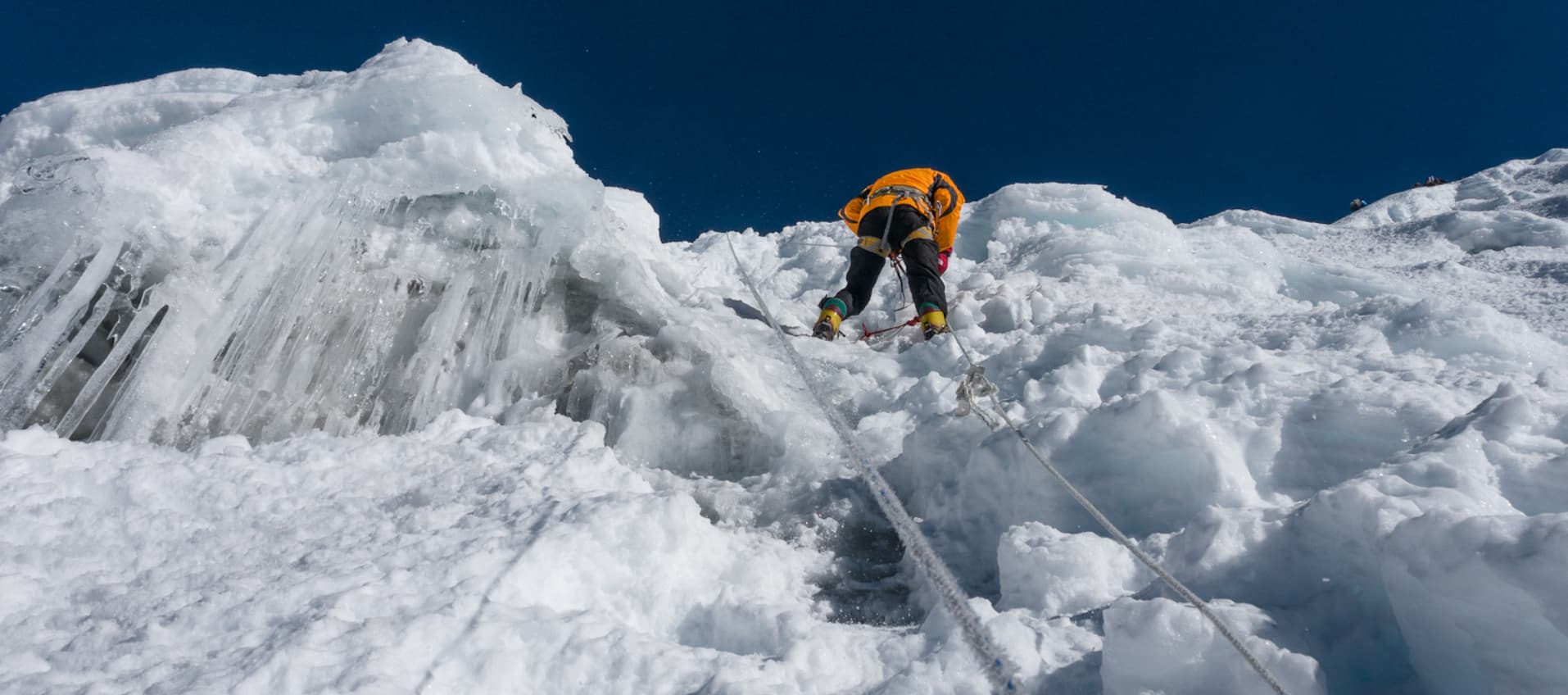
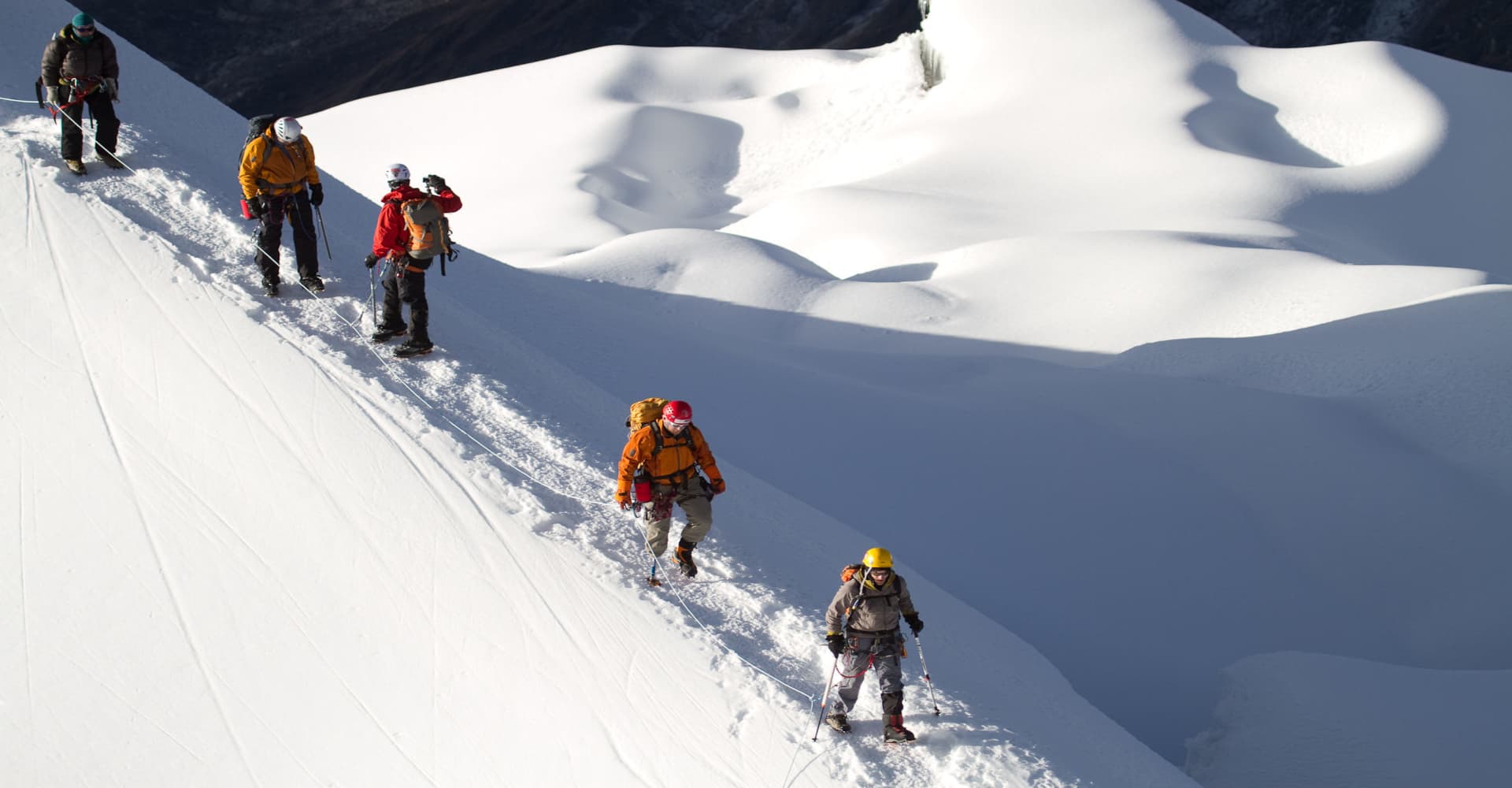
Trekking in Nepal has its own rewards, and plenty of them. But for a growing number of visitors, walking to the foot of a peak is no longer enough. Peak climbing offers something different: a summit. A fixed rope on a 45-degree ice face. Crampons biting into glacial ice at 6,000 metres as the sun comes up over the Himalayan skyline. It is one of the more unusual things a person can do with a two-week holiday.
The good news is that Nepal has a well-developed system of designated trekking peaks and minor expedition peaks, most of them under 7,000 m, that are accessible to people who are fit, motivated, and willing to do some preparation. You do not need to be an elite mountaineer. You do need to be serious about it.
This guide covers what you need to know: the best peaks, permit logistics, costs, training, and the questions most people ask before they book. If you are thinking about it, read this first.
Why Choose Peak Climbing in Nepal?
You Are Already in the Right Place
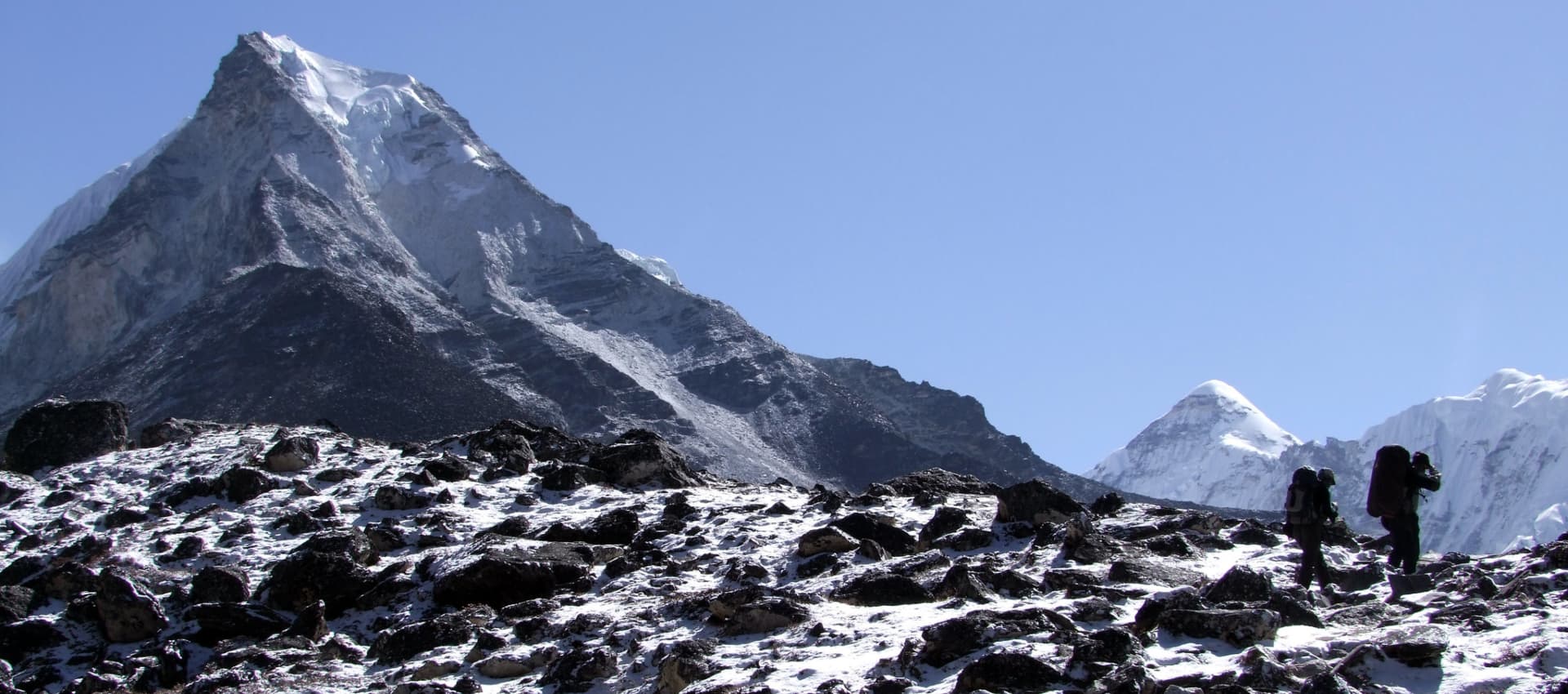
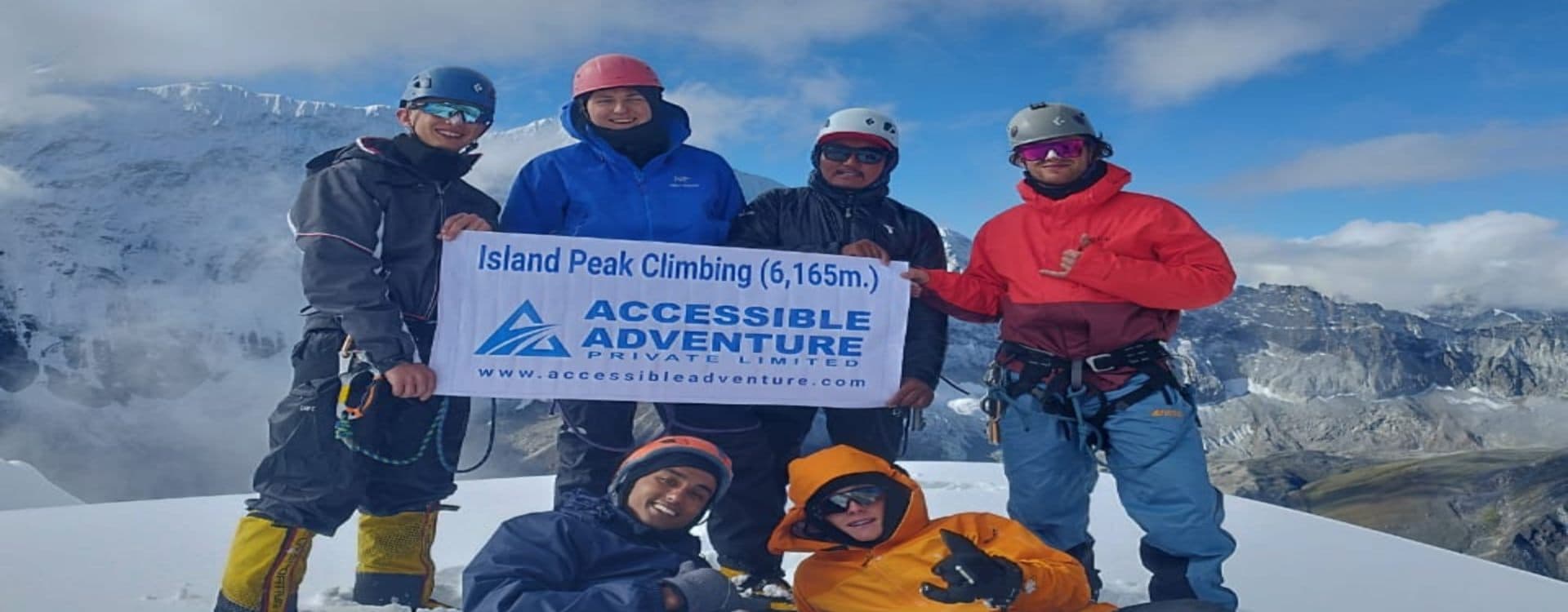
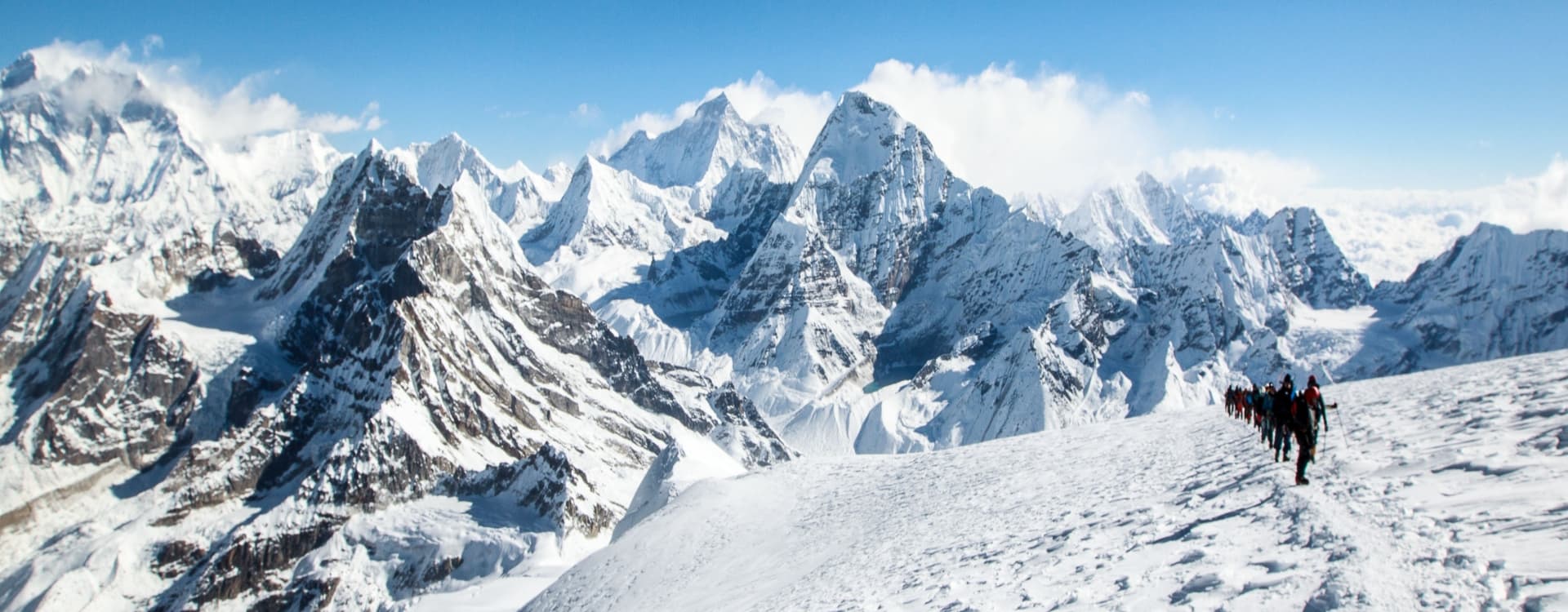
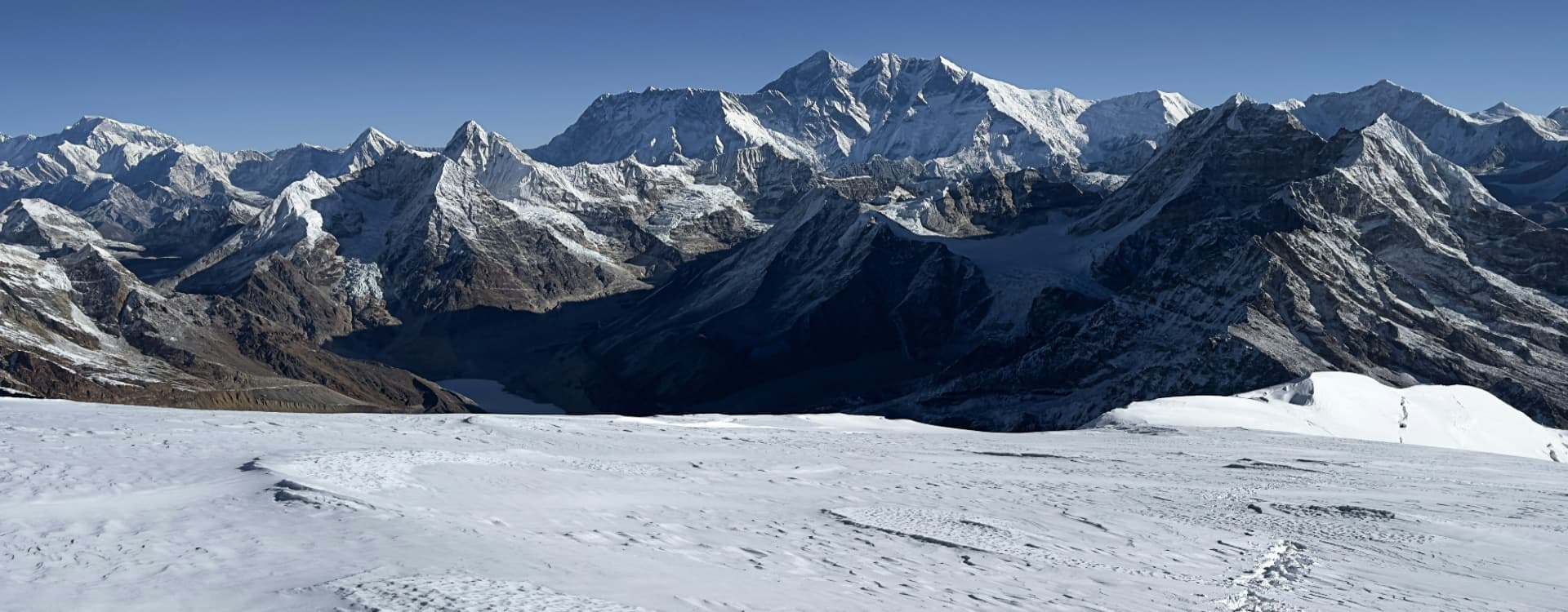
Nepal is home to eight of the world’s 14 eight-thousanders, including Everest, Kanchenjunga, Lhotse, and Makalu. Most people are aware of this. What is less obvious is how close the trekking peaks sit to these giants. When you are standing on the summit of Island Peak at 6,189 m, Lhotse and Nuptse fill your entire field of view. Makalu is to the east. You can count the peaks. It is not like anything you will see from a viewpoint or a valley floor.
The Khumbu region alone, which sits just below Everest, contains several classic trekking peaks within a few days’ walk of one another. The Annapurna region has its own set of options with a very different character: less glaciated, more approachable in some ways, with the added visual drama of the Annapurna massif rising over the surrounding ridgelines.
Logistically, Nepal has the infrastructure to support you. Experienced Sherpa guides, established base camps on popular peaks, gear rental in Kathmandu and Namche Bazaar, and a permit system that, once understood, is relatively straightforward to navigate.
The Terrain Is Unlike Anywhere Else
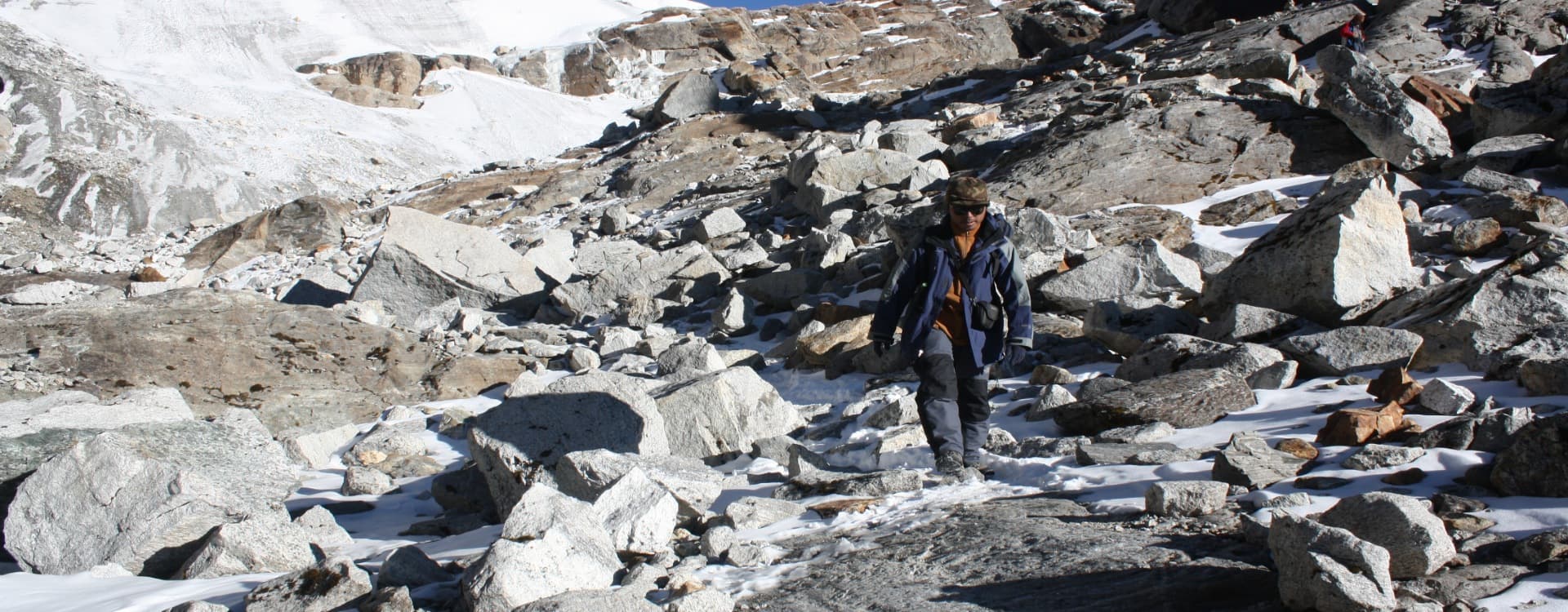
The approach routes to Nepal’s trekking peaks take you through landscapes that shift dramatically over just a few days. You will walk past rhododendron forests, cross glacial moraines, skirt alpine lakes, and navigate icefalls that would be the centrepiece of a climbing trip in most other countries. On the approach to Mera Peak alone, you pass through dense subalpine jungle before emerging onto the high Hinku valley, a wide glacial corridor flanked by peaks that most people have never heard of.
The cultural layer adds another dimension. The trail to Island Peak passes through Tengboche, where the monastery sits at roughly 3,800 m with Ama Dablam rising directly behind it. You will walk through Sherpa villages that have been on these routes for generations. Stopping for tea at a teahouse in Dingboche, or talking to your Sherpa guide about the mountain they grew up looking at, is part of what makes Nepal climbing feel different from an alpine objective in Europe or North America.
There Is a Realistic Entry Point for Most People
This is probably the most important point for anyone who has not done high-altitude climbing before. Nepal’s designated trekking peaks are structured to allow progression. At one end, you have peaks like Mera Peak (6,476 m) that are non-technical in good conditions and achievable by fit trekkers who put in the right training. At the other end, Ama Dablam (6,812 m) is a full expedition-grade climb requiring significant technical skill and experience.
Most first-time Himalayan climbers start somewhere in the middle: Island Peak or Lobuche East, both of which involve glacier travel, crampon work, and short technical sections on fixed ropes. They are hard. But they are achievable with proper preparation and a good guide.
Nepal’s peaks also work well as stepping stones. Many people who summit Island Peak go on to attempt Lobuche East the following year, then Mera Peak as an acclimatisation climb before something bigger. The progression is logical, and the Nepali guiding community is well set up to support it.
The Best Peaks to Climb in Nepal
Nepal has 33 officially designated trekking peaks managed by the Nepal Mountaineering Association (NMA), plus a longer list of expedition peaks requiring separate permits. The three peaks below are the most popular starting points, each for different reasons.
Island Peak (Imja Tse) – 6,189 m
Island Peak is the most climbed trekking peak in Nepal, and the numbers reflect how well it works as a first Himalayan summit. It sits in the Khumbu region and is typically combined with the Everest Base Camp trek, meaning you get both experiences in one trip. Most itineraries run 18 to 22 days total.
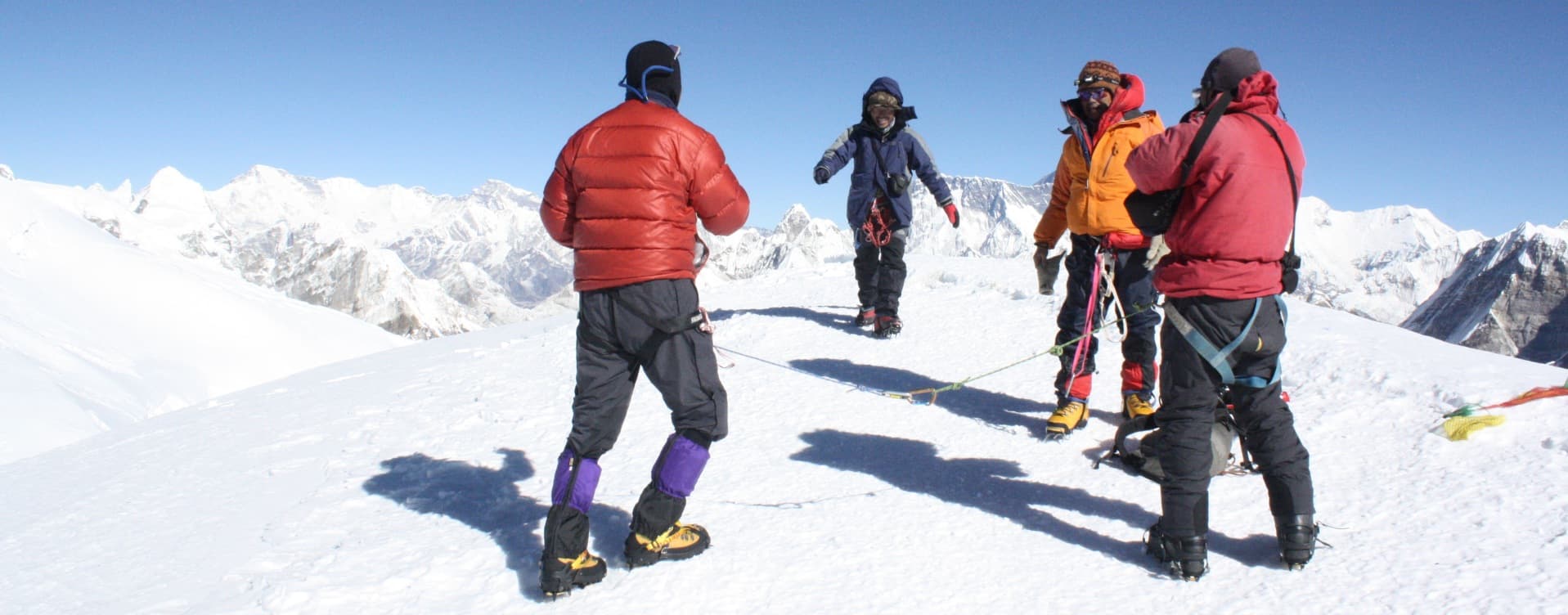
The climb itself involves a glacier crossing to the base of the headwall, followed by a steep ascent on fixed ropes to the summit ridge. The technical demands are real but manageable. You need to be comfortable with crampons and an ice axe and know how to handle a jumar on a fixed line. If you have never used this equipment before, your guide will teach you at base camp, but coming with some prior familiarity makes the summit day considerably less stressful.
The views from the top justify every step of the approach. Lhotse, the world’s fourth-highest peak, sits directly to the north. Nuptse’s long south wall dominates the west. On a clear morning, the summit panorama is something you will not forget.
Mera Peak – 6,476 m
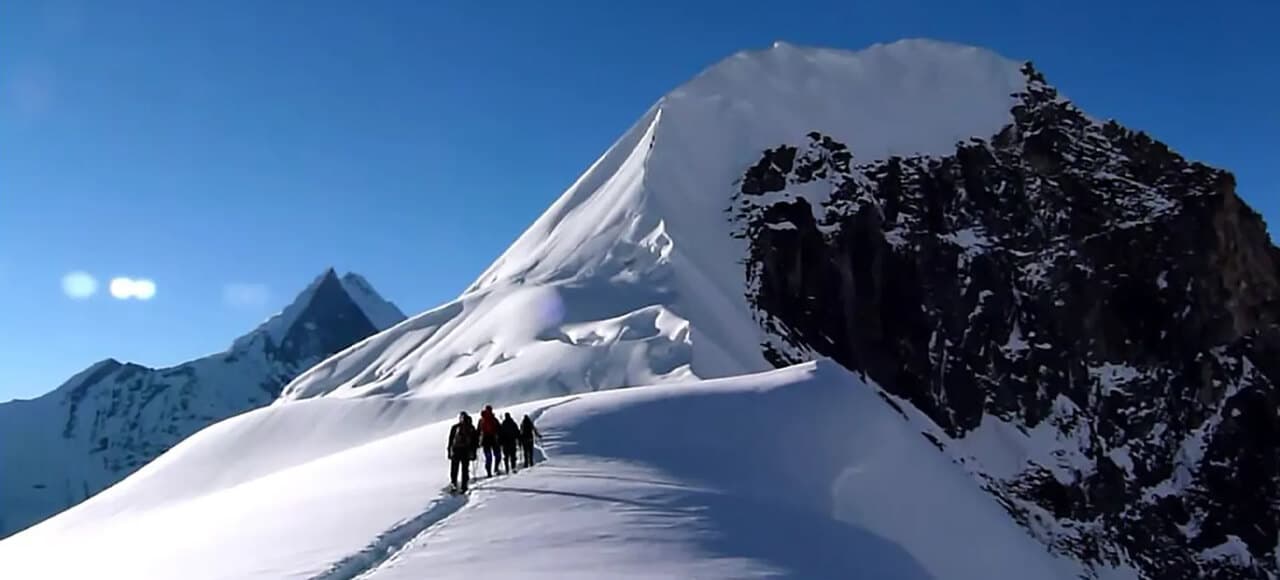
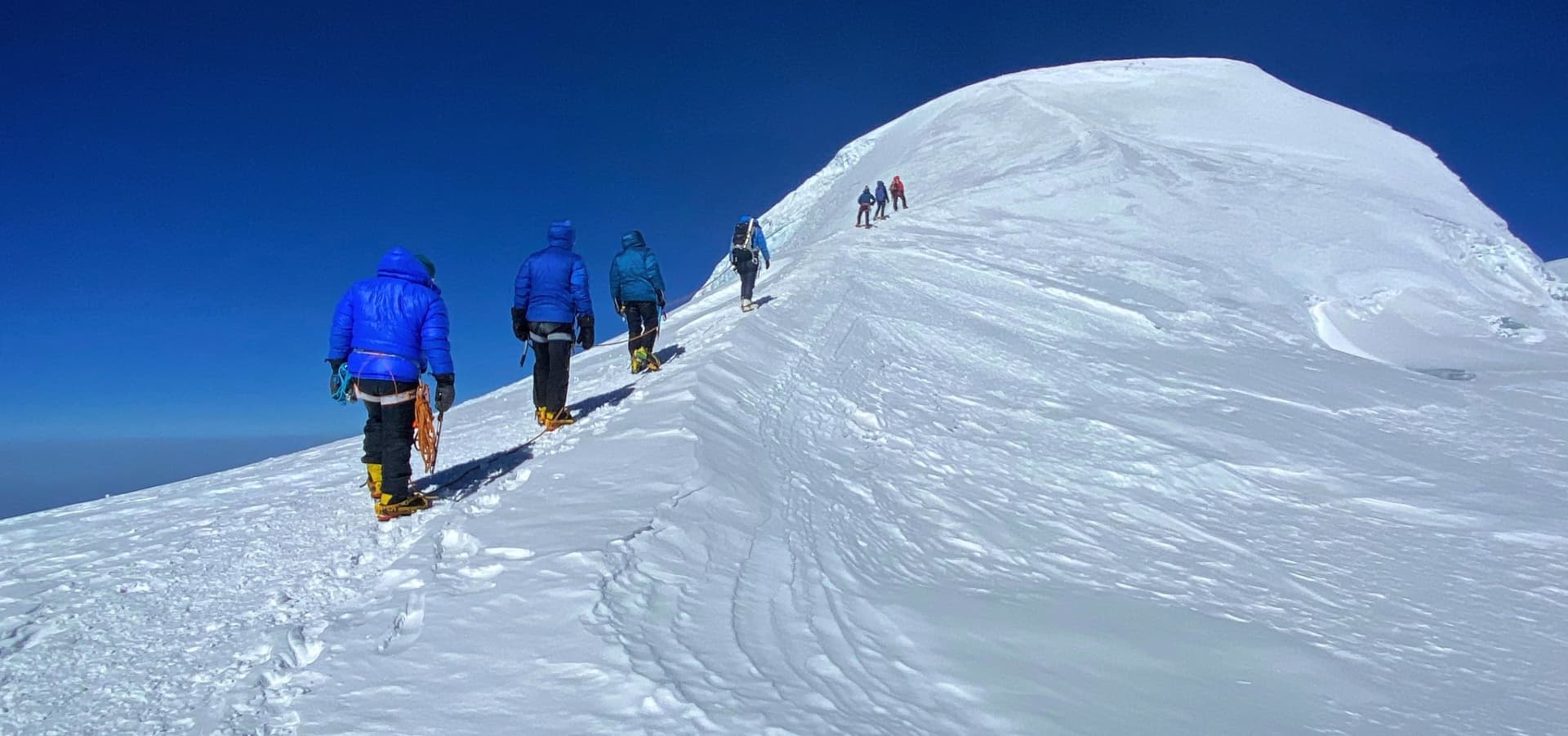
Mera Peak is the highest officially designated trekking peak in Nepal, which makes it a credible objective for anyone serious about altitude. What sets it apart from Island Peak is the nature of the climb: in good conditions, it is a high-altitude snow walk rather than a technical mountaineering route. There are no fixed ropes on the standard route. No serious rockwork. Just sustained glacier travel at increasing altitude.
That simplicity is deceptive. The altitude alone makes the final push to the summit demanding. At 6,476 m, the air contains roughly half the oxygen available at sea level. Your pace will slow to something that feels comically slow. Most climbers take one step, then two breaths, then another step. The summit day typically starts at 2 or 3 in the morning to allow enough time for the ascent and a safe descent.
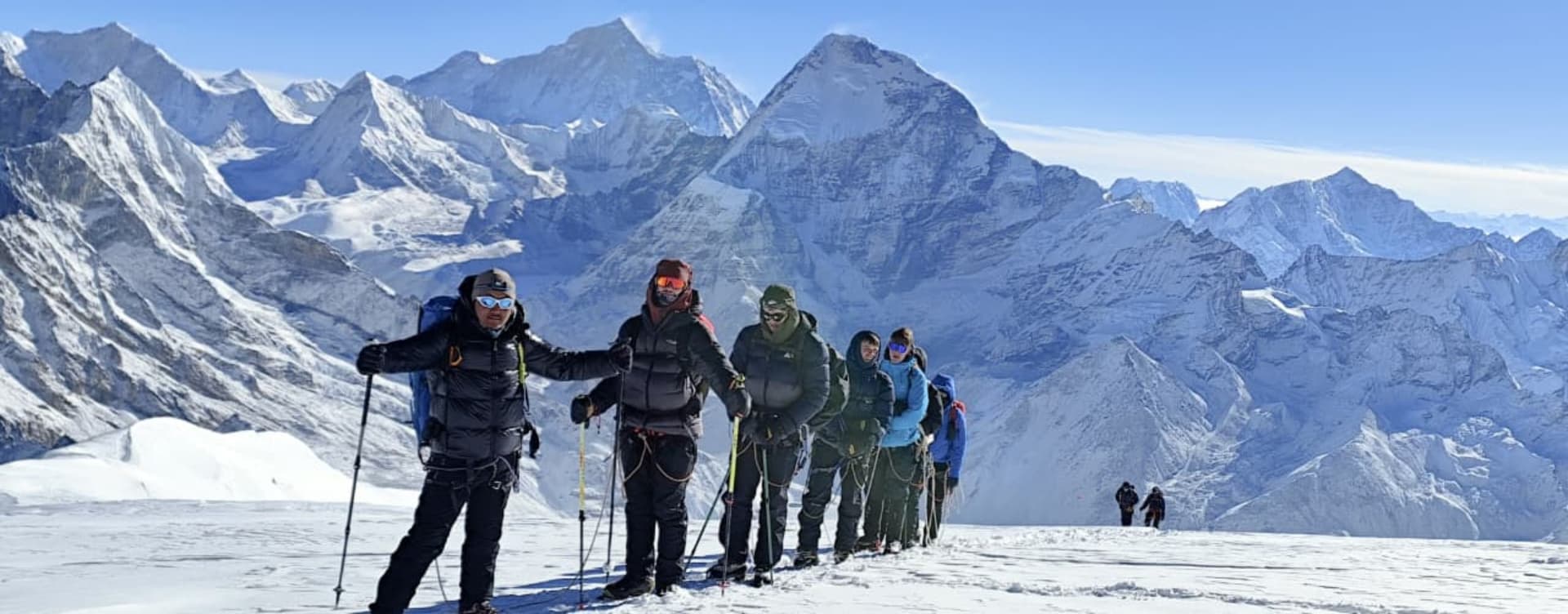
The reward is one of the finest summit panoramas available from any trekking peak. On a clear day, five 8,000-metre peaks are visible: Everest, Cho Oyu, Lhotse, Makalu, and Kanchenjunga. The approach through the Hinku Valley is also one of the most remote and dramatic in the region, passing through terrain that sees significantly fewer visitors than the Everest or Annapurna corridors.
Mera works well as either a standalone objective or as an acclimatisation climb before a more technical peak. Several operators combine it with Island Peak in a single 25 to 28-day itinerary.
Lobuche East – 6,119 m
Lobuche East is the step up that serious climbers take after Island Peak. It sits in the Khumbu, close to the classic EBC route, and involves a more sustained technical challenge: a steep summit ridge with exposed sections that require solid crampon technique and comfort on mixed terrain.
The standard route goes from high camp at approximately 5,600 m to the summit at 6,119 m via a rocky and icy ridge. There are sections where the drop on either side is considerable. It is not the kind of climb where you can zone out.
Most climbers attempt Lobuche after accumulating some experience at altitude, either through prior trekking to EBC or a previous trekking peak ascent. It is an excellent preparation climb for anyone considering a major Himalayan expedition, since it introduces the kind of technical terrain and summit-day decision-making that bigger objectives demand.
Costs, Permits, and Logistics
Climbing Permits and Required Documents
All trekking peaks in Nepal require a climbing permit issued by the Nepal Mountaineering Association (NMA). These are separate from trekking permits and must be obtained in advance through a licensed climbing agency. You cannot purchase NMA permits independently as a foreign climber.
Beyond the NMA permit, most peaks in the Khumbu require entry into Sagarmatha National Park (Sagarmatha National Park permit), and climbers must also carry valid travel insurance that explicitly covers high-altitude evacuation. For Khumbu-region peaks, your agency will also arrange a TIMS card as part of standard registration.
Bring your passport, two passport-sized photos, and cash in both USD and Nepali Rupees. Your agency handles the bureaucratic process, but it is worth understanding what you are signing and what coverage you actually have before you arrive.
What It Actually Costs (2026 Estimates)
Peak climbing in Nepal is not cheap. An all-inclusive guided trip on a standard trekking peak typically runs between USD 2,200 and USD 5,500 depending on the peak, the operator, and the level of support you choose. Here is a rough breakdown of where the money goes:
• NMA climbing permit: USD 125 to 350 depending on the peak and season
• National park entry fees: USD 30 to 50
• Domestic flights (Kathmandu to Lukla return): USD 350 to 500
• Climbing guide fees: USD 40 to 60 per day for a certified high-altitude guide
• Porter fees: USD 20 to 30 per day
• Equipment rental (crampons, harness, ice axe, down suit if needed): USD 100 to 300
• Teahouse accommodation and food on the approach: USD 25 to 40 per day
The package pricing offered by most agencies bundles many of these costs together, which simplifies the planning process. What it often does not include is your international flights, travel insurance, personal gear, and pre-trip expenses in Kathmandu. Budget for those separately.
One note on equipment: do not try to cut corners on your personal mountaineering gear. A poorly fitting harness or boots that are not rated for the temperatures you will encounter are not just uncomfortable, they are unsafe. If you are buying rather than renting, get properly fitted at a reputable outdoor retailer before you travel.
Training and Preparation
Physical Fitness: What You Actually Need
Peak climbing demands more from your body than trekking does, and the altitude amplifies everything. A bad day at 5,500 m is a very different experience from a bad day at 3,000 m. You need to arrive in genuinely good shape.
Start a dedicated training programme at least three to six months before your trip. The focus should be on cardiovascular endurance above everything else. Running, cycling, rowing, and swimming all work. What matters is sustained aerobic effort: the ability to keep moving at a moderate pace for several hours without your heart rate spiking. Aim for at least four cardio sessions per week in the months leading up to your trip, with at least one long session of 90 minutes or more each week.
Leg strength is the other priority. Weighted hikes on steep terrain are the most transferable training you can do. Find a hill with a significant elevation gain and climb it regularly with a loaded pack. Squats, lunges, and step-ups in the gym complement this, but there is no real substitute for actual hiking. If you live somewhere flat, a stair climber with a loaded pack is the next best option.
If you have no prior mountaineering experience, take a basic mountaineering course before your trip. A single week-long course covering crampon technique, ice axe use, rope management, and basic crevasse rescue will make a significant difference to both your confidence and your safety on summit day. Many programmes are available in the Alps, the Rockies, or Mount Rainier in the US.
Altitude Acclimatisation
Altitude sickness does not discriminate. Fit people get it. Experienced climbers get it. The only reliable protection is a slow, structured acclimatisation schedule. Your itinerary should build in rest days at key elevations, with the classic principle of “climb high, sleep low” applied consistently throughout the approach.
The symptoms of acute mountain sickness (AMS) include persistent headache, nausea, dizziness, and disturbed sleep. If any of these appear, do not ascend further. If symptoms worsen, descend immediately. Even a 300 to 500 m descent can bring rapid relief. No summit is worth ignoring these signals.
Some climbers use Diamox (acetazolamide) as a prophylactic for AMS. Consult a doctor before your trip about whether this is appropriate for you, what the correct dosage is, and what side effects to expect. It is not a substitute for proper acclimatisation, but it can help some people in the early stages of altitude gain.
The Best Time to Go
Two seasons dominate the peak climbing calendar in Nepal: spring (March to May) and autumn (September to November). Both offer stable weather windows and acceptable summit conditions, but they have different characteristics.
Spring is expedition season. This is when Everest is busy and the logistical infrastructure on the major peaks is at its most active. The weather tends to be settled in April, with longer daylight hours and warmer temperatures on the approach. The trade-off is that popular peaks like Island Peak see significant traffic in April, and summit day can feel crowded on the fixed lines.
Autumn offers arguably better conditions for trekking peaks specifically. The post-monsoon skies are exceptionally clear, the temperatures are cold but manageable, and the trails are at their most photogenic. October is the sweet spot. Late autumn into November is colder and can bring early snowfall on the higher routes, but the peaks are quieter and the visibility is superb.
Expect summit temperatures well below freezing on any trekking peak regardless of season. At 6,000 m in October or April, temperatures of -15°C to -25°C are standard. Factor this into your clothing and gear decisions. Down is not optional.
Gear for Peak Climbing in Nepal
The gear list for a trekking peak is more involved than for a standard trek, but not as extensive as a full expedition. You need to be warm enough, technically equipped, and light enough to move efficiently. Here is what the essentials look like:
• Mountaineering boots: Double-plastic or insulated leather boots rated to at least -30°C. This is non-negotiable at altitude.
• Crampons: 12-point steel crampons compatible with your boots. Borrow or rent if you do not want to buy.
• Ice axe: A standard general-purpose alpine axe. Length depends on your height; get advice from a guide or outfitter.
• Harness and ascending device (jumar): Required for fixed rope sections on peaks like Island Peak and Lobuche.
• Down suit or expedition-weight down jacket and trousers: Temperatures on summit day will be severe. A thin down jacket is not sufficient.
• Layering system: Moisture-wicking base layer, fleece mid-layer, hardshell outer. The same principles as trekking, but you need everything to work together at extreme cold.
• Headlamp with spare batteries: Summit starts at 2–3 AM are standard. Lithium batteries perform better in cold.
• Sleeping bag rated to -20°C: High camp nights are cold. Do not scrimp here.
Most of this gear can be rented in Kathmandu or Namche Bazaar, which keeps the upfront cost down. Quality varies, so inspect rented equipment carefully and test fit before the approach begins.
Conclusion
Peak climbing in Nepal sits in a category of its own. It asks more of you than trekking does, both in preparation and on the mountain, but it delivers something that a standard trek cannot: the experience of actually standing on a summit. At 6,000-plus metres, with the Himalayan giants filling the horizon in every direction, it is hard not to feel like the effort was worth it.
The entry point is lower than most people assume. With the right training, a good agency, and a realistic approach to acclimatisation, peaks like Mera and Island Peak are accessible to fit, motivated non-specialists. You do not need a mountaineering CV. You need several months of serious preparation and the willingness to turn back if the mountain says no.
Start with the right peak for your experience level. Hire a certified guide through a reputable, TAAN-registered agency. Take the altitude protocol seriously. The logistics, the discomfort, and the early morning starts are all very manageable if you have prepared properly.
Nepal has been hosting climbers for generations. The infrastructure, the expertise, and the mountains are all there. The rest is up to you.
Frequently Asked Questions
What exactly is peak climbing in Nepal?
Peak climbing refers to summiting one of Nepal’s officially designated trekking or expedition peaks, most of which are under 7,000 m. These peaks require basic to intermediate mountaineering skills and are a step above standard high-altitude trekking. They sit between trekking and full Himalayan expeditions in terms of complexity and commitment.
Do I need prior climbing experience?
For Mera Peak, the primary requirement is good physical fitness and high-altitude endurance. No prior technical climbing experience is strictly necessary, though familiarity with crampons is helpful. For Island Peak and Lobuche East, some prior experience with basic mountaineering techniques, glacier travel, and fixed ropes is strongly recommended. A one-week mountaineering course before your trip is the most effective way to prepare if you are starting from zero.
How difficult is Island Peak?
Island Peak is rated moderately technical. The standard route involves a glacier crossing, crampon travel across exposed snowfields, and a steep fixed rope section to the summit ridge. It is achievable for fit, well-prepared climbers with basic mountaineering skills. Altitude is a bigger factor than technical difficulty for most people who attempt it.
What is the best time of year for peak climbing in Nepal?
Spring (March to May) and autumn (September to November) are the two main seasons. Autumn offers better post-monsoon visibility and quieter conditions on most trekking peaks. Spring has longer days and is the main expedition season but popular peaks can be crowded in April. Both seasons work well for competent climbers with proper gear.
How much does peak climbing in Nepal cost?
A fully guided trip on a standard trekking peak typically costs between USD 2,200 and USD 5,500, depending on the peak, operator, group size, and level of support. This generally includes permits, domestic flights, guiding fees, porters, and accommodation. International flights, personal gear, and travel insurance are separate.
How long does a peak climbing trip take?
Most trekking peak itineraries run 15 to 22 days in total, including the approach trek, acclimatisation days, the summit attempt, and the return. Island Peak combined with EBC can take 18 to 22 days. Mera Peak as a standalone objective is typically 15 to 18 days. Rushed itineraries that cut acclimatisation days increase both the risk of altitude sickness and the likelihood of not summiting.
Is peak climbing in Nepal safe?
With proper preparation, a certified guide, adequate acclimatisation, and the willingness to turn back when conditions demand it, trekking peaks in Nepal have a reasonable safety record. The risks are real and include altitude sickness, weather changes, and the inherent hazards of glacier travel. These risks are manageable with experience and good decision-making, but they cannot be eliminated entirely.
What gear do I need?
The core technical items are mountaineering boots, 12-point crampons, an ice axe, a harness, and an ascending device for fixed rope sections. For warmth, you need a down suit or high-loft insulation jacket and trousers, a layered clothing system, and a sleeping bag rated to at least -20°C. Most gear can be rented in Kathmandu or Namche Bazaar if you do not want to buy.
What is the highest trekking peak in Nepal?
Mera Peak at 6,476 m is the highest officially designated trekking peak in Nepal managed by the Nepal Mountaineering Association.
Can beginners attempt a Himalayan peak?
Yes, within limits. Peaks like Mera are achievable for fit beginners with no prior technical experience, provided they train seriously and follow a proper acclimatisation schedule. Peaks like Lobuche East and Island Peak are more appropriate for people with at least some prior mountaineering exposure. Be realistic about your experience level when choosing an objective.
Do I need travel insurance?
Yes, and it is a legal requirement for peak climbing in Nepal. Your policy must cover high-altitude mountaineering (specify the altitude of your intended peak), helicopter evacuation, and medical treatment. Standard travel insurance usually does not include climbing above 4,000 m, so read the fine print and get a dedicated adventure or mountaineering policy.
Is peak climbing harder than trekking?
Yes, meaningfully so. Beyond the physical demands of trekking at altitude, peak climbing adds technical sections on ice and snow, the requirement to use specialised equipment, and typically a summit day that starts in the middle of the night and involves multiple hours of sustained effort at the limits of acclimatised altitude. The mental challenge is also greater. Trekking is demanding. Climbing at 6,000 m is a different category of experience.