No cancellation fees. No hassle. Book Now, stay relaxed.Cancellation Terms
Accessible Adventure
Outbound
Trekking in Nepal
Expeditions
Activities
Travel Guide
Company
Accessible Adventure Logo
About Us

As Accessible Adventure, we are a trusted adventure tour operator, crafting unforgettable journeys across Nepal, Tibet, and Bhutan that leave lasting memories for every traveler.

Explore More
  • Blog
  • Travel Guide
  • Our Commitments
  • Online Payment
Company
  • Our Team
  • Terms and Conditions
  • No-risk Booking Policy
  • Legal Documents
Have Questions?
  • Phalful Chwok, Nayabazar-16, Kathmandu, Bagmati, 44600, Nepal
  • +9779851352707
  • info@accessibleadventure.com
Contact Us
👥 Follow us:
FacebookX (Twitter)LinkedInInstagramYouTubePinterestTikTokWhatsAppViber

All content and photographs on this website are copyright © Accessible Adventure Pvt. Ltd. and may not be reproduced without prior written permission.

Developed byTuring Research And Development Private Limited ↗
Muktinath Pilgrimage Tour: Complete Guide, Itinerary & Cost for 2026

Starting from

USD 1/ person
Book Now ↓
HomeActivitiesSpiritual ToursMuktinath Pilgrimage Tour: Complete Guide, Itinerary & Cost for 2026

Muktinath Pilgrimage Tour: Complete Guide, Itinerary & Cost for 2026

Country

Nepal

Duration

8 Days

Difficulty

Easy to Moderate

Max Altitude

3800m/12467ft

Style

Tour | Cultural Immersion | Moderate Himalayan Adventure

Best Season

Year Round (best: Sept–May, avoid Jun–Aug monsoon)

OverviewItineraryCost DetailsBookingGuideAdditional InfoFAQs

Why Choose Muktinath Pilgrimage Tour: Complete Guide, Itinerary & Cost for 2026?

Last updated September 8, 2026

Few journeys in Nepal carry the weight that this one does. The road to Muktinath climbs out of the subtropical valleys around Kathmandu, over a Himalayan cable car ride to a wish-fulfilling goddess, along the shores of Phewa Lake in Pokhara, and finally up through the deepest gorge on earth into the high, wind-scoured desert of Mustang. At the end of it sits a temple that Hindus and Buddhists have shared without argument for centuries, a place where 108 stone spouts pour glacial water over pilgrims seeking release from the cycle of birth and death, and where a flame said to burn from stone and water together has never gone out.

This guide walks through a complete Muktinath Pilgrimage Tour, the kind built for travelers who want the temple visit itself paired with the wider cultural and spiritual sweep of Kathmandu and Pokhara. It covers exactly what such a trip involves day by day, what it costs, who it suits, and every practical detail worth knowing before booking, all gathered from current 2027 planning research so nothing here is guesswork.

Why Muktinath Draws Pilgrims From Across Two Faiths

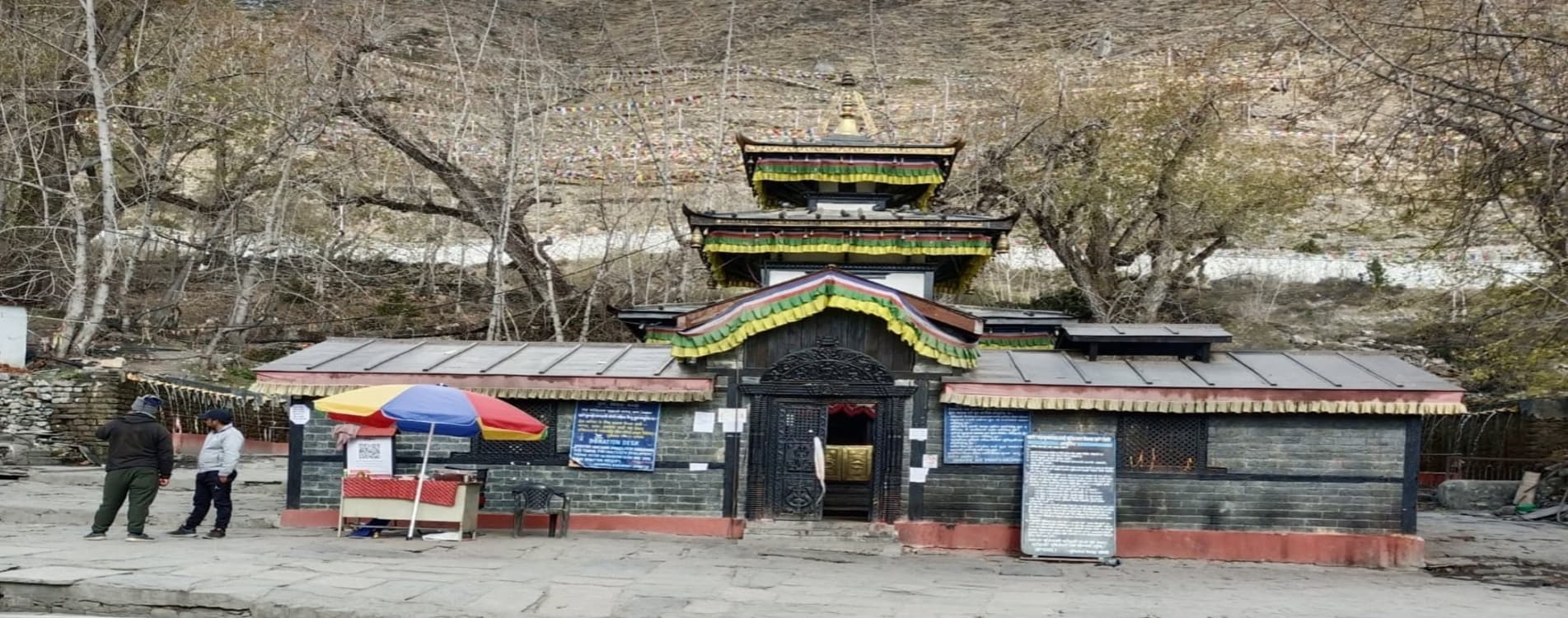
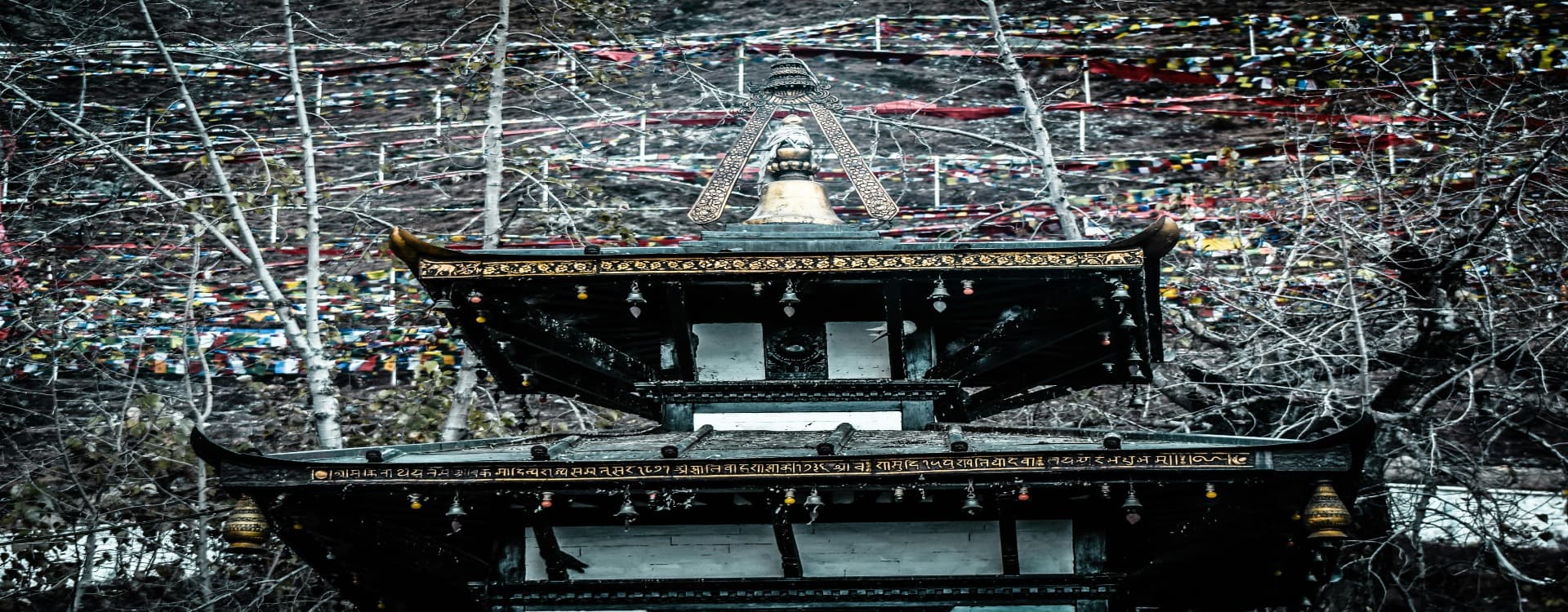
Muktinath Temple sits at roughly 3,710 metres, about 12,172 feet, in the Mustang district of Nepal, tucked at the base of the Thorong La mountain pass inside the Annapurna Conservation Area. For Hindus, it ranks among the eight self-manifested shrines of Vishnu known as the Svayam Vyakta Kshetras, and it is counted among the 108 Divya Desam, the most sacred Vishnu temples across the subcontinent. Devotees call the site Mukti Kshetra, the place of liberation, and many believe that a visit here, followed by a ritual bath, can free a soul from the endless cycle of rebirth.

Buddhists hold the same ground in equally high regard. They know it as Chumig Gyatsa, meaning Hundred Waters, and revere it as a place where Guru Rinpoche, the teacher who carried Buddhism into Tibet in the eighth century, is said to have meditated on his journey north. A resident Buddhist monk and Buddhist nuns take part in temple worship alongside Hindu priests, and no one treats this overlap as unusual. It is simply how the temple has always worked.

The most striking physical feature is the row of 108 stone water spouts, shaped like bull heads and set into a curved wall behind the main shrine. Cold water drawn from the Kali Gandaki river system runs continuously through each one, and pilgrims who make the walk often stand beneath every single spout in turn as an act of purification, regardless of how icy that water is at nearly 3,800 metres. The number itself is not arbitrary. In Hindu astrology, twelve zodiac signs multiplied by nine planets gives 108, and the same number recurs in the count of lunar mansions divided into quarters. For Buddhists, the 108 spouts represent the washing away of 108 mental afflictions on the path toward enlightenment.

Just behind the water spouts stands the Jwala Mai temple, where natural gas seeps up through the ground and burns in a small, steady flame beside the spring water, fire and water sitting side by side in a way that has fascinated pilgrims for generations and needs no embellishment to feel remarkable. The Kali Gandaki riverbed downstream from the temple is also the only known source of the rare Shaligram stones required to consecrate a Vishnu temple anywhere else in the world, which has made this valley a place of pilgrimage and trade between India and Tibet for centuries.


Trip Summary

Day 1

Arrival in Kathmandu

Arrival at Tribhuvan International Airport is met with a warm welcome and a transfer to your hotel. The rest of the day is free to rest and adjust after the journey, with an overnight stay in Kathmandu.


Daily Summary

Accommodation3* Hotel
MealsB
Mountain Seen-
Day 2

Kathmandu Sightseeing, Pashupatinath and Swoyambhunath

A full day of sightseeing begins with Pashupatinath Temple, the most sacred Hindu shrine to Lord Shiva anywhere in Nepal, built as a two-tiered pagoda on the banks of the Bagmati River. Entry to the temple complex itself is reserved for Hindus, but the temple and its riverside cremation ghats, among the most significant Hindu cremation sites in the country, are clearly visible from the eastern bank.

From there, a short drive leads toward Sanga to see a towering statue of Kailashnath, followed by a visit to Swoyambhunath, the roughly 2,000-year-old stupa perched on a hillside above the city and known widely as the Monkey Temple for the resident population that shares the grounds. Its whitewashed dome is capped with a gilded copper spire painted with the all-seeing eyes of the Buddha on all four sides, and it remains one of the most photographed Buddhist monuments in the world.

The day also takes in Narayanthan Temple, also called Budhanilkantha, home to a five-metre reclining statue of Lord Vishnu resting in a small pond at the base of Shivapuri hill. Hindu pilgrims gather here in especially large numbers during the Chaturmasya festival in October or November, when tradition holds that Vishnu awakens from his sleep. A stop at Patan Durbar Square, one of three Durbar Squares in the Kathmandu Valley and roughly five kilometres southeast of the city center, rounds out the day with a walk through the former royal palace complex, known for Newari architecture, a 17th-century stone Krishna temple, and a museum housing an extensive collection of bronze religious artifacts. Overnight in Kathmandu.

Daily Summary

Accommodation3* Hotel
MealsB
Mountain Seen-
Day 3

Manakamana Temple and Drive to Pokhara

The journey toward Pokhara begins with a roughly 100 kilometre drive to Kurintar, where a cable car ride of about ten minutes carries visitors up to the Manakamana Temple, dedicated to a wish-fulfilling goddess whose name in Nepali literally translates to "your wishes come true." Pilgrims from across Nepal and neighboring India visit daily, making the offering and cable car ride part of the journey's own tradition long before Muktinath comes into view.

After descending by cable car, the drive continues roughly another 100 kilometres toward Pokhara, passing valleys, rivers, and increasingly striking views of the Annapurna Himalaya as the road climbs into the lake district. On arrival, most travelers take a relaxed evening boat ride on Phewa Lake to watch the sunset over the water before checking in for the night.

Daily Summary

AccommodationTeahouse
MealsB,L,D
Mountain Seen-
Day 4

Guided Sightseeing in Pokhara

An early start rewards travelers with sunrise views from Sarangkot Hill, roughly a 45-minute drive followed by a short 25-minute hike to the viewpoint, where the sun rises over the Annapurna range, Dhaulagiri, and the distinctive fishtail summit of Machhapuchhre, with Pokhara Valley and Phewa Lake spread out below. After the walk back down and the return drive, breakfast follows at the hotel.

The rest of the day covers Pokhara's most notable sites. Barahi Temple, a two-storeyed pagoda on a small island in the middle of Phewa Lake dedicated to the goddess Shakti, is best reached by a short boat ride, with the Annapurna and Machhapuchhre peaks reflected in the lake's calm water. Nearby, Gupteshwor Cave stretches almost three kilometres underground, with chambers large enough to stand in and passages narrow enough to require crouching, home to a naturally formed shrine to Lord Shiva preserved exactly as it was discovered. Just across from the cave entrance, Davis Falls, known locally as Patale Chhango, sends the outflow from Phewa Lake crashing through a narrow gorge and disappearing into an underground tunnel system.

The afternoon often continues with a visit to the Tibetan Refugee Camp, where the Tashiling and Tashi Palkhel settlements have preserved Tibetan cultural traditions since refugees first arrived in the 1950s, particularly known today for woolen carpets and handicrafts. The day typically closes at Bindhabasini Temple, a site in the heart of Pokhara's old bazaar dedicated to the goddess Bhagwati, set within quiet park grounds that also offer elevated views back over the valley. Overnight in Pokhara.

Daily Summary

Accommodation3* Hotel
MealsB
Mountain Seen-
Day 5

Drive to Kagbeni

Leaving lakeside Pokhara early, the road runs through Kushma and Beni along the Kali Gandaki valley, transitioning gradually from lush green hillsides into the semi-arid, high-desert landscape that defines Mustang. The roughly 170 kilometre drive to Kagbeni takes 5 to 6 hours and passes waterfalls, terraced farmland, mountain villages, and the Galeshwor temple along the way, tracing the edge of what is often described as the world's deepest gorge, carved between the Annapurna and Dhaulagiri massifs.

The evening in Kagbeni offers time to explore the medieval village itself, its monastery, and its strong Tibetan cultural imprint, along with a visit to the sacred confluence of the Kali Gandaki and Jhong Khola rivers, a spot many pilgrims use to offer prayers for their ancestors. Because Kagbeni sits close to 2,800 metres, warm clothing, gradual acclimatization, and attentiveness to any early symptoms of altitude discomfort, such as headache, nausea, or dizziness, matter here more than at any previous stop on the trip.

Daily Summary

Accommodation3* Hotel
MealsB
Mountain Seen-
Day 6

Muktinath Darshan and Return Drive

An early departure leads to Muktinath Temple itself, where pilgrims take the traditional ritual bath beneath the 108 stone spouts known as Mukti Dhara, drawing on water diverted from the same glacial system that feeds the Kali Gandaki below. The temple complex includes a visit to the main shrine, the small Shakti pith, a Yagya shala used for ritual fire offerings, an adjoining monastery, and the Jwala Mai temple with its continuously burning natural flame. After completing darshan, the group drives back toward Pokhara, with an option to extend the trip further for travelers interested in exploring Upper Mustang in greater depth, adding the Poon Hill sunrise trek, or stopping at the natural hot springs of Bhurung Tatopani or Singha Tatopani in the Myagdi district along the way. On arrival back in Pokhara, the evening is typically kept free for rest, souvenir shopping, and a farewell dinner marking the completion of the pilgrimage.

Daily Summary

AccommodationTeahouse
MealsB
Mountain Seen-
Day 7

Drive Back to Kathmandu

The return to the capital covers roughly 200 kilometres of the same scenic route travelled earlier in the trip, passing valleys, rivers, gorges, and mountain settlements along the way. On arrival in Kathmandu, the remainder of the day is free to explore the valley further before departure preparations begin.

Daily Summary

Accommodation3* Hotel
MealsB
Mountain Seen-
Day 8

Final Departure

The tour concludes with a transfer to Tribhuvan International Airport for the international flight home, closing out a journey that carries pilgrims across two of Nepal's most sacred faith traditions and some of its most dramatic landscapes in a single connected trip.

Daily Summary

AccommodationTeahouse
MealsB
Mountain Seen-

Cost Details

Price Includes

Accommodation

  • 7 nights' twin-sharing hotel accommodation: standard tourist-class hotels with private bathroom and reliable electricity in Kathmandu and Pokhara
  • Guesthouse-style accommodation in Jomsom and around Muktinath (simpler by necessity, given the altitude and remoteness)

Meals

  • Daily breakfast throughout the trip
  • Dinner on most evenings, including the farewell dinner in Pokhara after Muktinath darshan (Day 6)

Transportation

  • Private ground transport for the full route: Kathmandu–Pokhara–Kagbeni–Muktinath and the return journey
  • Airport pick-up on arrival (Day 1) and departure transfer to Tribhuvan International Airport (Day 8)
  • Cable car ride to Manakamana Temple (both ways)
  • Boat ride on Phewa Lake, plus the boat crossing to Barahi Temple

Sightseeing 

  • Kathmandu: Pashupatinath (exterior/riverside view), Kailashnath statue at Sanga, Swoyambhunath, Narayanthan/Budhanilkantha, Patan Durbar Square
  • Pokhara: Sarangkot sunrise viewpoint, Barahi Temple, Gupteshwor Cave, Davis Falls, Tibetan Refugee Camp, Bindhabasini Temple
  • Kagbeni village and monastery visit, and the sacred river confluence
  • Full Muktinath temple complex: the 108 stone spouts (Mukti Dhara), main shrine, Shakti pith, Yagya shala, monastery, and Jwala Mai temple

Permits

  • Annapurna Conservation Area Permit (ACAP) - NPR 3,000 (approx. USD 22) for foreign nationals, arranged by the operator as part of the package

Guide & Support

  • An accompanying guide throughout the trip, handling cultural context at each site as well as permit logistics, hotel check-ins, and route adjustments if weather disrupts the plan

Price Excludes

  • International airfare to and from Kathmandu
  • Nepal visa fee (USD 30-50, paid on arrival or via e-visa, separately from the package)
  • Personal travel insurance (strongly recommended, especially coverage up to 4,000m with emergency evacuation)
  • Lunch on driving days, when not already covered, typically USD 6-12 per meal, paid out of pocket
  • Alcoholic and bottled beverages
  • Tips for guides and drivers (customary in Nepal's tourism industry, though not mandatory)
  • Personal expenses: bottled water, snacks, temple donations, souvenirs
  • Domestic flights (Kathmandu–Pokhara or Pokhara–Jomsom): the standard 7-8 day itinerary runs on private road transport throughout; flights only apply if a traveler books the shorter fly-and-drive variant instead

Muktinath Pilgrimage Tour: Complete Guide, Itinerary & Cost for 2026 Departures

Select Departure Date

Trip duration: 8 Days

Sep - Oct 2026

September 2026

Su
Mo
Tu
We
Th
Fr
Sa
1
2
3
4
5
6
7
8
9
10
11
12
13
14
15
16
17
18
19
20
21
22
23
24
25
26
27
28
29
30

October 2026

Su
Mo
Tu
We
Th
Fr
Sa
1
2
3
4
5
6
7
8
9
10
11
12
13
14
15
16
17
18
19
20
21
22
23
24
25
26
27
28
29
30
31
Your Trip
USD 1/ person

Best Price Guaranteed

2-3 People
USD 0/ Person
4-5 People
USD 0/ Person
6-11 People
USD 0/ Person
12-15 People
USD 0/ Person
16+ People
USD 0/ Person
CUSTOMIZE TRIP

Speak to an Expert

Laxmi Malla
Hari Kumar Shrestha
Himal Shrestha
Shiva Kumar Shrestha
UR Ghale

Himal Shrestha

Director 🇳🇵

Chat on WhatsApp

Meet Our Expert Guides

Uma Bhatta

Uma Bhatta

Tour Guide

10 years of experience

Uma is an easy-going, good-natured cultural guide with deep knowledge of Nepal's history and culture. She delivers insightful information about sites and destinations, adding richness and context to every tour experience.
Niranjan Nepal

Niranjan Nepal

Tour Guide

10 years of experience

Niranjan Nepal is a tour guide with more than ten years of experience and an excellent command of English. He has extensive knowledge of Nepalese history, art, architecture, culture, geography, tourism, and religion, and is a government-registered guide.
Shree Krishna Lamichhane

Shree Krishna Lamichhane

Tour Guide

8 years of experience

Shree Krishna Lamichhane is an experienced professional in cultural tours, known for clear communication and historical insight. He is fluent in English and Spanish and completed a government-approved Tourist Guide program.
Rameshwor Maharjan

Rameshwor Maharjan

Tour Guide

7 years of experience

Rameshwor Maharjan has extensive understanding of Nepal's culture, religion, history, and geography. A trusted and conscientious tour leader, he provides highly engaging and informative site interpretations for guests.

Additional Information

What Does the Muktinath Pilgrimage Tour Cost?

A guided Muktinath Pilgrimage Tour cost typically runs between USD 700 and USD 1,200 per person for a full 7 to 8 day itinerary that includes Kathmandu sightseeing, the scenic drive to Pokhara, the road journey through Jomsom and Kagbeni, and the temple visit itself, with accommodation, most meals, private transport, and permits included. Shorter 3 to 4 day versions that fly directly between Pokhara and Jomsom instead of driving the full mountain road can run closer to USD 300 to USD 750 per person, since they compress the journey considerably and skip several nights of accommodation along the way.

Two things shape the final number more than anything else: whether you travel by road, by a mix of flights and road, or by helicopter, and how many people are sharing the vehicle or aircraft with you. A private jeep for a couple costs meaningfully more per person than the same vehicle shared among a group of six, and a private helicopter charter costs dramatically more than a seat on a shared group flight.

Cost by Travel Style

  • Full road tour, Kathmandu to Muktinath and back, 7 to 8 days: roughly $700 to $1,200 per person, including sightseeing stops in Kathmandu and Pokhara along the way.

  • Fly and drive combination, Pokhara to Jomsom by air, then jeep to Muktinath, 3 to 4 days: roughly $300 to $750 per person, the most efficient option for travelers short on time.

  • Helicopter tour from Pokhara, same-day return: roughly $500 to $700 per person when joining a shared group flight of five passengers, since the private charter cost of around $3,000 is split among the group. A private charter for fewer passengers costs considerably more per head.

  • Helicopter tour from Kathmandu, same-day return: a longer flight covering more ground, typically priced higher than the Pokhara departure due to the extended flight time over the Himalayas.

What Drives the Daily Cost on the Ground

Once you are on the road rather than in the air, daily costs settle into a fairly predictable pattern. Hotel accommodation in Kathmandu and Pokhara for a standard tourist-class package typically runs $25 to $50 per night per person on a twin-sharing basis, while guesthouses in Jomsom and around Muktinath itself, simpler by necessity given the altitude and remoteness, run somewhat less. Meals included in most packages cover breakfast daily and often dinner, with lunch sometimes left as an out-of-pocket cost during the driving days, typically $6 to $12 depending on where you stop along the Kali Gandaki valley.

Private ground transport, the jeep or car that carries you from Kathmandu to Pokhara and onward toward Jomsom, forms one of the largest single costs in the package, and this is precisely where group size makes the most difference. A private vehicle for two people costs the same whether it carries two or seven passengers, so a family or group traveling together can bring the per-person transport cost down substantially compared to a couple traveling alone.


Who Should Take This Tour, and What to Expect Physically

This itinerary is built primarily around road travel rather than multi-day trekking, which makes it accessible to a considerably wider range of travelers than a typical Himalayan trek. Most of the physical activity involves short walks at each stop, a modest hike to the Sarangkot viewpoint, a walk through temple grounds, and the walk from the Ranipauwa area up to the Muktinath temple complex itself, none of which demand serious trekking fitness. Travelers of a wide age range complete this tour each year, including many senior pilgrims for whom the spiritual purpose of the trip matters more than physical challenge.

That said, the altitude at Kagbeni and Muktinath, both above 2,700 and 3,700 metres respectively, deserves genuine respect regardless of how the journey is being made. Traveling by road or vehicle does not grant immunity to altitude-related symptoms, and moving from Kathmandu's roughly 1,400 metre elevation to nearly 3,800 metres over the course of a few days is still a significant change for the body to absorb. Staying well hydrated, avoiding alcohol during the ascent days, and paying attention to any headache, dizziness, or nausea are worthwhile precautions for every traveler on this route, not only those who consider themselves less fit.


Frequently Asked Questions About Muktinath Pilgrimage Tour: Complete Guide, Itinerary & Cost for 2026

GeneralWeather and TemperatureArrival and VisasTrek CostWho Can Trek?Physical FitnessTrek Preparation and PackingTrek AccommodationHealth and SafetyPractical MattersTransportation and Flights

General

4 Qs
What is the Muktinath Pilgrimage Tour?

It is a guided journey through Kathmandu, Pokhara, and the Mustang region culminating in a visit to Muktinath Temple, one of the most sacred pilgrimage sites shared by Hindus and Buddhists in Nepal. Most itineraries combine temple visits, cultural sightseeing, and scenic mountain drives into a single 7 to 8 day trip, though shorter fly-in versions of 3 to 4 days are also widely available.

Why is Muktinath significant to both Hindus and Buddhists?

Hindus regard it as one of the eight self-manifested Vishnu shrines and a place where liberation from the cycle of rebirth is possible. Buddhists know it as Chumig Gyatsa and honor it as a meditation site linked to Guru Rinpoche, the teacher credited with bringing Buddhism to Tibet. Both traditions worship at the same temple complex without any conflict, which is part of what makes the site so distinctive.

How high is Muktinath Temple?

The temple sits at approximately 3,710 metres, or 12,172 feet, above sea level in the Mustang district, near the base of the Thorong La pass.

Do I need to be religious to take this tour?

No. While the tour is built around a pilgrimage, many travelers join primarily for the cultural history, mountain scenery, and the unique atmosphere of a site sacred to two major world religions, regardless of their own personal beliefs.

Weather and Temperature

4 Qs
What is the best time of year to visit Muktinath?

Autumn, from September through November, is widely considered the best season, with stable weather, clear skies, and daytime temperatures generally between 8 and 18 degrees Celsius. Spring, from March through May, runs a close second, with similar temperatures and blooming rhododendrons along the lower valley.

Can Muktinath be visited in winter?

Yes, though winter months from December through February bring temperatures that can fall well below freezing at night, along with snowfall that occasionally affects higher sections of road. The route to Muktinath generally remains passable by jeep even in winter, but cold-weather gear becomes essential.

Is monsoon season a good time to visit?

Generally not recommended. The monsoon months of June through August bring heavy rain, landslide risk along the road route, and frequent flight cancellations on the Pokhara to Jomsom air route due to poor visibility. Mustang does sit partly in a rain shadow, so rainfall is somewhat lighter here than in other parts of Nepal, but road conditions and flight schedules still suffer during this period.

What should I pack for the temperature swings on this trip?

Layered clothing works best, since Kathmandu and Pokhara sit at much lower, warmer elevations than Kagbeni and Muktinath. A warm jacket, gloves, and a hat are worth carrying even during the shoulder seasons, since nights at higher elevation can turn cold quickly regardless of how mild the daytime temperature felt.

Arrival and Visas

3 Qs
Do I need a visa to enter Nepal?

Most foreign nationals require a Nepal tourist visa, obtainable on arrival at Tribhuvan International Airport or in advance through Nepal's e-visa system, generally costing between $30 and $50 depending on the length of stay requested. Indian nationals do not require a visa and can enter with a valid passport, voter ID, or Aadhaar card.

What documents do I need to carry throughout the trip?

A valid passport with at least six months of remaining validity, along with any permits arranged for the Annapurna Conservation Area. Carrying photocopies of your passport and permits separately from the originals is a sensible precaution given the number of checkpoints along the route.

Is there an airport near Muktinath?

The nearest airport is at Jomsom, roughly a two-hour jeep ride from Muktinath, served by short flights from Pokhara. There is no airport in Muktinath itself, and this itinerary reaches the temple by road throughout rather than by air.

Trek Cost

5 Qs
How much does the Muktinath Pilgrimage Tour cost overall?

A full 7 to 8 day road itinerary from Kathmandu typically costs between USD 700 and USD 1,200 per person, including transport, accommodation, most meals, and permits. Shorter fly and drive versions can cost between USD 300 and USD 750 per person.

Does the cost include international flights?

No. Package pricing covers arrangements within Nepal only. International airfare, Nepal visa fees, and personal travel insurance are separate costs to budget for independently.

What permits are required, and are they included in the cost?

The Annapurna Conservation Area Permit, or ACAP, is required for all visitors entering the region, at a cost of roughly NPR 3,000 about USD 22) for foreign nationals, with a reduced rate for SAARC nationals. Reputable operators arrange this permit as part of the package price, so it rarely appears as a separate line item once you have booked.

Is a helicopter tour more expensive than the road route?

Generally, yes, per person, unless traveling in a full group of around five people sharing a single charter. A shared helicopter tour from Pokhara typically runs USD 500 to USD 700 per person, while a private charter for fewer passengers costs considerably more per head, since the base charter cost of roughly USD 3,000 is simply divided among however many people are on board.

Are there hidden costs I should plan for?

Lunch during driving days is occasionally excluded from package pricing and paid for directly, generally USD 6 to USD 12 per meal. Personal expenses such as bottled water, snacks, donations at temples, and tipping for drivers and guides are also worth budgeting separately.

Who Can Trek?

3 Qs
Is this trip suitable for older travelers?

Yes. Because the itinerary relies on road transport rather than multi-day walking, it is considerably more accessible to older travelers or those with limited trekking experience than most Himalayan itineraries, provided ordinary care is taken around altitude and rest.

Can children join this tour?

Many families do bring children on this itinerary, though the altitude at Kagbeni and Muktinath is worth discussing with a doctor in advance for very young children, and the long driving days can be tiring for a child regardless of altitude concerns.

Do I need previous trekking experience?

No prior trekking experience is required for the standard road itinerary described here. Only travelers who choose to extend their trip with the Poon Hill sunrise walk or a deeper exploration of Upper Mustang will need a reasonable baseline of walking fitness.

Physical Fitness

3 Qs
How physically demanding is this tour?

Relatively modest compared to a true Himalayan trek. Most days involve sightseeing stops, short walks of thirty minutes to an hour, and long stretches of vehicle travel rather than sustained walking, with the notable exception of the short hike to the Sarangkot viewpoint and the walk from Ranipauwa up to the Muktinath temple complex.

Will I need to prepare physically before the trip?

General fitness sufficient for a day of walking and standing is enough for most travelers. Anyone with underlying heart or lung conditions should consult a doctor beforehand given the altitude reached at Muktinath, regardless of how the journey there is made.

What if I experience altitude symptoms during the trip?

Mild headache or fatigue at higher elevation is common and usually resolves with rest, hydration, and avoiding further ascent until symptoms ease. Guides accompanying the tour are trained to recognize early signs of altitude sickness and will adjust the schedule if needed. Anyone with severe symptoms should descend immediately rather than continuing.

Trek Preparation and Packing

3 Qs
What should I pack for this trip?

Warm layered clothing, a good pair of walking shoes, sunglasses and sunscreen for the high-altitude sun, a reusable water bottle, and any personal medications. A padlock for luggage, a small daypack for daily excursions, and a power bank for charging devices during long driving days are also worth including.

Do I need specialized trekking gear?

Not for the standard road itinerary. This is not a multi-day trekking package, so heavy mountaineering equipment, trekking poles, or technical gear are unnecessary unless you plan to extend the trip with an additional trek.

Should I bring cash, and in what currency?

Nepali rupees are essential for smaller purchases, donations, and any expenses not covered by the package, particularly once you are beyond Pokhara, where card payment options become far less reliable. Currency can be exchanged in Kathmandu or Pokhara before heading toward Mustang.

Trek Accommodation

3 Qs
What kind of accommodation is provided during this tour?

Standard tourist-class hotels in Kathmandu and Pokhara, generally with private bathrooms and reliable electricity, and simpler guesthouse-style accommodation in Jomsom and around Muktinath, where the remoteness and altitude naturally limit the level of comfort available.

Are rooms private or shared?

Most packages are built around twin-sharing rooms as standard, with private single rooms available as an upgrade for an additional cost.

Is hot water available throughout the trip?

Hot water is standard in Kathmandu and Pokhara hotels. In Jomsom and around Muktinath, hot water may be more limited or available only at certain times of day, given the altitude and reliance on solar heating in many guesthouses.

Health and Safety

3 Qs
Is travel insurance necessary for this trip?

Yes, strongly recommended. A policy covering high-altitude travel up to at least 4,000 metres and emergency evacuation is a sensible precaution given the remoteness of the Mustang region, even though this itinerary travels by road rather than on foot.

What health precautions should I take before traveling?

A visit to a travel health clinic before departure is worthwhile to discuss any recommended vaccinations and to review your own medical history against the altitude this trip reaches. Carrying a basic personal first aid kit and any regular medication in sufficient supply for the full trip is also sensible.

Are there medical facilities available along the route?

Kathmandu and Pokhara both have proper hospitals. Facilities become considerably more limited in Jomsom and Muktinath, which is part of why altitude awareness and a cautious pace matter throughout the higher sections of the journey.

Practical Matters

4 Qs
Do I need a guide for this tour?

Guides are included as standard in nearly every package version of this tour, both for the cultural context they provide at each site and for handling the logistics of permits, hotel check-ins, and route changes if weather disrupts the plan.

What is not included in a typical package price?

International airfare, Nepal visa fees, personal travel insurance, alcoholic and bottled beverages, tips for guides and drivers, and any optional upgrades to private rooms or additional excursions are generally excluded from the base package cost.

Is tipping expected?

Yes, tipping drivers and guides at the end of the trip is customary in Nepal's tourism industry, though it is not formally mandatory. Most travelers set aside a modest amount as a gesture of appreciation for the trip's smooth running.

What should I know about temple etiquette at Muktinath?

Modest dress is expected at the temple complex, generally covering the shoulders and knees. Photography rules can vary by section of the temple, so it is worth checking with your guide before photographing the inner shrine areas.

Transportation and Flights

5 Qs
How do I get from Kathmandu to Pokhara?

By private road transport as part of the standard package, a journey of roughly six to seven hours that includes the stop at Manakamana Temple along the way. A domestic flight option between Kathmandu and Pokhara is also available for travelers wanting to shorten this leg of the trip.

How do I get from Pokhara to Muktinath?

Either by road, following the Kali Gandaki valley through Beni, Tatopani, Jomsom, and Kagbeni before reaching Muktinath, or by a short domestic flight from Pokhara to Jomsom followed by a jeep ride of roughly one to two hours to the temple.

Are flights to Jomsom reliable?

Flights to Jomsom operate only in the morning due to wind conditions that develop later in the day, and cancellations do occur, particularly during monsoon season when visibility drops. Anyone relying on this flight should build a buffer day into their schedule in case of delay.

Is a helicopter option available for this tour?

Yes. Helicopter tours to Muktinath operate from both Kathmandu and Pokhara, offering a same-day return option for travelers with limited time, though weather conditions can affect scheduling here as well, particularly during monsoon and deep winter months.

What happens if my flight to or from Jomsom is cancelled?

Cancelled flights are typically rescheduled to the next available slot, subject to seating availability, or an alternative overland route by jeep can be arranged instead, though this adds several hours of additional travel time.

Now Offering 100% Private Treks

Explore Nepal's breathtaking trails at your own pace with our exclusive private treks. No strangers, no rushed schedules—just you, your adventure, and complete flexibility. Enjoy personalized itineraries, expert guides, and a safety-first approach designed for unforgettable experiences.

Tailor-Made Itineraries

Plan your trek exactly how you want it. Choose destinations, duration, and activities that suit you.

Dedicated Guide & Porter

Enjoy expert guidance and personal assistance every step of the way.

Safety & Health Focus

We ensure proper acclimatization, medical support, and emergency readiness.

Flexible Scheduling

Pick your own travel dates and move at a pace that suits your adventure style.

Privacy & Comfort

Ideal for couples, families, and friends who want a fully private experience.

Discover Your Private Trek