No cancellation fees. No hassle. Book Now, stay relaxed.

Spiritual Tours

It is well knowledge that Nepal is endowed with a special spiritual and religious significance, for both Hindus and Buddhists alike. Both Buddhism and Hinduism have developed side by side here in peace and prosperity.  

Taking a Spiritual Tour in Nepal will bring a higher degree of happiness into your life and will fill it with an abundance of wonderful energies. You will have the amazing opportunity to see ancient rites that have been practiced for thousands of years if you pay a visit to the monasteries and temples that are situated in the towering mountains. You may get a glimpse of the life of renunciation and redemption that the priests and monks lead by visiting places of worship such as the greatest Hindu temple, Pashupatinath, or the mountaintop monkey temple, Swayambhunath. Both of these temples are located in Nepal. You have the incredible opportunity to participate in the lighting of a traditional butter lamp that is used in monasteries.

Nepal is considered to be sacred land, thus many great teachers have traveled there, including Vyasa and Guru Rinpoche, amongst others. It is reported that a great number of Rishis spent their time meditating in the hills and mountains of Nepal. The Himalayas are also considered to be the residence of Lord Shiva. The lives of the people living in Nepal are filled with daily rituals and festivals that is a devotional impact on the lives of the people who visit Nepal as well.

Through the widely recognized Spiritual Tour in Nepal, you may take part in this spiritual trip and uncover a mystical universe that is still and enigmatic. Spend some quiet time in an extraordinarily beautiful area amidst the nature gifted by the Himalayas for spiritual pursuits such as meditation, yoga, astrology, and retreating. At the same time, witness the preservations of old riches.

You are welcome to participate in the Nepal Spiritual Tours whenever it is most convenient for you, regardless of the time of year. The strength of faith is typically viewed as a triumph over the elements of nature because these forces do not present any danger to the pilgrim who is attempting to cleanse their soul. Even during the monsoon season, which in Nepal occurs between the months of July and August, one can observe a wide variety of celebrations and religious events taking place at virtually all of the country's sacred sites. In point of fact, this time of year is when a large number of chariot processions known as jatras featuring deities such as Karunamaya, which is a manifestation of Avalokiteshvara, as well as Indra and Bhimsena, can be observed. Winter is not out of the question, despite the fact that Spring and Autumn are likely to provide for a more pleasant tour with breathtaking views of clear blue skies and the snow-capped peaks of the Himalayas from Muktinath.

For the Hindu Spiritual Tour, we have carefully selected the temples of Budanilakantha, Guhyeswari, Pashupatinath, Sankata, Muktinath, Taal Barahi, and Bindabasini Temple, along with many others, to include in an itinerary. We are confident that this tour will allow you to gain a deeper understanding of the spiritual realm that is Nepal.

For the Buddhist Spiritual Tour, destinations like Lumbini, Swayambhunath, Bouddhanath, Namobuddha, Temal, and Pharping, amongst others, have been specifically chosen to meet your requirements in terms of spirituality. Nearly every location on this list features some kind of prayer or meditation space where visitors may cultivate feelings of compassion and tranquility.

So join the Spiritual Tours package in Nepal to experience the calm and tranquility that Nepal has to offer.

Available Packages

2 carefully curated packages to match your adventure style

Nepal Buddhist Pilgrimage Tour
10 Days
1350mm

Nepal Buddhist Pilgrimage Tour

The world-famous and well-known Buddhist pilgrimage sites are located in Nepal, the birthplace of the Buddha. For Buddhists, it is one of the holiest places on earth. Numerous temples, stupas, and monasteries exist that are devoted to past, present, and future Buddhas as well as numerous Bodhisattvas. In order to purify our minds and hearts, we might view and visit the ancient stupas that are mentioned in various works, including the Tripataka and Jataka.

Swayambhunath Stupa is the oldest and most enigmatic of all the holy sites in the Kathmandu valley. It is a golden spire perched atop a conical hill covered in forest. From all sides of the valley, its towering white dome and glittering golden spire may be seen for miles. The Swayambhu Purana, a collection of legends about the area written in the 15th century, mentions a miracle lotus that a former Buddha planted and which rose from the water that once covered the Kathmandu Valley. As a result of the lotus' exceptionally brilliant light projection, the area came to be known as Swayambhu, which is Sanskrit for "Self-Created or Self-Existent." The bodhisattva Manjushri was deeply touched by the intensity of the brilliant light and thought that by draining the lake, Swayambhu would be more easily accessible to outsiders. With his two-edged blade, Manjushri honed a canyon in the mountains encircling the lake. The flood receded and leaving the valley where present-day Kathmandu is located. The light then created the Swayabhunath Stupa, and the lotus changed into a hill.

One of the most impressive structures in the city is the Boudhanath stupa, which is 8 kilometers east of the city's center and is clearly visible as soon as you arrive at Tribhuvan International Airport. It is renowned as the center of the Himalayan Buddhist movement and is the largest stupa in the Kathmandu Valley. Many of the Tibetan refugees who came to Nepal in the 1950s settled in Boudhanath. The relics of Kassapa Buddha are reported to be kept in the stupa. Numerous tales, including those associated with King Vikramaditya and the Buddha Kassapa in Tibet, surround the stupa's genesis. You may visit many Tibetan monasteries in the area, as well as eateries that provide delicious Tibetan food.

The Jamchen Viajaya Stupa may be noticed from the route leading to Budanikakantha that it is located close to the Shivapuri National Park. The stupa is perched on a hill, providing a picturesque outlook. You will want to stay and stay as long as you can because of the views from the summit, the clean air, and the peaceful surroundings. Although the journey there is a little challenging, the reward is certainly worth it. The stupa has a beautiful aura. You will be forced to focus for a while in that delightful peace with melodic chanting music. The 108-foot-tall stupa was built in remembrance of Guru Chyogye Trhinchen Rimpoche. There are educational boards there that detail Buddhism's numerous facets. A beautiful Buddha statue, as well as statues of many gurus and Guru Chyogye Trhinchen Rimpoche, can be found inside the monastery. The monastery's walls are exquisitely decorated.

Namo Buddha lies around 40km from Kathmandu city. The Jataka stories describe the Buddha's earlier birth. Our Guru, the perfect Buddha, was practising on the road of learning a very long time ago, many uncountable eons ago. The incident where he was filled with compassion and immediately offered his body to a tigress who was starving is located at Namobuddha. There is also a monastery here established to commemorate the event. Khyabje Thrangu Rinpoche toiled long and hard to build the monastery, knowing the value of this holy site and rejecting all difficulties. The site shows amazing views of the nearby hills and the elaborate temple complex will be a treasure to explore and meditate in. 

The village of Temal houses the Harkinaag shrine where as legend goes, when Guru Rinpoche was meditating in the Asura cave in Pharping, he saw a large snake called Herkinaag disturbing and causing havoc in the village of Temal. Using his tantric siddhi powers, he flew across to Temal to chase the Snake and rid the snake of poison and make punish the snake for his acts. His footprint can be found in the village where he is said to have chased the snake. There is a statue of Guru Rinpoche placed here in order to commemorate the act as well as a small ditch where the snake was said to have been thrusted after being disabled by Guru Rinpoche. 

Lumbini, is where the Lord Buddha took his final birth before gaining enlightenment. According to an inscription on a pillar built by the Mauryan Emperor Asoka in 249 BC, the Lord Buddha was born there in the sacred region of Lumbini in the Terai plains of southern Nepal in 623 BC. The remnants of Lumbini, one of the holiest sites of one of the great faiths of the world, provide significant information regarding the nature of Buddhist pilgrimage centers dating back to the third century BC. The present temple complex houses the sacred Mayadevi temple which houses the footprint of the infant buddha, as well as an old statue of Queen Mayadevi giving birth amid the ancient temple ruins. There also exist numerous Theravada, Mahayana  and Vajrayana monasteries built by various countries and organizations throughout Lumbini. There are around 32 monastaries built by Sri Lanka, China, Thailand, South Korea, Nepal, India and much more. It can take you around 2 days to tour the complex completely. You can stay and meditate also in the many numerous meditation centers nearby and also visit the world peace flame and the peace Pagoda. 

Pokhara is a wonderfully scenic city and home to numerous natural and cultural beauties. The world peace pagoda built atop a hill near Pokhara city houses a temple also. The view of the valley, Fewa lake and the Western Himalaya including peaks of Annapurna, Macchapuchhre and others are simply amazing. The white pagoda has two tiers that tourists and pilgrims can walk around. The second floor exhibits four Buddha sculptures that were given as gifts from various nations: the "Dharmacakra Mudra" statue from Japan, the "Bodh Gaya" statue from Sri Lanka, the "Kushinagar" statue from Thailand, and the "Lumbini" statue from Nepal. Each statue was given its name based on the location where it reflects significant Buddha-related events. Pokhara is also the gateway to Mustang. 

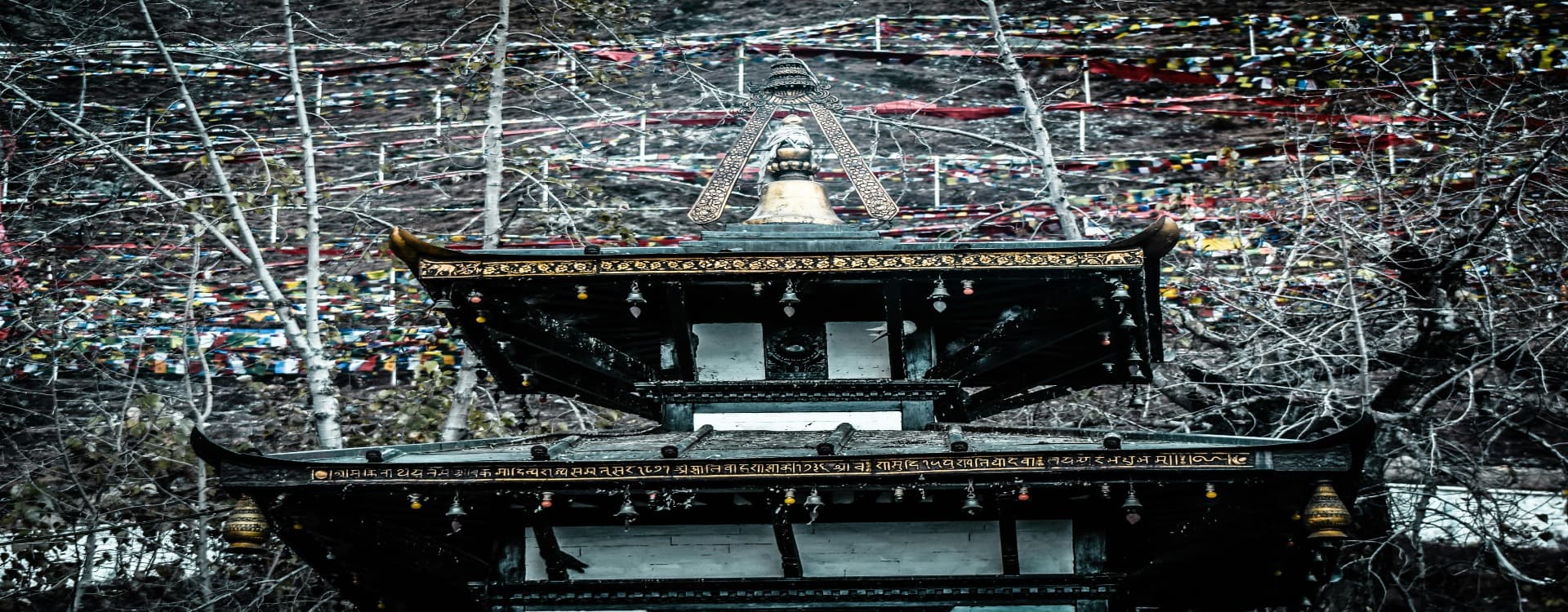
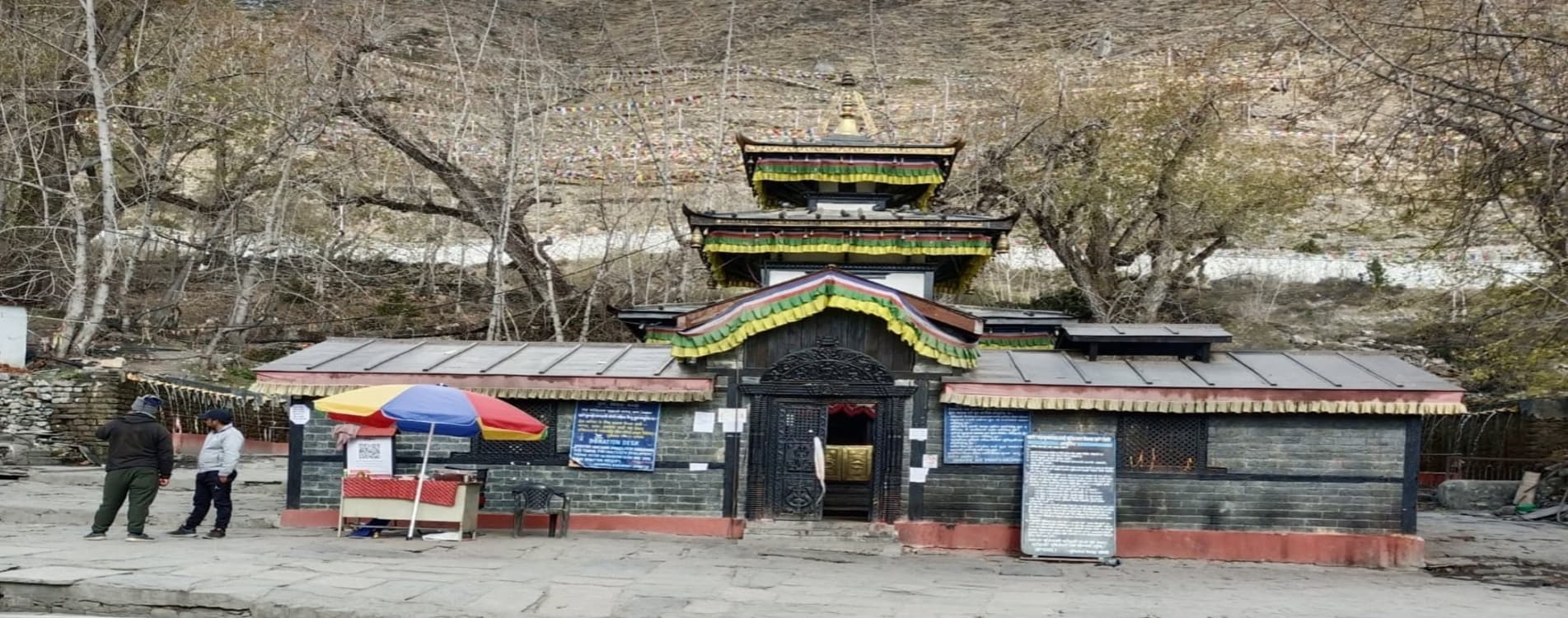
Muktinath, a revered holy site for both Hindus and Buddhists, is located at a height of 3,710 meters (12,172 feet) at the foot of the Thorong La mountain pass in the Mustang area. Buddhists refer it Muktinath as Chumming Gyatsa, which translates to "Hundred Waters" in Tibetan. Chumig Gyatsa, one of the 24 revered Tantric sites, is a sacred site of the Dakinis deities known as Sky Dancers, according to Tibetan Buddhism. Avalokitesvara, the Bodhisattva of Compassion and Virtue, is also thought to incarnate at the place. The founder of Tibetan Buddhism, Guru Rimpoche, also known as Padmasambhava, is said to have meditated here before traveling to Tibet, according to Tibetan Buddhist tradition.

The town of Pharphing is also especially important for Buddhists. Guru Padmasambhava achieved the status of a Mahamudra vidyadhara in Yangleshö, a sacred location in Pharping, a town south of Kathmandu in Nepal. Because Padmasambhava, the second Buddha Guru, acquired enlightenment in Yangleshö, it is believed by Katok Rigdzin Tsewang Norbu to be just as significant to Vajrayana practitioners as Bodhgaya. The Asura cave and the Yangleshö cave are the two main practice caves in Pharping that have been blessed by Guru Rinpoche. One of the oldest and most significant Vajrayogini temples is the Pharping Vajravarahi temple, which is located at the base of the flight of stairs leading up to the Asura cave. The cave can be reached through additional stairs. At Ralo Rinpoche's monastery at the further end of the village, they begin by a shrine with a self-arisen Tara on the side of a Ganesha statue. On the way to Pharphing lies the Taudaha lake where the sacred Nagas of Kathmandu Valley were sent after Manjushri drained the holy lake of Kathmandu. 

Chobhar gorge is another name for the Manjushree gorge. Legend has it that Manjushree, who journeyed to Nepal to pray to the Swayambhu Flame and Goddess Gujeswari, struck this gorge. Manjushree is claimed to have traversed the lake's peaks three times before using his powerful sword to cut a large chasm in the southern hills, draining the suspension bridge that had been designed to span the gorge's two sides. Views from the bridge include the Hanjushree gorge, the neighboring Chobhar cave, and the Jal Binayak shrine. Manjushree Park is located close to Chobhar Gorge. It is named in honor of Manjushree, the wise person who chiseled out Chobhar Gorge to form the Kathmandu Valley.


Best Season for Buddhist Pilgrimage Tour

The Buddhist Pilgrimage Tour to Nepal is accessible at any time of year. The best seasons to visit Nepal are spring (April-May) and fall (September-November), when the weather is neither too hot nor too cold. Significant monsoon rains will make for a muddy adventure during the months of July-August. Flights to Lubini are also prone to cancellation during the monsoon, and the peak of Pokhara  will be quite chilly.

Why Us for Buddhist Pilgrimage Tour? 

We are easy to work with, versatile, and will meet all of your requirements. In addition, we owns a hotel in Kathmandu where we can tailor rooms to your specific need.

Professional local guides will accompany you and give personalized recommendations and advice on local "must-sees" and "must-visits" not listed in guidebooks. Our tour guides will educate you on local history, culture, and religion.

We are well-versed in the theological importance of the numerous pilgrimage places and will assist you with all of your prayers and veneration of the divinities.

Trip StyleNatural and cultural sightseeing
Difficulty
Easy to Moderate
Starting from
$950/ person
Nepal Hindu Pilgrimage Tour
9 Days
3750mm

Nepal Hindu Pilgrimage Tour

Nepal's Hindu pilgrimage sites are renowned and well-known across the world. It is one of the world's spiritual centers for Hindus. There are several temples dedicated to the worship of various deities such as Vishnu, Shiva, and Shaktis. In Nepal, ancient temples referenced in several writings such as the Puranas and Itihasa may be viewed and visited in order to purify our thoughts and hearts.

Pashupatinath is among the most famous Hindu site in the world, and the temple itself is the largest Hindu temple devoted to Lord Shiva, located on the banks of the Bagmati River. Almost every Hindu pilgrim wants to do a supplication in front of the Pashupatinath temple at least once in their lives. The cremation placed on the banks of the Bagmati River, where most Hindus are cremated after death, and the adjoining forest, which is protected and regarded as mystical and sacred, are the principal elements surrounding Pashupatinath. UNESCO has previously listed the temple as a World Heritage Site. A large number of devotees, including national and international celebrities and delegations, have visited and continue to visit the Pashupatinath temple. The Temple devoted to Guyeshwari, the hidden Tantric form of Parvati and Shakti, is about a kilometer away from Pashupatinath. Another name for the goddess in the temple is Guhyekali. It is a renowned pilgrimage destination for Tantra practitioners.

Narayanthan temple, also known as Budhanilkantha temple, is a well-known Lord Vishnu shrine on Kathmandu's outskirts. After a short trek towards the base of Shivapuri hill, we arrive at Budhanilkantha temple, where we may worship the sleeping statue of Lord Narayan (Vishnu) in a 5-meter-long pond. A farmer plowing in the region is thought to have discovered the statue after striking it with his plough and causing it to bleed. 

Sankata Temple, also located in Kathmandu is one of the important tantric shrines in the valley. One curious aspect of the deity is that Hindus regard Sankata as a goddess, whilst Buddhists regard the deity as Achala. The goddess statue is covered with cloth, leaving only her head exposed. It is widely held that devotion to Sankata can fend off problems and negative omens from one's life. Even though religious ceremonies are performed every day, most people visit the temple on Saturdays or on their birthdays.

Manakamana Mandir is located on the way to Pokhara. The name 'Manakamana' denotes that she is the goddess of desire fulfillment. A trip to Manakamana also provides a panoramic view of mountain peaks in the north. Mt. Manaslu, Mt. Himchuli, and Mt. Annapurna are just a few of the popular remote mountains. The cable car journey to the main temple takes around 10 minutes from the station on the bank of the Trisuli River, which is 3 hours distant from Kathmandu. The distance from the bottom to the hill is 2.8 kilometers. The cable car's bottom station is located at a height of 258 meters, while the top station is located at a height of 1302 meters.

In Pokhara, we go to Sarangkot for a wonderful view of the valley and surrounding mountains. From Sarangkot we move towards the Bindabasini Temple, the oldest temple located in Pokhara dedicated to Bindabasini, the incarnation of Kali. The temple is atop a hill and has a small religious complex at the top. After our visit to Bindabasini we visit the Fewa lake in the middle and after a short boat ride, reach the temple of Tal Barahi, an incarnation of the consort of Vishnu. The Phewa lake sees many pilgrims as well as tourists who want to boat and pay respects to the deity. From Tal Barahi, we head towards the Cave of Gupteshwar, which houses a shrine dedicated to a form of lord Shiva. The temple lies a few meters below ground in a limestone cave which you can explore as well. 

From Pokhara, we take a domestic flight to the mountain village of Jomsom. A slight distance away is the Muktinath Temple, one of the holiest sites in Nepal.  Also called Mukti Kshetra, which literally means "region of salvation" in Hinduism, this is one of Nepal's oldest temples dedicated to the God Vishnu. The temple is one of the eight sacred places known as Svayam Vyakta Kshetras, Self-disclosed Regions It is also one of the 51 Shakti Pitha goddess locations. Buddhists refer to Muktinath as Chumming Gyatsa, which translates to "Hundred Waters" in Tibetan. Chumig Gyatsa is a sacred site of the Dakinis goddesses known as Sky Dancers, as well as one of the 24 famous Tantric sites, according to Tibetan Buddhism. Furthermore, the major temple's deity is thought to be a manifestation of Avalokitesvara. According to Tibetan Buddhist tradition, Guru Rinpoche meditated here on his route to Tibet.

The Swayambhu Purana, a collection of legends about the area written in the 15th century, mentions a miracle lotus that a former Buddha planted and which rose from the water that once covered the Kathmandu Valley. As a result of the lotus' exceptionally brilliant light projection, the area came to be known as Swayambhu, which is Sanskrit for "Self-Created or Self-Existent." The bodhisattva Manjushri was deeply touched by the intensity of the brilliant light and thought that by draining the lake, Swayambhu would be more easily accessible to outsiders. With his two-edged blade, Manjushri honed a canyon in the mountains encircling the lake. After that, the water drained away and disappeared. After that, the lotus changed into a hill, and the light created the Swayabhunath Stupa.

Our trip culminates as we visit the temples in Sankhu and the numerous temples dedicated to Shiva, Vishnu, and others in Bhaktapur. The city is decked with shrines and temples galore. The main attraction is the Nyatapola temple, the highest temple in Nepal, and the Dattatreya Temple. 


Best Season for  Nepal Hindu Pilgrimage Tour

The Nepal Hindu Pilgrimage Tour can be undertaken at any time of the year. The best times to visit Nepal are in the spring and fall when the weather is not too hot or chilly. Significant rains from the monsoon will make for a muddy excursion.

During the monsoon, flights to Jomsom are also prone to cancellation, and the summit of Muktinath will be very cold.


Why Us? 

 We are simple to work with, adaptable, and will fulfill all of your needs. In addition, We operates a hotel in Kathmandu where we can customize rooms to meet your individual needs.

Professional local guides will accompany you and provide tailored recommendations and advice on local "must-sees" and "must-visits" that are not featured in guidebooks. Our guides will inform you about local history and culture, as well as religious aspects. 

We are well versed in the religious significance of the various pilgrimage sites and will assist you in conducting all your prayer and reverence to the divinities. 

Trip StyleDay Hiking
Difficulty
Easy to Moderate
Starting from
$1190/ person