Langtang Region
The Complete Guide to Nepal’s Most Accessible Himalayan Trek
Most trekkers who land in Kathmandu have Everest Base Camp or the Annapurna Circuit at the top of their list. Both are great. But they also require flights, long lead times, and a tolerance for crowds that gets harder to ignore every year. The Langtang Region sits about 120 kilometres north of Kathmandu and delivers a genuinely high-altitude Himalayan experience without any of that logistical weight.
The road from Kathmandu to Syabrubesi, the main gateway to Langtang, takes roughly seven to nine hours by a rented jeep or a local bus. It is not a comfortable drive, but it is a straightforward one. From the moment you step off the vehicle and onto the trail, the valley announces itself quickly: dense forests, a roaring glacial river, and ridgelines that climb sharply into snow-capped peaks.
Langtang is sometimes called the “Valley of Glaciers.” That is accurate in a literal sense. But the region is also a cultural experience in a way that not every trek manages to be. The Tamang community has lived here for centuries, and their Tibetan Buddhist heritage shows up everywhere: in the monasteries, the mani walls, the prayer flags strung between trees, and the teahouse conversations over butter tea. If you want to understand Nepal beyond its headline peaks, Langtang is a strong answer.
This guide covers everything you need to plan your Langtang trek: geography, culture, seasons, permits, costs, and what to expect on the trail.
Where Is the Langtang Region Located?
The Langtang Region occupies a long valley running roughly east to west in the Rasuwa District of central Nepal, directly north of Kathmandu. It shares its northern boundary with Tibet, and the influence of that proximity is visible in both the landscape and the culture. The entire trekking area sits within Langtang National Park, established in 1976 as Nepal’s first Himalayan national park.
Getting There from Kathmandu
The trailhead at Syabrubesi is roughly 122 kilometres from Kathmandu. Most trekkers take a shared jeep, which costs around NPR 1,500 to 2,500 (about USD 12 to 20) one way and takes seven to nine hours depending on road conditions. Private jeeps run NPR 15,000 to 18,000 one way but can be split among a group. A public bus is the cheapest option at around NPR 1,000 to 1,200 but adds time and discomfort on a road that gets rough in sections.
The road passes through the market town of Dhunche, the district headquarters of Rasuwa, where you can also pick up your trekking permits if you have not already arranged them in Kathmandu. Most organised groups sort permits in the city before departure to avoid delays at the checkpoints.
Landscape and Terrain
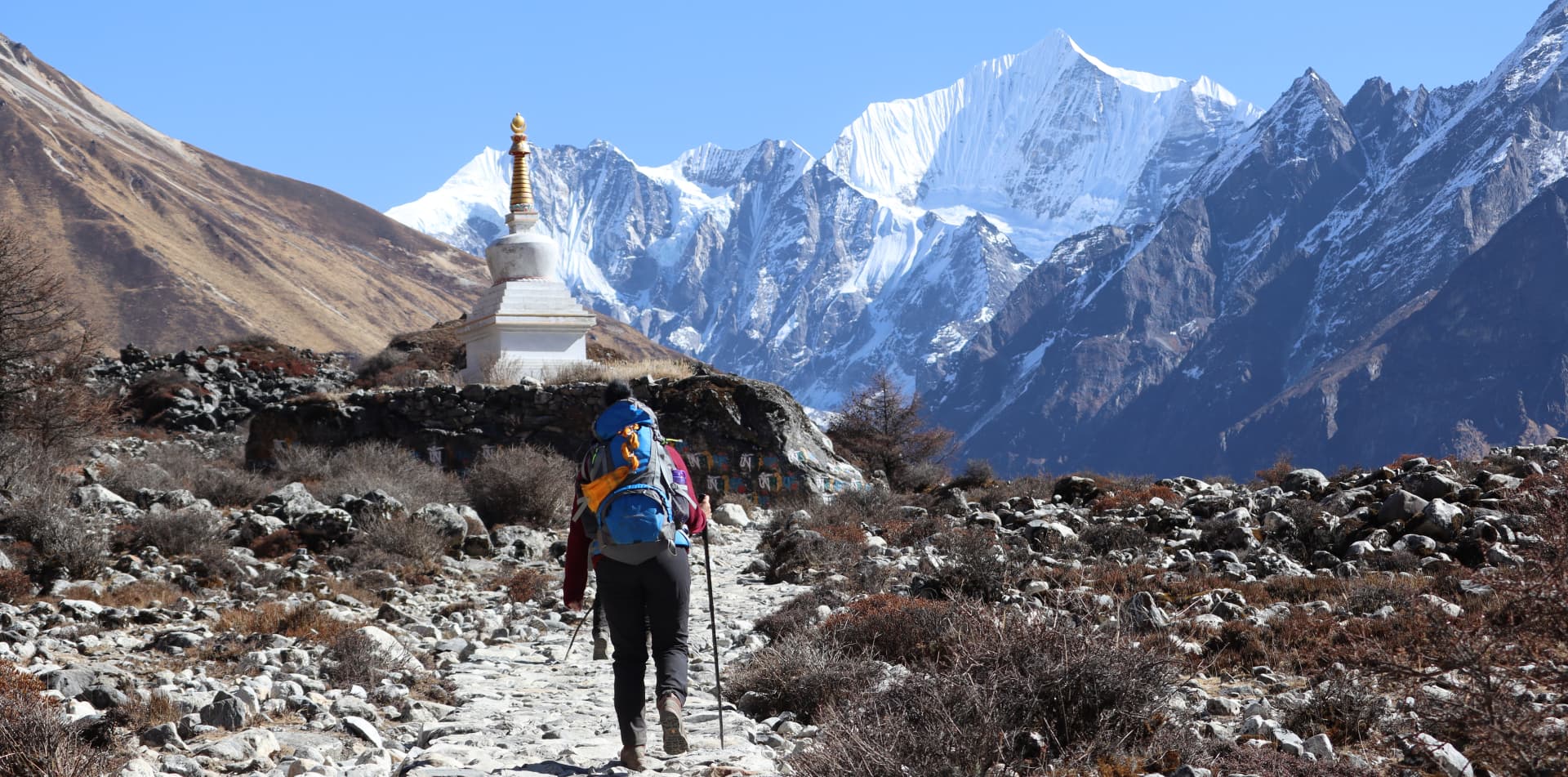
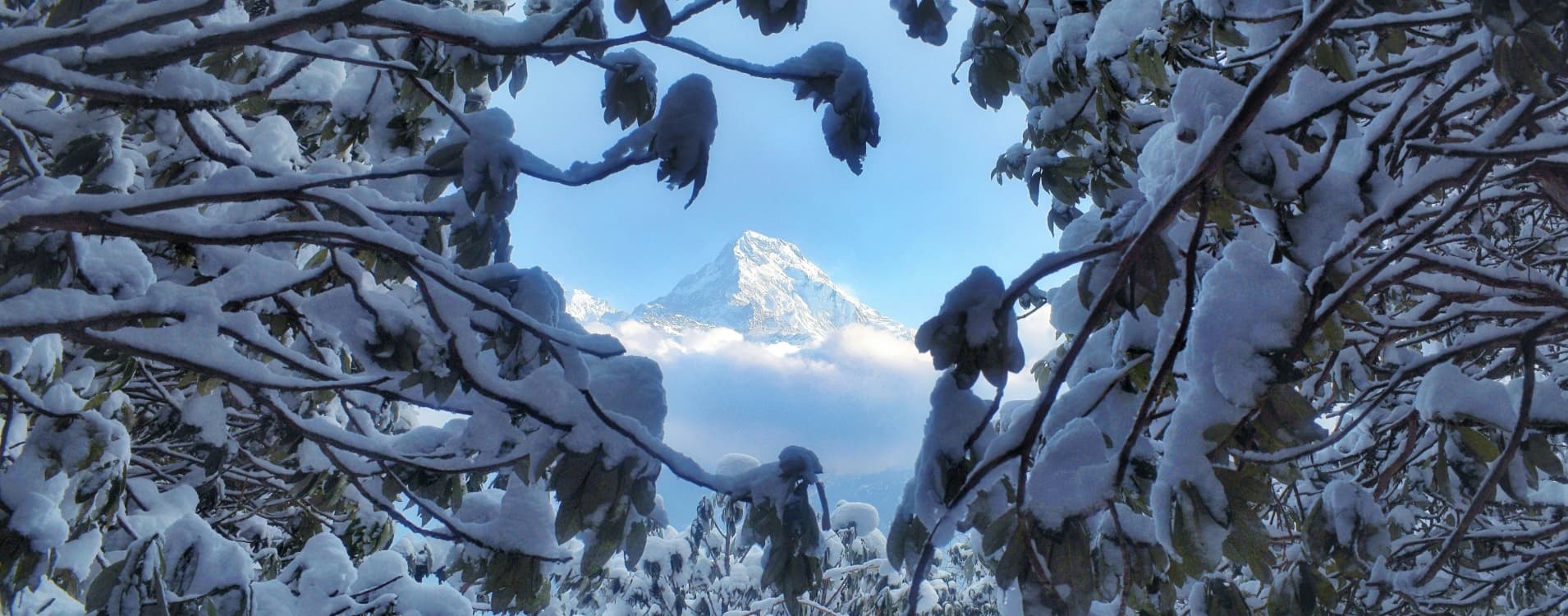
The terrain changes quickly as you move up the valley. Lower sections are forested, with rhododendron, oak, bamboo, and pine covering the slopes. The Langtang River runs alongside much of the trail, and crossing its suspension bridges is a regular feature of the first few days. As you gain altitude, the forest thins out and opens into alpine meadows and yak pastures. By the time you reach Kyanjin Gompa at 3,870 metres, you are in high mountain terrain: glaciers visible on multiple sides, peaks crowding the horizon.
Key destinations within the region include Langtang Village, Kyanjin Gompa, Gosaikunda Lake, and the Tamang Heritage Trail, which links several traditional villages in the lower valleys. Most trekkers stick to the main valley route up to Kyanjin, but the region supports a range of extensions depending on how much time you have.
Wildlife in Langtang National Park
Langtang National Park covers over 1,700 square kilometres and is one of the more biodiverse protected areas in Nepal. The park is home to over 1,000 plant species and around 160 bird species. The elusive red panda lives in the temperate forests of the lower zone, along with Himalayan black bears, snow leopards, and Himalayan tahr. Spotting wildlife requires patience and some luck, but even without any specific sightings, the biodiversity is evident in the quality of the forest and the sounds on the trail.
Culture, Heritage, and Local Experience
Tamang and Tibetan Buddhist Heritage
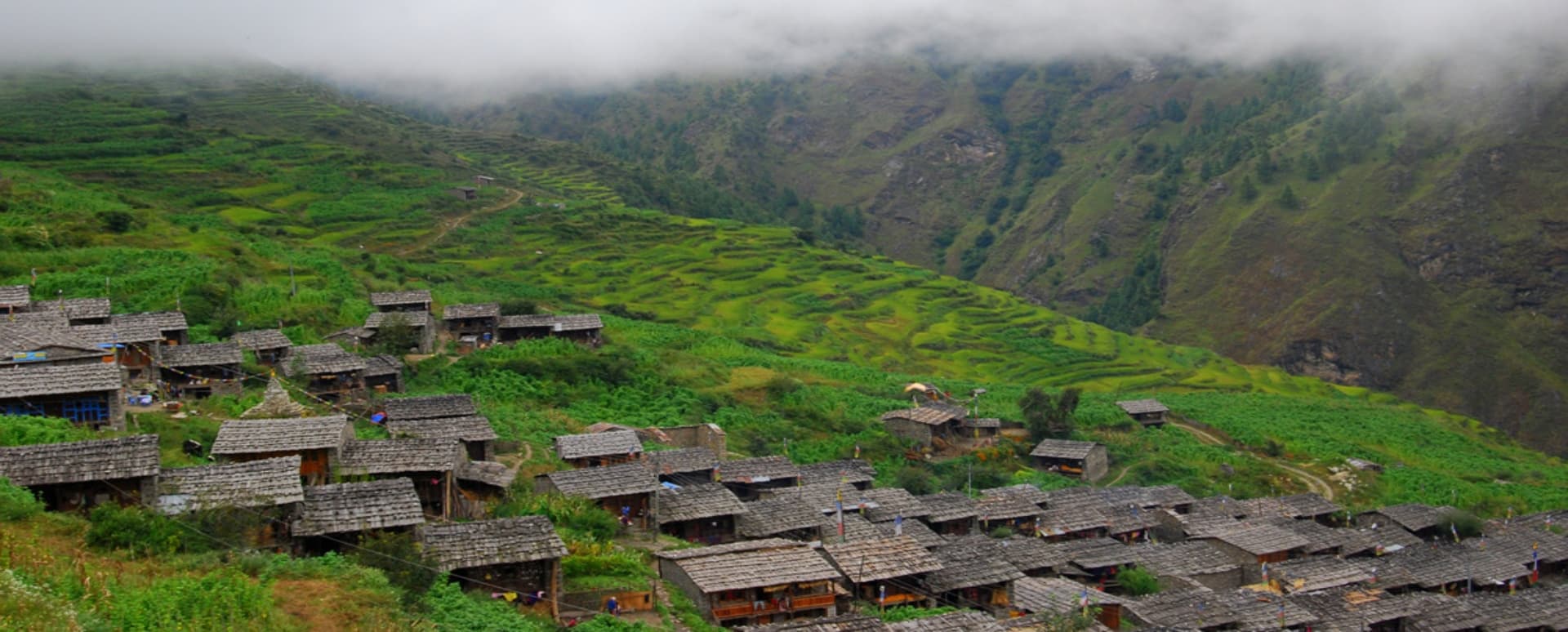
The Tamang are the dominant ethnic community in the Langtang region. They are an Indo-Tibetan group who are said to have migrated from mainland Tibet centuries ago, and their cultural identity still reflects those roots. Their language, architecture, food, and religious practices all carry strong Tibetan influences. Stone houses with flat roofs, intricate woodwork around doorways, and walls draped in prayer flags are the visual grammar of every village you pass through.
Buddhism runs through daily life in a way that is easy to observe but hard to fully articulate until you are in it. You will walk clockwise around chortens and mani walls. You will hear monks chanting in the early morning from the monastery at Kyanjin Gompa. At some teahouses, the family altar is visible from the dining room, butter lamps flickering alongside trekking brochures. It is a community where faith and practical mountain life have coexisted for generations.
The biggest festival in the Tamang calendar is Losar, the Tibetan New Year, celebrated in February or March. If your timing coincides, the celebrations in the villages are worth experiencing. Yartung, a summer horse-racing festival, is another culturally significant event. National Nepali festivals like Dashain and Tihar are also observed in the villages.
Kyanjin Gompa
The monastery at Kyanjin Gompa is several centuries old and sits at the upper end of the valley at 3,870 metres. It is the spiritual and cultural anchor of the upper Langtang region. The monastery’s interior features detailed murals, handcrafted religious figures, and rare scriptures. The building itself is modest by any grand architectural standard, but context matters: surrounded by glaciers and peaks, with prayer flags catching the mountain wind, it is a genuinely affecting place.
Most trekkers stay two nights in Kyanjin to acclimatise. That second day is typically used for a hike up to either Kyanjin Ri (4,773 m) or Tserko Ri (5,033 m) for panoramic views of Langtang Lirung (7,245 m), Dorje Lakpa (6,966 m), and the surrounding glaciers. From the top of Tserko Ri on a clear day, you can see over 20 peaks. It is the kind of viewpoint that justifies the entire trip.
There is also a small yak cheese factory near the monastery. It is a low-key operation, but the local yak cheese is a genuine regional product worth trying. Order it with bread or crackers at the teahouse. It is much better than it sounds at altitude.
Post-Earthquake Recovery and Community Tourism
The 2015 Nepal earthquake devastated the Langtang region. The village of Langtang itself was almost entirely buried by a massive avalanche triggered by the quake, and the human toll in the valley was severe. Most trekkers who visit today know this, and it is part of what makes the region feel meaningful to walk through.
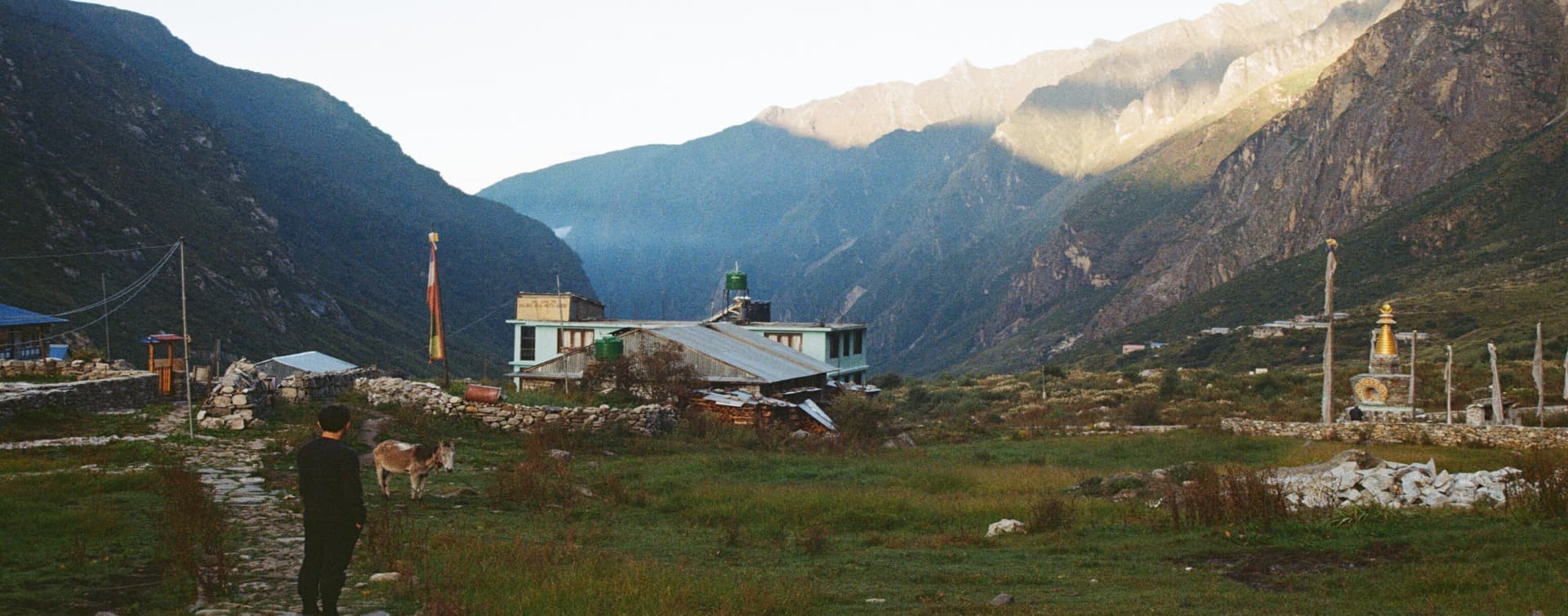
The recovery has been methodical and impressive. New teahouses and lodges have been built slightly uphill from the original village footprint, and the infrastructure is now cleaner and more modern than it was before 2015. The local communities, with support from NGOs and the government, have rebuilt with resilience. Visiting Langtang is one of the more direct ways that trekker spending translates into economic support for a community that genuinely needs it.
Best Time to Visit the Langtang Region
Langtang follows the same broad seasonal pattern as the rest of Nepal’s Himalayan trekking regions. Two windows stand out as clearly better than the others.
Autumn (September to November)
Autumn is the peak season, and for good reason. The monsoon has cleared the haze from the atmosphere, the skies are stable, and mountain visibility is at its best. Temperatures are comfortable in the lower valley and cold but manageable at Kyanjin. October is the busiest month, which in Langtang terms still means significantly fewer people than Everest or Annapurna. If you want the best possible conditions with some solitude, aim for early September or late November, when the crowds thin and the views stay clear.
Spring (March to May)
Spring is the second major trekking window. Lower elevations are covered in blooming rhododendrons, the days are long, and temperatures at altitude are warmer than autumn. Daytime temperatures in the valley typically run 10 to 20°C, making for comfortable walking. The tradeoff is some atmospheric haze in late spring, which can reduce the crispness of mountain views. April is generally the sweet spot. May starts to see pre-monsoon clouds building in the afternoon.
Spring also brings cultural life to the trails. Festivals like Holi and Buddha Jayanti are celebrated in Tamang villages during this period, and the trails feel more animated than in the colder months.
Winter and Monsoon
Winter trekking in Langtang (December to February) is possible but cold, especially at Kyanjin where temperatures drop well below freezing at night. The upside is near-total solitude and clear skies. The lower valley remains accessible, but the upper sections require proper cold-weather gear. It is an option for experienced trekkers who are comfortable in the cold and want the trails almost entirely to themselves.
Monsoon season (June to August) is not recommended for the main valley route. Leeches, muddy trails, the risk of landslides, and persistent cloud cover over the peaks make for a difficult experience. Unlike the rain-shadow areas of Mustang or Dolpo, Langtang takes the full force of the summer monsoon. Save it for a different time of year.
Permits, Regulations, and Costs in 2026
The Mandatory Guide Rule
As of February 2025, solo or unguided trekking in Langtang National Park is prohibited. All trekkers, both foreign nationals and Nepali citizens, must be accompanied by a licensed guide hired through a government-registered trekking agency. The rule is enforced at checkpoints at Dhunche, Syabrubesi, and Ghoda Tabela. Attempting to pass without a registered guide can result in fines or being turned back from the trail.
This regulation aligns Langtang with broader national trekking policy introduced in 2023, extending requirements that were already in place for other major routes. The stated reasons are safety, improved emergency response, and support for local employment. In practice, the rule makes logistical sense: a good guide handles permit checks, navigation, cultural context, and health monitoring. For first-time Himalayan trekkers especially, hiring a guide is a straightforward decision that removes most of the uncertainty from the trail.
Required Permits and Fees
Two permits are required for the standard Langtang Valley trek in 2026:
• Langtang National Park Entry Permit: NPR 3,000 per person (approximately USD 21 to 25 for foreign nationals). SAARC nationals pay NPR 1,500, and Nepali citizens pay NPR 100. This permit covers all routes within the park, including Langtang Valley, Gosaikunda, and the Tamang Heritage Trail.
• TIMS Card (Trekkers’ Information Management System): NPR 2,000 per person (approximately USD 15 to 17). SAARC nationals pay NPR 1,000. Note: The status of the TIMS card requirement has been subject to change in recent years. Some sources indicate it remains required for Langtang, while others note it has been or may be phased out. Check with your trekking agency or the Nepal Tourism Board before departure to confirm the current position.
Both permits can be obtained in Kathmandu at the Nepal Tourism Board office, or at the park entrance in Dhunche. Carry your original passport, two passport-sized photos, a copy of your Nepal visa, and cash in Nepali rupees. Bring multiple photocopies of your permits, as they will be checked at each checkpoint along the route.
Total Trek Cost: What to Budget
The total cost of a Langtang trek varies considerably depending on whether you go independent or book a full package. For a standard 7 to 10-day itinerary, here is what to expect:
• Permits: USD 40 to 50 per person in total.
• Transport (Kathmandu to Syabrubesi and back): USD 50 to 70 per person by shared jeep, or USD 150 to 200 one way for a private vehicle.
• Accommodation: USD 4 to 7 per night per room. Most teahouses offer free or heavily discounted rooms if you eat all your meals there, which is the standard arrangement.
• Food: USD 15 to 25 per day, depending on appetite and altitude. Prices increase as you go higher, reflecting the cost of getting supplies to remote lodges.
• Guide fees: USD 25 to 35 per day for a licensed, English-speaking guide.
• Porter fees: USD 20 to 25 per day. Porters typically carry loads of up to 20 to 25 kg.
A full guided package from a registered agency for a standard Langtang trek runs approximately USD 800 to 1,800 per person, depending on group size, season, and level of service. Budget trekkers handling more logistics independently can come in at USD 700 to 1,200. Luxury options with premium lodges and private guides run USD 1,800 to 2,500 and above.
On the trail itself, budget for small extras: hot showers cost USD 3 to 5, Wi-Fi access runs USD 2 to 5, and charging electronics typically incurs a small fee. Carry enough Nepali rupees to cover these, as there are no ATMs beyond Syabrubesi.
Why Choose Langtang Over Other Himalayan Regions?
The honest comparison: Langtang is not more dramatic than the Everest or Annapurna regions at their respective high points. Kala Patthar above Everest Base Camp and the view from Thorong La on the Annapurna Circuit are both extraordinary. But Langtang offers something that neither of those routes can: similar Himalayan quality at a fraction of the logistical overhead.
No domestic flights are required. No booking teahouses weeks in advance. The trail is busy in peak season but noticeably quieter than the major routes, which means you will actually talk to your guide and fellow trekkers rather than shuffling along in a queue. The cultural immersion with the Tamang community feels more genuine precisely because the tourism economy here has not been as thoroughly commodified.
It is also a natural first Himalayan trek. The difficulty is moderate. The maximum elevation at Tserko Ri is just over 5,000 metres, which is enough to give you a real high-altitude experience and test your acclimatisation, without the sustained extreme altitude of the Everest region. Many trekkers use Langtang as preparation for a more ambitious route the following year. It works extremely well in that role.
Time efficiency is another factor. A Langtang trek can be completed in 7 to 10 days of actual trekking. Add two days of driving and you have a Himalayan experience within a two-week holiday. The EBC trek, by comparison, typically requires 12 to 14 days just for the trek itself, plus the flight disruption risk at Lukla. For travellers with limited annual leave, Langtang removes a significant barrier.
What to Expect on the Trail
The Classic Route: Syabrubesi to Kyanjin Gompa
The standard route runs from Syabrubesi (1,503 m) through Bamboo and Lama Hotel, then up to Langtang Village (3,430 m) before continuing to Kyanjin Gompa (3,870 m). Most trekkers complete this in four to five walking days, with a rest and acclimatisation day at Kyanjin before making the ascent to Kyanjin Ri or Tserko Ri. The return follows the same trail, which is faster going downhill.
The trail is generally well-marked and straightforward to navigate. The hardest section is the climb from Lama Hotel to Ghodatabela on day three, which involves sustained elevation gain through dense forest. From Ghodatabela, the terrain opens up and the views improve dramatically. The approach to Langtang Village from Ghodatabela is one of the finest valley walks in Nepal: wide, flat, with peaks closing in on either side and yak pastures spreading across the valley floor.
Walking through the mani walls and chortens on the approach to Kyanjin feels like a proper arrival. There is a distinct change in atmosphere at that elevation: quieter, colder, and surrounded by glaciated terrain on all sides.
Teahouse Life in Langtang
Langtang is a teahouse trek. You walk during the day and sleep in family-run lodges at night. The teahouses here have been largely rebuilt since 2015 and the standard is good by Himalayan trail standards. Rooms typically have two beds with basic bedding. Bathrooms are often shared. Heating is rare in sleeping rooms, but the dining hall will have a wood or yak-dung stove that becomes the social centre of the teahouse in the evenings.
The food is solid and filling. Dal bhat is the staple, and it is nearly always a good choice because it is freshly cooked and the teahouses will refill your plate. Thukpa (noodle soup), momos, and Tibetan bread are other reliable options. At Kyanjin specifically, the local yak cheese is available and worth ordering.
Wi-Fi is available at some teahouses, particularly in Syabrubesi and Kyanjin Gompa, but do not count on a reliable connection in between. A power bank is worth carrying. Charging your devices at a teahouse typically costs a small fee. Cash is the only payment option on the trail, so withdraw enough in Kathmandu or Syabrubesi before you head up.
Altitude and Health Considerations
The risk of Acute Mountain Sickness (AMS) becomes real above 3,000 to 3,500 metres. On the Langtang route, you are in that range from Langtang Village upward. The standard acclimatisation advice applies: ascend gradually, follow the rule of climbing high and sleeping low, stay well hydrated, and pay attention to how your body is responding.
Symptoms to watch for include persistent headache, nausea, dizziness, and difficulty sleeping at altitude. If symptoms appear, do not push higher. Descending even 300 to 500 metres can bring rapid relief. Your guide is your first resource in any health situation on the trail, which is one of the practical reasons the mandatory guide rule makes sense beyond its regulatory context.
Travel insurance is mandatory in practical terms even if it is not always enforced. Make sure your policy covers high-altitude trekking above 5,000 metres and helicopter evacuation. Emergency evacuation from Kyanjin Gompa is not a simple undertaking, and the costs without insurance are significant.
Route Extensions and Combinations
The Langtang Valley trek connects naturally with several other routes, making it a versatile base for longer itineraries.
• Gosaikunda Lake Circuit: From Kyanjin, instead of retracing your steps to Syabrubesi, divert via Chandanbari and ascend to the sacred Gosaikunda Lakes at 4,380 metres. Cross the Laurebina Pass (4,610 m) and descend through the Helambu region to Sundarijal, then drive back to Kathmandu. Best for experienced trekkers wanting a longer, more spiritually significant route.
• Tamang Heritage Trail: Start with three to four days on the cultural trail from Syabrubesi through Gatlang, Tatopani, and Briddim, experiencing traditional Tamang village life and, in some villages, hot springs and homestays. Then link up to the main valley route. A strong option for travellers who want cultural depth alongside the high mountain scenery.
• Yala Peak Climbing: For those with mountaineering interest, Yala Peak (5,500 m) is accessible from Kyanjin Gompa as a camping side trip. It requires a permit and basic technical gear, but it is one of the more accessible peak-climbing objectives in Nepal for non-technical mountaineers.
Frequently Asked Questions
Where is the Langtang Region in Nepal?
The Langtang Region is located approximately 120 to 122 kilometres north of Kathmandu in the Rasuwa District, within Langtang National Park. It shares a border with Tibet to the north and is accessed via a road journey to the trailhead at Syabrubesi.
Is the Langtang trek suitable for beginners?
Yes, with some caveats. The trail itself is rated moderate, and the route is well-marked. The main variable is altitude. If you have never trekked above 3,000 metres before, take the acclimatisation day at Kyanjin seriously and be honest about how you are feeling. Go slow on ascent days. With sensible pacing and a good guide, the Langtang Valley trek is genuinely achievable for most people with a reasonable level of fitness.
Do I need a guide for the Langtang trek?
Yes. Since February 2025, a licensed guide hired through a registered trekking agency is legally required for all trekkers in Langtang National Park. Solo and unguided trekking is prohibited and enforced at checkpoints. This applies to both foreign nationals and Nepali citizens.
What permits are required?
The primary permit is the Langtang National Park Entry Permit, costing NPR 3,000 for foreign nationals. A TIMS card may also be required; confirm the current status with your agency or the Nepal Tourism Board before you travel, as requirements have been subject to change. Both permits are obtainable in Kathmandu or at Dhunche near the trailhead.
How long does the Langtang Valley trek take?
Most trekkers complete the standard Syabrubesi to Kyanjin Gompa and back route in 7 to 10 days of total time, including travel days from Kathmandu. The trekking itself takes approximately 6 to 8 days depending on pace and whether you add summit hikes to Kyanjin Ri or Tserko Ri.
What is the best time of year to trek in Langtang?
Autumn (September to November) offers the best mountain visibility and stable weather. Spring (March to May) is the second-best window, with rhododendron blooms and warmer temperatures. April is the sweet spot in spring. Avoid the monsoon months of June through August on this route.
Is altitude sickness a risk on the Langtang trek?
Yes, particularly above 3,500 metres, which includes Langtang Village and everything above it. Ascend slowly, include an acclimatisation day at Kyanjin, stay hydrated, and know the symptoms of AMS. If you develop a persistent headache, nausea, or dizziness, descend and do not continue upward until symptoms resolve.
How much does the Langtang trek cost?
For a 7 to 10-day fully guided package from a registered agency, budget approximately USD 800 to 1,800 per person. Budget trekkers going more independently can manage USD 700 to 1,200. Luxury options with premium lodges and private guides run USD 1,800 to 2,500 or more. Permits add approximately USD 40 to 50 on top of any package.
Conclusion
The Langtang Region does not need a hard sell. It is close to Kathmandu, it is affordable, it is genuinely beautiful, and the communities along the trail are worth meeting. If you have a week and a half and want to understand what high-altitude trekking in Nepal actually feels like, this is one of the most direct routes to that experience.
It is also a region with a recent and visible history. Walking through Langtang Village, rebuilt on higher ground after 2015, and standing at Kyanjin Gompa where the monastery has endured for centuries, gives the trek a weight that purely scenic routes sometimes lack. You are not just walking through a landscape. You are walking through a place that has been lived in, lost, and rebuilt.
Sort your permits, book a licensed guide through a registered agency, and plan your timing around autumn or spring. The rest of it, the yak cheese at Kyanjin, the views from Tserko Ri, the silence of the upper valley at dawn, takes care of itself.
Ready to trek the Langtang Region? Connect with a TAAN-registered trekking agency to plan your itinerary and arrange your guide and permits before you travel.