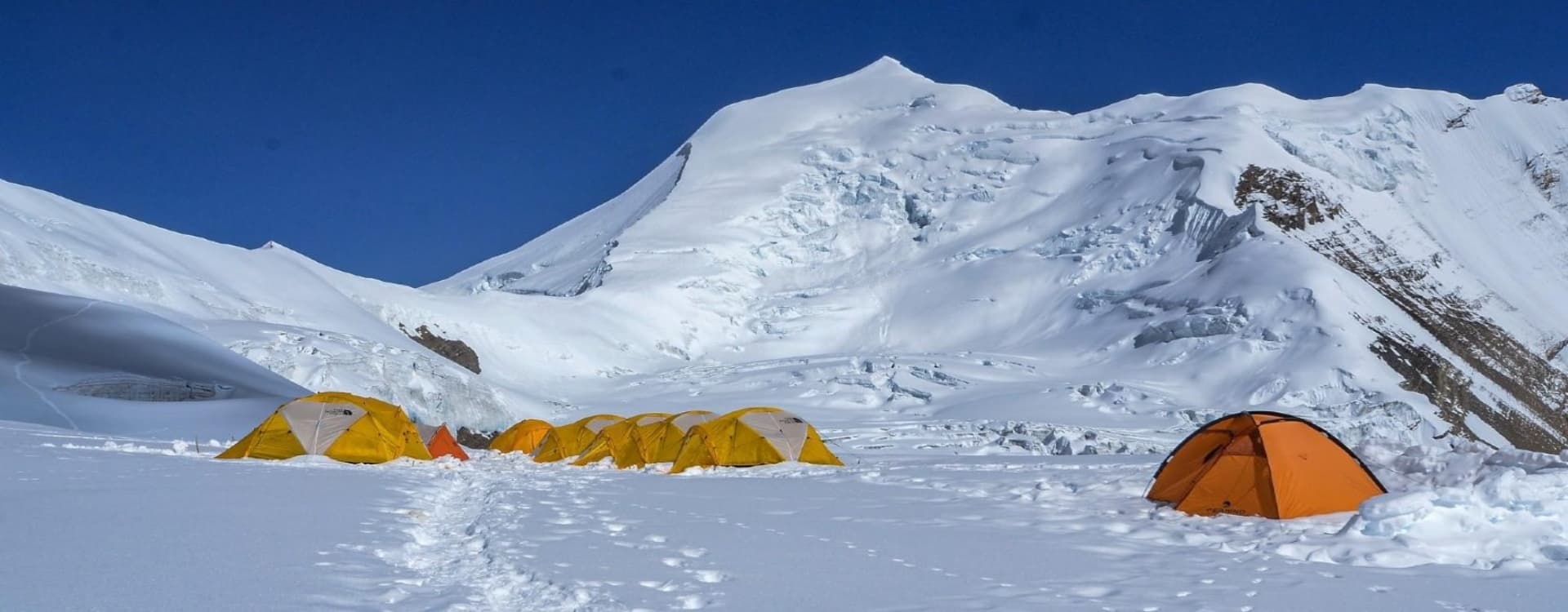
Nepal's 7000ers
The Complete Expedition Guide: Permits, Culture, Food, Logistics, and Everything In Between
Somewhere between the well-worn teahouse trails leading to Everest Base Camp and the brutal commitment required to stand on the summit of an eight-thousander sits a category of mountain that does not always get the attention it deserves. Nepal's seven-thousanders, the peaks that rise between 7,000 and 7,999 metres above sea level, occupy a distinct place in Himalayan climbing. They are serious enough to demand real expedition planning and the kind of physical preparation that goes well beyond a long hiking holiday, yet accessible enough that a strong, motivated climber without a lifetime of alpinism behind them can realistically reach a summit. That combination has made them some of the most sought-after objectives in modern high-altitude mountaineering.
Nepal holds 72 officially open peaks in this altitude band, ranging from mountains where the approach trek itself is most challenging to technically complex routes that will test experienced alpinists on every section. What draws climbers to this range, increasingly so in recent years, is not just the elevation or the difficulty but the setting. The approach valleys, the villages, and the cultural landscapes that surround these mountains are part of the experience in a way that is genuinely hard to replicate anywhere else on earth. You do not simply drive to a base camp on a paved road in Nepal. Getting to the mountain is its own journey, and that journey passes through some of the most compelling human and natural environments on the planet.
This guide is not a ranked list of individual peaks. It is an attempt to map the full experience of planning and undertaking a 7000m expedition in Nepal: the permit system, the culture you will encounter along the way, what you will eat and where you will sleep, how acclimatization actually works in practice, and what base camp life looks like once you get there. If you are considering this category of climbing for the first time, or coming back to Nepal after trekking peak experience, and wanting to understand what the next step actually involves, this is the guide to read before making any bookings.
Why the 7000ers? The Appeal of This Altitude Band
The logic of 7,000 metres makes sense once you understand where it sits in the broader structure of the Himalayan altitude. Trekking peaks, which top out around 6,500 metres, sit below the zone where the body's limits are genuinely tested. Eight-thousanders put climbers in the death zone above 8,000 metres, where the physiology of survival becomes the central concern of every decision. The seven-thousander category sits between those two worlds, demanding real expedition logistics, real acclimatization, and real technical skills, while stopping short of the death zone's specific and unforgiving demands.
For climbers building toward the eight-thousanders, a 7,000m peak has become something close to a prerequisite. Nepal passed a regulation in early 2026 requiring anyone applying for an Everest permit to have previously summited a 7,000m peak in Nepal first, formalising what had already become accepted best practice among experienced operators. Even before that rule, the Himalayan Database's own analysis consistently showed that climbers arriving at Everest or Manaslu with prior seven-thousander experience had meaningfully higher summit success rates and significantly fewer serious incidents than those who came without it. A 7,000m expedition is, in this sense, both a valid goal in itself and the best possible preparation for going higher.
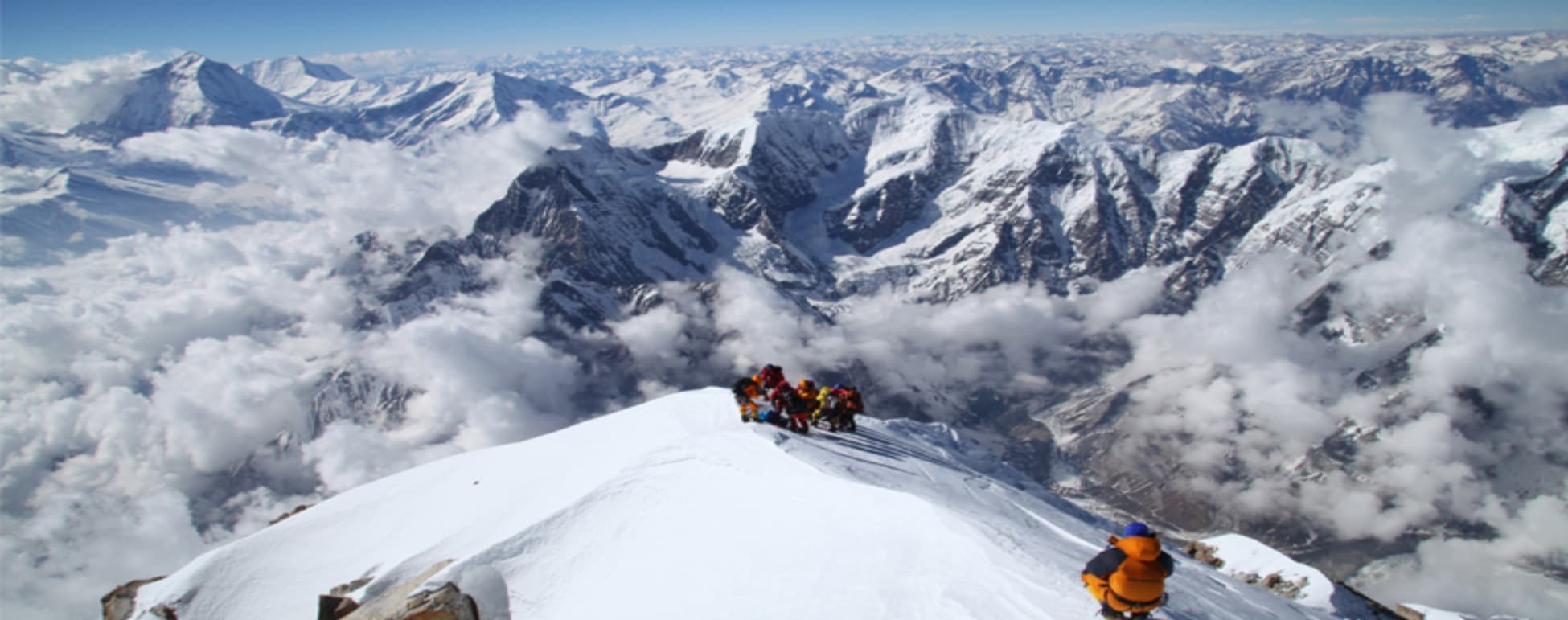
Then there is the question of what makes these mountains appealing on their own terms. The views from above 7,000 metres in Nepal are extraordinary in a way that photographs rarely capture accurately. On a clear summit morning, you are looking down at ranges that most of the world regards as towering, seeing the eight-thousanders as neighbouring peaks rather than distant giants. The experience of spending weeks in the high Himalaya, of adapting slowly to altitude and learning your own body's responses, of working with an experienced Sherpa team through shared hardship, leaves most climbers with something that is genuinely hard to put into words after the fact. The seven-thousanders tend to produce exactly this kind of experience.
The Peaks Worth Knowing About
Without turning this into a comprehensive list, it is worth naming the peaks that appear most often in expedition planning conversations and understanding why. Himlung Himal, at 7,126 metres in the Nar Phu Valley northeast of the Annapurna range, is widely cited in the Himalayan Database as having one of the highest summit success rates among commercial 7,000m expeditions. The standard route bypasses the objective danger of the older northwest ridge approach, and the approach trek passes through one of the most recently opened valleys in Nepal, adding significant cultural weight to what is already a rewarding mountain climb. For anyone stepping into this altitude category for the first time with a qualified guide, Himlung is frequently the recommendation.
Baruntse, at 7,129 metres, takes a different approach in every sense. Sitting between Lhotse and Makalu at the meeting point of three glacial valleys, the Barun, the Imja, and the Hinku, it was one of the first peaks east of Everest identified for climbing by Edmund Hillary's team, and it carries that history with it. The standard southeast ridge involves sustained glacier travel, steep ice sections around 50 degrees in places, and a pronounced ice cliff near 7,000 metres that keeps the route technically engaged. Many operators describe it as the best preparation available for 8,000m peaks precisely because it involves the kind of extended high-camp living and multi-day summit strategy that the biggest mountains demand.
Pumori, at 7,161 metres, belongs to the Khumbu region and carries perhaps the most recognisable setting of any seven-thousander in Nepal. It sits eight kilometres west of Everest, and its southeast ridge route puts climbers into a position where Everest, Lhotse, and Nuptse fill the skyline in a way that is difficult to describe without lapsing into superlatives. It is a technically demanding mountain with sections requiring real ice climbing skill, and its proximity to the Everest corridor means it sees more attention than genuinely remote objectives like Himlung or the Dhaulagiri massif peaks. Tilicho Peak, at 7,134 metres in the Annapurna region, draws its own distinct kind of climber: one who has often walked the Annapurna Circuit, seen the peak looming over Tilicho Lake, and spent years thinking about what it would take to stand on it.
The western ranges offer something different again. Putha Hiunchuli at 7,246 metres and Api Himal at 7,132 metres sit in the Dhaulagiri and far-western regions, respectively, both in areas where the local infrastructure is thin and the approach involves genuine logistical effort. These are the peaks for climbers who specifically want remoteness, and who understand that remoteness in Nepal's mountains comes with a longer planning timeline and a somewhat smaller margin for the kind of contingency management that is easier to arrange closer to Kathmandu. The reward for that effort is a mountain environment largely untouched by the commercial expedition industry, which has its own very specific appeal.
Understanding the Permit System
Climbing permits in Nepal are issued by two separate bodies, depending on the altitude and classification of the peak. The Nepal Mountaineering Association manages trekking peaks up to roughly 6,500 metres. Everything above that, including all of the seven-thousanders, falls under the Department of Tourism, which issues expedition peak permits through a royalty system charged per climber per season. The fee structure was revised significantly in September 2025, and the new rates are now in effect for all expeditions departing from that date onward.
For peaks in the 7,001 to 8,000 metre band, the current spring season royalty for foreign climbers runs between USD 500 and USD 800 per person, depending on the specific altitude of the peak. Autumn season fees drop to roughly half that figure, which is one of the reasons autumn remains popular despite the shorter weather windows compared to spring. A garbage deposit, currently set at USD 2,000 per team for peaks in this altitude range within the Khumbu and Annapurna regions, is also required upfront and returned on confirmation that waste has been properly removed from the mountain. This deposit is separate from the royalty fee.
Beyond the summit permit itself, several other documents are required before an expedition departs. Most approach treks pass through either a national park or a conservation area, each of which requires its own entry permit. The Sagarmatha National Park permit covers the Khumbu region and costs roughly USD 30 per person. The Annapurna Conservation Area permit, covering peaks and approaches in that region, is similarly priced. Restricted area permits apply to valleys like Nar Phu, which forms the approach to Himlung, and these carry a higher fee of several hundred dollars per week, given the limited visitor access historically granted to that corridor.
A TIMS card, the Trekkers' Information Management System card, has historically been required for most trekking routes in Nepal, though its applicability to expedition teams whose permits already cover documentation has evolved over recent years. Your expedition operator will confirm which specific documents apply to your chosen route and handle the paperwork directly, since attempting to navigate the permit window at the Department of Tourism in Kathmandu independently is a time-consuming exercise that experienced operators have refined into a single day's work.
It is also worth noting the 2026 regulation requiring Everest aspirants to have a documented 7,000m summit in Nepal. If your longer-term goal involves Everest or other eight-thousanders, it makes sense to request a summit certificate from the Department of Tourism at the conclusion of your seven-thousander expedition. This document, collected through your operator, is what satisfies the new requirement and is straightforward to obtain once the summit has been reached.
|
Permit / Document |
Issuing Body |
Approx. Cost (Spring) |
Notes |
|
Expedition Royalty (7001 to 8000m) |
Dept. of Tourism |
USD 500 to 800 per person |
Autumn season approx. 50% lower |
|
Garbage Deposit |
Dept. of Tourism |
USD 2,000 per team |
Refunded on proof of waste removal |
|
Sagarmatha NP Entry |
Dept. of National Parks |
USD 30 per person |
Khumbu region peaks and approaches |
|
Annapurna Conservation Area |
ACAP |
USD 30 per person |
Annapurna and Manaslu region approaches |
|
Nar Phu Restricted Area |
Dept. of Immigration |
Several hundred USD per week |
Required for the Himlung and Nar Phu approaches |
|
TIMS Card |
NTB / TAAN |
USD 10 to 20 |
Operator confirms applicability per route |
Culture: The Sherpa World and What It Means for Climbers
It is easy to arrive in Nepal thinking of the mountains as the point of the trip and to treat the cultural landscape as a pleasant backdrop. A week on the trail generally corrects that impression. The communities through which most seven-thousander approaches pass are among the most distinctive in Asia, shaped by centuries of life at altitude in conditions that have produced both a specific physiology and a specific worldview, one rooted deeply in Tibetan Buddhism and an understanding of the mountain environment that has no real parallel in Western mountaineering culture.
The Sherpa people are the most visible and widely known of Nepal's high-altitude communities, but they are not the only ones. The Rai, Tamang, Gurung, and Magar communities, among others, form the human fabric of many approach corridors, particularly in the Annapurna and Dhaulagiri regions. Each has its own language, distinct festival calendar, architectural tradition, and relationship with the land. An expedition that moves quickly through these valleys and focuses entirely on the mountain ahead misses something that many returning climbers describe as the part of the experience they actually think about most, years later.
The Puja Ceremony
Every expedition in Nepal begins with a puja, the Tibetan Buddhist blessing ceremony conducted at base camp before any team member sets foot on the mountain itself. The ceremony is led by a lama, a Buddhist monk or senior religious figure, who travels to base camp specifically for the occasion. A stone altar is constructed and adorned with offerings: rice, biscuits, chang (a local barley beer), butter lamps, and incense. The team's climbing equipment, ice axes, crampons, harnesses, ropes, is arranged before the altar to receive a blessing. The lama chants for several hours while juniper branches burn to purify the space, and prayer flags are raised on a central pole and strung out over the camp in five colours, each representing one of the five elements.
The puja is not a formality. Many Sherpa members will not begin climbing until it has been properly conducted, and the sentiment behind that position is worth understanding rather than simply accommodating. For the Sherpa, the mountains are not terrain to be conquered. They are dwelling places of deities. Chomolungma, Everest, is the throne of Miyolangsangma, the goddess of inexhaustible giving. The other great peaks of the Himalaya carry similarly specific spiritual identities. Climbing is understood as entry into sacred space, and the puja is the act of seeking permission and offering respect before that entry. Climbers who understand this tend to find the ceremony genuinely moving rather than merely interesting.
The practical effect of the puja on team cohesion is also real. A shared ceremony conducted in unfamiliar surroundings, watched over by a lama whose authority the Sherpa team genuinely respects, creates a specific kind of collective mood at the start of an expedition. Most climbers who have experienced it describe it as the moment the expedition stops feeling like a logistics exercise and starts feeling like something else entirely.
On the Trail: Monasteries, Mani Walls and Living Buddhist Culture
The approach walks to most seven-thousander base camps pass through villages where Tibetan Buddhism is not a historical artefact but an active, daily practice. Monasteries punctuate the trail at intervals, sometimes small gompas perched on ridgelines and sometimes substantial institutions like Tengboche in the Khumbu or the Thubten Choling nunnery in the Solu region, both of which receive expedition teams as a routine part of their annual calendar. Stopping at these places is not an optional cultural detour. It is part of the experience that the mountain approach is supposed to be.
Mani walls, the long stone structures carved with Buddhist mantras and the faces of deities, line the trails throughout the high Himalaya. The etiquette is simple and worth knowing: always pass them on your left, keeping the wall to your right. The same clockwise rule applies to chortens, the white stone stupas that mark sacred sites along the trail. These are not museum pieces. They are in active use, the physical expression of a worldview in which the landscape itself is understood as inhabited by spiritual forces.
Prayer flags are everywhere: strung across suspension bridges, raised on high passes, clustered around summits and base camps. Their five colours represent the five elements, sky, wind, fire, water and earth, and the belief is that as the wind passes through them, the mantras printed on the fabric travel out into the world as blessings. This is a good frame for approaching the entire cultural landscape of a Himalayan expedition. It is not a system of beliefs designed to be observed at a respectful distance. It is a living practice that surrounds you from the moment you leave the main road, and engaging with it, at minimum with curiosity and genuine respect, changes the quality of the experience in ways that are difficult to anticipate beforehand.
Working with Your Sherpa Team
The role of the Sherpa climbing team on a seven-thousander extends well beyond carrying loads and fixing ropes, although both of those things are central to how the expedition functions. A strong sirdar, the head Sherpa who manages the local team, brings weather reading, route judgement, personnel management and expedition logistics together in a single role. The climbing Sherpas who work alongside foreign clients at high altitude are, in many cases, among the most experienced high-altitude climbers in the world. Kami Rita Sherpa had summited Everest 29 times as of 2026, a figure that conveys something important about what generational knowledge in this environment actually looks like.
The relationship between a foreign climbing team and their Sherpa counterparts works best when it is understood as a partnership rather than a service transaction. This means learning a few words of Nepali, participating in the puja with genuine engagement, being attentive to the workload your team is carrying, tipping appropriately at the end of the expedition, and approaching the daily rhythms of the climb with the kind of patience that the mountains consistently require. None of this is complicated, but it makes a significant difference to the quality of the experience on both sides.
Food on a 7000m Expedition: From Teahouse to High Camp
Food is a subject that every serious expedition discussion should spend more time on than it typically does, because what you eat and how well you manage your nutrition through four to six weeks of physical and altitude stress has a direct, measurable impact on summit chances. This is not a minor logistical consideration. It is a core part of expedition management.
The Teahouse Phase
The approach trek to most seven-thousander base camps passes through a network of teahouses, family-run lodges that have been serving trekkers and expedition teams for decades. The food in a good teahouse is more varied than most first-time visitors expect. The core of any teahouse menu is dal bhat, the national dish: rice, lentil soup, and a rotating cast of vegetable curries and pickles, served with unlimited refills on the dal and rice. It is one of the better things you can eat at altitude, since the combination of complex carbohydrates, protein and salt addresses almost everything your body is asking for after a long walking day.
Beyond dal bhat, teahouse menus typically include noodle soups, fried rice, momos, eggs in various forms, tsampa porridge, pancakes and chapati. Black tea, milk tea, ginger lemon honey tea and instant coffee are the standard drinks, and staying well hydrated through multiple cups throughout the morning is one of the simplest and most effective altitude management strategies available. Most teahouses also carry boiled or filtered water, which is cheaper and more environmentally responsible than the bottled water that becomes steadily more expensive as you climb higher.
The quality and variety of teahouse food drops as you gain altitude and move away from the main trekking corridors. In the Nar Phu Valley, approaching Himlung, or in the upper Barun Valley approaching Baruntse, you are in genuinely remote territory where the menu may consist of whatever ingredients were carried in recently. That is not a problem if you are prepared for it and are eating well at lower altitude during the approach days. It becomes a problem if you arrive at base camp already running a calorie deficit from a week of poor appetite management.
Base Camp: The Kitchen Tent as Expedition Anchor
At base camp, the expedition's own kitchen takes over from teahouse cooking. A well-organised 7,000m expedition runs with a dedicated cook and one or two kitchen assistants who are responsible for three meals a day, plus tea and snacks throughout the rest periods between rotations. The quality of this setup varies significantly between operators, and it is one of the details worth investigating before booking, since a competent base camp cook who understands altitude nutrition and can manage a consistent menu over five weeks is genuinely valuable.
Base camp meals typically move between Nepali staples and international dishes, with rice, lentils, pasta, vegetables, eggs and bread forming the backbone and more varied options appearing when fresh supply runs are possible. In the Khumbu region, yaks carry supplies from lower villages to base camp throughout the season, and the relatively good infrastructure means fresh vegetables are more consistently available than at the more remote base camps. In genuinely isolated locations, freeze-dried meals, high-calorie snack foods, chocolate, nuts and energy supplements play a larger role in filling the nutritional gap.
Above base camp, at the high camps established during acclimatization rotations and the summit push, food simplifies considerably. Freeze-dried meals, instant noodles, boiled rice and whatever hot drinks can be prepared on a small stove are the standard. Appetite reliably drops above 6,000 metres, which makes calorie-dense, easy-to-prepare food more practical than anything that requires significant cooking time or a complex setup. The discipline of eating even when you are not hungry, particularly during the summit push itself, is something experienced guides emphasise because the consequences of running an energy deficit at 7,000 metres are not subtle.
Acclimatization: The Discipline That Decides the Outcome
More seven-thousander summit attempts fail because of rushed acclimatization than because of any other single factor. This is a consistent finding across the Himalayan Database's records and the operational experience of guide services working in this altitude band. Understanding why acclimatization matters and how it actually works is therefore not background reading. It is core knowledge for anyone planning an expedition in this range.
Acclimatization is the process by which the body adjusts to reduced atmospheric oxygen pressure. At 7,000 metres, the oxygen content of each breath is roughly 41 percent of what it is at sea level. The body responds to this shortage by increasing red blood cell production, adjusting breathing patterns, and redistributing blood flow toward the heart and lungs. None of these adaptations happen quickly. The standard mountaineering rule of thumb, climbing high and sleeping low, exists because spending time at altitude triggers adaptation while sleeping at a lower elevation allows recovery. The adaptation accumulates over weeks, not days.
A properly structured 7,000m expedition builds acclimatization into the itinerary through a series of rotations. The typical structure involves trekking to base camp over 10 to 14 days, which provides meaningful altitude exposure along the way, followed by a rotation to Camp 1, then back to base camp for rest. A second rotation extends to Camp 2 or the equivalent elevation for that peak's specific camp structure. After returning again to base camp, sometimes including a descent to a lower teahouse village for a more thorough recovery period, the team moves into position for the summit push. This structure is what separates a well-designed expedition itinerary from an aggressively shortened one, and the difference in summit success rates between the two approaches is substantial.
Acute Mountain Sickness, or AMS, is the umbrella term for the symptoms that result from ascending too quickly. Headache, nausea, dizziness, disturbed sleep and unusual fatigue are the classic early signs. More serious forms, High Altitude Pulmonary Oedema (HAPE) and High Altitude Cerebral Oedema (HACE), are medical emergencies that require immediate descent and can become fatal if not acted upon quickly. The management principle in all cases is the same: if symptoms develop, do not ascend further until they resolve, and descend if they worsen. Most experienced guides monitor their clients with a pulse oximeter throughout the expedition, since blood oxygen saturation provides a useful objective measure of how well an individual is acclimatizing at each stage.
Life at Base Camp: What the Experience Actually Looks Like
Base camp on a seven-thousander is neither the spartan wilderness bivouac of older mountaineering literature nor the elaborate circus that the Everest Base Camp on the Khumbu Glacier has become in the age of commercial expeditions. It sits somewhere in between, and what it actually looks like depends heavily on the peak, the operator and the time of year.
A standard setup includes separate sleeping tents for each climber, a communal dining tent where meals are served and the team spends most of its non-sleeping time, a kitchen tent, toilet facilities and a separate tent or area for equipment storage and rope management. Larger commercial operators add satellite internet and a communications setup that allows real-time weather forecast access and contact with family. Smaller, more alpine-style expeditions strip this back considerably. Most seven-thousander expeditions on popular peaks in the Khumbu or Manaslu regions sit closer to the well-serviced end of this spectrum.
Days at base camp during rest periods between rotations follow a familiar rhythm. Mornings are for breakfast and equipment checks. Afternoons involve gear maintenance, route planning discussions with the guide team, occasional training exercises on nearby terrain if the location allows, and a good amount of reading and resting. The temptation to feel guilty about the amount of time spent sitting around at base camp is something most first-time expedition climbers have to consciously manage, since the rest periods are not idle time. They are a deliberate part of the acclimatization strategy and the reason the summit push will be physically possible when it comes.
The social dimension of base camp life should not be underestimated either. On popular peaks during the main spring and autumn seasons, neighbouring expedition teams from different countries share the same glacier or moraine, and the camp-to-camp interactions that develop over a shared month of waiting, rotating and weather watching create a specific kind of community that people who have experienced it tend to describe with considerable affection. The evenings around the dining tent, swapping route information and stories from other mountains, are where a good portion of the lasting memories of any expedition seem to form.
Choosing the Right Season
Seven-thousander expeditions in Nepal run during two main windows, with a small number of climbers attempting winter ascents and the monsoon months essentially closing the peaks to serious summit attempts.
Spring, March to May: The most popular season for expeditions above 7,000 metres, for reasons that reflect both the weather and the logistics. Skies tend to be clear in the pre-monsoon period, temperatures are cold but not at winter extremes, and the infrastructure of experienced operators, fixed rope teams and supply chains is fully mobilised. The jet stream typically lifts off the highest peaks in late April or early May, opening the windows that most 8,000m summit bids are timed around, and the seven-thousanders benefit from similar dynamics. The main downside of spring is that it is also the busiest period on the popular peaks, with multiple expedition teams sometimes sharing the same route and camps.
Autumn, September to November: The post-monsoon season offers the clearest skies of any period in Nepal, with the atmosphere washed clean by months of rain and the visibility that results extending to ranges 200 kilometres away on the best days. The trade-off is a shorter weather window and temperatures that drop more quickly as the season moves toward November. Permit fees are also lower in autumn, which makes it attractive from a cost perspective. Many operators and experienced climbers who have done both seasons describe autumn as producing the best summit views, if not always the best summit odds on the very highest objectives.
Winter, December to February: A small number of experienced teams attempt winter ascents on seven-thousanders, particularly on peaks where the technical challenge rather than the weather is the primary consideration. Temperatures drop sharply, winds intensify at altitude, and the margin for error on any decision narrows considerably. This is specialist terrain, not a category for first-time expeditions in this altitude band.
Monsoon, June to August: The combination of cloud, precipitation and avalanche risk effectively closes the peaks for most practical purposes. Some operators offer off-season treks in the lower valleys during this period, and the landscape turns dramatically green, but serious summit attempts are not a reasonable expectation in June through August.
Training and Preparation: What the Mountain Actually Requires
Physical preparation for a seven-thousander needs to start at least four to six months before the expedition, and the training that works best is specific rather than general. Running, cycling and swimming all build the cardiovascular base the climb requires, but they do not replicate the specific demands of spending 8 to 10 hours a day walking uphill on uneven terrain with a pack, sleeping at altitude and repeating the process the next morning. Weighted hill walking, with a pack similar in weight to what you will carry on the approach, is the single most transferable form of training for this kind of expedition.
Strength training deserves more attention in expedition preparation than it sometimes gets in favour of pure cardio volume. The legs and the stabilising muscles of the core do a disproportionate amount of work on multi-day expedition terrain, and arriving with genuine strength in those areas reduces injury risk and delays the onset of the deep fatigue that affects decision-making quality at altitude. Multi-day back-to-back exercise blocks, where you train hard on consecutive days rather than always resting between sessions, also build the kind of recovery resilience that a long expedition demands.
Prior altitude experience matters in a way that is worth being honest about. If your highest previous elevation is a moderate European alpine route, a seven-thousander will involve a significant jump in what your body is asked to manage. Some people acclimatise efficiently and find the transition manageable with a properly designed itinerary. Others find that even with the best preparation and a sensibly paced schedule, their body's response to extreme altitude is limiting in ways that no amount of fitness training fully addresses. Prior high-altitude experience, on an Everest Base Camp trek, a Kilimanjaro climb, or a trekking peak in Nepal, does not guarantee a clean acclimatization on a seven-thousander, but it does give you and your guide genuinely useful information about how your body responds.
Insurance, Safety, and Emergency Procedures
Travel insurance for a seven-thousander expedition is not a standard travel insurance product. Most policies sold alongside international flights cover medical emergencies to a limit that does not begin to approach the cost of a helicopter evacuation from high altitude in Nepal. A purpose-written mountaineering or expedition insurance policy is essential, and it needs to explicitly cover the altitude of the peak you intend to climb, emergency evacuation, including helicopter rescue, and medical treatment both in Nepal and in any country you may need to be transported to.
Helicopter evacuation from the Khumbu region, to give a specific example, costs in the range of USD 3,000 to 5,000 per flight under standard conditions, and that figure increases substantially for rescues from high altitude or in poor weather. An uninsured evacuation from a seven-thousander base camp or high camp represents a financial event that would affect most individuals for years. The cost of adequate insurance, typically USD 150 to 400 for a six-week expedition, depending on the level of cover, is not a point of negotiation.
Most professional operators include a base camp medical kit and a pulse oximeter as standard. Some include a Gamow bag, a portable hyperbaric chamber that simulates descent to a lower altitude and buys time in cases of serious AMS, HAPE or HACE. The presence of these items matters less than the competence of the guide team in recognising when to use them, since a Gamow bag deployed 20 minutes too late is a significantly different situation from one used at the first clear sign of serious oedema. Asking your operator directly about their emergency protocol and their guide team's altitude sickness recognition training is a completely reasonable question at the booking stage.
Frequently Asked Questions
Do I need previous mountaineering experience to attempt a 7,000m peak in Nepal?
Yes, in practical terms. You do not need a mountaineering qualification or a formal alpine resume, but you need genuine high-altitude trekking experience, solid physical fitness, comfort on steep terrain with crampons and an ice axe, and ideally a previous summit above 5,500 metres. The specific requirements vary by peak. Himlung Himal is among the more accessible objectives in the category, while Pumori or a Dhaulagiri satellite peak requires a substantially more technical background.
How long does a typical 7,000m expedition take?
Between 25 and 35 days from arrival in Kathmandu to return, depending on the specific peak, the approach route and the number of acclimatization rotations built in. Shorter itineraries in the 18 to 22 day range exist but consistently produce lower summit success rates. Anyone booking a seven-thousander with the genuine intention of summiting should prioritise itinerary length over cost saving.
What does a 7,000m expedition in Nepal cost?
Full service expedition packages from reputable operators typically range from USD 4,000 to USD 8,000 per person depending on the peak, the season, group size and the level of service included. That figure covers permits, Kathmandu hotel nights, approach transport, all food and accommodation during the expedition, the guide and Sherpa team, base camp setup and standard safety equipment. It does not cover international flights, travel insurance, personal gear, personal expenses on the approach trek, or tips for the team.
Is spring or autumn better for a first seven-thousander expedition?
Both seasons work well for most peaks in this category. Spring typically offers more stable multi-day weather windows, which matters on summit pushes, while autumn delivers clearer skies and lower permit fees. Your operator's fixed departure schedule will often make the decision for you, since the best value bookings fill up months in advance.
Do I need supplemental oxygen on a seven-thousander?
For most peaks below approximately 7,500 metres, supplemental oxygen is neither required nor commonly used by climbers in good condition on well-paced itineraries. The situation differs significantly from 8,000m peaks where oxygen is standard for all but the most experienced high-altitude alpinists. Some operators make oxygen available as an option for clients who find their acclimatization particularly challenging, but it is not assumed as standard on the peaks in this category.
What is the role of the Sherpa team on the expedition?
The Sherpa team, led by the sirdar, handles fixed rope installation, load carrying between camps, high camp setup and a significant amount of route-finding and weather judgement. On most commercial seven-thousander expeditions, climbing Sherpas accompany foreign clients during the rotation climbs and on summit day itself. The ratio of Sherpas to clients varies by operator, but a one to one ratio for the summit push is considered best practice on the more serious peaks in this category.
What should I look for when choosing an expedition operator?
Licensed registration with the Nepal Tourism Board is the baseline, but beyond that, look for operators with documented experience on the specific peak you intend to climb, a transparent itinerary with adequate acclimatization days, a clearly described Sherpa team with named and verifiable experience, honest communication about what is and is not included in the package price, and real reviews from previous clients rather than testimonials sourced by the company itself.
Final Thoughts
A seven-thousander expedition in Nepal is not a trip you take lightly, and the best outcomes consistently belong to climbers who prepared seriously, chose their operator carefully, gave the itinerary the time it actually needs, and showed up to the mountains with genuine curiosity about the culture as well as ambition about the summit. The permit paperwork, the food logistics, the acclimatization rotations, the puja ceremony at base camp: all of it is part of the same experience, and the climbers who engage with it as a whole tend to find that the memory of the expedition holds together as something more substantial than a summit certificate and a photograph.
If you are considering a specific seven-thousander and want to understand the itinerary, cost, team structure and logistics in detail, the package pages on this site cover the peaks in the current expedition programme with the same level of thoroughness applied to every section of this guide.