No cancellation fees. No hassle. Book Now, Cancellation Terms
Peak ClimbingTrekking Regions+55
18 min readMera Peak Climbing in Nepal: Complete Planning Guide, Cost, Itinerary & Preparation
June 15, 2026
18 min
579 views
Standing at 6,476 meters, Mera Peak is Nepal's highest official trekking peak. It sits deep in the Hinku Valley, tucked south of Everest in a part of the Khumbu that most trekkers never reach. Every year, climbers from all over the world travel here for one specific reason.
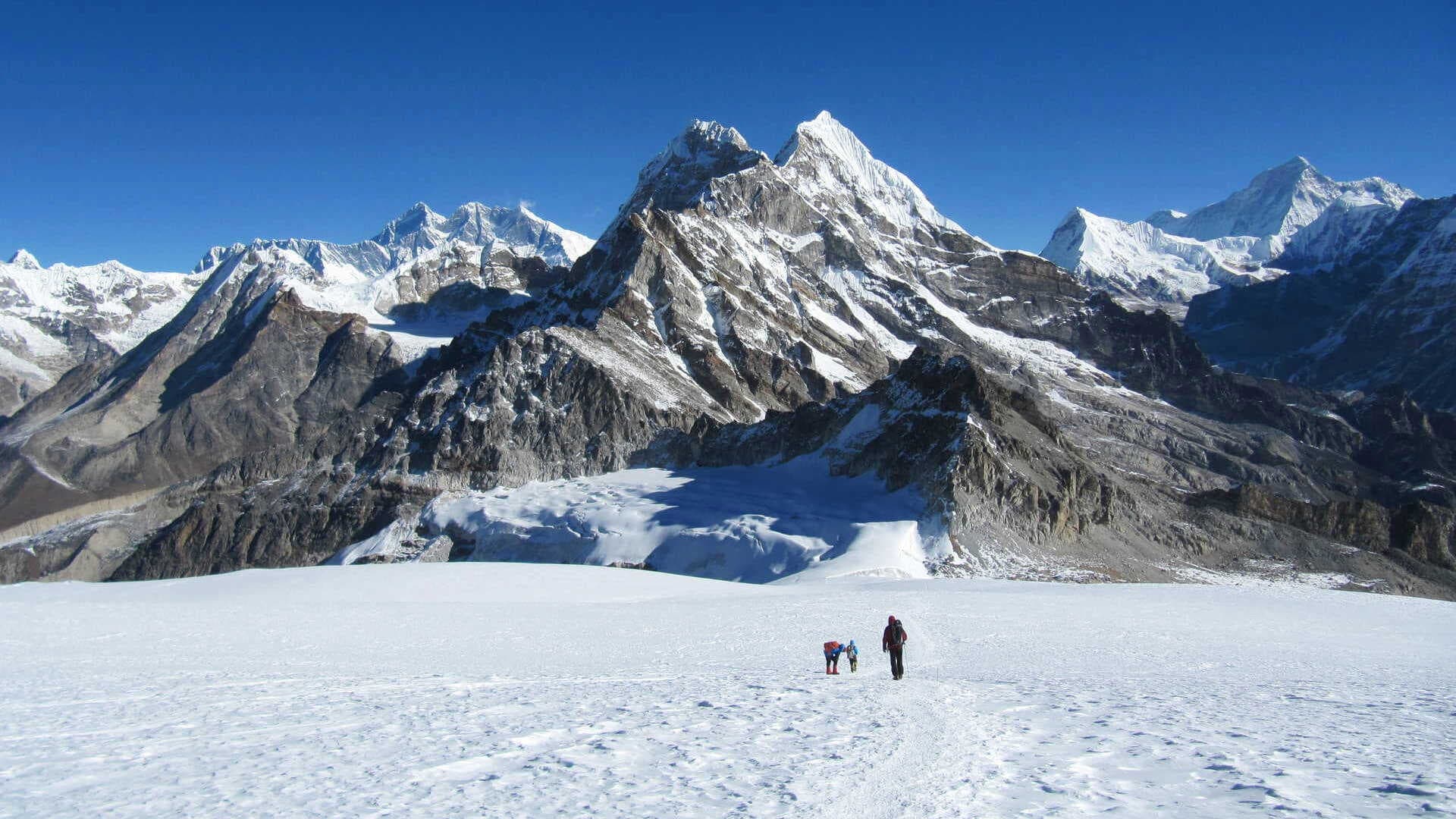
From the summit of Mera Peak, you can see five of the world's fourteen eight-thousanders at once. Everest, Lhotse, Makalu, Cho Oyu, and Kanchenjunga all fill the horizon. That panorama is, by most accounts, one of the most extraordinary views available to any non-technical climber anywhere on earth.
This guide covers everything you need to plan a Mera Peak expedition properly. The permits, the costs, how to train, what to pack, and what to expect day by day. Whether you're a seasoned trekker stepping into climbing for the first time, or someone who already has high-altitude trips behind them, this is the complete picture.
Our company has run Mera Peak expeditions for years from our base in Kathmandu. This guide reflects what we've learned from doing it right, season after season.
Why Choose Mera Peak Climbing in Nepal?
Overview of Mera Peak
Location and Geography
Mera Peak sits in the Everest region, inside the Makalu Barun National Park. To reach it, you travel through the Hinku Valley, a remote and largely untouched corridor that bears almost no resemblance to the busy trails leading to Everest Base Camp. Very few teahouses exist along the route. You'll spend nights in isolated herders' camps called kharkas.
Key Statistics
Mera has three summits. Mera North rises to 6,476 meters, Mera Central to 6,461 meters, and Mera South to 6,065 meters. Most commercial expeditions target Mera Central because of better accessibility. The mountain was first climbed on May 20, 1953, by Colonel J.O.M. Roberts and Sen Tenzing, just days after Hillary and Tenzing's historic Everest summit.
On the Alpine difficulty scale, Mera is rated PD (Peu Difficile), meaning slightly difficult. Summit slopes reach roughly 30 to 40 degrees. Fixed ropes are in place on the steepest sections. The real challenge is not technical difficulty but altitude. You're operating above 6,000 meters, where your body works significantly harder for every step.
What Makes Mera Peak Unique?
The highest trekking peak in Nepal
At 6,476 meters, Mera is the highest trekking peak recognized by the Nepal Mountaineering Association. For climbers who want serious high-altitude experience without the extreme technical demands of peaks like Ama Dablam or the Himalayan giants, Mera is the right choice.
Ideal First Himalayan Climbing Experience
The climb involves navigating snow and ice, crossing glaciers, and managing crevasses on a rope team. None of it requires years of prior climbing experience. With a good guide and proper preparation, fit trekkers with no mountaineering background summit Mera Peak successfully every season. Summit success rates for well-prepared, guided climbers consistently run between 80 and 95 percent.
Less Crowded Alternative to Island Peak
Island Peak sits close to the popular EBC trekking highway, which means a steady flow of traffic. Mera, by contrast, attracts a more dedicated crowd. The approach is longer and the commitment is greater. The solitude on the mountain is genuine. On the climb itself, you're unlikely to share high camp with dozens of other teams.
Mountains Visible from the Mera Peak Summit
Everest, Lhotse, Makalu, Cho Oyu & Kanchenjunga
The summit view from Mera Peak is often described as the finest panorama accessible to any non-technical climber in the Himalayas. On a clear day, five of the world's eight-thousanders are visible at the same time. Everest (8,849m) peers to the north over the massive south face of Lhotse (8,516m). Makalu (8,485m) appears to the east as a distinctive red pyramid. Cho Oyu (8,188m) looms to the northwest. And Kanchenjunga (8,586m) comes into view far to the east on clear mornings. Ama Dablam, Baruntse, Chamlang, Nuptse, and dozens of lesser-known peaks fill out the rest of the horizon.
Sunrise Summit Experience
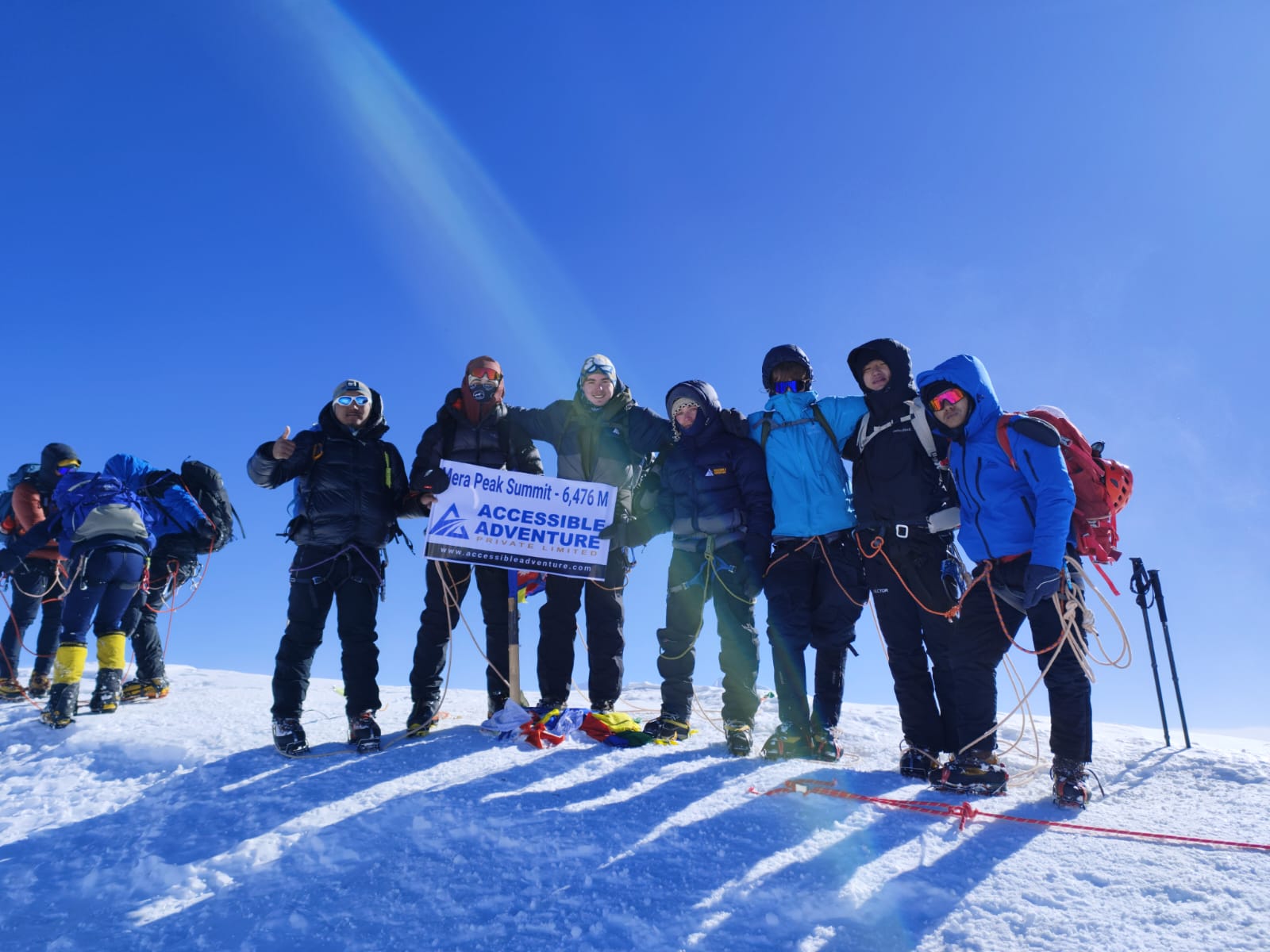
Summit attempts begin around 2:00 AM to reach the top before afternoon winds arrive. By 9:00 to 10:00 AM, most teams stand on the summit in extraordinary morning light. The combination of altitude, early hours, and the scale of the view around you makes summit morning on Mera Peak something that stays with climbers long after they get home.
Mera Peak Planning & Cost Breakdown
Mera Peak Permit Costs
Nepal Mountaineering Association (NMA) Permit
The NMA issues the official climbing permit for Mera Peak. Costs vary by season. In spring (March to May), the permit runs USD 250 per person. In autumn (September to November), it drops to USD 125. For winter or summer climbers, the fee is USD 70 per person.
Makalu Barun National Park Entry Fee
Mera Peak sits inside Makalu Barun National Park, and entry requires a park permit. This is arranged through your trekking operator as part of the standard package.
Local Municipality Permit
The Khumbu Pasang Lhamu Rural Municipality charges an entry fee for the Everest region. This currently runs around USD 20 per person and is also arranged through your operator.
Seasonal Permit Price Differences
Spring carries the highest permit fees because it is peak climbing season. Autumn is a cost-effective alternative with only slightly different weather. All permit applications must go through a registered trekking agency. The NMA does not issue permits to individual climbers directly.
Total Mera Peak Climbing Cost
Budget Climbing Package
Budget guided packages typically start from around USD 1,700 to USD 2,000 per person. These trips run with larger group sizes and more basic services, but they cover the core logistics of the expedition.
Standard Guided Expedition
Most of our clients choose a standard guided expedition, which runs between USD 2,500 and USD 3,500 per person. This range covers all permits, round-trip domestic flights between Kathmandu and Lukla, teahouse accommodation during the trek, tents at high camp, all meals throughout, a certified climbing guide, porters, and standard group equipment.
Premium Luxury Climbing Package
Premium packages with private guides, smaller group sizes, and better Kathmandu accommodation can reach USD 4,000 to USD 4,500 and above. Group size is often the biggest driver of per-person cost. Solo climbers pay more because fixed costs are divided by one. Groups of four to eight generally see the best per-person rates.
What's Included in a Guided Expedition?
A properly organized Mera Peak package should include:
- All permits: NMA climbing permit, national park fee, TIMS card, and municipality permits
- Round-trip domestic flights between Kathmandu and Lukla
- All ground transport in Kathmandu
- Accommodation and all meals throughout the trek and climb
- A licensed, NMA-certified climbing guide
- Porters to carry group gear
- Group climbing equipment including ropes, high camp tents, and cooking supplies
- Rescue support planning and communication equipment
Personal climbing gear such as harness, crampons, ice axe, and mountaineering boots is usually not included. Most operators in Kathmandu offer quality rental for reasonable daily rates.
Additional Expenses to Budget For
Travel Insurance
High-altitude helicopter rescue insurance is non-negotiable for this expedition. Standard travel insurance typically does not cover rescue above 4,000 to 5,000 meters. Make sure your policy explicitly covers helicopter rescue at 6,000 meters. Budget around USD 100 to USD 200 for a comprehensive policy.
Personal Climbing Equipment Rental
Renting crampons, ice axe, sleeping bag, and other personal gear in Kathmandu's Thamel area runs roughly USD 5 to USD 20 per item per day. If you're renting most of your kit, plan for USD 100 to USD 200 across the expedition.
Tips and Gratuities
Guide and porter tips are standard practice and an important part of fair compensation for the team. A widely used guideline is USD 150 to USD 250 per client for guides and USD 75 to USD 100 for porters, spread across the group.
Emergency Rescue Coverage
International flights to Kathmandu and Nepal visa fees are separate from any climbing package. The Nepal visa costs USD 30 for 15 days or USD 50 for 30 days, available on arrival at Tribhuvan International Airport.
Mera Peak Itinerary Options
Classic Mera Peak Itinerary (17-18 Days)
The standard itinerary gives you proper acclimatization time and carries the best summit success rate. Here is how the route unfolds.
Kathmandu to Lukla
Days one and two are spent in Kathmandu handling permits, gear checks, and team briefings. Day three is the flight to Lukla (2,840m), followed by the first trek south toward Paiya (3,100m). The route immediately diverges from the EBC trail, heading into deep forest and through small Sherpa settlements.
Trek Through Hinku Valley
Days four and five cross the Khari La and Pangkongma La passes before descending into the Hinku Valley. Days six and seven push through Kothe (3,600m) and deeper into the valley, with the terrain shifting from forest to alpine. The first clear views of Mera Peak appear on this stretch. Day eight reaches Thangnak (4,356m), passing a 200-year-old gumba along the way.
Day nine climbs to Khare (5,045m) across glacial moraine. Khare serves as base camp for the climb. The northern face of Mera Peak dominates the view from the teahouses here.
Acclimatization at Khare
Day ten is a full acclimatization day at Khare. Guides run climbing training covering crampon use, ice axe technique, and rope management on the glacier above the village. This day is not optional. Skipping it reduces both safety and summit success rates significantly.
High Camp and Summit Push
Day eleven is the move to Mera High Camp at roughly 5,780 to 5,800 meters. The camp sits on a rocky outcrop with sweeping views of the surrounding peaks. Day twelve is the summit attempt. The alarm goes off at 2:00 AM. After a warm drink, the team ropes up and crosses the glacier by headlamp. The final 40 to 50 meters to the summit involve fixed rope and require a jumar. Most teams reach the summit between 9:00 and 10:00 AM, then descend to Khare for the night.
Return to Kathmandu
Days thirteen through seventeen or eighteen cover the return trek through the Hinku Valley back to Lukla, then a flight to Kathmandu and a final overnight before international departure.
Short Mera Peak Itinerary (14-15 Days)
Helicopter-Assisted Approach
Some operators run shorter itineraries using a helicopter to cover part of the lower approach, bypassing some of the early trekking sections. This reduces travel time but also cuts the gradual acclimatization that the longer route provides naturally.
Faster Summit Strategy
The 14-day version suits climbers who are already well-acclimatized from a recent high-altitude trip, or those returning to the peak a second time. For most first-timers arriving from sea level, the additional days in the classic route are worth having.
Extended Mera Peak Expeditions
Mera Peak with Amphu Lapcha Pass
For teams with technical climbing experience, Mera Peak can be combined with a crossing of the Amphu Lapcha Pass (5,845m), which links the Hinku Valley with the Khumbu. This pass requires roping up and belaying sections and should only be attempted with an experienced, well-equipped team.
Mera Peak and Island Peak Combination
Combining Mera Peak and Island Peak in a single trip is popular with serious climbers. The full circuit typically runs 26 to 30 days and gives you high-altitude experience on two very different mountains. Mera is the endurance test; Island Peak is the technical challenge.
Mera Peak and Everest Base Camp Adventure
Mera Peak can also serve as a complement to an Everest Base Camp trip, either before or after the famous EBC route. Combining the two gives you both the iconic base camp experience and a genuine summit.
Sample Day-by-Day Route Overview
Major Stops and Elevations
The classic route follows this sequence:
- Lukla (2,840m)
- Paiya (3,100m)
- Panggom (3,100m)
- Ningsow (3,800m)
- Chhatra Khola (3,100m)
- Kothe (3,600m)
- Thangnak (4,356m)
- Khare / Base Camp (5,045m)
- Mera High Camp (5,780m)
- Summit: Mera Central (6,461m) or Mera North (6,476m)
Mera Peak Preparation Guide
Physical Fitness Requirements
Cardiovascular Training
Summit day on Mera covers roughly 12 kilometers round-trip from high camp and takes 10 to 12 hours, at altitudes where your body receives about half the oxygen available at sea level. Cardiovascular fitness is the single most important thing you can build before the expedition.
Running four to five times a week, building up to 45 to 60-minute sessions, is probably the best general preparation. Add elevation wherever possible. Stair climbing with a loaded pack, cycling, and swimming all help build the aerobic base you need.
Strength Training
Leg and core strength matter considerably on long days with a heavy pack. Squats, lunges, step-ups, and deadlifts build muscular endurance for the sustained effort involved. A strong core also helps with balance on uneven glacier terrain.
Recommended 12-Week Training Plan
Start at least three to six months before your departure date. The first month should focus on building a base of aerobic fitness and general strength. Months two and three increase intensity and volume, with regular loaded hikes and interval training. In the final month, taper the intensity and focus on recovery while maintaining fitness. If you can fit in a multi-day trekking trip at altitude before Mera, even better.
Technical Skills and Climbing Knowledge
Basic Ice Axe Techniques
You'll need to use an ice axe for balance on steep snow and to arrest a potential fall. The guide-led training day at Khare covers this, but understanding the basic self-arrest position before you arrive is helpful. Watch videos and practice the grip and body position at home.
Fixed Rope Usage
The summit section involves clipping onto a fixed rope and using a jumar (ascender) to pull yourself up steep terrain. This technique is straightforward but requires practice with gloves on, since that's how you'll be doing it in the cold.
Crampon Walking Skills
Walking in crampons on glacier terrain requires adjusting your stride to avoid snagging points on clothing or other leg. The flat-footed, deliberate technique needs a bit of practice. Your guide will walk you through it on the glacier above Khare before the summit push.
Essential Packing List
Clothing System
The layering system needs to cover warm forest trekking at 2,000 to 3,000 meters, cold alpine terrain at 4,000 to 5,000 meters, and summit conditions where temperatures at high camp can hit -20°C to -25°C.
Base Layers
Two moisture-wicking long-sleeve base layers in merino wool or synthetic fabric. These go against your skin and need to move sweat away efficiently.
Insulation Layers
A mid-layer fleece, a waterproof hardshell jacket and trousers for the trek, and a heavyweight down jacket (minimum 900g fill, with hood) for high camp and summit. Insulated down trousers are essential above base camp.
Summit Gear
Warm gloves and a separate pair of heavier overmitts for the summit push. A balaclava and warm hat. Gaiters to keep snow out of your boots. Double or expedition-grade mountaineering boots that are compatible with crampons.
Climbing Equipment
Core technical items include:
- Harness: an adjustable climbing harness that fits over insulated clothing
- Crampons: 12-point steel crampons with anti-balling plates, fitted to your mountaineering boots
- Ice Axe: a standard alpine axe of appropriate length for your height
- Helmet: a lightweight climbing helmet for the glacier and summit sections
- Carabiners: at least two locking and two non-locking carabiners
- Jumar / Ascender: for fixed rope sections on the summit push
- Prussic cord: 6mm for backup attachment
Most of this equipment is available for rent in Kathmandu's Thamel area. Check rental gear carefully before leaving the city.
Altitude Sickness Prevention
Acclimatization Strategies
The classic Mera Peak itinerary is designed around gradual altitude gain. The general principle is to climb high and sleep low, ascending to higher elevations during the day and returning to lower camp for sleep. The classic route builds this in naturally, and the dedicated acclimatization day at Khare is particularly important before the summit push.
Hydration Guidelines
Drink three to four liters of water per day throughout the expedition. At altitude, dehydration intensifies AMS symptoms. Avoid alcohol entirely above base camp. Limit caffeine at higher elevations.
Recognizing AMS Symptoms
Acute Mountain Sickness (AMS) typically begins with a persistent headache, nausea, fatigue, and loss of appetite. These symptoms are common at new elevations and often resolve within 24 to 48 hours with rest and hydration. Watch for signs that things are getting worse rather than better.
Emergency Response Procedures
High Altitude Pulmonary Edema (HAPE) and High Altitude Cerebral Edema (HACE) are serious and potentially fatal. Signs include a persistent wet cough, confusion, inability to walk in a straight line, or a severe headache that does not respond to ibuprofen. These require immediate descent. Do not wait until morning. Your guide is trained to recognize and act on these signs. Trust that judgment.
Some climbers use Acetazolamide (Diamox) as a preventive medication for AMS. Consult a doctor before taking it. It can help but has side effects and is not a substitute for proper acclimatization.
Best Time for Mera Peak Climbing
Spring Season (March-May)
Weather Conditions
Spring weather on Mera Peak becomes increasingly stable through April. Temperatures are moderate by Himalayan standards, and the lower approach trail through rhododendron forests is in full bloom in late March and April, making the trek to Lukla and beyond particularly beautiful.
Visibility and Summit Success Rate
April and early May offer excellent summit visibility. Permit fees are at their highest in spring, reflecting the premium season. Most fixed departures from operators in Kathmandu run in April and the first two weeks of May.
Autumn Season (September-November)
Stable Weather Patterns
The monsoon ends in late September, leaving the trails freshly washed and the skies often strikingly clear. October is widely considered the best single month for Mera Peak climbing, combining post-monsoon clarity with manageable temperatures. Permit fees are lower than spring, making autumn a slightly more cost-effective choice.
Popular Climbing Period
Autumn is heavily popular across the Khumbu region. Book early if you want a spot on an autumn departure. Temperatures at high camp in October and November can drop to -20°C overnight, so sleeping bag quality matters here.
Winter and Monsoon Considerations
Challenges and Risks
Winter climbing (December to February) is possible but carries significantly greater risk. Temperatures at high camp can fall to -30°C or below. High winds narrow the summit window considerably. Monsoon season (June to August) brings heavy snowfall at altitude, poor visibility, and unstable conditions.
Who Should Attempt Off-Season Climbs?
Winter and monsoon expeditions are not appropriate for first-time climbers. Some experienced alpinists seek winter Mera Peak ascents for the solitude and reduced permit fees. A few operators run carefully managed monsoon trips for teams with prior Himalayan experience. For everyone else, spring or autumn is the right choice.
Choosing the Right Mera Peak Operator
What to Look for in a Climbing Company?
Safety Standards
A reputable operator provides NMA-certified climbing guides, emergency oxygen (for critical situations, not general use), a portable altitude chamber (Gamow bag), two-way radios, and documented helicopter rescue protocols. Ask specifically about each of these before booking.
Guide Qualifications
NMA certification is the baseline. Beyond that, ask how many Mera Peak summits your guide has personally completed, whether they hold a wilderness first aid or wilderness medicine qualification, and how long they've been guiding technical climbs. A guide with fifteen or twenty Mera Peak summits brings experience that simply cannot be faked.
Rescue Support
Rescue access from the Hinku Valley is excellent compared to many remote climbing areas, with helicopter evacuation typically reachable from Khare within a few hours. Your operator should have established relationships with rescue services and clear protocols for initiating a call.
Questions to Ask Before Booking
Group Size
Ask about maximum group sizes and whether your guide ratio changes when groups get larger. A ratio of one guide to two or three climbers on the mountain above Khare is appropriate for a peak like Mera.
Summit Support Ratio
Find out whether additional support staff accompany the team above base camp. Some operators assign a second guide or climbing sherpa to support larger groups on summit day, which significantly improves safety and success rates.
Included Services
Go through the inclusion list line by line. Permits, flights, meals, tents, group gear, and guide fees should all be clearly itemized. Vague language about what's included or excluded is a warning sign.
Why Book a Guided Mera Peak Expedition?
Higher Success Rates
Guided expeditions consistently achieve higher summit rates than self-supported attempts. Beyond the legal requirement to use a registered operator for permits, the practical case for a guide is strong. The route through the Hinku Valley is difficult to navigate in bad weather. Crevasse risk on the glacier requires proper rope team management. These are not situations where improvising is a good idea.
Better Acclimatization Management
A guide who has made this ascent many times knows how to read the signs that a client is struggling and when to slow down, rest, or turn around. That judgment comes from experience, not from reading a guidebook. It's often what separates a successful summit from a dangerous retreat.
Local Expertise and Logistics
Our company has guided climbers on Mera Peak across multiple seasons. Our guides bring deep route knowledge and the kind of careful, patient management that technical altitude objectives demand. We handle every logistical detail from your arrival in Kathmandu to your return flight home.
Conclusion
Mera Peak is one of the finest introductions to Himalayan mountaineering available. The route is remote and genuinely beautiful. The acclimatization profile is forgiving when managed carefully. The technical demands are achievable for fit, motivated first-time climbers. And the summit view, on a clear morning, is among the most extraordinary things a person can witness.
It requires serious preparation, realistic planning, and the right team behind you on the mountain. Given those things, the summit success rate is high, and the experience tends to stay with people for a long time afterward.
If you're considering a Mera Peak expedition, we're glad to help you plan it properly. Our team runs expeditions in both spring and autumn, with fully certified guides, complete logistics, and a track record of responsible, high-success operations.
Get in touch with us to talk through your experience level, travel dates, and budget. We'll put together an itinerary that gives you the best possible chance at that summit panorama.
Frequently Asked Questions
Most guided Mera Peak expeditions run between USD 1,700 and USD 4,500 per person, depending on the package type, group size, and season. Standard guided trips, which are the most common choice, typically fall in the USD 2,500 to USD 3,500 range and cover permits, domestic flights, accommodation, meals, and guide fees. Premium private expeditions run higher. Budget packages start at the lower end but involve larger groups and fewer included services.
Mera Peak is rated Alpine Grade PD (slightly difficult) and is manageable for fit trekkers who have no prior technical climbing experience. The altitude is the main challenge, not the technical terrain. With proper training before the trip, adequate acclimatization days built into the itinerary, and a certified guide, summit success rates for well-prepared climbers consistently run between 80 and 90 percent.
Three permits are required. The NMA trekking peak climbing permit (USD 250 in spring, USD 125 in autumn, USD 70 in winter and summer), the Makalu Barun National Park entry permit, and the local municipality permit for the Khumbu region. All must be arranged through a registered trekking agency. The NMA does not issue permits to individual climbers.
Plan for 17 to 18 days total, including travel from Kathmandu, the trek approach through the Hinku Valley, acclimatization days, summit attempt, and return. A shorter 14-day version is available with a helicopter approach, but this suits climbers who are already well-acclimatized. For most people arriving from sea level, the longer itinerary provides meaningfully better acclimatization and higher summit success rates.
Spring (March to May) and Autumn (September to November) are the two main climbing windows. October is widely considered the best single month, combining post-monsoon clarity with stable weather. April and early May are also excellent. Winter and monsoon seasons are possible but carry considerably greater risks and lower success rates.
No prior technical climbing experience is required, but previous high-altitude trekking experience is strongly recommended. If you haven't trekked above 4,000 meters, consider completing the Annapurna Base Camp or Everest Base Camp trek first, then tackle Mera Peak in a subsequent season. The altitude on Mera is the primary challenge, and knowing how your body responds above 4,000 meters is genuinely useful preparation.
They're challenging in different ways. Mera Peak is higher (6,476m versus Island Peak's 6,189m) and more physically demanding because of the altitude and long summit day. Island Peak requires more technical skills, particularly on the steep 45 to 50-degree headwall below the summit where climbers use fixed rope, jumar, and crampons on exposed ice. Many climbers attempt Mera Peak first to build high-altitude experience before moving on to Island Peak.
Yes, but the word 'beginner' here means someone who is physically fit, has previous experience trekking at altitude, and is committed to three to six months of serious training before the expedition. With an NMA-certified guide, a proper acclimatization schedule, and the right preparation, first-time Himalayan climbers summit Mera Peak successfully every season. The mountain is accessible to motivated, prepared people. It rewards those who take the preparation seriously.
About Accessible Adventure
Bringing unforgettable Himalayan adventures to everyone. Our expert guides and carefully curated experiences ensure that everyone can explore the beauty of Nepal, Tibet, and Bhutan.
Learn More