Why Choose Upper Dolpo Trekking?
Last updated
A Trek That Very Few Trekkers Ever Attempt
Fewer than a few hundred international trekkers reach Upper Dolpo in any given year. The numbers have not grown substantially since the region was first opened to foreign visitors in 1988. That low footfall is not an accident. The Upper Dolpo Circuit requires more time, more money, and more physical capacity than any other standard trekking package in Nepal. The permit alone costs USD 500 per person for the first ten days, a deliberate policy set by the Nepalese government to limit tourist density in a region considered too fragile and too culturally significant for mass tourism.
Those filters do their job. What you find when you arrive is a landscape and a culture that have largely run on their own terms for centuries. No road connects the interior villages to the outside world. The high passes close with snow for much of the year. The people who live here, often called Dolpo-pa, have adapted over generations to one of the most demanding living environments on the planet, building their stone houses into cliff faces, farming at altitudes that would stop most crops, and maintaining religious traditions that trace back to before Buddhism reached the Himalayas.
The Upper Dolpo Circuit covers approximately 244 to 247 kilometers on foot over the central trekking days. It crosses three major passes: Kang La at 5,360 meters, Saldang La at 5,200 meters, and Jeng La at 5,090 meters. It passes Phoksundo Lake, the deepest alpine lake in Nepal, and it ends at Shey Gompa, the spiritual heart of the entire Dolpo region, before looping back through the remote northern villages and returning via the long descent to Juphal. It is a full journey through one of the least-visited corners of Asia.
What Makes the Upper Dolpo Circuit Different
Most Nepal treks ask you to choose between mountain scenery and cultural depth. The Upper Dolpo circuit offers both without compromise. The landscapes here shift every few days in ways that keep the experience visually fresh for three weeks. You walk through dense pine gorges below 3,000 meters, then cross into open plateau country that feels closer to the Tibetan tableland than to anything in the rest of Nepal. The rain shadow created by the Dhaulagiri massif means the inner valleys receive very little monsoon precipitation, giving them a stark, dry character unlike anything on the southern side of the Himalayan range.
The cultural layer is equally distinct. The dominant religion in the interior villages is not Tibetan Buddhism but Bon, the older spiritual tradition from which some Buddhist practices eventually derived. In Saldang, the largest village in Upper Dolpo, and in the settlements around Shey Gompa, you are walking through living Bon communities. The monasteries here are active, the monks are young as well as old, and the festivals are observed by the full village rather than for tourist visitors. The distinction is real and noticeable if you spend time in the places rather than just passing through.
Highlights of the Upper Dolpo Circuit Trek Package
-
Kang La Pass (5,360 m): The highest point of the circuit and one of the highest trekking passes in Nepal. The crossing requires an early start and sustained climbing, but the views from the summit span the entire western Himalayan arc.
-
Shey Gompa and Crystal Mountain: An 800-year-old monastery at the base of a peak whose cliffs are coated in quartz crystal and embedded with marine fossils. This is the destination that Peter Matthiessen described in his 1979 book 'The Snow Leopard,' widely regarded as one of the finest nature travel books in English.
-
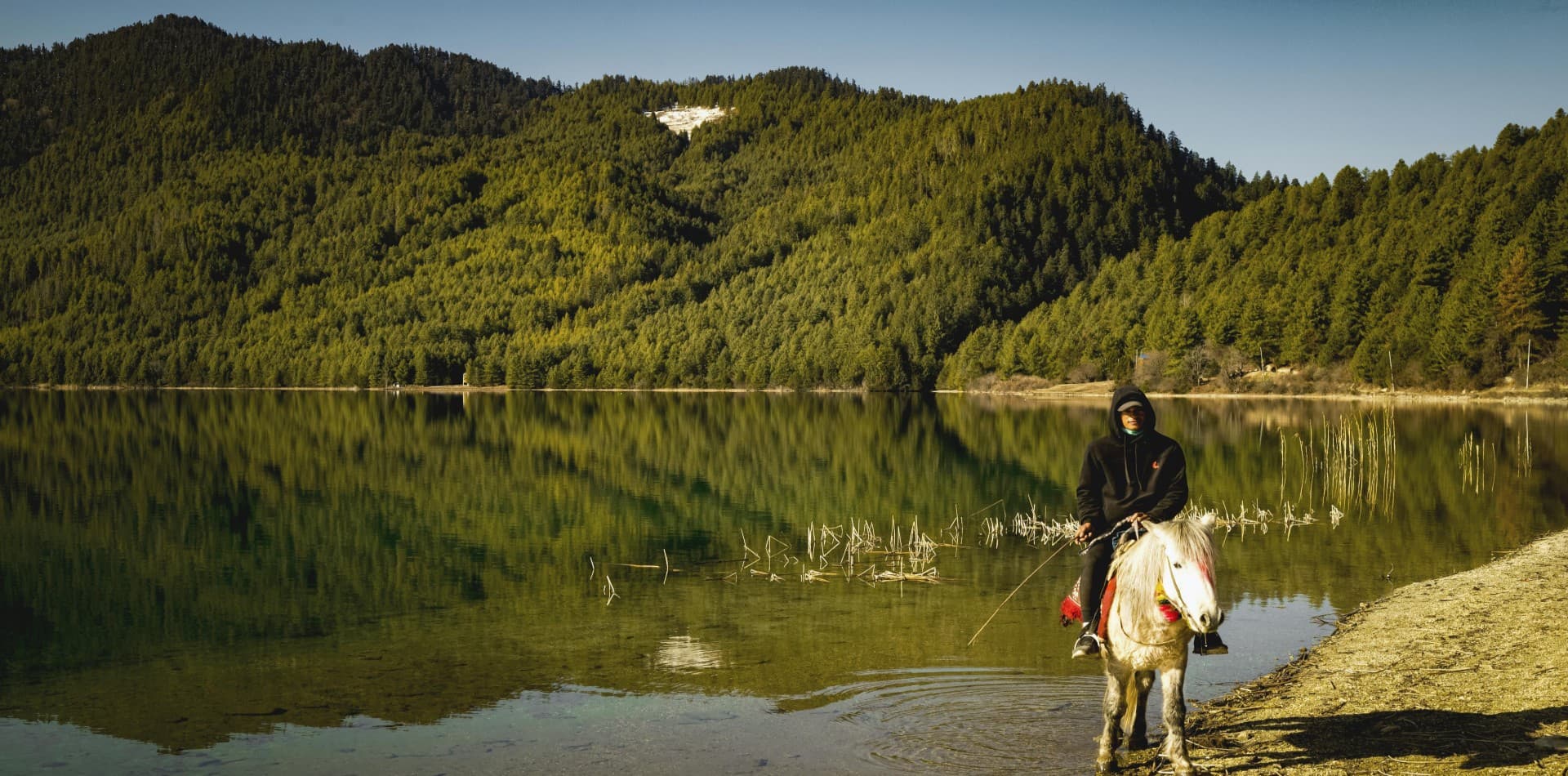
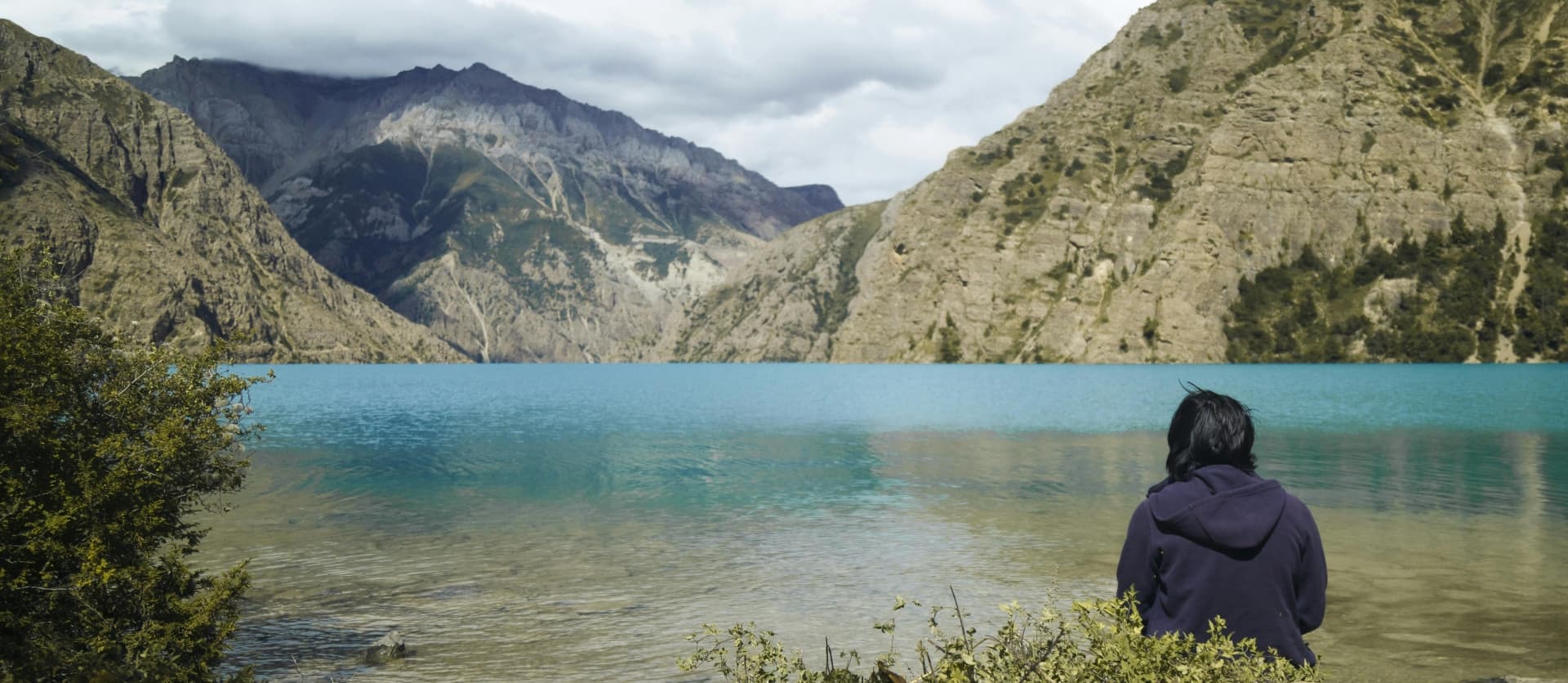
Phoksundo Lake (3,611 m): Nepal's deepest lake, with water so blue-green it reads as color-saturated even on overcast days. The lake sits within Shey Phoksundo National Park and is sacred to the Bon tradition.
-
Saldang La Pass (5,200 m): The second major crossing of the circuit, reached from the spiritual enclave of Shey Gompa, connecting the inner Dolpo plateau to the northern network of villages that lie beyond.
-
Jeng La Pass (5,090 m): The third and final high pass on the circuit, dropping from the northern plateau back into the Tarap Valley and the culturally rich settlement of Dho Tarap.
-
Saldang Village: The largest and most substantial settlement in Upper Dolpo, sitting on a wide plateau at around 3,900 meters with views of Shey Shikhar and Kang Chunne. The village maintains active Bon and Chaiba Buddhist religious practices in parallel.
-
Yangze Gompa: A Bon monastery north of Saldang reached by following the Nagon Khola through barren terrain. The gompa houses centuries-old art and ritual objects rarely encountered outside this region.
-
Namdo and Sibu Villages: Prosperous villages south of Saldang with terraced fields, mani walls, and chortens that reflect the dense spiritual architecture of northern Dolpo.
-
Dho Tarap Valley (4,080 m): One of the world's highest inhabited settlements, a wide flat-bottomed valley with a tight cluster of stone buildings, multiple Bon monasteries, and a community that preserves ancient textile and agricultural traditions.
-
Full Camping Trek: Unlike routes with teahouse networks, the Upper Dolpo circuit is primarily a camping expedition. The team carries all tents, kitchen equipment, and food for the inner sections, giving you genuine wilderness immersion.
Detailed Journey Breakdown
Kathmandu and the Gateway Flights
The journey begins in Kathmandu with two days devoted to permits, gear checks, and the domestic flight down to Nepalgunj. The double-permit system for Upper Dolpo requires both a Lower Dolpo Restricted Area permit and a separate Upper Dolpo Restricted Area permit. Processing these through the Department of Immigration takes a full morning. The afternoon is typically used for sightseeing or last equipment purchases.
The Approach: Juphal to Phoksundo Lake
From Juphal at 2,320 meters, the first four days follow the Suli Gad River corridor upstream through a sequence of gorge sections, riverside villages, and forested hillsides. The elevation gain is gradual and well-structured, giving the body time to begin its altitude adjustment before reaching the lake. By Day 6 you arrive at Ringmo village and the edge of Phoksundo Lake, a stop that earns a full rest and exploration day. The turquoise water, the gompa on the lakeshore, and the proximity of Shey Phoksundo waterfall make this one of the better rest days in Himalayan trekking.
The Inner Dolpo Core: Kang La and Shey Gompa
Above Phoksundo Lake, the trail enters proper inner Dolpo. The approach to Kang La Pass follows the Phoksundo Khola northward into a high glacial valley where the landscape changes from pine to rock within a few kilometers. The base camp at Phoksundo Bhanjyang sits at around 4,400 meters and gives the body a partial adjustment night before the summit push. The crossing of Kang La at 5,360 meters is the physical and spiritual center of the entire circuit. Shey Gompa is less than a day below on the far side, and the rest day there allows a thorough visit to the monastery, Crystal Mountain, and the surrounding Bon settlement of Shey village.
Northern Villages: Saldang La, Namgung, and Saldang
From Shey, the route crosses Saldang La Pass at 5,200 meters and drops into the northern network of villages that make up the inner plateau population. Namgung, built into a cliff face in red stone, is one of the more memorable overnight stops. Saldang, the largest village in the upper region, sits on an exposed plateau with views north toward Tibet. From Saldang, a full day north along the Nagon Khola reaches Yangze Gompa, where the Bon monastery contains some of the most intact pre-Buddhist ceremonial art in Nepal. The return south through Namdo and Sibu brings you to the base of the final pass.
Jeng La and the Return Through Dho Tarap
The Jeng La crossing at 5,090 meters drops you into the Tarap Valley and the village of Tokyu, which marks the eastern edge of the Upper Dolpo circuit. From here, an easy walk through wetland and meadow brings you to Dho Tarap, where a rest day allows you to explore the Bon monasteries and recover before the long descent back to Juphal. The final trek days retrace the Bheri River corridor, giving you the route in reverse with different light and slightly different energy after 20-plus days in the mountains.
The Return Flight
The circuit closes at Juphal with the short flight back to Nepalgunj and the onward connection to Kathmandu. Three weeks in the mountains tends to make Kathmandu feel overwhelming for the first 24 hours, but the layover day is useful for rest, recovery, and reflection before the international departure.