Why Choose Pikey Peak Trek?
Last updated
The Hidden Himalayan Viewpoint That Rivals Anything in Nepal
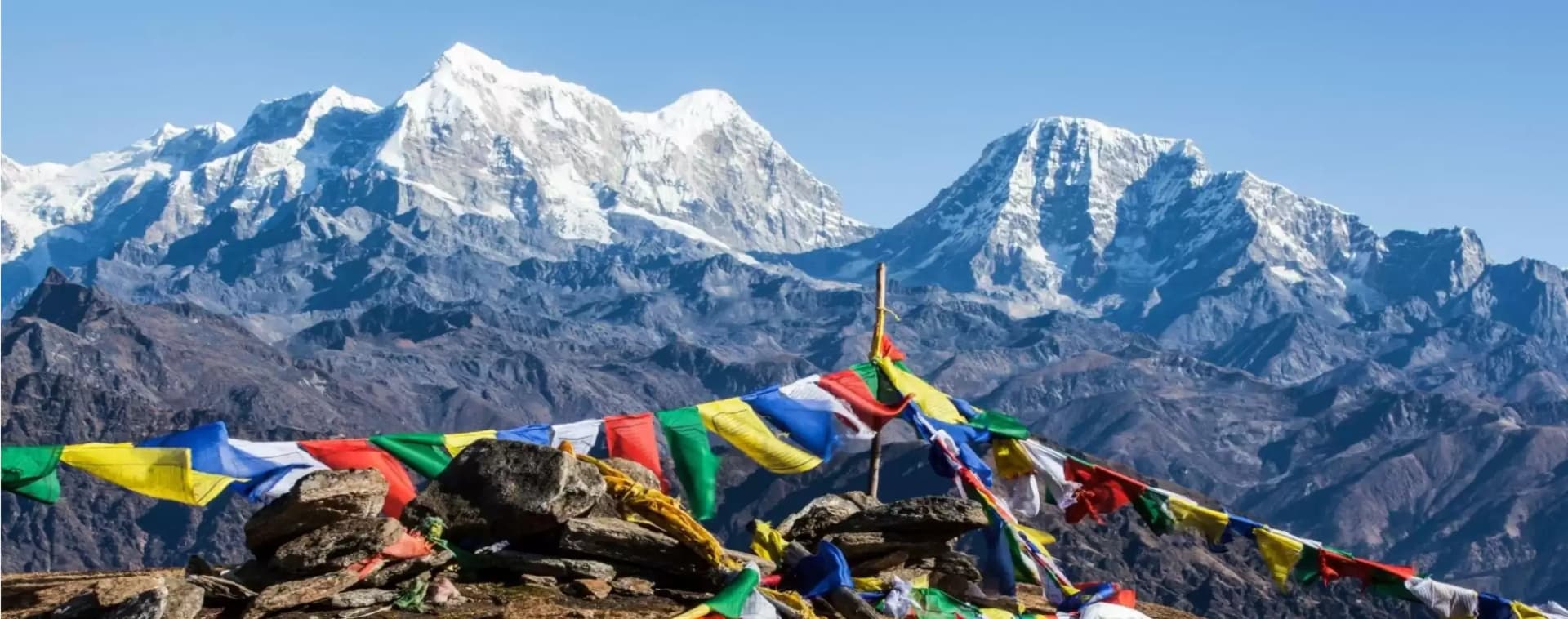
Sir Edmund Hillary, the first man to stand on the summit of Everest, is reported to have said that Pikey Peak offered the finest panoramic view of the Himalayan range he had ever seen. That claim is not made on behalf of every trail in Nepal, and it is not made lightly. From the summit of Pikey Peak at 4,065 meters, on a clear morning in October or late April, you can see five of the world's fourteen 8,000-meter peaks simultaneously: Everest, Lhotse, Makalu, Cho Oyu, and Kanchenjunga. The view stretches from the far east of the Himalayan chain to the west in a continuous arc of high ice and rock that is very difficult to see from any other single accessible point in Nepal.
The fact that Pikey Peak remains largely off the radar of mainstream trekking is one of its most significant attributes. The Everest Base Camp route draws tens of thousands of trekkers each season. The trail from Lukla to Namche on a busy October day can feel more like a mountain highway than a wilderness experience. Pikey Peak sits in the Solu Khumbu district, south and west of the Lukla flight corridor, in a section of the region that sees a fraction of the foot traffic. You reach it by road from Kathmandu and then by a short two-day approach through rhododendron forest and high ridgelines. You will share the trail, if you share it at all, with local Sherpa and Rai villagers going about their daily routines rather than with columns of international trekkers.
In seven days, this package covers a complete loop: the drive from Kathmandu to the Dhap trailhead, the approach through Japre to the summit, the descent through Junbesi village, and the return via Salleri to Kathmandu. The circuit is logical and well-structured. The driving days are long but they pass through some of the most varied mid-hill scenery in eastern Nepal, and the road from Kathmandu to Salleri has improved considerably over the past decade. The active trekking is concentrated in three days, with the summit day as the clear centerpiece.
What Sets the Pikey Peak Trek Apart
The most obvious distinction is the viewpoint itself. Pikey Peak sits on the southern edge of the Solu Khumbu in a position that gives an unusually wide sightline to the main Himalayan range because there are no intervening ridgelines blocking the northern view. Peaks that are hidden from viewpoints further east become visible from Pikey because the geometry of the landscape opens up from this southwestern angle. Kanchenjunga, for instance, which is rarely seen from the standard Khumbu trekking routes, appears clearly from Pikey Peak on a clear day to the far east.
The Solu region through which the trek passes also has a cultural character distinct from the Khumbu. Junbesi, the overnight village on the descent from the summit, is one of the most prosperous and culturally intact Sherpa villages in Nepal. The Thubten Choling Monastery, a short distance from Junbesi, is home to several hundred monks and nuns and is one of the most significant active Tibetan Buddhist institutions in Nepal. The village itself has maintained traditional stone architecture, community-run water mills, and a pattern of agricultural life organized around the monastic calendar.
The trek is also notable for its accessibility. No domestic flight is required: the drive to Dhap is long but manageable in a full day. No prior high-altitude experience is necessary: the summit at 4,065 meters is achievable by any reasonably fit person with appropriate preparation. No technical skills are needed. The combination of spectacular views, low crowds, genuine cultural encounters, and a compact seven-day structure makes this one of the most efficient Himalayan trekking experiences available.
Highlights of the Pikey Peak Trek Package
-
Pikey Peak Summit (4,065 m): A ridge-top summit with arguably the widest simultaneous view of 8,000-meter peaks in Nepal: Everest, Lhotse, Makalu, Cho Oyu, Kanchenjunga, and Numbur all visible on a clear morning.
-
Everest Panorama Without the Crowds: The same peaks visible from the standard Khumbu trekking routes, seen from a completely different and arguably wider angle, on a trail that sees a fraction of the visitor traffic.
-
Junbesi Village (2,700 m): One of the most beautiful and culturally intact Sherpa villages in the Solu Khumbu, with traditional stone architecture, community water mills, and a living connection to Tibetan Buddhist traditions.
-
Thubten Choling Monastery: A major active Tibetan Buddhist monastery a short walk from Junbesi, housing several hundred monks and nuns and maintaining one of the most complete collections of Himalayan religious art in Nepal.
-
Rhododendron Forests: The approach through Japre and the base camp trail pass through some of the most extensive rhododendron forest in eastern Nepal, spectacular in bloom during March and April.
-
Solu Khumbu Sherpa Culture: The villages of Japre, the base camp area, and Junbesi are Sherpa communities whose cultural practices, architecture, and daily rhythms reflect the specific character of the Solu rather than the more Westernized Khumbu closer to Lukla.
-
No Flight Required: Unlike most Khumbu treks, the Pikey Peak route is entirely road and foot accessible from Kathmandu, eliminating the weather-dependent Lukla flight and its associated delays.
-
Numbur Himal (6,957 m): The highest peak of the Solu Khumbu district, prominent from the summit and the base camp ridge, with a mountain face that catches the morning light dramatically.
-
Sunrise from Pikey Peak: The summit is specifically positioned for a pre-dawn start that catches the Himalayan range in the first light of day, a moment that most experienced Himalayan trekkers describe as one of the most memorable of their trekking careers.
Detailed Journey Breakdown
Kathmandu: Arrival and Cultural Foundation
Day 1 in Kathmandu is more than a logistics stop. A guided cultural sightseeing tour covers Pashupatinath Temple, Boudhanath Stupa, and the Patan Durbar Square, giving the trek a cultural grounding that extends the overall experience beyond pure mountain scenery. These sites represent three distinct dimensions of Nepali heritage: Hindu pilgrimage, Tibetan Buddhist tradition, and Newari civic architecture.
The Drive to Dhap and the First Trek Section
Day 2 is the longest single travel day of the trip: a seven to eight-hour drive east from Kathmandu through the Solu Khumbu foothills to Dhap, the trailhead village, followed by a three to four-hour walk to Japre at 2,920 meters. The drive itself passes through the mid-hills of eastern Nepal, climbing out of the Kathmandu valley, passing through Solu district market towns, and reaching the higher country where the road begins to give way to trail. Japre is a small settlement with teahouse accommodation and views that hint at what is coming the next day.
The Approach to Pikey Peak Base Camp
Day 3 is the approach day through the primary forest section of the trek. The trail from Japre to the base camp at 3,640 meters passes through dense rhododendron and oak forest, gaining altitude steadily through a landscape that transforms from mixed deciduous lower forest to high-altitude conifer and rhododendron above 3,000 meters. The base camp sits on an open ridge with wide views that provide the first clear sightlines to the surrounding peaks.
Summit Day and Descent to Junbesi
Day 4 is the centerpiece of the trek. A pre-dawn start from base camp reaches the Pikey Peak summit at 4,065 meters in time for the sunrise panorama. The summit view on a clear morning is one of the finest in Nepal. The descent after sunrise leads all the way down to Junbesi at 2,700 meters, a long but rewarding day that moves through forest, high pasture, and the final approach to the valley floor where Junbesi sits.
Junbesi to Salleri and the Return Drive
Day 5 follows the lower valley trail from Junbesi to Salleri, the district headquarters of the Solukhumbu district, passing through traditional Sherpa settlements and cultivated terraces. Day 6 is the drive from Salleri back to Kathmandu, retracing the road network through the Solu hills. Day 7 is the international departure.


