Why Choose Everest Panorama Trek?
Last updated
The Most Spectacular Short Trek in the World
There is no mountain on earth that carries the weight of meaning that Everest does. At 8,849 meters, it is the highest point the planet offers, and the surrounding Khumbu region has drawn climbers, trekkers, writers, and photographers for over seven decades. The Everest Panorama Trek gives you a direct, unhurried encounter with this world in nine days, without requiring months of preparation, technical climbing skills, or the stamina needed for the full base camp route.
The route follows the classic Khumbu valley path from Lukla to the ridgeline above Namche Bazaar, continues to Khumjung village and the legendary Hotel Everest View, and pushes on to Tengboche Monastery before looping back to Lukla along the same trail corridor. Maximum altitude reached is 3,880 meters at the Hotel Everest View, a point high enough to deliver unobstructed sightlines to Everest, Lhotse, Ama Dablam, Nuptse, Thamserku, and Kantega without crossing into the altitude zones that demand extended acclimatization.
Nine days is the kind of window that fits into a standard international trip without consuming an entire annual leave. You fly in, walk through the most iconic mountain landscape on the planet for six active days, and fly back with photographs and a physical memory of the Himalayas that no amount of looking at pictures can replicate. The trail is well-established, the teahouses are comfortable by mountain standards, and the Sherpa guides who lead it have grown up in these valleys and know every section in every weather condition.
What Makes This Trek Distinct
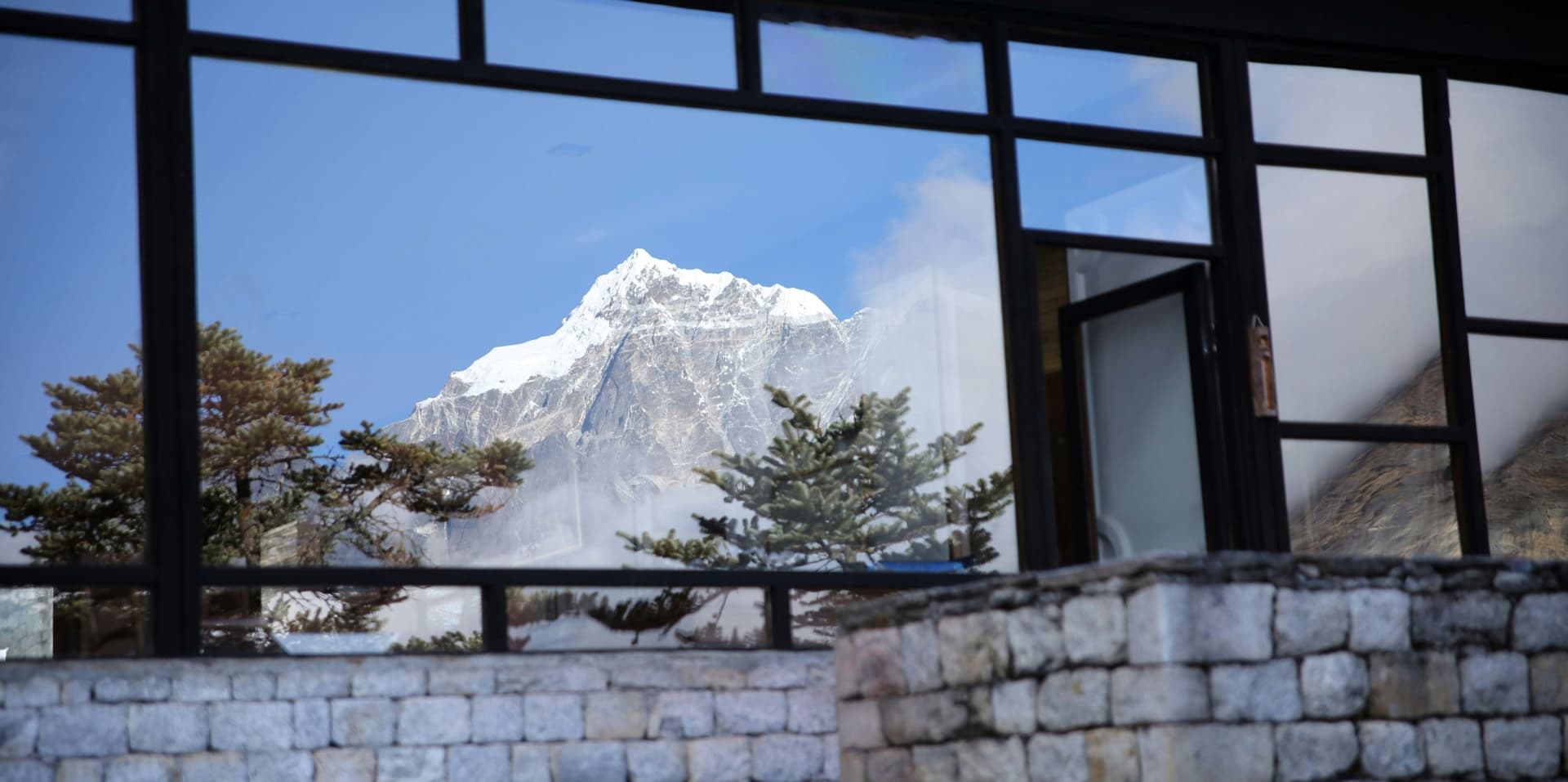
Short treks in popular mountain regions sometimes feel abbreviated, as though the interesting parts have been cut out to fit the time. The Everest Panorama Trek is different. The route was designed around the highest-quality viewpoints in the Khumbu, not simply the shortest path. The detour through Khumjung and the Hotel Everest View is the centerpiece of that design. From the terrace of this hotel at 3,880 meters, you look directly at the summit of Everest above the South Col, with Lhotse and Nuptse flanking it on either side and Ama Dablam rising sharply to the southeast. On clear mornings, the view is one of the finest mountain panoramas accessible on foot anywhere in the world.
Tengboche Monastery adds a cultural dimension that distinguishes this trek from a purely scenic route. The monastery sits on a forested ridge at 3,860 meters with views in multiple directions and a resident monastic community that has operated here, with one significant interruption caused by a fire in 1989, since 1916. The prayer hall, the thangka collection, the sound of the monks' ritual schedule, and the evening light on the surrounding peaks make Tengboche one of the most memorable overnight stops on any Himalayan trek.
Namche Bazaar deserves its reputation as the capital of the Khumbu. Saturday market day draws traders and buyers from dozens of surrounding villages. The cafes, gear shops, bakeries, and monasteries that line the semicircular main street of Namche reflect the town's unusual position as both a commercial hub and a gateway to some of the highest terrain on earth. A half-day spent walking through Namche is a useful orientation to Sherpa culture before the higher walking begins.
Highlights of the Everest Panorama Trek Package
-
Tenzing-Hillary Airport, Lukla: The iconic mountain airstrip at 2,840 meters, with a short runway ending at a cliff edge, offering one of the more dramatic arrival experiences in aviation.
-
Sagarmatha National Park: A UNESCO World Heritage Site established in 1976, home to the highest peaks on earth, dense rhododendron and birch forest at lower elevations, and iconic wildlife including snow leopards, musk deer, and the Himalayan Tahr.
-
Namche Bazaar (3,440 m): The main trading center of the Khumbu region, with its distinctive horseshoe layout, Saturday market, Sherpa Museum, and the first clear sightlines to Everest from the hill above town.
-
Hotel Everest View (3,880 m): The highest hotel on this route, built in 1971 and sitting on a ridge above Khumjung with direct views of Everest, Lhotse, Nuptse, and Ama Dablam. This terrace is the visual centerpiece of the entire trip.
-
Khumjung Village (3,780 m): A traditional Sherpa village with a monastery housing what the community claims is a preserved yeti scalp, and the Hillary School, built in 1961 with support from Sir Edmund Hillary and still operating today.
-
Tengboche Monastery (3,860 m): One of the most revered Buddhist monasteries in the Himalayan region, set on a forested ridge with 360-degree mountain views and an active community of monks following a centuries-old monastic schedule.
-
Ama Dablam (6,812 m): The defining peak of the Khumbu skyline, a slender pyramid of rock and ice that appears at almost every viewpoint on this trek and is considered by many mountaineers to be among the most beautiful mountains on earth.
-
Dudh Kosi River Valley: The glacial river corridor that runs from the Khumbu Glacier through the Phakding gorge and down to the Solukhumbu lowlands, with multiple suspension bridges and the characteristic turquoise color of glacial meltwater.
-
Sherpa Culture: The Khumbu is the ancestral homeland of the Sherpa people. Villages like Namche, Khumjung, and Phakding give a genuine window into a culture shaped by altitude, Buddhism, and a long tradition of mountaineering and trade.
Detailed Journey Breakdown
Kathmandu Arrival and Preparation
The trek begins in Kathmandu, where the team handles all permit processing, final gear checks, and the flight booking confirmation for the Lukla sector. One night in Thamel gives you time to sort equipment, exchange currency, and adjust to the time zone before the early morning flight to Lukla.
Flying into Lukla and Descending to Phakding
The 35-minute mountain flight from Kathmandu to Lukla is itself a landmark experience. The aircraft approaches through valleys, passes below ridgelines, and lands on one of the most technically demanding airstrips in civil aviation. From Lukla, the trail descends through forest and riverside villages along the Dudh Kosi River to Phakding, a small settlement that serves as the first proper overnight stop of the trek.
The Climb to Namche Bazaar
The ascent from Phakding to Namche Bazaar is the longest and most demanding day of the trek, a six to seven-hour push that climbs over 800 meters through the Sagarmatha National Park gate at Jorsalle, across the famous Hillary Suspension Bridge, and up a long, steep ridge to the town. The first view of Everest on the final approach to Namche is a moment that most trekkers remember precisely.
Khumjung and Hotel Everest View
Day 4 moves through the high ridge above Namche to the Hotel Everest View and then down to Khumjung village. The morning at the hotel terrace, if the weather is clear, is the single best viewpoint of the entire trip: Everest, Lhotse, Nuptse, and Ama Dablam all visible simultaneously. Khumjung village in the afternoon offers the Hillary School and the monastery with the alleged yeti scalp, two of the more distinctive stops in the Khumbu.
Tengboche Monastery
Day 5 covers the trail from Khumjung eastward to Tengboche, crossing the river at Phunki Tenga and climbing the forested ridge to the monastery. Tengboche is one of the most photographed locations in Nepal, partly because of the monastery architecture and partly because Ama Dablam appears directly behind the main gompa in the eastern view. An overnight here gives access to the morning prayer session.
The Return to Lukla
Days 6 and 7 retrace the route to Lukla, moving at a pace shaped by the familiarity of the path going back. The return takes two days, overnighting at Monjo before the final short push to Lukla. The landscape is identical but the perspective shifts when you are moving downhill and outward rather than up and in.
Departure
The morning flight from Lukla returns you to Kathmandu in 35 minutes. A rest day in the city before your international departure gives time to process the experience, pick up souvenirs from the Thamel market, and recover from the walking before a long-haul flight.