No cancellation fees. No hassle. Book Now, stay relaxed.Cancellation Terms
 Ama Dablam Base Camp Trek

Starting from

USD 1,430/ person
Book Now ↓

Ama Dablam Base Camp Trek

Country

Nepal

Duration

13 Days

Difficulty

Easy to Moderate

Max Altitude

5120m

Style

Trekking | Cultural Immersion | Moderate Himalayan Adventure

Status

March-June & Sept-November

Why Choose the Ama Dablam Base Camp Trek

Few treks in Nepal put you face to face with a mountain quite the way this one does. Ama Dablam, rising to 6,812 meters (22,349 feet) in the Khumbu region of northeastern Nepal, has been called the most beautiful peak in the Himalayas, and the trail to its base camp delivers on every part of that claim. The mountain's name translates from Sherpa as 'Mother's Necklace,' a reference to the hanging glacier on its southwest face that resembles the dablam, a sacred ornamental box worn by Sherpa women. From the ridge above Pangboche onward, the peak fills your field of vision with a sharpness and symmetry rarely found at any altitude. The Ama Dablam Base Camp Trek is a moderate to moderately strenuous journey through the heart of Sagarmatha National Park, reaching the base camp at roughly 4,600 meters (15,092 feet). Unlike the Everest Base Camp trek, which tops out above 5,300 meters, this route stays at a manageable altitude while threading through the same storied valleys, monasteries, and Sherpa communities. The result is a trek that suits a wider range of fitness levels without sacrificing any of the landscape drama. Best attempted in spring (March to May) or autumn (September to November), the trek rewards visitors with stable skies, temperatures between around minus five and plus fifteen degrees Celsius depending on elevation, and the kind of mountain panoramas that appear on the covers of climbing journals. The base camp sits directly beneath Ama Dablam's southwest pillar and offers sweeping views of Lhotse, Everest, Makalu, Nuptse, Kangtega, and Thamserku.

The standard route begins in Lukla after a thirty to forty-minute mountain flight from Kathmandu, then follows the famous Everest trail north through the Dudh Koshi river valley. Villages like Phakding, Namche Bazaar, Tengboche, and Pangboche mark the progression, each one sitting higher than the last and each one bringing the surrounding peaks into sharper focus. From Pangboche, the trail leaves the main Everest highway and climbs east through more isolated terrain toward the base camp meadow. This detour is where the route distinguishes itself. The crowds thin considerably, the trail narrows, and the scale of Ama Dablam's ridgelines becomes genuinely overwhelming. Most itineraries run between eight and thirteen days depending on the pace, acclimatization schedule, and whether a rest day is included at Namche Bazaar. The trek passes through the UNESCO-listed Sagarmatha National Park and visits one of the oldest active Tibetan Buddhist monasteries in the region at Tengboche.

This trek is the right choice for anyone who wants Khumbu scenery and culture without committing to the longer, more altitude-intensive push to Everest Base Camp. It is a practical alternative for people with tighter travel windows and an ideal standalone adventure for those who want to return to Nepal later for a more demanding objective. Whether it is your first time trekking at altitude or you are adding another chapter to a long history with the Himalayas, the path to Ama Dablam's base camp belongs on the list. Book early during peak season, especially October, as teahouses in the lower Khumbu fill quickly.


Why Choose the Ama Dablam Base Camp Trek: 7 Highlights

1. Unmatched Views of Ama Dablam Itself

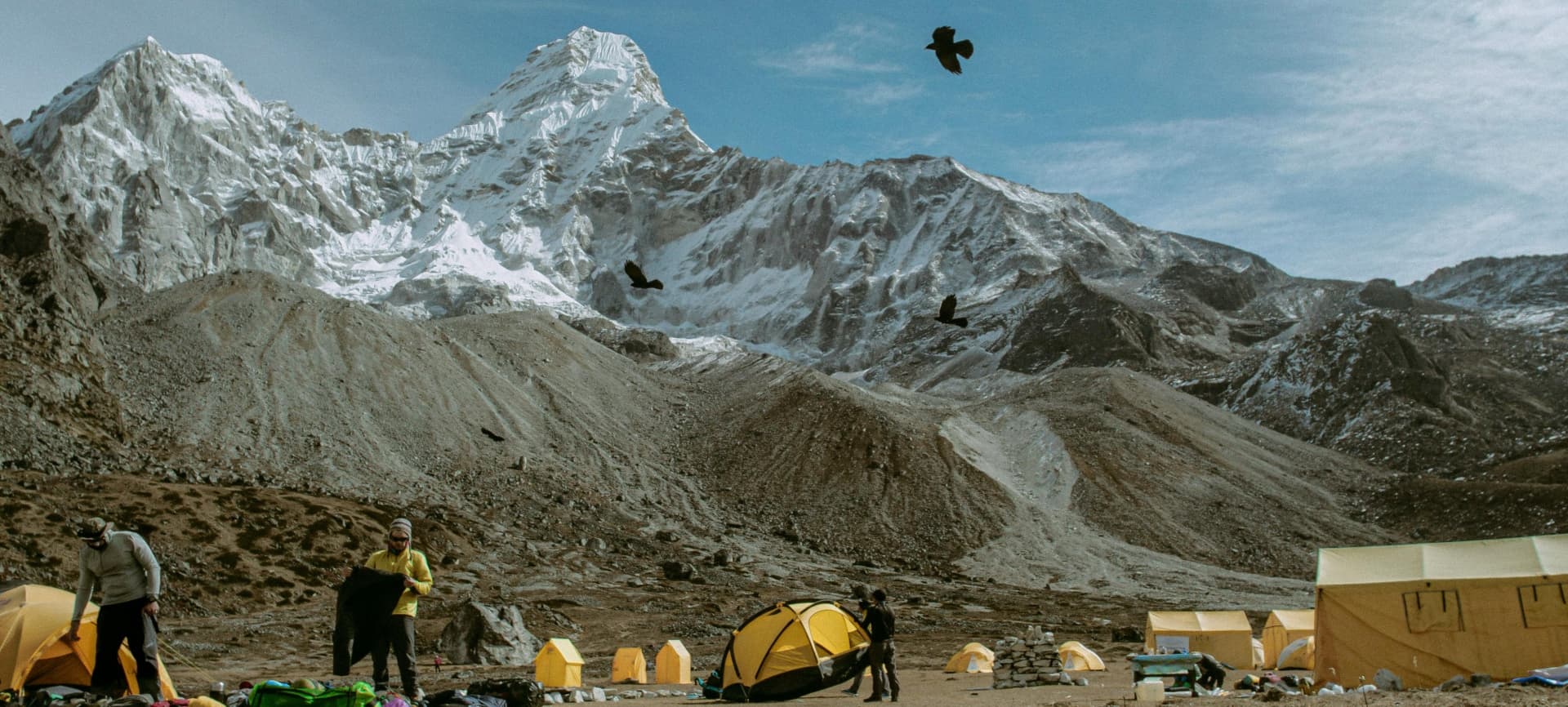
Most Himalayan treks offer views of their target peak from a distance. The Ama Dablam Base Camp Trek closes that gap to something genuinely intimate. By the time you reach the base camp meadow at 4,600 meters, the mountain's southwest face rises directly above you, close enough to make out the individual snow formations and the lines that serious climbers follow toward the summit. No telephoto lens is required. The mountain's pyramid shape, which earned it comparisons to the Matterhorn in the Alps, is most striking from Tengboche and Pangboche, where the entire south face appears as a clean triangle above the valley. Standing at base camp itself, that clean triangle dissolves into a vast wall of rock and ice.

2. A Quieter Alternative to Everest Base Camp

The Everest Base Camp trail handles tens of thousands of trekkers each year during peak season. The section from Pangboche to Ama Dablam Base Camp carries a fraction of that traffic. Past Pangboche, you can walk for hours without seeing another trekking party. Teahouses are fewer and more basic, but the sense of space and the quality of solitude more than compensate. The lower sections of the route, between Lukla and Namche, follow the same busy trail as EBC, so you still experience the lively Sherpa market town culture at Namche before peeling away onto quieter ground.

3. Rich Sherpa Culture and Living Monasteries

The Khumbu is the heartland of Sherpa civilization, and this trek passes directly through villages where that culture is practiced and expressed daily. Tengboche Monastery, founded in 1916 and rebuilt after fires in 1934 and 1989, remains one of the most active and atmospheric religious sites in Nepal. Monks conduct morning and evening ceremonies that visitors are welcome to observe quietly. Pangboche, the village closest to the base camp, holds one of the oldest monasteries in the entire Khumbu, believed to date from the seventeenth century. Prayer flags are strung along every ridge, mani walls mark trail junctions, and the sound of chanting carries down from the hillsides on still mornings. The Sherpa people themselves, known globally for their mountaineering expertise and extraordinary high-altitude endurance, are your guides, porters, and teahouse hosts throughout the journey.

4. Sagarmatha National Park Biodiversity

The trek routes through Sagarmatha National Park, a UNESCO World Heritage Site covering 1,148 square kilometers of rugged mountain terrain. Below the tree line, the trails pass through dense forests of rhododendron, birch, fir, and juniper. In spring, the hillsides between Phakding and Namche turn vivid pink and red when the rhododendrons bloom, a natural display that rivals anything in the region. Wildlife within the park includes the Himalayan tahr, musk deer, snow leopard, red panda, and over 150 recorded bird species, among them the Himalayan Monal, Nepal's national bird. Above the tree line, alpine grasses and mosses give way to rocky moraines and glacial terrain, illustrating the full vertical range of Himalayan ecosystems within a single week's walk.

5. Manageable Altitude Without Sacrificing Scale

Reaching 4,600 meters is a meaningful altitude gain, but it sits well below the threshold where serious acute mountain sickness becomes a common threat for acclimatized trekkers. By contrast, Everest Base Camp at 5,364 meters and Gokyo Ri at 5,357 meters push into territory where the margin for error narrows considerably. The Ama Dablam Base Camp itinerary includes a standard acclimatization day at Namche Bazaar (3,440 meters) with an optional hike to the Hotel Everest View at 3,962 meters, which provides a physiologically sound step before continuing higher. Trekkers who follow the recommended 'climb high, sleep low' principle and stay well-hydrated typically complete the route without serious altitude-related complications.

6. The Iconic Lukla Flight

Tenzing Hillary Airport at Lukla sits at 2,845 meters on a narrow shelf carved into a mountainside. The runway is 527 meters long and slopes upward at about twelve degrees toward a stone wall at the upper end. Aircraft approach over a steep valley and decelerate abruptly against the gradient. It is a short, dramatic, and entirely safe flight in good weather, operated regularly by several Nepali domestic carriers, and it delivers you directly into the mountains in thirty to forty minutes from Kathmandu. Few arrivals at a trekking destination are more memorable or more effective at establishing the sense that something genuinely exceptional is about to begin.

7. Flexibility for Extension or Combination

The Ama Dablam Base Camp Trek shares its route with the Everest Base Camp trail as far as Pangboche, making it straightforward to extend the journey toward Dingboche, Lobuche, and the Everest Base Camp itself for those with additional time. Alternatively, side trips to Khumjung village, the Everest View Hotel, or the Gokyo Valley can be added without returning to Kathmandu. Helicopter returns from Namche Bazaar or Lukla are also available, cutting the descent days if a tighter return schedule requires it. This adaptability makes the trek a versatile anchor for broader Nepal itineraries.


Trip Summary

DayDestination & ActivitiesDistanceTimeMountain Seen
1

Arrival in Kathmandu and Gateway to the Himalayas

10 km30 minsOn a clear day: Langtang Lirung, Ganesh Himal (from flight)
2

Full Day Cultural Sightseeing and Technical Briefing

N/AN/ALangtang Lirung, Ganesh Himal
3

Flight to Lukla and Trek to Phakding

7km (walk)3-4 hrsKusum kanguru
4

Trek from Phakding to Namche Bazaar

12 km6-7 hrsEverest, Lhotse (first glimpse)
5

Mandatory Acclimatization Day in Namche Bazaar

5 km3-4 hrsEverest, Ama Dablam, Thamserku
6

Trek from Namche Bazaar to Tengboche

10 km5-6 hrsAma Dablam, Everest, Nuptse
7

Trek from Tengboche to Pangboche

6 km3-4 hrsAma Dablam close-up
8

The Ascent to Ama Dablam Base Camp and Return to Pangboche

12 km6-7 hrsAma Dablam (dominant)
9

Trek from Pangboche to Phortse Village

7 km4-5 hrsAma Dablam, Thamserku
10

Pangboche or Tengboche to Namche Bazaar (3,440 m)

7 km5-6 hrsEverest, Lhotse, Kongde Ri
12

Final Trek back to Lukla

20 km6-7 hrsKusum Kanguru
13

Fly back to Kathmandu

N/A30 minsHimalayan Rage (from flight)
13

Final Departure and Transfer to Airport

10 km30 minsOn a clear day: Himalayan Ranges (from flight)

Detailed Ama Dablam Base Camp Trek Itinerary

Cost Details

Price Includes

1. Airport & Transportation

  • All airport transfers in a private tourist vehicle (arrival & departure)
  • Domestic round-trip flights: Kathmandu – Lukla – Kathmandu
  • Ground transfers required for sightseeing and trek preparation

2. Accommodation

  • 3 nights in Kathmandu at a 3-star or boutique hotel (twin-sharing, breakfast included)
  • Teahouse/lodge accommodation during the trek (twin-sharing basis)
  • Best available lodges in remote areas with hygienic standards

3. Meals During Trek

  • Full board meals (Breakfast, Lunch, Dinner) during trekking days
  • Freshly prepared local and international dishes (veg/non-veg options available)
  • Seasonal fruits after dinner (where available)

4. Trekking Staff & Support Team

  • Experienced, government-licensed English-speaking trekking guide
  • Assistant guide (for groups above 4 pax)
  • Strong and reliable porters (1 porter for every 2 trekkers)
  • Staff wages, insurance, meals, accommodation, and equipment

5. Permits & Entry Fees

  • Sagarmatha National Park entry permit
  • Khumbu Pasang Lhamu Rural Municipality permit
  • All required trekking permits and documentation

6. Flight & Trek Logistics

  • Lukla flight arrangements and airport assistance
  • Cargo management and porter allocation
  • Sleeping bags and duffel bags (if required)

7. Sightseeing & Cultural Experience

  • Guided sightseeing in Kathmandu Valley with professional city guide
  • Entry fees to major UNESCO heritage sites

8. Safety & First Aid

  • Comprehensive first aid medical kit carried by the guide
  • Pulse oximeter for daily oxygen saturation monitoring
  • Assistance in arranging emergency rescue (covered by client’s insurance)

9. Government Taxes & Service Charges

  • All applicable local taxes, VAT, and service charges included
  • No hidden operational costs

Price Excludes

1. International Travel & Visa

  • International airfare to/from Kathmandu
  • Nepal entry visa fees (available on arrival)

2. Meals in Kathmandu

  • Lunch and dinner in Kathmandu (to allow flexibility for dining preferences)

3. Personal Expenses

  • Tea, coffee, soft drinks, bottled water, and alcoholic beverages during the trek
  • Snacks, desserts, and additional food beyond standard meals
  • Hot showers, Wi-Fi, and charging fees at lodges

4. Travel Insurance (Mandatory)

  • Comprehensive travel insurance covering:
  • High-altitude trekking (up to 5,000m+)
  • Emergency helicopter evacuation
  • Medical expenses and trip cancellation

5. Trekking Gear & Equipment

  • Personal trekking gear (boots, jackets, trekking poles, etc.)
  • Personal clothing and climbing accessories

6. Tips & Gratuities

  • Tips for guide, porter, and driver (customary but not mandatory)

7. Unforeseen Expenses

  • Costs arising from:
  • Flight delays/cancellations (common for Lukla sector)
  • Weather disruptions or natural causes
  • Early return from trek or itinerary changes


8. Optional Upgrades

  • Helicopter return from Lukla or Ama Dablam Base Camp
  • Luxury hotel upgrades in Kathmandu
  • Private guide or single room supplement
Altitude in:
Scroll to view full route

Additional Information

SpO₂ Acclimatization & Monitoring Chart

Day Place Estimated SpO₂ (%) Comment
1 Kathmandu 96–99% Baseline reading at low altitude; no altitude stress
2 Kathmandu (Sightseeing) 96–99% Stable; ideal for pre-trek briefing & hydration prep
3 Lukla → Phakding 92–95% Mild drop begins; body starts adapting
4 Phakding → Namche Bazaar 88–92% Noticeable drop; monitor for mild AMS symptoms
5 Namche (Acclimatization) 90–94% Recovery phase; SpO₂ may improve with acclimatization hikes
6 Namche → Tengboche 86–90% Gradual decline; breathing slightly heavier
7 Tengboche → Pangboche 85–89% Stable but lower; hydration and pacing critical
8 Ama Dablam Base Camp (4,600m) → Pangboche 80–85% Significant drop at ABC; short exposure minimizes risk
9 Pangboche → Phortse 86–90% Slight recovery as altitude decreases
10 Phortse → Monjo 90–94% Strong recovery zone; body re-oxygenates well
11 Monjo → Lukla 91–95% Near-normal levels return
12 Kathmandu 96–99% Full recovery expected
13 Departure 96–99% Exit in a stable physiological condition


A Day in the Life: The Trekking Experience

A typical day on the Ama Dablam trail is structured around the rhythm of the mountains and the needs of physiological adaptation.   

  • Morning Sunrise and Breakfast: The day typically begins around 6:00 AM with the crisp, cold Himalayan air and the sun hitting the peaks of the Khumbu. A hearty breakfast is served between 7:00 AM and 8:00 AM, featuring items like Tibetan bread, porridge, eggs, and hot tea or coffee.   

  • The Trek: Most walking is done in the morning to take advantage of stable weather and clear views. Guides maintain a slow, rhythmic pace to assist with acclimatization.   

  • Lunch: A midday break is taken at a trailside teahouse, where Dal Bhat (rice and lentils) is the most popular energy-rich choice.

  • Arrival and Relaxation: The group usually reaches the next village by mid-afternoon. This time is used for exploration, socializing in the teahouse common room, or documenting the journey through journals and photography.   

  • Evening and Night: Dinner is served around 6:30 PM in the heated dining hall. Afterward, travelers often enjoy stargazing under the dark mountain skies before retiring early to their sleeping bags.   


Difficulty Level: Assessing the Challenge

The Ama Dablam Base Camp Trek is officially graded as a moderate to challenging journey. While it does not require technical climbing skills or equipment like ropes and ice axes, it demands a high level of physical fitness and mental endurance.   

Key Physical Demands

  • Altitude: Trekkers spend the majority of the journey above 3,000 meters, with a maximum elevation of 4,600 meters (15,092 ft) at the base camp. This requires the body to adapt to significantly lower oxygen levels.   

  • Steep Terrains: The trail features two major steep sections: the famous "zig-zag" climb to Namche Bazaar and the final vertical ascent from Pangboche to the base camp.   

Daily Walking: Participants should be prepared to walk for 5 to 7 hours daily, covering distances between 8 and 12 kilometers over rugged, rocky, and often uneven terrain.

Teahouse Culture: Accommodation and High-Altitude Nutrition

A hallmark of trekking with Accessible Adventure is the immersive experience of staying in locally run teahouses. These lodges are more than just hotels; they are the social centers of the mountain community.

Understanding the Teahouse Experience

Rooms are generally simple, providing two twin beds with mattresses, pillows, and blankets. In higher elevations, there is no heating in the sleeping quarters, making a high-quality sleeping bag essential. The common dining hall is the warmest place in the lodge, typically heated by a central stove fueled by yak dung or wood.

  • Hygiene: While lower villages offer attached bathrooms and hot showers, higher lodges may rely on shared squat toilets and bucket showers.

  • Connectivity: Wi-Fi and electricity for charging are available in most teahouses for a fee ($2 to $10), but the speed and reliability decrease with altitude and poor weather.

Sustenance on the Trail

The diet of a trekker is designed for high caloric output and easy digestion at altitude. Freshness is a priority, and most meals are prepared to order.


Meal Type

Popular Menu Items

Nutritional Value

Breakfast

Porridge, Tibetan bread, eggs (any style), pancakes with honey, tea or coffee.

High fiber and slow release carbohydrates for early morning energy.

Lunch & Dinner

Dal Bhat (national dish), Momos (dumplings), Thukpa (noodle soup), pasta, Sherpa stew.

Dal Bhat provides a complete protein and is served with free refills.

Hydration

Garlic soup, ginger lemon honey tea, boiled water, electrolytes.

Garlic soup is a local remedy for altitude acclimatization.

It is a standard health recommendation to avoid meat products above Namche Bazaar, as all meat must be carried up the mountain by porters and may not remain fresh during the long transit.

Geographic and Cultural Landscape of the Khumbu

The trek takes place within the Sagarmatha National Park, a UNESCO World Heritage site recognized for its exceptional natural beauty and its role as the home of the Sherpa people. This region is a sanctuary for rare Himalayan wildlife, including the elusive snow leopard, the red panda, and the Himalayan tahr. The trails traverse diverse ecological zones, transitioning from lush temperate forests of pine and rhododendron to the rugged, barren landscapes of the high alpine zone.

Culturally, the Khumbu is a living museum of Tibetan Buddhism. The influence of religious practice is visible in every mani wall, chorten, and prayer flag encountered along the path. The Sherpa people, who migrated from eastern Tibet centuries ago, have developed a resilient and sophisticated culture centered on the challenges and beauty of the high mountains. Their hospitality is legendary, and the teahouse culture that has evolved along the trekking routes allows visitors to experience this warmth firsthand while enjoying the traditional flavors of the Himalayas.


Optimal Trekking Windows: Seasonal Analysis

The experience of the Ama Dablam Base Camp Trek varies significantly depending on the time of year. Choosing the right season ensures optimal visibility, stable weather, and a comfortable trail environment.

Spring (March to May)

Spring is widely considered one of the two premier windows for trekking in the Khumbu region.

  • Conditions: Temperatures at lower elevations range between 10 C and 15 C during the day, though they can drop below -5 C at the base camp at night.

  • Aesthetics: The landscape is revitalized with blooming rhododendron, magnolia, and wildflower forests.

  • Experience: This is a peak climbing season, so trekkers often have the unique opportunity to witness professional climbing teams preparing for summit attempts at the base camp. Wildlife, including musk deer and Himalayan tahr, are also more active and frequently spotted.

Autumn (September to November)

Autumn is the most popular season for the Ama Dablam trek due to its exceptional stability and clarity.

  • Conditions: The post-monsoon air is crisp and clear, providing the sharpest visibility of the entire year. Daytime temperatures range from 12 C to 16 C at lower altitudes, falling to around -10 C at base camp.

  • Cultural Highlights: The Mani Rimdu festival is typically held at Tengboche Monastery in October or November, offering a vibrant immersion into Sherpa Buddhist rituals and masked dances.

  • Experience: While the trails are busier, the dry, firm ground makes the trekking more manageable.

Winter (December to February)

Trekking in winter is possible but requires advanced preparation for extreme cold.

  • Conditions: Daytime temperatures range from 5 C to -10 C, and nights at base camp can plummet to -25 C.

  • Experience: The main advantage is the profound solitude and the spectacular, snow-draped landscapes. However, high-altitude trails can be blocked by heavy snow, and many teahouses may be closed.

Monsoon (June to August)

The monsoon season is the most challenging time for Himalayan trekking.

  • Conditions: Continuous rainfall makes trails muddy, slippery, and prone to landslides. Cloud cover often obscures the mountain peaks for days at a time.

  • Experience: While the landscape is lush and green, the presence of leeches and mosquitoes at lower elevations can be a deterrent.

Logistical Framework and Permit Architecture

Operating a premium trek in this remote environment requires meticulous planning and adherence to local and national regulations. For the 2025 and 2026 seasons, the permit structure has remained stable, though logistics regarding flights have become more complex due to infrastructure upgrades in Kathmandu.


Document Type

Location of Issue

Cost for Foreigners

Purpose of Fee

Sagarmatha National Park Entry Permit

Kathmandu or Monjo Checkpoint

NPR 3,000 

Funding environmental conservation and trail maintenance.

Khumbu Pasang Lhamu Municipality Permit

Lukla or Monjo

NPR 2,000 to 3,000 

Supporting local community development and infrastructure.

TIMS (Trekkers Information Management System) Card

Kathmandu or Pokhara

NPR 1,000 to 2,000 

Safety monitoring and emergency coordination.

The flight to Lukla is the most critical logistical component of the trip. During peak trekking seasons (March to May and October to November), most domestic flights are diverted from Kathmandu to the Manthali Airport in Ramechhap to alleviate congestion. This shift necessitates a four to five-hour drive from Kathmandu, typically commencing in the early hours of the morning to secure the best weather window for flying into the short, mountain airstrip of the Tenzing Hillary Airport.


Physiological Adaptation and Altitude Safety

Trekking to nearly 5,000 meters involves significant physiological stress. The body must adjust to the reduced amount of oxygen available in the atmosphere.

Acute Mountain Sickness (AMS)

The primary concern for all high altitude trekkers is the prevention and management of AMS. Symptoms occur when the rate of ascent exceeds the body's ability to adapt.


Severity

Symptoms

Standard Response

Mild

Headache, fatigue, loss of appetite, mild dizziness, and insomnia.

Rest at current altitude, increase hydration, monitor symptoms closely.

Moderate

Persistent headache, nausea, shortness of breath on exertion, and high pulse rate.

Cease ascent immediately, consider descending to a lower elevation.

Severe

Confusion, inability to walk, shortness of breath at rest, and persistent vomiting.

Immediate descent or emergency helicopter evacuation to a lower altitude hospital.

Prevention involves a slow ascent rate, drinking 3 to 4 liters of water per day, avoiding alcohol and sleeping pills, and maintaining a high caloric intake. The use of Acetazolamide (Diamox) can assist the acclimatization process but must be discussed with a medical professional.


Extra Personal Expenses

While the package covers core costs, trekkers should budget for personal amenities on the trail.   

  • Hot Showers: Teahouses charge approximately $2 to $5 per use.   

  • Device Charging: Expect to pay $1 to $5 for charging mobile phones or cameras.   

  • Wi-Fi: Internet access via Everest Link or local routers ranges from $3 to $10 per session.

  • Beverages and Snacks: Bottled water, specialty coffees, and imported snacks become increasingly expensive with altitude.   

  • Tips: Tipping the local crew is a customary practice. Guidelines suggest $5 to $10 per day for guides and $3 to $7 for porters. 


Final Synthesis and Conclusions

The Ama Dablam Base Camp Trek is more than a high altitude walk; it is a profound journey into the spiritual and physical heart of the Sherpa world. By following the 13 day itinerary designed by Accessible Adventure, travelers are afforded the time to not only reach the base of one of the world's most beautiful mountains but to do so with a deep respect for their own physiological limits and the cultural heritage of the Khumbu.

The "Mother's Necklace" stands as a symbol of protection and endurance, qualities that are reflected in the lives of the people who inhabit its shadows. For the international trekker seeking a premium, authentic, and challenging experience, this trek provides the perfect equilibrium between physical exertion and spiritual reward. Standing at 4,600 meters, surrounded by the greatest peaks on the planet, one realizes that the true value of the trek lies not just in the destination, but in the resilience found within every step taken toward the base of Ama Dablam.


Why Trek with a Local Company

Local Expertise and Sherpa Community Guides

The guides and porters who operate the Ama Dablam Base Camp Trek are, in the great majority of cases, from the Sherpa communities of the Khumbu itself. These are people who grew up in Namche, Tengboche, Pangboche, and the surrounding villages, and who have been walking these trails since childhood. Their knowledge of the route extends well beyond waypoints and distances: they know which teahouses are clean and well-run, which sections become icy under specific weather conditions, which alternative paths avoid the crowded main trail during peak season, and which households in the villages can accommodate last-minute changes to the itinerary. They also speak Nepali, Sherpa, and English, which means they can navigate every interaction along the trail without friction.

Guides licensed by the Nepal Tourism Board are required to complete formal training in mountain safety, first aid, wilderness rescue, and altitude sickness management. The best of them have many years of experience at altitude and have developed the kind of judgment that formal training alone cannot produce. Choosing a local company means choosing guides who have a personal and cultural stake in the mountains they lead people through, which produces a qualitatively different experience than working with an international operator who subcontracts local staff at the lowest available rate.

Sustainable Tourism Practices

The Khumbu's natural environment and the communities that depend on it are under sustained pressure from the volume of trekking traffic. Responsible operators make deliberate choices to minimize the negative impact of that traffic and maximize the benefit to local communities. Using locally owned and operated teahouses rather than foreign-owned lodges keeps revenue in the community. Hiring porters who are paid fairly, equipped appropriately, and covered by insurance keeps local employment viable and dignified. Avoiding single-use plastic by supplying reusable water bottles and water purification options reduces the waste burden on a region where rubbish disposal infrastructure is limited.

Local companies are also in a better position to support Khumbu community initiatives including school supply programs, trail maintenance, and conservation efforts in the national park. They are more likely to be aware of, and compliant with, the regulations set by the Sagarmatha Pollution Control Committee (SPCC), which manages waste management and environmental compliance within the national park. Trekkers can ask their operator directly about their sustainability policies: how porters are paid relative to industry minimums, whether they carry out all rubbish from higher elevations, and whether they contribute to any specific local programs.

Safety Record and Experience

The most measurable indicator of a trekking company's competence is its operational track record: the ratio of itineraries completed successfully to those that required emergency intervention, its record on guide-to-trekker ratios, and the feedback left by previous clients across independent platforms. A company with multiple years of operation in the Khumbu will have managed delayed Lukla flights, unexpected weather windows, and altitude sickness cases, and the way in which it handled those situations is the best predictor of how it will handle them again. Ask any potential operator directly about how they have managed altitude sickness cases, what their helicopter evacuation procedure is, and whether their guides carry oxygen on trail.


Everything you need to know

Frequently Asked Questions About The Ama Dablam Base Camp Trek

Insurance

For a high-altitude expedition to Ama Dablam Base Camp, comprehensive travel insurance is not just recommended; it is mandatory for all participants.   

  • Evacuation Coverage: Policies must explicitly include emergency helicopter evacuation, which can cost between $5,000 and $8,000 in the Khumbu region.   

  • Altitude Limits: Ensure your policy covers trekking up to at least 5,000 meters, as many standard travel insurances exclude activities above 3,000 meters.   

  • Comprehensive Protection: A high-quality policy should also cover trip cancellations, flight delays to Lukla, and medical treatment for altitude-related illnesses. 

At minimum, the policy must cover: medical emergency treatment in Nepal; helicopter evacuation from altitude (confirm this specifically with the insurer; some policies exclude it); trip cancellation and curtailment; and personal liability. Coverage for high-altitude trekking above 4,000 meters must be confirmed explicitly, as some standard policies exclude activities above this threshold. Many specialist adventure travel insurers offer policies tailored to Himalayan trekking that include all of the above at reasonable premiums. Carry the policy number and emergency contact phone number on your person at all times on the trail.

Tourist visas are available on arrival at Tribhuvan International Airport in Kathmandu. The fee is USD 30 for 15 days, USD 50 for 30 days, and USD 125 for 90 days, payable in US dollars, euros, or several other major currencies. One passport-size photograph is required. The visa application form can be completed online in advance at the Nepal government's online visa portal, which speeds up the airport process. Your passport must have at least six months of validity from your entry date. A Nepal visa can also be obtained at Nepalese embassies and consulates in your home country before departure.

Mild AMS symptoms include persistent headache, fatigue, loss of appetite, nausea, and disturbed sleep. These are common at new altitudes and usually resolve with rest and hydration within twenty-four hours. The critical rule is: do not ascend while symptomatic. Immediate descent is required if symptoms include any of the following: severe or worsening headache that does not respond to ibuprofen or paracetamol; confusion or disorientation; loss of coordination; inability to walk a straight line; persistent dry cough that becomes wet; severe breathlessness at rest; or frothy pink or blood-tinged sputum. These latter symptoms indicate HACE or HAPE, which are medical emergencies requiring immediate descent and, if available, supplemental oxygen.


The Himalayan Rescue Association operates a clinic at Namche Bazaar that is staffed by a physician during the spring and autumn trekking seasons. The clinic provides altitude sickness diagnosis, advice, and treatment, and is a valuable resource for any trekker experiencing concerning symptoms. Beyond Namche, medical facilities are very limited; teahouses sometimes have basic first aid, and guides carry first aid kits, but serious medical situations above Namche require helicopter evacuation.

Ama Dablam Base Camp Trek Departures

Select Departure Date

Trip duration: 13 Days

May - Jun 2026

May 2026

Su
Mo
Tu
We
Th
Fr
Sa
1
2
3
4
5
6
7
8
9
10
11
12
13
14
15
16
17
18
19
20
21
22
23
24
25
26
27
28
29
30
31

June 2026

Su
Mo
Tu
We
Th
Fr
Sa
1
2
3
4
5
6
7
8
9
10
11
12
13
14
15
16
17
18
19
20
21
22
23
24
25
26
27
28
29
30
Your Trip
USD 1,430/ person

Best Price Guaranteed

1 Person
USD 1,430/ Person
2-3 People
USD 1,395/ Person
4-7 People
USD 1,365/ Person
8-11 People
USD 1,335/ Person
12-17 People
USD 1,315/ Person
18-28 People
USD 1,295/ Person

Speak to an Expert

Laxmi Malla
Hari Kumar Shrestha
Himal Shrestha
Shiva Kumar Shrestha
UR Ghale

Himal Shrestha

Director 🇳🇵

Meet Our Expert Guides

Shiva Kumar Shrestha

Shiva Kumar Shrestha

Managing Director & Senior Guide

20 years of experience

I am an experienced and knowledgeable Senior Guide who has accompanied countless travelers throughout their time spent hiking in Nepal. Beginning my working life in 2004 as a porter, I am now a government-licensed trekking guide in Nepal with many years of experience. I was born and raised in the mountainous region of Dhading, and as a result, I have an in-depth understanding of the region's history, traditions, culture, and festivals. I have extensive experience trekking in the Everest, Annapurna, Langtang, Manaslu, and Dolpo regions.
Deepak Gurung

Deepak Gurung

Trekking Guide

12 years of experience

I have more than ten years of experience directing hikers across the high terrain of the Nepal Himalaya. I was born and grew up in the Gorkha highlands, which has given me profound awareness of the mountains and the way of life of the people who live in them. I have led numerous expeditions to Everest Base Camp and other locations in the Everest and Annapurna ranges. I received training from the Nepal Academy of Tourism and Hotel Management (NATHM) as a Trekking Guide. I am especially skilled at directing groups of senior citizens and families with children.
Ramsaran Shrestha

Ramsaran Shrestha

Senior Trekking Guide

19 years of experience

Anyone who spends some time with me will eventually recognize me for the respectful and knowledgeable gentleman that I am. I started working as a hiking guide at the end of the nineties. Since 2004, I have been one of Nepal's Best Trekking Company's employees, and I currently have a position as one of the company's senior trekking guides. I am one of the most experienced, competent, and professional trekking guides, and I speak English fluently. I have traveled with trekking groups on an uncountable number of Nepal's trails.
Meena Karki

Meena Karki

Trekking Guide

13 years of experience

I am from the Kaski district in the Annapurna region of Nepal. Trekking has been my passion since childhood as I grew up seeing trekkers and hikers stepping up the trails for trekking adventures. Following my dreams, I took female trekking guide as my profession and now I have more than a decade of experience in this field. I have been to Everest, Annapurna, Langtang, Mustang and most of the trekking regions numerous times. With in-depth knowledge of routes, culture, and history, I ensure your trekking adventure is extra special.
Prakash Gurung

Prakash Gurung

Trekking Guide

8 years of experience

I am a young and enthusiastic guide with enough knowledge in guiding the Himalayas. Having sound experience in the trekking sector, I bring rich experience and readiness to assist trekkers with professionalism and dedication. I respect not only my own culture but also those of other communities. My unwavering commitment has been an enormous boon to the organization's ability to function smoothly. I recently received my license from the Ministry of Tourism Hotel Management tourist training center and have a certificate for providing first aid at high altitudes.
Ram Hari Dhamala

Ram Hari Dhamala

Trekking Guide

11 years of experience

I am a field member of Nepal's best trekking company with more than a decade of experience working in the field of travel and tourism. I am certified as a trekking guide and was brought up among the wondrous sights and sounds of Mother Nature in the picturesque town of Dhading. The rolling landscape complete with mountains, valleys, and rivers has always piqued my interest. Because of my deep love for the outdoors, I decided to pursue a career in tourism. My disposition is cordial and upbeat, and I am responsible and experienced.

Similar Packages

Now Offering 100% Private Treks

Explore Nepal's breathtaking trails at your own pace with our exclusive private treks. No strangers, no rushed schedules—just you, your adventure, and complete flexibility. Enjoy personalized itineraries, expert guides, and a safety-first approach designed for unforgettable experiences.

Tailor-Made Itineraries

Plan your trek exactly how you want it. Choose destinations, duration, and activities that suit you.

Dedicated Guide & Porter

Enjoy expert guidance and personal assistance every step of the way.

Safety & Health Focus

We ensure proper acclimatization, medical support, and emergency readiness.

Flexible Scheduling

Pick your own travel dates and move at a pace that suits your adventure style.

Privacy & Comfort

Ideal for couples, families, and friends who want a fully private experience.