Why Choose 14 Days Everest Base Camp Trek?
Last updated
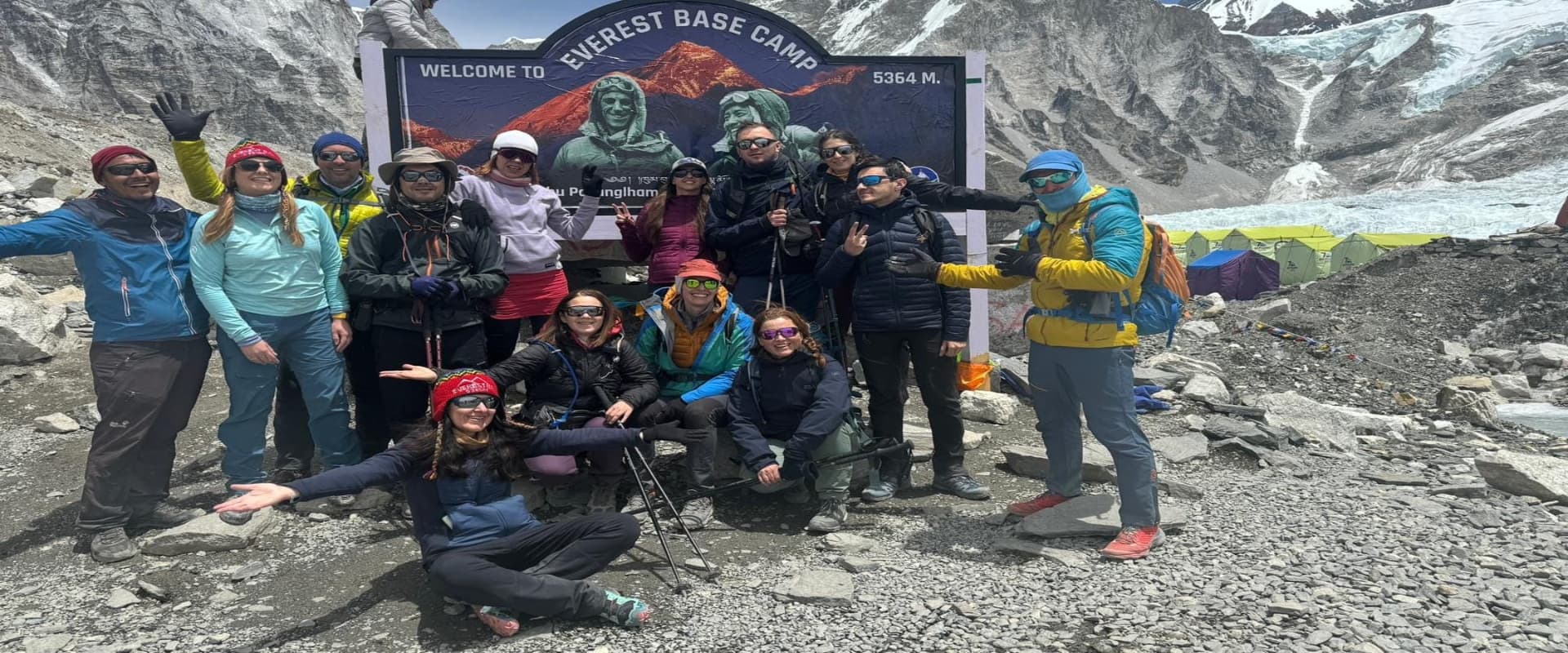
The Everest Base Camp Trek is one of the most celebrated hiking routes on earth, drawing thousands of trekkers each year into the heart of Nepal's Khumbu region. The route covers roughly 130 kilometers round-trip and climbs to 5,364 meters above sea level at Everest Base Camp itself, where mountaineering expeditions establish their staging ground before attempting the world's highest summit. What makes this journey stand apart from other long-distance treks isn't just the altitude or the famous name attached to it. It's the way the landscape changes completely every few days, moving from low-elevation forests dripping with rhododendron and birch through alpine scrub and high meadows, and eventually into the sparse, glacially carved terrain of the upper Khumbu. The villages along the way, Phakding, Namche, Tengboche, Dingboche, each carry a distinctly Sherpa character, with whitewashed chortens, fluttering prayer flags, and the smell of juniper incense drifting from monastery doorways. Spring, running from March through May, and autumn, from September through November, offer the most stable weather and the clearest mountain views, though every season carries its own particular quality.
The trail begins at Tenzing-Hillary Airport in Lukla, a 40-minute flight north of Kathmandu that deposits you at 2,860 meters in the Solukhumbu district. From Lukla the trail descends briefly before following the Dudh Koshi River valley north, reaching the village of Phakding after a gentle two-hour walk. The following day's climb to Namche Bazaar is the trek's first serious test, a steep 600-meter ascent through forest that arrives at the busy, horseshoe-shaped market town sitting at 3,440 meters. A mandatory two-night acclimatization stop in Namche lets your body begin adjusting to reduced oxygen before the trail pushes on to Tengboche at 3,860 meters, where the monastery commands one of the finest mountain panoramas in Nepal, taking in Ama Dablam, Nuptse, Lhotse, and Everest directly behind the roofline. The path climbs steadily through Dingboche and Lobuche before arriving at Gorak Shep at 5,140 meters, the last settlement before base camp. The final walk to EBC crosses the rocky moraine of the Khumbu Glacier and takes about three hours from Gorak Shep. Most itineraries also include a pre-dawn climb of Kala Patthar at 5,644 meters, a viewpoint that sits directly opposite Everest's south face and delivers one of the most photogenic summit views available anywhere on foot.
Planning a trip to Everest Base Camp doesn't have to be complicated, but it does benefit from booking well ahead, particularly if you're targeting the busy spring season when expedition teams and trekking groups fill the trail simultaneously. Our company has operated guided EBC treks for over a decade, handling all permits, domestic flights, and daily logistics so that your attention stays on the trek itself. We keep group sizes small, assign a dedicated Sherpa guide to each party, and carry a pulse oximeter and basic medical kit on every departure. Whether you want to follow the classic 14-day itinerary or extend the journey with side trips to the Gokyo Lakes or Island Peak, we're ready to tailor a program that fits your timeline and fitness level. Contact us today to check departure dates and start the conversation.
Why Choose the Everest Base Camp Trek (7 Highlights)
1. Scenery That Defies Description
Nobody comes back from the Khumbu saying the views were disappointing. The mountain scenery along the EBC route is genuinely in a class of its own, and part of what makes it so striking is how gradually it builds. Early on, you're walking through pine and rhododendron forest with the sound of the Dudh Koshi River below you, catching glimpses of snow-covered ridgelines through the trees. By the time you reach Namche, Kongde Ri at 6,187 meters fills the sky to the west. At Tengboche, Ama Dablam appears so dramatically close that it looks almost theatrical. From the moraines above Lobuche, you can see the Khumbu Icefall directly, a chaotic frozen cascade pouring down between the walls of the Western Cwm. Kala Patthar at 5,644 meters gives you what is by any reasonable standard the most accessible high-altitude panorama on earth, with Everest, Lhotse, Nuptse, and Pumori arranged in a semicircle around you at sunrise. No description does it justice. You need to stand there yourself.
2. Authentic Immersion in Sherpa Culture
The Khumbu is the ancestral homeland of the Sherpa people, a Tibetan-origin community whose history in Nepal stretches back several centuries. The trail passes directly through the social fabric of that culture in ways that feel genuine rather than staged. In Namche, you'll find the weekly Saturday market where Sherpa traders, Tibetan merchants, and local farmers have been gathering for generations. In Tengboche and Pangboche, the monasteries are functioning religious institutions, not museum pieces, and the monks living in them are carrying on a practice that predates Western mountaineering interest in the region by hundreds of years. Mani walls, long stretches of flat stones carved with the Buddhist mantra om mani padme hum, line the trail for hundreds of meters in places. You walk clockwise around them, as locals do. Prayer wheels at the entrance to villages are meant to be spun with the right hand as you pass. These rituals aren't performances for tourists. They're part of daily life here, and being asked to engage with them respectfully is part of what makes the trek feel like something more than sightseeing.
3. Guided by Sherpa Professionals Who Know This Mountain Personally
There's a real difference between a trekking guide who has learned about altitude sickness from a manual and a Sherpa who grew up in a household at 3,800 meters. Our guides are local to the Khumbu; many of them were born in the villages you'll pass through on the trek. They have firsthand knowledge of how the weather behaves at different times of year, where the trail gets tricky in early-morning ice, which teahouses run the cleanest kitchens, and how to read the early signs of altitude-related problems before they escalate. Several of our senior guides hold mountaineering certifications from the Nepal Mountaineering Association and have summit experience on Himalayan peaks. When you trek with us, your guide isn't just a route-follower. He or she is your most important safety resource on the mountain.
4. All Permits, Flights, and Logistics Fully Arranged
The administrative side of the EBC Trek involves several moving parts, and the list grows longer than most first-timers expect. You need a Sagarmatha National Park entry permit, a TIMS card, a Khumbu Pasang Lhamu Rural Municipality entry fee, and bookings for the Lukla flights, which fill up fast in spring. Our package includes all of these. We book your domestic flights, handle the permit paperwork at the relevant offices in Kathmandu, and provide your guide with all necessary documentation before the trek begins. There are no hidden costs associated with access or administration. The only things not included in our package are your international flights, personal travel insurance, and tips for your guide and porter, which we outline clearly in the cost breakdown. Every other fixed cost is covered upfront.
5. Small Groups for a More Meaningful Experience
We deliberately cap our group departures at eight trekkers. That's not an accident or a capacity constraint; it's a decision based on years of running these trips and watching what actually makes people enjoy them. Larger groups slow down on steep ascents, create bottlenecks at teahouse dining tables, and make it harder for the guide to maintain consistent health monitoring. Small groups move at a steadier pace, stop more naturally for photographs and conversations, and tend to develop a real sense of camaraderie among participants. If you're traveling solo, a small-group departure is often a surprisingly social experience. If you're booking as a pair or a family, small groups mean you won't be lost in a crowd. Private departures for groups who want the trail to themselves are also available, with flexible itinerary options.
6. Responsible and Sustainable Trekking Practices
The Everest region has faced genuine environmental pressure over the years, including trail erosion, waste accumulation, and the impact of large-scale tourism on the teahouse economy. We use only locally owned teahouses at every stop on the itinerary, which means your accommodation costs go directly into the hands of Sherpa families who have been running these lodges for generations. We enforce a strict no-single-use-plastic policy on our treks, requiring all trekkers to carry reusable water bottles and use purification tablets or SteriPen devices rather than buying plastic bottled water on the trail. Our porters are employed under fair-wage agreements and receive clothing appropriate to the altitude they work at. We also contribute a percentage of annual revenue to trail maintenance initiatives operating within Sagarmatha National Park.
7. Comprehensive Medical Safety Protocols from Day One
Altitude illness is the single most serious risk on the EBC Trek, and it doesn't discriminate based on fitness, age, or previous trekking experience. Our safety protocols are built around early detection and a conservative response. Every guide carries a calibrated pulse oximeter, and blood oxygen readings are taken from every trekker at the end of each walking day. We follow the internationally recognized "climb high, sleep low" acclimatization approach, which is the main reason the itinerary includes dedicated rest days in Namche and Dingboche. If a trekker's oxygen saturation drops below our intervention threshold, or if they report symptoms of AMS, the guide has standing instructions to descend immediately without waiting to see if conditions improve overnight. No summit selfie is worth a medical emergency, and our team operates accordingly.


