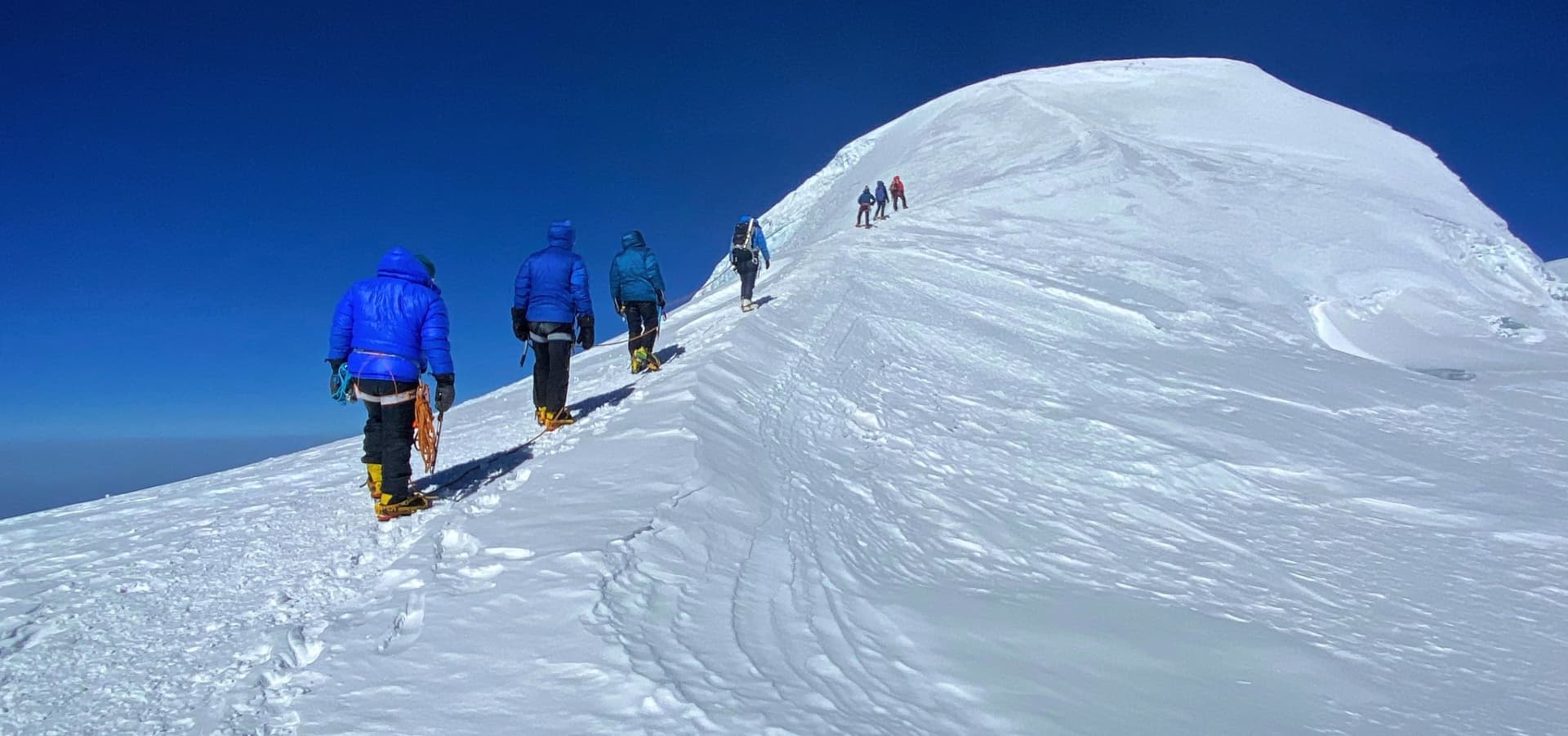
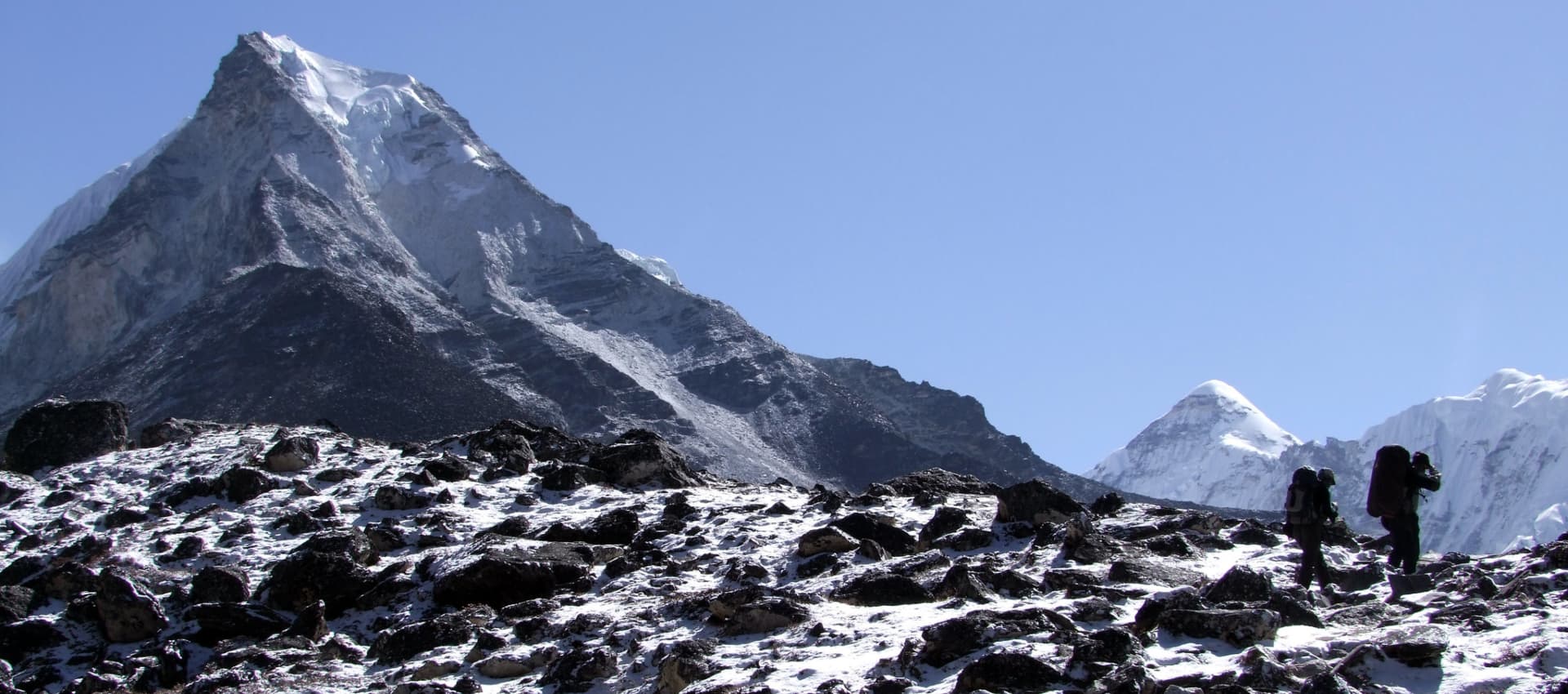
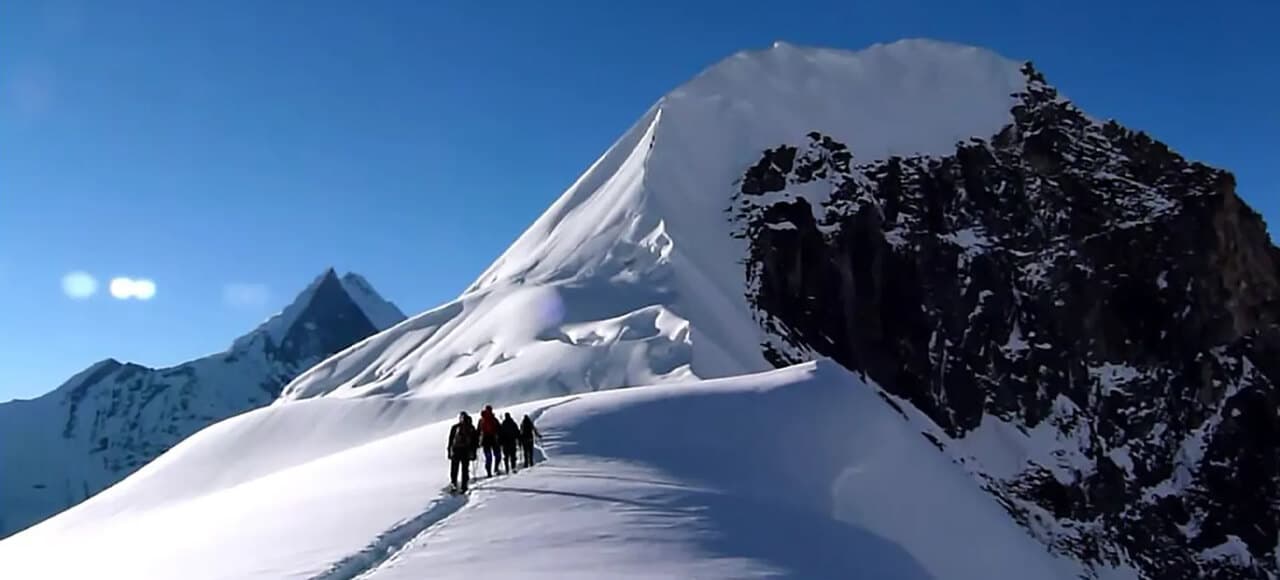
Island Peak climbing is the most sought-after first technical Himalayan summit for mountaineers ready to move beyond trekking. The peak, officially named Imja Tse, sits at 6,189 meters in Nepal's Khumbu region, rising above the village of Chhukung in a glaciated basin encircled by Lhotse, Nuptse, Ama Dablam, and Makalu. The name came from Tenzing Norgay and members of Eric Shipton's 1952 reconnaissance team, who looked up from Dingboche and saw the mountain standing like an island in a sea of ice.
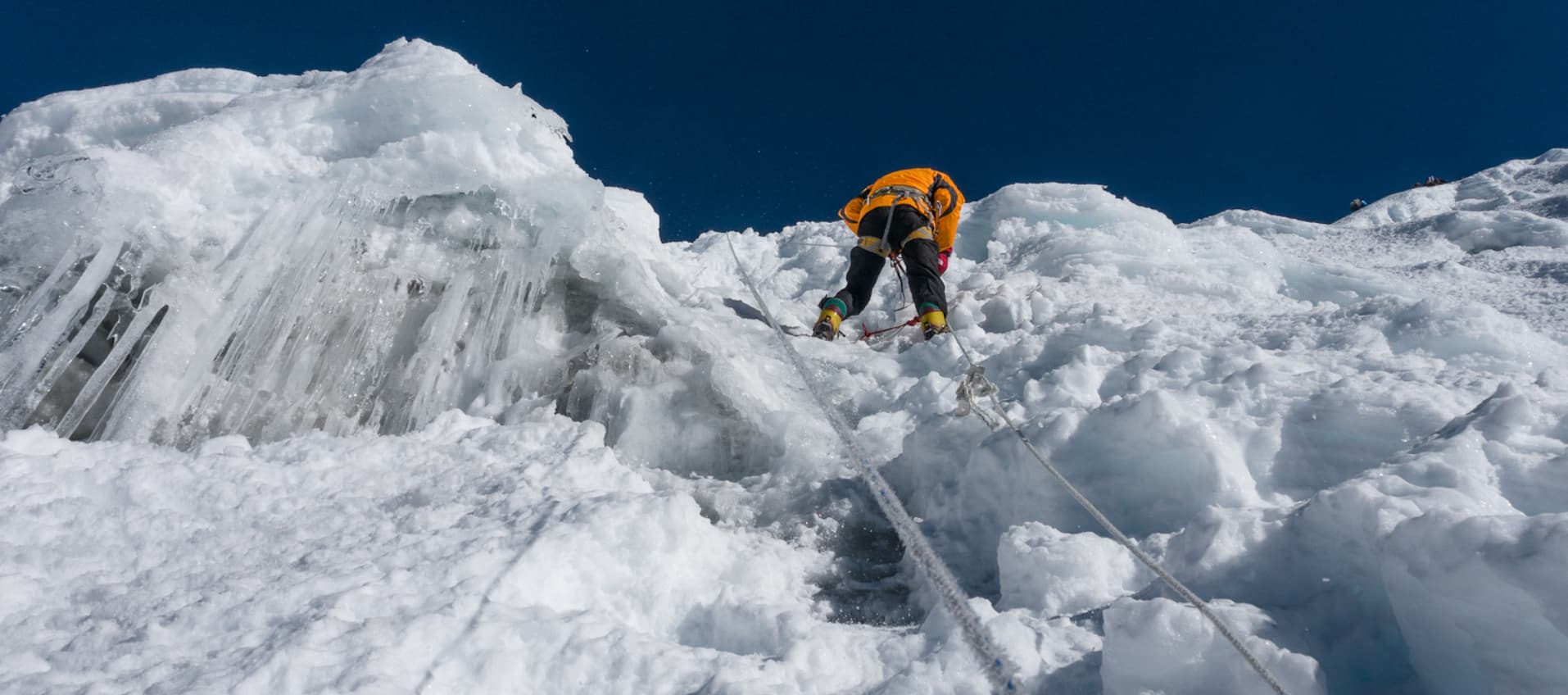
Island Peak climbing draws a specific kind of participant: the experienced trekker who has stood at Everest Base Camp or Annapurna Base Camp and wants to know what it feels like to actually climb above 6,000 meters with crampons and a rope. The southeast ridge route is graded AD in the French alpine system. It involves genuine glacier travel, fixed rope ascent on a 40 to 50-degree headwall, and an exposed summit ridge at altitude. The skills required are teachable and the route is manageable for any well-prepared and properly guided climber, but it is not a walk. It asks for fitness, commitment, and respect for the altitude.
We specialize exclusively in high-altitude expeditions and trekking peaks. Every guide, every protocol, and every piece of equipment we stock is oriented toward the specific demands of technical mountain objectives in Nepal. The Island Peak guided expedition runs across spring and autumn seasons with small groups and a certified guide team whose members have each summited this peak multiple times. Contact us directly to check current season availability and departure dates.
Island Peak Quick Facts
|
Official Name: Imja Tse
|
Common Name: Island Peak
|
|
Elevation: 6,189 m / 20,305 ft
|
Location: Khumbu, Solukhumbu District, Nepal
|
|
Range: Mahalangur Himal, Main Himalaya
|
Type: NMA Trekking Peak
|
|
Route: Southeast Ridge
|
Grade: AD (Assez Difficile)
|
|
First Ascent: 1953, Sherpa team led by Tenzing Norgay with Eric Shipton expedition
|
Best Months: April, May, October, November
|
|
Expedition Duration: 16 days from Kathmandu
|
Summit Success Rate: 72 to 78 percent on guided expeditions
|
Island Peak Climbing: Complete Guide
Perfect First Himalayan Peak
Island Peak occupies the ideal position in the progression from Himalayan trekker to Himalayan mountaineer. The approach runs through the Khumbu's natural acclimatization corridor. The technical demands are real but learnable with a qualified guide. The altitude at 6,189 meters provides the full physiological experience of climbing above 6,000 meters without the extended high-altitude exposure required on bigger objectives. Every technical skill used on this route, crampon use on steep ice, ascending and descending fixed lines, glacier rope travel, forms the foundation for more ambitious Himalayan climbs later.
Stunning Everest Region Views
The summit panorama of Island Peak ranks among the finest in the Khumbu. Lhotse's massive southern buttress fills the northwestern skyline at close range. Nuptse's long ridge runs parallel to the west. Makalu, the fifth-highest mountain on earth, stands in clear detail to the east. Ama Dablam's unmistakable profile rises to the west. Below, the Imja and Khumbu glacial systems spread across the valley floor. On a clear April or October morning, the combination is extraordinary.
Beginner-Friendly Mountaineering
The term beginner-friendly means the route is structured to accommodate climbers who have not previously used technical climbing gear, with a comprehensive skills session at base camp before the attempt. It does not mean the climb is trivial. The headwall section, the glacier crossing, and the summit altitude all present genuine challenges. What the route does not involve is lead climbing, complex crevasse rescue, or multi-pitch technical terrain, which keeps the objective firmly within the reach of fit and motivated first-time technical climbers.
Glacier Adventure
The Island Peak glacier approach from base camp to high camp is a proper Himalayan glacier experience. Roped travel across crevassed terrain, crampon technique on the ice, and the bergschrund crossing at the headwall base are all managed under guide leadership with fixed lines. The glacier alone provides a level of mountain experience that no amount of trekking at lower altitude replicates.
Sherpa Culture and the Khumbu Approach
Ten days of approach through the Khumbu give significant time in one of the most culturally layered mountain landscapes in the world. The Saturday market in Namche, the puja at Tengboche Monastery, the traditional architecture of Dingboche and Chhukung, and the historical weight of the place where mountaineering's most significant expedition history unfolded all contribute to an experience that goes well beyond a pure climbing objective. Our guides from Sherpa families bring personal stories to every section of this approach.
Island Peak Climbing Highlights
Top Experiences
-
Moving onto the glacier before dawn with headlamps and crampons, the entire Khumbu still dark below
-
Following fixed ropes up the 40-degree headwall as Makalu catches the first light to the east
-
The summit at 6,189 meters: crampons on the snow dome, the full eastern Himalaya in every direction
-
Pre-dawn base camp on summit morning, tea in hand, gear laid out, the guide running the final briefing
-
The descent to Chhukung with the altitude dropping, the air thickening, and the exhaustion becoming satisfaction
-
Walking into Namche on the return with everything completed
Mountains Seen from the Summit
-
Lhotse (8,516 m): Directly northwest, the fourth-highest mountain on earth at close range.
-
Nuptse (7,861 m): The long southwest ridge visible to the west of Lhotse.
-
Makalu (8,481 m): Fifth-highest globally, prominently visible to the east.
-
Ama Dablam (6,812 m): The Khumbu's most recognizable peak, to the west.
-
Baruntse (7,129 m): Rising above the Hongu Basin to the southeast.
-
Cho Polu (6,735 m): Visible above the Imja Valley.
Cultural Highlights
-
Boudhanath Stupa in Kathmandu, one of the world's largest Buddhist monuments
-
Tengboche Monastery morning puja, open to respectful visitors
-
Namche Bazaar Saturday market, the commercial heart of the Khumbu Sherpa community
-
Traditional stone architecture and agricultural terraces of Dingboche and Chhukung
-
Mani walls and prayer flag lines throughout the entire Khumbu approach
Wildlife in the Region
-
Snow leopards in the high glacial zones above 4,500 meters, rarely seen but present
-
Himalayan Monal pheasant in the rhododendron forest between Phakding and Namche
-
Blue sheep (bharal) on the rocky slopes above Dingboche and the Island Peak approach
-
Red pandas are occasionally found in the lower forest sections of the Dudh Kosi valley
Photography Opportunities
-
Ama Dablam from the trail above Sanasa, one of the most photographed compositions in the Himalaya
-
Sunrise from the summit ridge with the eastern range silhouetted and the glaciers lit below
-
Tengboche Monastery against the Nuptse wall in afternoon light
-
The bergschrund and headwall of Island Peak in the blue pre-dawn hour
-
Village life in Chhukung in the autumn harvest period
Island Peak Climbing Route
Kathmandu to Lukla
The expedition starts with the 35-minute domestic flight from Kathmandu's domestic terminal to Tenzing-Hillary Airport in Lukla at 2,860 meters. The 527-meter runway slopes at 12 degrees and terminates at a cliff edge on one side and a mountain wall on the other. The approach is technically one of the most demanding in commercial aviation and is a memorable introduction to the Khumbu before the first step is taken.
Lukla to Namche Bazaar
From Lukla, the trail descends the Dudh Kosi valley through birch and rhododendron forest, crossing the Hillary Suspension Bridge above the river gorge before the long climb to Namche. The Sagarmatha National Park gate at Monjo marks the formal entry into the UNESCO World Heritage Site. The first glimpse of Everest typically appears through the ridgeline gap about 20 minutes below Namche, a brief but unmistakable moment.
Namche to Dingboche
The acclimatization day at Namche uses the hike to the Hotel Everest View ridge at 3,880 meters, then returns to sleep at 3,440 meters. The route continues through Tengboche Monastery and climbs the Imja Valley to Dingboche at 4,410 meters. A mandatory rest day at Dingboche with a hike to 4,800 meters gives the second major acclimatization stimulus before the move toward the technical section.
Chhukung
Chhukung at 4,730 meters is the last teahouse settlement before base camp. It sits at the foot of the Imja Glacier with Lhotse, Nuptse, Baruntse, and Island Peak itself directly visible from the village. A rest or partial acclimatization hike from Chhukung is included before the base camp move.
Base Camp at 5,100 m
Island Peak Base Camp sits on a rocky moraine platform with clear views of the peak above. The approach from Chhukung takes three to four hours on trail that steepens significantly in the final section. A mandatory technical skills session at base camp covers crampon attachment, ice axe use, and fixed rope ascending and descending before any movement above camp.
High Camp at 5,600 m
High Camp sits on a snowfield below the headwall at approximately 5,600 meters. Crampons go on at the glacier transition from base camp, and the route to high camp passes the lower headwall sections where fixed lines are pre-installed by the guide team. High camp gives a summit day altitude gain of approximately 589 meters rather than the 1,089 meters a base-camp-only approach would require.
Summit via the Southeast Ridge
The summit push leaves high camp between 1:00 and 3:00 AM. The bergschrund crossing and the fixed rope headwall at 40 to 50 degrees are the technical crux. Above the headwall, the southeast ridge narrows toward the broad snow dome summit. The descent reverses the ascent line. Return to high camp, then base camp on the same day.
Return Route
The return from base camp to Lukla covers in two days what the approach took nine. The trail is familiar and the altitude is dropping, which changes the body's energy and the mood in the group. Namche on the return provides the last bakeries, hot showers, and gear shop browsing before Lukla and the flight back to Kathmandu.